
The first week of August brought together important updates across GU oncology, with expert posts covering prostate cancer, urothelial carcinoma, muscle-invasive bladder cancer, metastatic renal cell carcinoma, clear cell renal cell carcinoma, and penile cancer.
This week’s selection includes updates on PSMAddition and ¹⁷⁷Lu-PSMA-617 in PSMA-positive metastatic hormone-sensitive prostate cancer, MR-guided adaptive SBRT to the prostate bed, early enfortumab vedotin-associated rash as a potential marker of response, PSA nadir as a prognostic marker in mHSPC, and conditional survival in metastatic RCC treated with first-line nivolumab plus ipilimumab.
Other posts highlight unmet needs in penile cancer, neoadjuvant immunotherapy in MIBC using data from PURE-01, NureCombo, and SURE2, Nicheverse and spatial transcriptomics in ccRCC under immunotherapy, enzalutamide versus darolutamide doublet therapy in mHSPC, and the EORTC 2238 DE-ESCALATE trial in metastatic hormone-sensitive prostate cancer.
Together, these posts reflect the continued evolution of GU oncology across radioligand therapy, adaptive radiotherapy, biomarkers, real-world evidence, immunotherapy, spatial biology, treatment de-escalation, and multidisciplinary care.
Shilpa Gupta — GU Oncologist and Clinical Trialist at Cleveland Clinic | United States
“Excited to see the PSMAddition trial published in The Lancet, on the heels of the FDA approval of ¹⁷⁷Lu-PSMA-617 for patients with PSMA-positive metastatic hormone-sensitive prostate cancer.
Congratulations to Dr. Scott Tagawa and Mike Morris on leading this effort.
Proud to have been part of this landmark trial at Cleveland Clinic, which enrolled the highest number of patients in the United States.”
Felipe Couñago, MD, PhD — Medical Director at GenesisCare Spain; Radiation Oncologist; Clinical Researcher; Professor | Spain
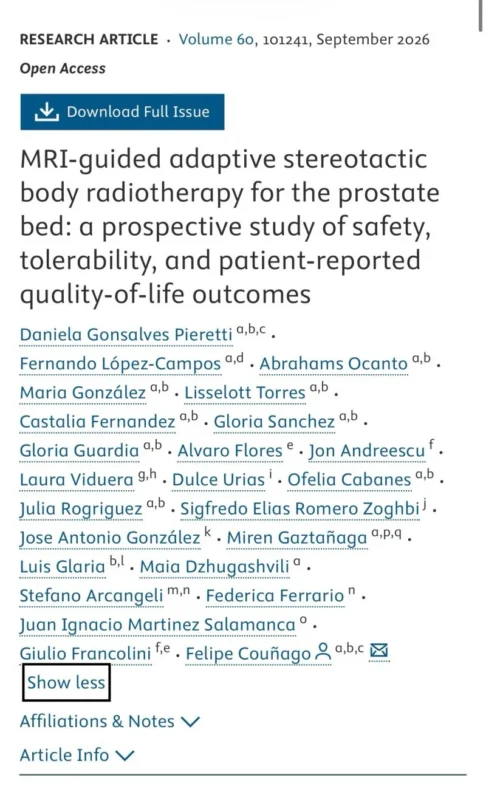
“I am delighted to share that our prospective study, ‘MRI-Guided Adaptive Stereotactic Body Radiotherapy for the Prostate Bed: A Prospective Study of Safety, Tolerability, and Patient-Reported Quality-of-Life Outcomes,’ is now officially published and available as open access in Clinical and Translational Radiation Oncology.
In this prospective study of 31 consecutive patients treated with online adaptive MR-guided SBRT to the prostate bed after radical prostatectomy, we observed:
• No grade ≥3 treatment-related adverse events
• Only 4.3% grade ≥2 genitourinary adverse events at 6 months
• 0% grade ≥2 gastrointestinal adverse events
• Preservation of urinary and bowel quality of life throughout follow-up
• 100% biochemical response during the early follow-up period
To our knowledge, this is the first prospective Spanish study reporting clinical outcomes and patient-reported quality-of-life data for online adaptive MR-guided SBRT in the post-prostatectomy setting.
Congratulations to Dr. Daniela Gonsalves Pieretti for leading this outstanding work.
I would also like to thank all co-authors, collaborators, and, most importantly, our patients and their families for making this research possible.
This publication represents another important milestone for our MR-Linac clinical research program, with a second prospective Clinical and Translational Radiation Oncology study on localized prostate cancer expected to be published soon.”
Katy Beckermann — GU Medical oncologist | Clinical Trials and Drug Development | GU Medical Oncologist | United States
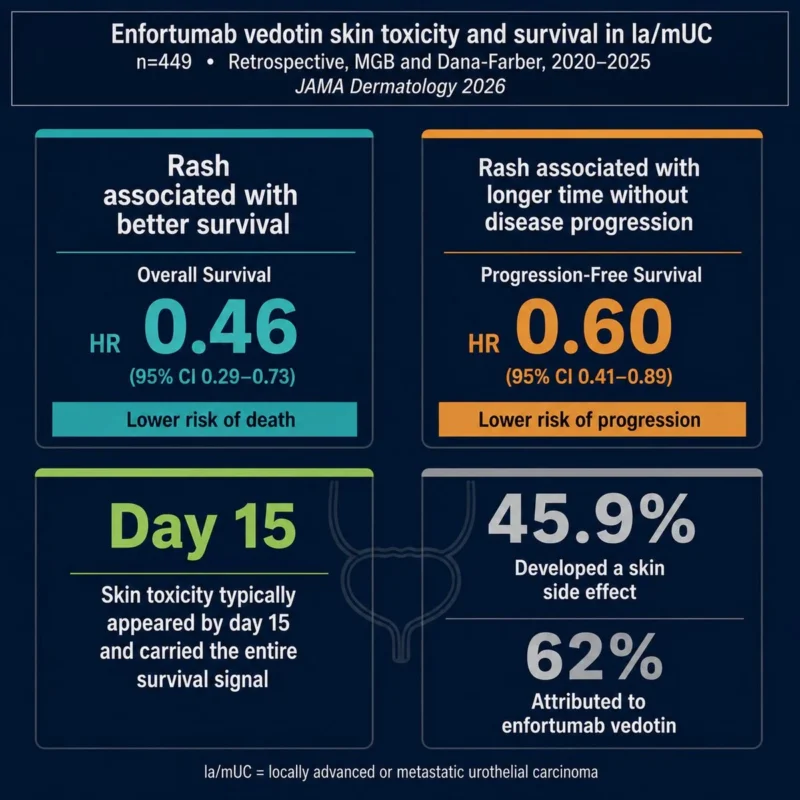
“Early enfortumab vedotin rash may be associated with response.
EV-attributed skin toxicity was associated with improved outcomes, with OS HR 0.46 and PFS HR 0.60 at the 30-day landmark.
Onset by day 15 carried the signal. Late rash did not.
High-grade rash did not predict worse survival.
This was retrospective, and the rash group started healthier, with ECOG 0 in 57% versus 33%.
I hope we continue to learn more as we understand dose intensity and response, and how we can best manage what can be severe skin toxicity, including topical and oral steroids, dose holds, and dose reductions.”
Giuseppe Procopio — Chief of Genitourinary Oncology | Director Prostate Program | Full Professor Qualified | FICOG and Meet-URO President | Italy
“New publication in Targeted Oncology on the prognostic value of PSA nadir in metastatic hormone-sensitive prostate cancer.
Our new systematic review and reconstructed individual patient data meta-analysis investigated the association between the depth of PSA response and clinical outcomes in patients with mHSPC treated with ARPIs or docetaxel.
Across 8 studies, data from 1,638 patients for overall survival and 1,104 patients for progression-free survival were analyzed.
Key findings:
• Achieving a PSA nadir ≤0.2 ng/mL was associated with markedly improved PFS: median PFS was not reached versus 12.1 months; HR 0.19, 95% CI 0.16–0.23; p<0.0001
• A strong association was also observed for OS: 92.8 versus 34 months; HR 0.27, 95% CI 0.22–0.33; p<0.0001
• High-volume disease and synchronous/de novo metastatic disease were associated with a lower probability of achieving a PSA nadir ≤0.2 ng/mL
These results support PSA nadir as an early, accessible, and clinically meaningful prognostic marker in mHSPC.
Integrating PSA dynamics with clinical, radiological, and molecular parameters could further refine prognostic stratification and contribute to more personalized treatment strategies.
Further prospective studies will be important to establish the optimal PSA nadir threshold and clarify the role of time to PSA nadir in therapeutic decision-making.
Thank you to all the authors and collaborators who contributed to this work.”
Heber Reyes — Medical Oncologist | Current focus: GU Oncology (kidney / bladder) | Canada
“Missed our ASCO 2026 poster from the International Metastatic RCC Database Consortium?
We evaluated conditional survival in patients with metastatic renal cell carcinoma treated with first-line nivolumab plus ipilimumab, asking a simple but clinically meaningful question:
How does a patient’s prognosis change after remaining alive and on treatment for 3, 6, 9, 12, or 24 months?
Our real-world analysis demonstrates that prognosis improves dynamically over time, with the greatest gains observed in patients who continue therapy without interruption.
These findings provide updated survival benchmarks that may help inform patient counseling.”
Luis G Medina — Urologic Oncologist at MUSC Urology and Hollings Cancer Center; Assistant Professor of Urology; Associate Program Director, Urologic Oncology Fellowship; Secretary, Global Society of Rare Genitourinary Tumors | United States
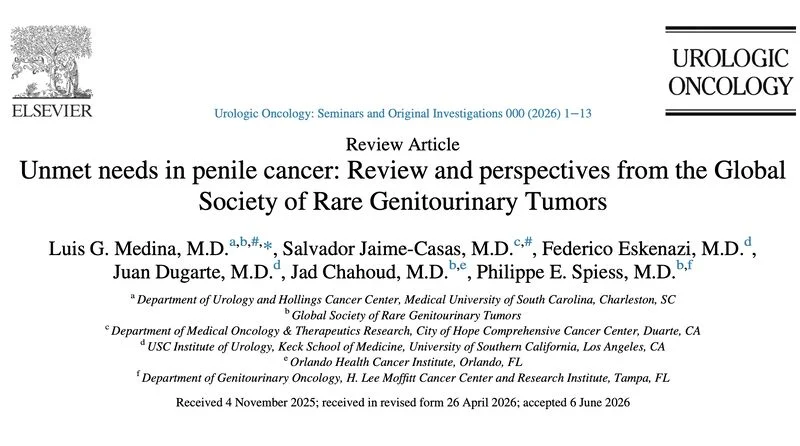
“Our review is out now in Urologic Oncology: Seminars and Original Investigations.
We examine key unmet needs in penile cancer, from patient advocacy and organ preservation to ILND optimization and emerging systemic therapy options.
Thanks to this great team: Salvador Jaime-Casas, Juan Pablo Dugarte, Philippe Spiess, and Jad Chahoud.”
Chiara Mercinelli — MD, Genito-Urinary Medical Oncologist, PhD Candidate in Molecular Medicine | Italy
“Which patients are most likely to benefit from neoadjuvant immunotherapy in muscle-invasive bladder cancer?
Our latest study explores this question by leveraging data from the PURE-01, NureCombo, and SURE2 trials.”
Christina Leslie — Member/Professor, Computational and Systems Biology Program | United States
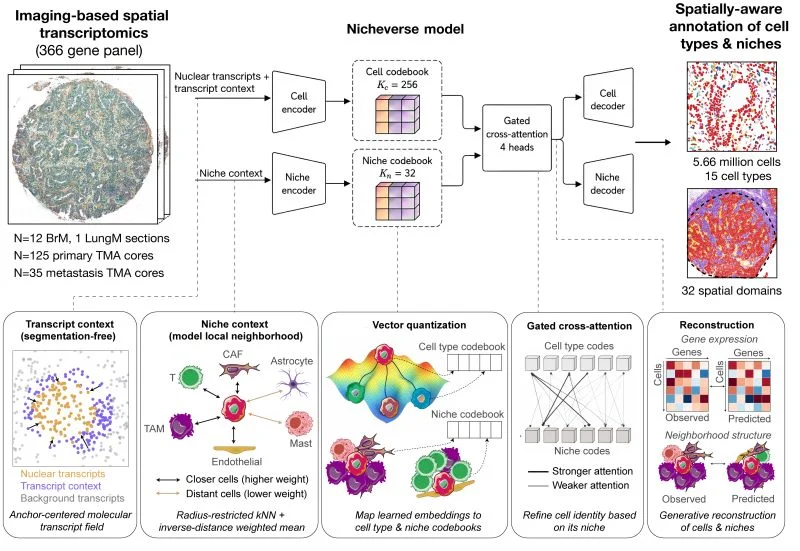
“Very excited to share this new preprint, which provides the first application of Nicheverse, our novel computer vision-inspired AI model for imaging-based spatial transcriptomics analysis, to dissect the primary and metastatic clear cell renal cell carcinoma microenvironment and study persister cells under immunotherapy.
This work was a close collaboration with Joan Massagué, with major help from Ari Hakimi for access to clinical samples, and was led by our co-mentored PhD student Vijay Yarlagadda, who developed Nicheverse and did almost all the experimental work. Nicheverse uses a discrete representation learning strategy to learn a codebook of cell types and niches in a cell segmentation-free manner, avoiding transcript misassignments and cell loss due to quality filtering in cell segmentation workflows.
Instead, a cross-attention mechanism between cell and niche representations enables spatially informed cell annotations, with every cell assigned both a cell type and niche code and no cells lost from the analysis. Biologically, we first use single-cell analyses to show that ccRCC cells occupy a spectrum of stages along an embryonic nephrogenic developmental axis.
Using both patient primary and metastatic tumors and new immunocompetent mouse models, we find that phenotypic commitment to this developmental axis is implicated in resistance to immune checkpoint inhibitor therapy, the standard of care in ccRCC. Persister ccRCC cells also reside in spatial niches relatively depleted of CD8+ T cells and display an immunosuppressive surface repertoire.
Our study therefore defines developmental reversion along a continuous embryonic nephrogenic axis as a novel mechanism of cancer cell persistence under ICI in ccRCC and shows that the persisting cancer cell compartment is physically coupled to its immune microenvironment in tissue.”
Neal Shore — Medical Director, CPI – Carolina Urologic Research Center; Director, START GU Oncology Center of Excellence | United States
“Commentary on ‘Matching-Adjusted Indirect Comparison of Enzalutamide Versus Darolutamide Doublet in Metastatic Hormone-Sensitive Prostate Cancer.’”
Bertrand Tombal — Chairman, Department of Surgery at Cliniques universitaires Saint-Luc | Belgium
“Proud to share our latest paper describing the design of the EORTC 2238 DE-ESCALATE trial.
This is an international pragmatic phase 3 study evaluating whether intermittent maximal androgen blockade can safely reduce treatment burden while maintaining outcomes in men with metastatic hormone-sensitive prostate cancer.
With modern androgen receptor pathway inhibitors, patients often receive treatment until progression.
DE-ESCALATE revisits an important question: can selected patients with a deep PSA response safely benefit from treatment interruptions, potentially improving quality of life while preserving survival?
Congratulations to all investigators, patients, and partners involved in this truly European collaboration.”

Find out 10 Must-Read Posts in GU Oncology from the last week of July on OncoDaily.