
Bladder cancer is usually discussed in the context of smoking, occupational exposures, and chronic urothelial injury. But a less familiar question is whether viruses may also contribute to tumor development in some patients.
The strongest interest has centered on BK polyomavirus (BKPyV) and human papillomavirus (HPV). Their possible role appears especially relevant in immunosuppressed patients, where persistent viral infection, impaired immune surveillance, and viral effects on cell-cycle control may create conditions that favor malignant transformation.
The evidence is not strong enough to consider these viruses established causes of most urothelial carcinomas. Still, emerging molecular data suggest that viral infection may act as a cofactor in selected tumors, particularly through mechanisms such as viral integration, disruption of tumor-suppressor pathways, and genomic instability.
Understanding this viral side of bladder cancer may help clarify why some urothelial tumors develop in specific clinical settings and whether virus-associated disease could eventually become a distinct biological and therapeutic subgroup.
Can Viruses Contribute to Bladder Cancer Development?
Viruses may contribute to bladder cancer development in selected settings, but they are not established causes of most urothelial carcinomas. Research has focused mainly on human papillomavirus (HPV) and BK polyomavirus (BKPyV), with JC polyomavirus and Epstein–Barr virus (EBV) also investigated. (Yao et al., 2023; Motlaghzadeh et al., 2024).
The epidemiologic evidence remains inconsistent. A 2022 meta-analysis found HPV in approximately 14% of bladder-cancer samples but did not identify a statistically significant overall association between HPV infection and bladder cancer. In contrast, more recent meta-analyses have reported significant associations involving HPV and, in broader viral analyses, EBV. (Khatami et al., 2022; Otero-Muriel et al., 2024; Motlaghzadeh et al., 2024).
An important distinction is that detecting viral DNA inside or around a tumor does not necessarily mean that the virus caused the cancer. Demonstrating a causal contribution requires stronger evidence, such as persistent viral oncogene expression, integration into the tumor genome, characteristic molecular changes, or a consistent epidemiologic association.
Some of the strongest evidence for virus-associated urothelial carcinogenesis comes from immunosuppressed solid-organ transplant recipients, where BKPyV and other viral sequences are found considerably more often than in bladder cancers arising in the general population. (Starrett et al., 2023).
Viruses are therefore best viewed as possible cofactors or drivers in selected biological settings, rather than universal causes of bladder cancer.

What Is the Role of BK Polyomavirus in Urothelial Carcinoma?
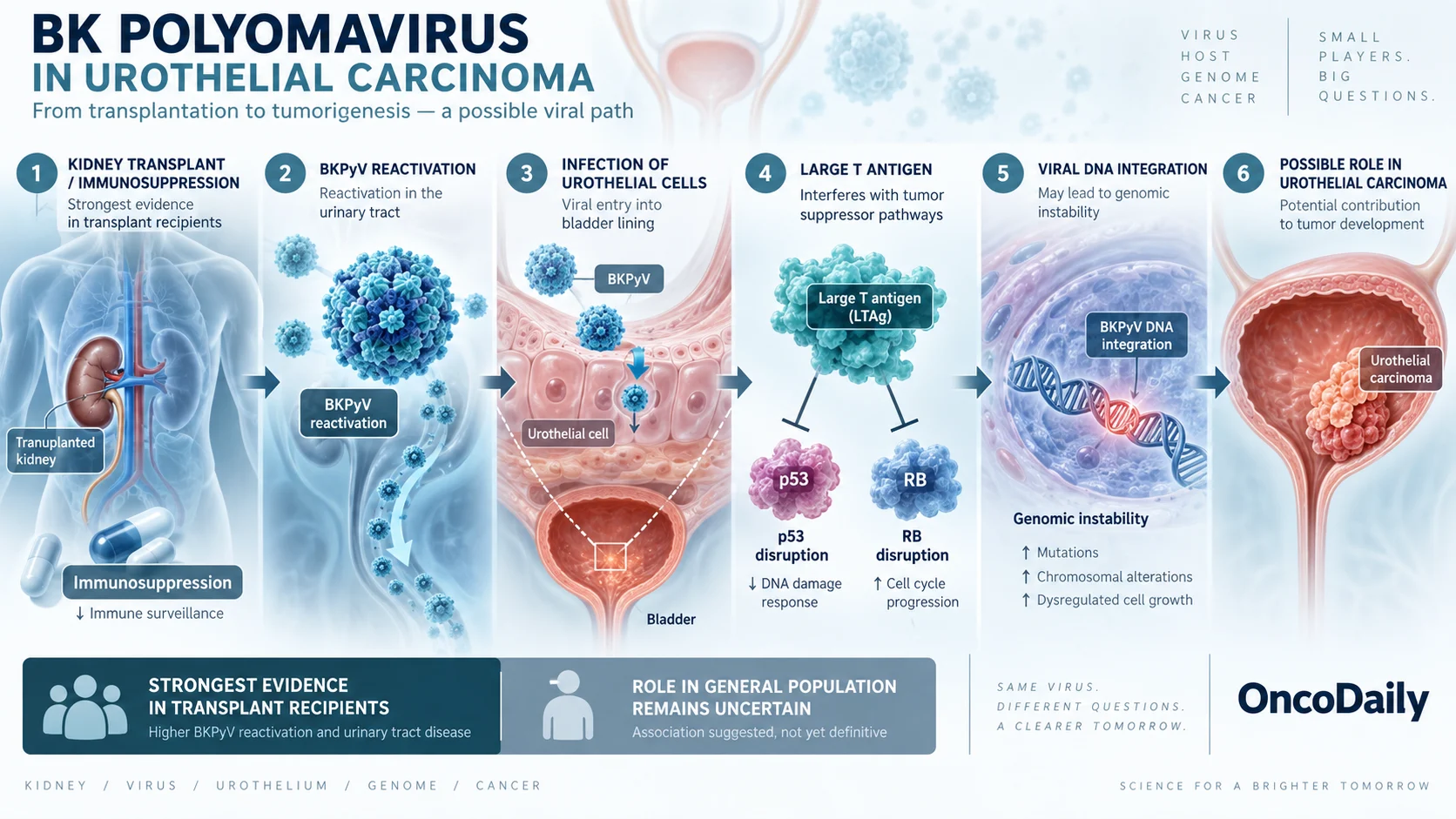
BK polyomavirus is a common infection that usually remains latent within the urinary tract after primary infection. In immunocompetent people, viral reactivation is generally controlled by the immune system. After kidney transplantation, however, immunosuppressive therapy can allow BKPyV to reactivate and replicate within renal and urothelial cells. (Kenan et al., 2015; Borgogna et al., 2021).
Interest in BKPyV as a potential oncogenic virus comes largely from urothelial carcinomas occurring in transplant recipients. BKPyV large T antigen has been detected within some of these tumors, and individual studies have demonstrated integration of BKPyV DNA into the tumor-cell genome together with persistent large T-antigen expression. (Kenan et al., 2015; Starrett et al., 2023).
In a genomic analysis of bladder cancers arising in solid-organ transplant recipients, BKPyV sequences were detected in approximately 21% of tumors. In most BKPyV-positive cases, the viral genome appeared to be clonally integrated into the host chromosome, supporting a potential role in tumor development rather than simple incidental infection. (Starrett et al., 2023).
The relationship is far less clear in immunocompetent patients. Studies of sporadic urothelial carcinoma generally find BKPyV much less frequently, and some have failed to demonstrate significant viral replication within tumor tissue. (Kumari et al., 2019).
BKPyV should therefore be considered a potential oncogenic driver in a subset of immunosuppressed patients, particularly after kidney or other solid-organ transplantation, rather than an established cause of urothelial carcinoma in the general population.
Is HPV Linked to Bladder Cancer?
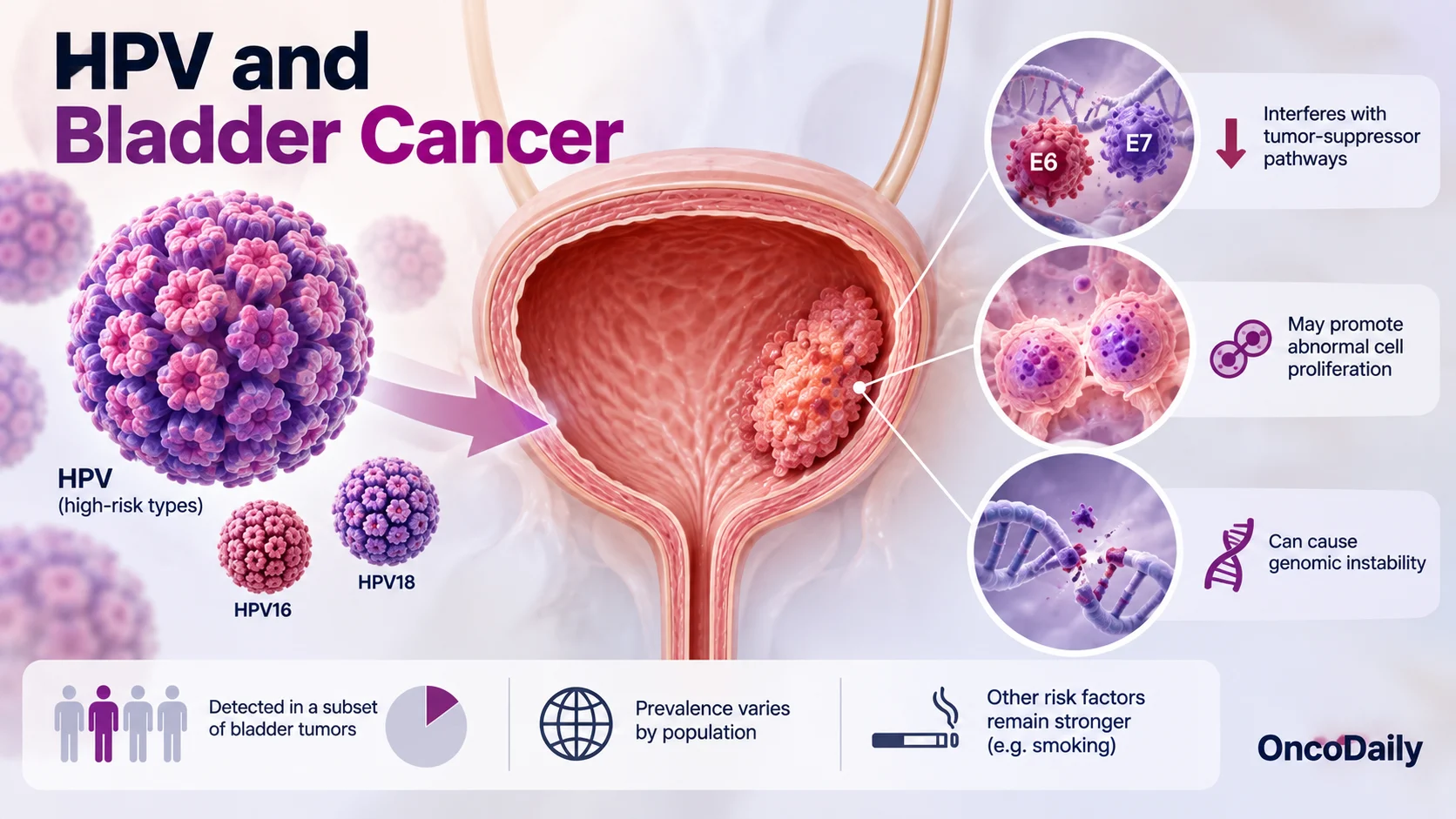
Human papillomavirus has been detected in a proportion of bladder tumors, but whether it directly contributes to urothelial carcinogenesis remains controversial. Unlike cervical, anal, or penile cancer, bladder cancer is not currently considered a well-established HPV-driven malignancy. (Yao et al., 2023).
High-risk HPV types, particularly HPV16 and HPV18, are among the most frequently reported genotypes in HPV-positive bladder tumors. However, reported prevalence varies considerably between studies depending on geography, tumor histology, tissue preparation, and the method used to detect HPV. (Yao et al., 2023).
The meta-analytic evidence illustrates this uncertainty. Khatami et al. reported a pooled HPV prevalence of 14.3% among bladder-cancer samples but found no statistically significant overall association with bladder cancer (OR 2.08, 95% CI 0.94–4.59). (Khatami et al., 2022).
In contrast, a 2024 meta-analysis of case-control studies reported a significant association between HPV detection and bladder-cancer diagnosis, with an OR of 4.18. These conflicting results suggest that an association may exist in certain populations but do not establish HPV as a direct cause of most bladder cancers. (Otero-Muriel et al., 2024).
HPV should therefore currently be regarded as a possible contributing factor or cofactor. Established bladder-cancer risk factors including tobacco exposure, occupational carcinogens, chronic urothelial injury, and selected prior cancer treatments remain much more firmly supported. (Dyrskjøt et al., 2023).
How Could Viral Infection Promote Urothelial Carcinogenesis?
If viruses contribute to urothelial carcinogenesis, they are likely to do so through several interacting molecular mechanisms rather than a single pathway.
One important mechanism involves disruption of tumor-suppressor signaling. BKPyV large T antigen can interfere with the retinoblastoma protein pathway and suppress normal p53-dependent responses, allowing infected urothelial cells to re-enter the cell cycle. High-risk HPV uses a different set of viral proteins E6 and E7 to disrupt p53 and RB signaling. These effects can reduce cell-cycle control and allow genetically damaged cells to survive and continue dividing. (Tornesello et al., 2018; Baker et al., 2022; Rahimi Foroudi et al., 2026).
BKPyV infection may also promote genomic instability through APOBEC enzymes. Experimental models of differentiated human urothelium have shown increased APOBEC3A and particularly APOBEC3B protein and enzymatic activity after BKPyV infection, together with measurable damage to host-cell DNA. (Baker et al., 2022).
This has led to the proposed ‘hit-and-run’ model of BKPyV carcinogenesis. Under this hypothesis, transient viral infection could generate genomic damage that helps initiate malignant transformation, even if viral DNA is later cleared and is no longer detectable when the tumor is diagnosed. (Baker et al., 2022).
Another potential mechanism is viral integration. Integration of BKPyV DNA into the human genome has been documented in transplant-associated urothelial tumors and may permit persistent expression of large T antigen while disrupting normal viral replication. HPV integration into host DNA is also an established component of carcinogenesis in classical HPV-driven malignancies, although its importance in bladder cancer remains uncertain. (Kenan et al., 2015; Starrett et al., 2023).
Persistent infection may additionally promote chronic inflammation, oxidative stress, repeated tissue injury, and compensatory proliferation. At the same time, impaired immune surveillance can allow virus-infected or genetically abnormal cells to persist rather than being eliminated.
Viruses may therefore function as initiators, promoters, or cofactors in urothelial carcinogenesis. At present, the strongest mechanistic evidence in bladder cancer involves BKPyV in immunosuppressed patients.

Why Are Transplant Recipients and Immunosuppressed Patients at Higher Risk?
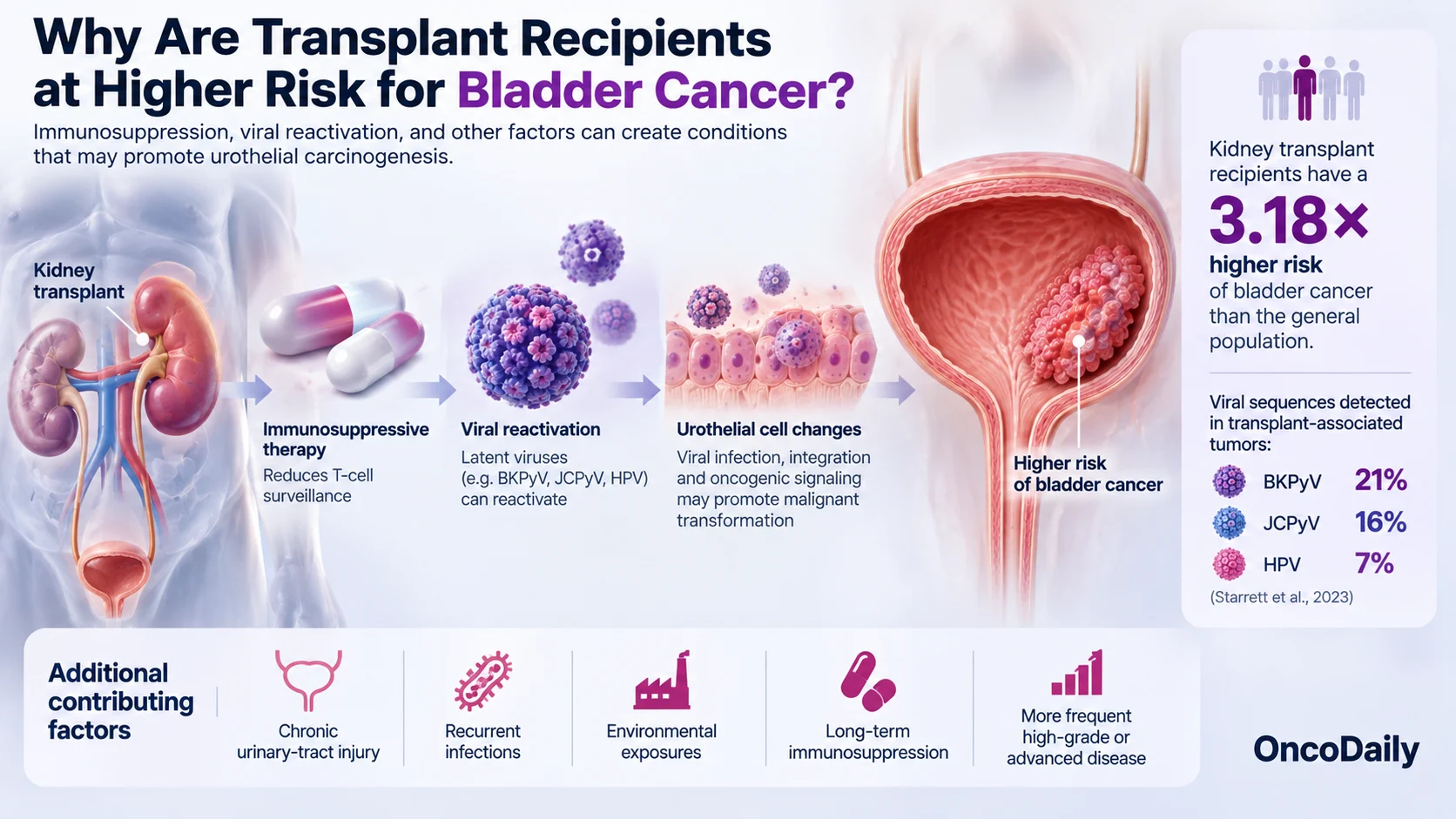
Kidney-transplant recipients have a significantly increased risk of bladder cancer compared with the general population. A meta-analysis involving almost 80,000 renal-transplant recipients reported a 3.18-fold higher standardized incidence ratio, although the magnitude of risk varied substantially between populations. (Yan et al., 2014).
Long-term immunosuppression is likely an important contributor. Reduced T-cell surveillance makes it more difficult to eliminate virus-infected or genetically abnormal cells and creates an environment in which latent viruses such as BKPyV can reactivate and persist. (Borgogna et al., 2021).
The viral contribution appears particularly important in some transplant-associated bladder tumors. Starrett et al. performed whole-genome and transcriptome sequencing of tumors from 43 solid-organ transplant recipients and found viral sequences in nearly half of the tumors. BKPyV was detected in 21%, JC polyomavirus in 16%, and carcinogenic HPV types in 7%. (Starrett et al., 2023).
BKPyV-positive tumors also showed evidence of viral integration, large T-antigen expression, and altered host-gene expression consistent with viral oncogenic activity. These findings provide considerably stronger evidence than simply detecting viral DNA within a tumor. (Starrett et al., 2023).
Other factors may also contribute to the increased risk after transplantation, including chronic urinary-tract injury, recurrent infection, environmental exposures, and the long-term effects of immunosuppressive therapy. Transplant-associated urothelial carcinomas have also been reported to present more frequently with high-grade or advanced disease, although outcomes vary considerably between populations. (Pradere et al., 2020).
Not every urothelial carcinoma occurring after transplantation is virus-driven. The increased risk probably results from an interaction between impaired immune surveillance, viral reactivation, conventional carcinogenic exposures, and host susceptibility.
Could Viral Testing or Targeted Strategies Change Bladder Cancer Management?
Viral testing could eventually help identify biologically distinct forms of urothelial carcinoma, but it is not currently part of routine bladder-cancer screening or diagnostic workup in the general population. Bladder cancer continues to be diagnosed using established approaches such as cystoscopy, tumor biopsy or resection, histopathology, imaging, and appropriate urinary testing.
Kidney-transplant recipients are routinely monitored for BKPyV DNAemia, but this surveillance is designed to prevent and manage BKPyV-associated nephropathy—not bladder cancer. Current international consensus guidelines recommend plasma BKPyV-DNA monitoring after kidney transplantation, but specifically note that there is insufficient evidence to recommend how patients with persistent BKPyV replication should be screened for BKPyV-associated urothelial carcinoma. (Kotton et al., 2024).
Testing tumor tissue for BKPyV DNA, large T-antigen expression, or viral integration may help characterize suspected virus-associated tumors, particularly in immunosuppressed patients. However, viral DNA detection alone cannot establish causation and is not currently a standard molecular classification test for urothelial carcinoma.
Reduction of immunosuppression remains the primary treatment for sustained BKPyV DNAemia or BKPyV nephropathy because it allows recovery of antiviral immune control. However, this strategy is not an established treatment for BKPyV-associated urothelial carcinoma itself, and reducing immunosuppression carries a risk of graft rejection. (Kotton et al., 2024).
The cancer itself should therefore continue to be treated according to its stage and clinical context using standard bladder-cancer approaches. In transplant recipients, these decisions require additional consideration of graft function, immunosuppressive therapy, infection risk, and overall renal function. (Pradere et al., 2020).
Immune checkpoint inhibitors create a particular challenge. These therapies can restore antitumor T-cell activity in advanced urothelial carcinoma, but in patients with functioning solid-organ transplants they can also activate immune responses against the graft. Earlier systematic data in kidney-transplant recipients found acute rejection in approximately 40% of patients treated with checkpoint inhibitors, although newer strategies are being investigated to reduce this risk. (Manohar et al., 2020).
Future research may determine whether viral integration patterns, viral-antigen expression, APOBEC signatures, or other virus-associated molecular features can be used to identify clinically meaningful subgroups of bladder cancer. For now, however, no virus-specific screening strategy or antiviral therapy has been established for the prevention or treatment of BKPyV- or HPV-associated urothelial carcinoma.
FAQ
Can viruses cause bladder cancer?
Viruses may contribute to some bladder cancers, but they are not established causes of most urothelial carcinomas.
Which viruses have been linked to bladder cancer?
Research has mainly focused on BK polyomavirus, HPV, JC polyomavirus, and Epstein–Barr virus.
Is BK polyomavirus a proven cause of bladder cancer?
Not in the general population. The strongest evidence is in immunosuppressed patients, especially solid-organ transplant recipients.
Is HPV linked to bladder cancer?
HPV has been detected in some bladder tumors, but studies remain inconsistent and a direct causal role has not been proven.
Should patients be tested for viruses when bladder cancer is diagnosed?
Routine viral testing is not currently recommended for most patients, although it may be useful in selected immunosuppressed or transplant-associated cases.