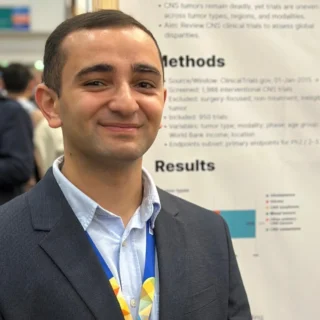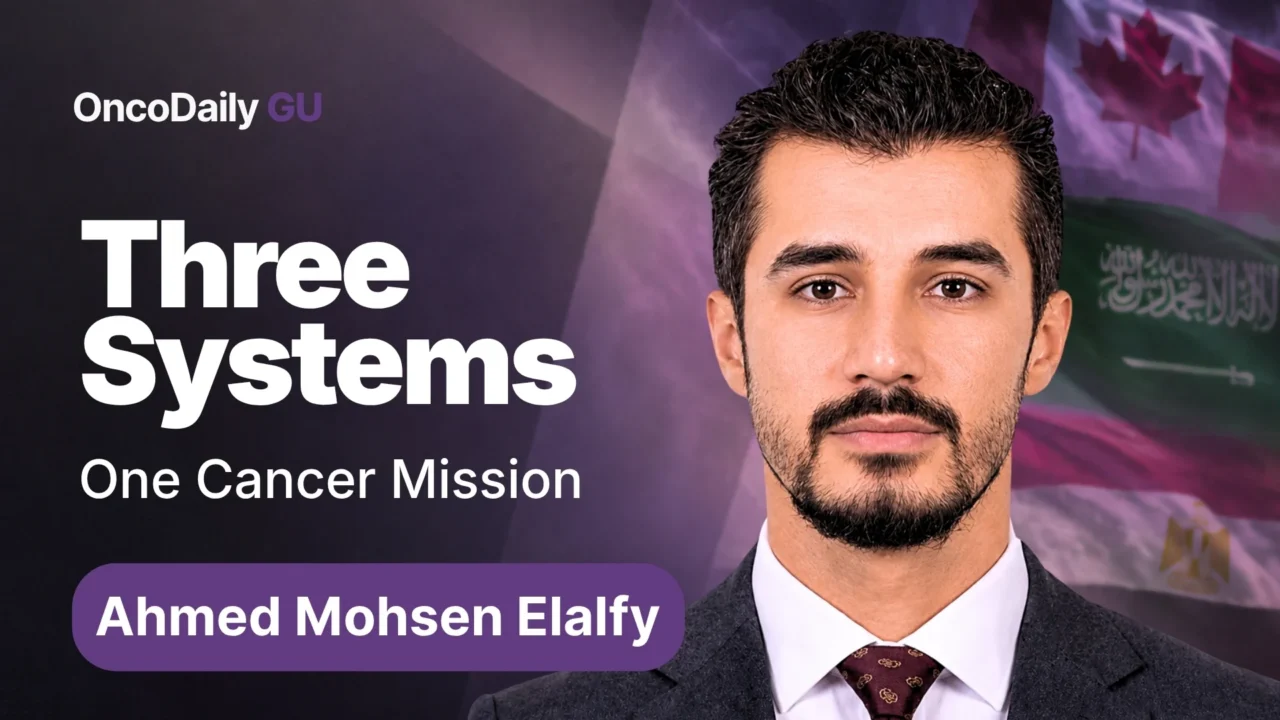
Ahmed Mohsen Elalfy, MD, PhD, shared his article with OncoDaily to highlight his experience from practicing oncology in Egypt, Saudi Arabia and Canada. The article was originally published in ASCO Connection on August 20, 2026.
While cancer biology remains universal, the journey from diagnosis to treatment is shaped by many factors beyond the disease itself, including access to therapies, diagnostic capabilities, referral pathways, multidisciplinary collaboration, and cultural context.
Through his experiences across diverse oncology environments, Dr. Ahmed Mohsen Elalfy highlights an important reality of modern cancer care: scientific advances and treatment guidelines may cross borders quickly, but their implementation depends on the systems built around patients and clinicians.
His journey demonstrates that every healthcare system has its own strengths, challenges, and lessons to offer — and that improving global oncology requires learning from each other rather than applying a single model everywhere.
Egypt: Where Resourcefulness Becomes a Clinical Strength
Dr. Ahmed Mohsen Elalfy’s oncology journey began at Mansoura University in Egypt, within a high-volume academic environment where patient care, education, and research existed alongside significant clinical demands.
Patients often arrived after traveling long distances, sometimes with advanced disease, incomplete medical records, or investigations performed across multiple institutions. In this setting, clinical decision-making required not only knowledge of guidelines but also careful prioritization and adaptability.
When every diagnostic test or treatment option cannot be immediately accessible, oncologists must determine which choices will have the greatest impact on patient outcomes.
A treatment plan is only successful if patients can realistically access and continue it.
This environment strengthened the importance of clinical judgment, communication, and education. Explaining complex cancer information clearly to patients and families became an essential part of care, particularly in situations where families play a central role in treatment decisions and support.
Egypt demonstrated that limitations do not eliminate excellence. Instead, they can encourage clinicians to develop strong problem-solving skills, resource stewardship, and a deeper understanding of the practical factors that influence cancer treatment.
Saudi Arabia: Creating Systems Through Collaboration and Growth
Dr. Ahmed Mohsen Elalfy’s experience in Saudi Arabia offered another perspective: a rapidly developing oncology landscape combining advanced technology, specialized institutions, and international expertise.
Working across tertiary and private-sector settings, including King Faisal Specialist Hospital and Research Centre in Madinah and Al Salama Hospital in Jeddah, he observed both the opportunities and complexities of delivering cancer care within diverse healthcare environments.
Modern diagnostics, systemic therapies, and molecular tools have expanded treatment possibilities. However, ensuring consistency requires more than access to technology.
Effective oncology systems depend on clear clinical pathways, communication between specialties, standardized processes, and strong multidisciplinary collaboration.
At Al Salama Hospital, Dr. Ahmed Mohsen Elalfy contributed to establishing a secondary-care oncology unit and supporting accreditation standards. This experience demonstrated that quality improvement is not simply about documentation; it requires building reliable processes that allow healthcare teams to provide safer and more consistent care.
Saudi Arabia also highlighted the importance of culturally sensitive communication. Discussions surrounding prognosis, treatment goals, and uncertainty must reflect patients’ values, expectations, and family dynamics.
Compassionate oncology requires not only scientific accuracy but also an understanding of the individual behind the diagnosis.
Canada: Seeing Oncology as a Healthcare System
Dr. Elalfy’s transition to Canada introduced a different model of cancer care: a publicly funded, population-based system built around coordinated pathways, multidisciplinary collaboration, and integration between clinical practice and research.
During his fellowship in genitourinary oncology at the Arthur J.E. Child Comprehensive Cancer Centre, Cumming School of Medicine, University of Calgary, he has experienced a system where prostate, bladder, and kidney cancer care is supported by advanced imaging, molecular testing, tumor boards, registries, and collaborative research structures.
The greatest lesson has been the power of coordination.
Successful cancer treatment is not delivered by one physician alone. It depends on the combined work of oncologists, surgeons, radiation specialists, pathologists, radiologists, pharmacists, nurses, research teams, and many other healthcare professionals.
However, even highly structured systems face challenges. Geographic barriers, referral processes, workforce limitations, and healthcare capacity continue to influence access and timing of care.
Organization improves outcomes, but every system must continue adapting to meet patient needs.
What Oncology Can Learn Across Borders
Dr. Ahmed Mohsen Elalfy’s experience across three countries reveals several important lessons for global cancer care.
Healthcare Context Is Part of the Treatment Decision
Modern oncology decisions already consider tumor characteristics, molecular biomarkers, performance status, and patient preferences. However, factors such as accessibility, travel burden, caregiver support, and healthcare infrastructure also influence whether a treatment plan can succeed.
The best medical option is meaningful only when it can reach the patient who needs it.
Standardization and Flexibility Must Work Together
Clinical pathways improve safety and reduce unnecessary variation. At the same time, oncology requires flexibility because every patient’s medical and social circumstances are different.
Strong systems combine evidence-based protocols with thoughtful clinical judgment.
Multidisciplinary Care Requires More Than Meetings
A tumor board is valuable only when the necessary information is available, specialists can contribute effectively, and discussions lead to a clear treatment plan.
The meeting itself is only one part of a larger infrastructure required for coordinated care.
Knowledge Exchange Should Be Global
Healthcare systems should not be viewed through a simple hierarchy of “advanced” and “less advanced.”
Each environment offers valuable lessons.
Egypt demonstrates clinical adaptability, resource stewardship, and the importance of patient-centered communication. Saudi Arabia illustrates how investment, technology, and international collaboration can accelerate oncology development. Canada shows the impact of coordinated systems, data integration, and population-based cancer care.
The future of oncology depends on sharing these strengths rather than applying a single model everywhere.
Building the Bridge Between Science and Reality
After practicing oncology across different healthcare systems, Dr. Elalfy’s perspective has evolved beyond comparing countries.
The central question is not which system is best, but what each system can teach the global oncology community.
Cancer therapies and guidelines continue to advance rapidly, but outcomes depend on the ability of healthcare systems to deliver those advances effectively and equitably.
Across every country, the mission remains the same: combining evidence, compassion, and organization so that patients receive the care they need at the right time.
The science of cancer may be universal. The pathway from discovery to treatment depends on the systems built around it.
Stay informed with more articles like this on OncoDaily