At the ESMO Congress 2026, Zev A. Wainberg (Los Angeles, USA) presented additional subgroup analyses from the Phase III RASolute 302 trial (NCT06625320), evaluating daraxonrasib, an oral RAS(ON) multi-selective inhibitor, versus standard-of-care chemotherapy in patients with previously treated metastatic pancreatic ductal adenocarcinoma (mPDAC).
The analysis, presented as Late-Breaking Abstract LBA82, examines overall survival (OS) across subgroups defined by tumour RAS mutation status, preselected chemotherapy regimen, and disease setting of prior treatment.
Why Was RASolute 302 Conducted?
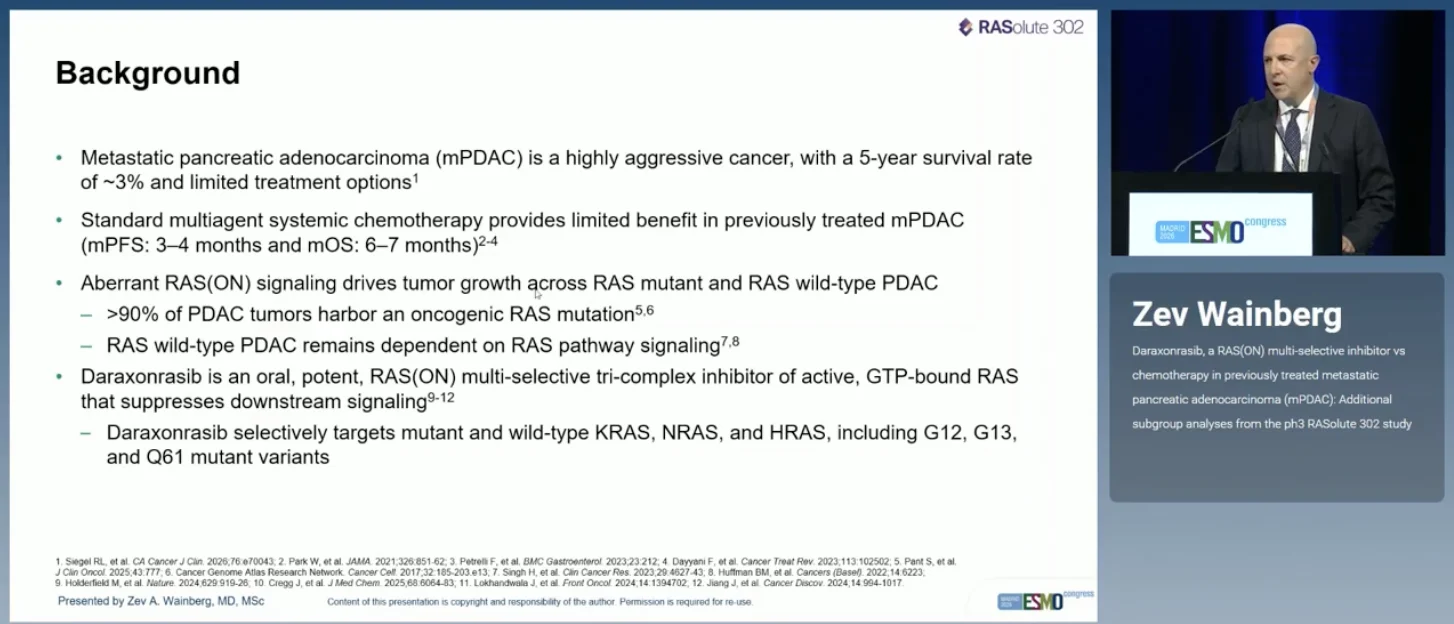
Multiagent systemic chemotherapy provides limited benefit in previously treated mPDAC. Aberrant RAS(ON) signalling drives pancreatic ductal adenocarcinoma, with more than 90% of cases harbouring RAS mutations, while RAS wild-type tumours remain dependent on RAS pathway signalling. Daraxonrasib is an oral RAS(ON) multi-selective tri-complex inhibitor targeting active, GTP-bound mutant and wild-type RAS.
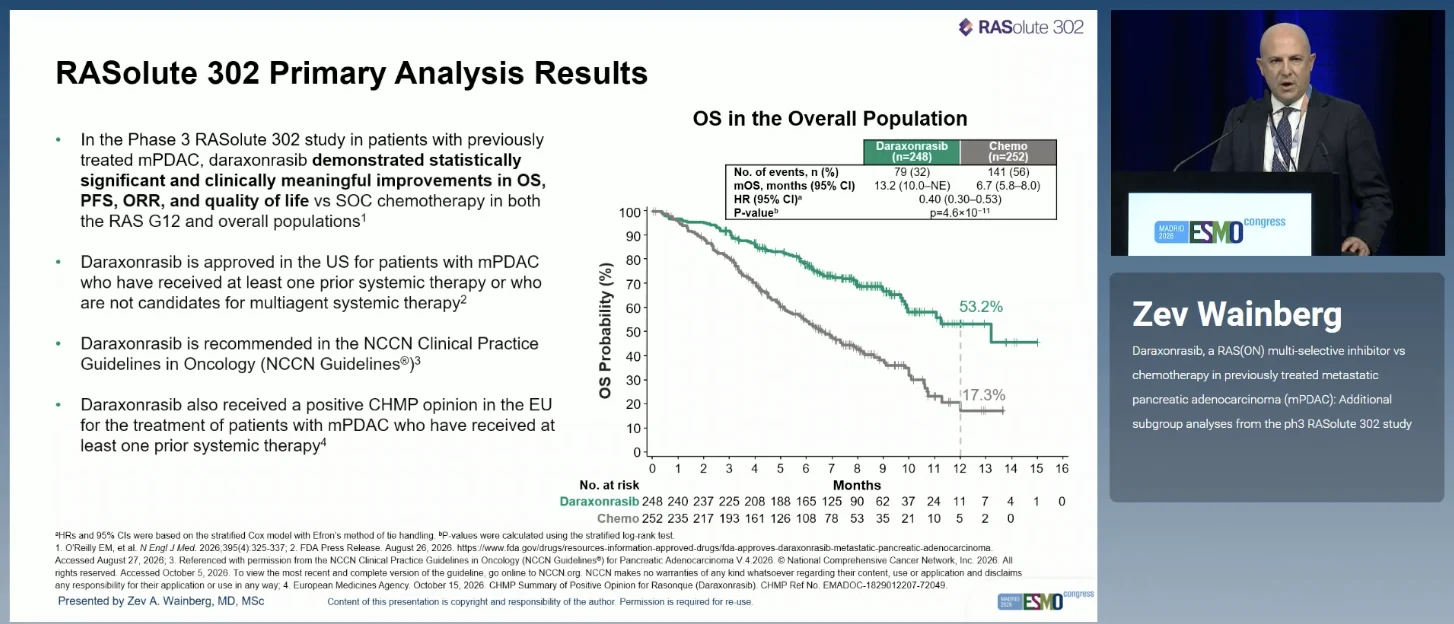
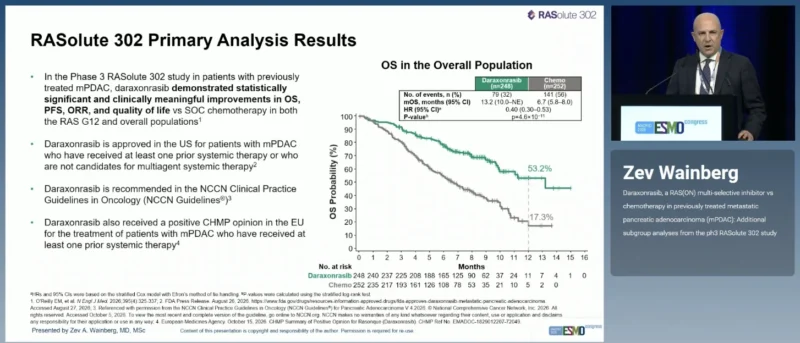
In the primary RASolute 302 analysis, daraxonrasib significantly improved OS and PFS compared with chemotherapy in the RAS G12 and overall populations. In the overall population, median OS was 13.2 months with daraxonrasib versus 6.7 months with chemotherapy (HR 0.40; 95% CI 0.30–0.53).

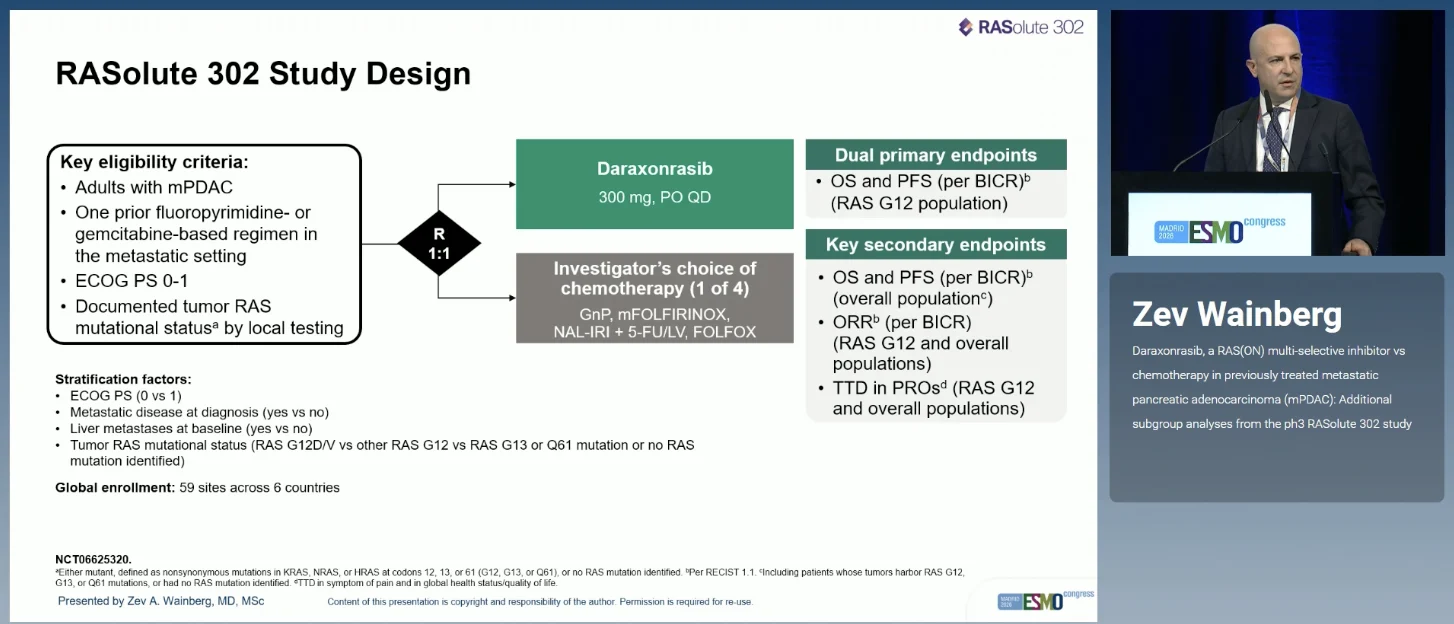
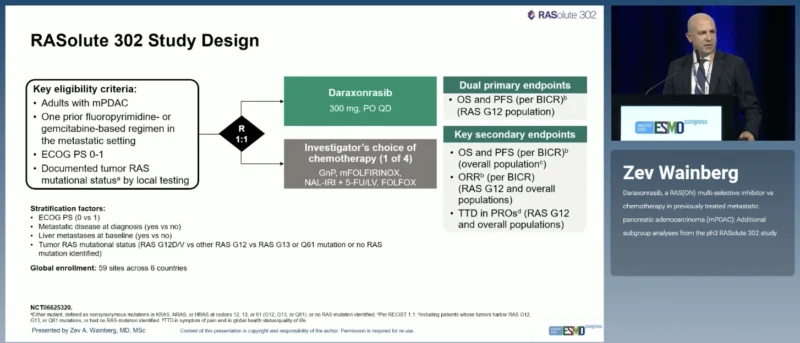
RASolute 302 Study Design and Methods
Patients with previously treated mPDAC were randomized 1:1 to receive daraxonrasib 300 mg orally once daily or investigator’s choice of standard-of-care chemotherapy, including gemcitabine plus nab-paclitaxel, modified FOLFIRINOX, liposomal irinotecan plus 5-fluorouracil/leucovorin, or FOLFOX.
The dual primary endpoints were OS and PFS in the RAS G12-mutated population, with OS and PFS in the overall population assessed as key secondary endpoints. Exploratory analyses evaluated OS according to locally determined tumour RAS mutation status, preselected chemotherapy regimen, and disease setting of prior treatment.
Key Findings from RASolute 302
At the February 10, 2026 data cutoff, median follow-up was 8.5 months (range 3.2–15.9). The analyses included 248 patients randomized to daraxonrasib and 252 randomized to chemotherapy.
Overall Survival by RAS Mutation Status
OS hazard ratios numerically favoured daraxonrasib across all reported RAS-status subgroups. Among patients with RAS G12D mutations, 95 (38%) received daraxonrasib and 121 (48%) received chemotherapy, with an OS HR of 0.49 (95% CI 0.33–0.74). For RAS G12V mutations, the corresponding numbers were 102 (41%) and 76 (30%), with an OS HR of 0.32 (95% CI 0.19–0.54). In the RAS G12R subgroup, 30 (12%) received daraxonrasib and 31 (12%) received chemotherapy (HR 0.61; 95% CI 0.29–1.30).
For patients with RAS Q61 mutations, 11 (4%) were included in each treatment arm, with an OS HR of 0.37 (95% CI 0.09–1.44). Among patients with no identified tumour RAS mutation, nine (4%) received daraxonrasib and seven (3%) received chemotherapy (HR 0.43; 95% CI 0.09–1.98). Although the point estimates favoured daraxonrasib across subgroups, confidence intervals crossed 1 in the G12R, Q61, and no-identified-mutation groups.
Overall Survival by Chemotherapy Regimen
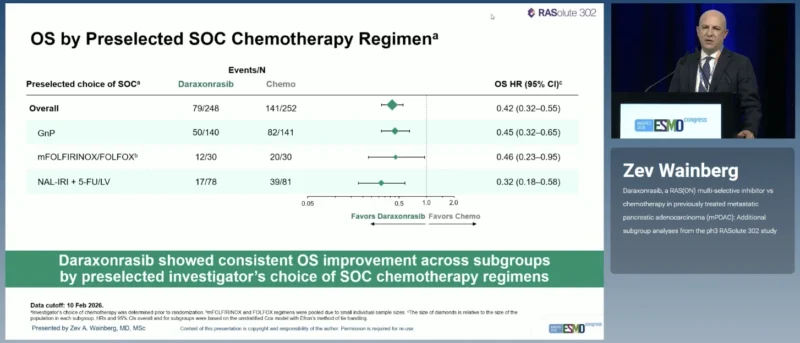
Daraxonrasib showed OS outcomes favouring daraxonrasib across subgroups defined by preselected standard-of-care chemotherapy, including gemcitabine plus nab-paclitaxel (HR 0.45; 95% CI 0.32–0.65), pooled modified FOLFIRINOX/FOLFOX (HR 0.46; 95% CI 0.23–0.95), and liposomal irinotecan plus 5-fluorouracil/leucovorin (HR 0.32; 95% CI 0.18–0.58).
Overall Survival by Prior Treatment Setting
OS outcomes also favoured daraxonrasib across prior treatment settings. Among patients diagnosed with metastatic disease less than six months after the last dose of neoadjuvant or adjuvant therapy (n=42 versus n=34), the OS HR was 0.36 (95% CI 0.17–0.75). In patients who had received one prior line of therapy for metastatic disease (n=206 versus n=218), the OS HR was 0.43 (95% CI 0.32–0.58).
Conclusions
The additional RASolute 302 analyses showed OS outcomes numerically favouring daraxonrasib over chemotherapy across clinically relevant subgroups of previously treated mPDAC, including patients with or without an identified tumour RAS mutation. Although several mutation-defined subgroups were small and their confidence intervals crossed 1, the directionally consistent findings across subgroups further reinforce the potential for daraxonrasib to become a new standard of care for eligible patients with mPDAC.
Source: ESMO Congress 2026 – LBA82, RASolute 302
Find more videos on OncoDaily YouTube TV.