From October 5 to 11, the second week of October brought together important updates across GI oncology, with expert posts covering biliary tract cancer, pancreatic cancer, colorectal cancer, gastric cancer, rectal cancer, esophageal cancer, intrahepatic cholangiocarcinoma, hepatocellular carcinoma, and ctDNA-guided research.
This week’s selection includes updates on ctDNA-based next-generation sequencing for precision medicine in advanced biliary tract cancers, cachexia in pancreatic cancer, the LEARNBOT Pan-European training program for robotic pancreatoduodenectomy, anastomotic leak and outcomes after colorectal cancer surgery, and RhoA Y42C-driven immune evasion in diffuse gastric cancer.
Other posts highlight the TESAR trial commentary in early rectal cancer, immune checkpoint inhibitors added to definitive chemoradiotherapy in unresectable or inoperable esophageal squamous cell carcinoma, vascular resection and neoadjuvant therapy in intrahepatic cholangiocarcinoma, patient eligibility and enrollment in ctDNA-guided clinical trials from CIRCULATE-Japan, and first-line durvalumab plus tremelimumab in poor-prognosis unresectable hepatocellular carcinoma.
Together, these posts reflect the continued evolution of GI oncology across precision medicine, liquid biopsy, supportive care, robotic surgery, surgical oncology, tumor biology, immunotherapy, neoadjuvant treatment, clinical trial design, and multidisciplinary decision-making.
Arndt Vogel — Professor of Gastrointestinal Oncology, Department of Gastroenterology, Hepatology and Endocrinology, Hannover Medical School | Germany
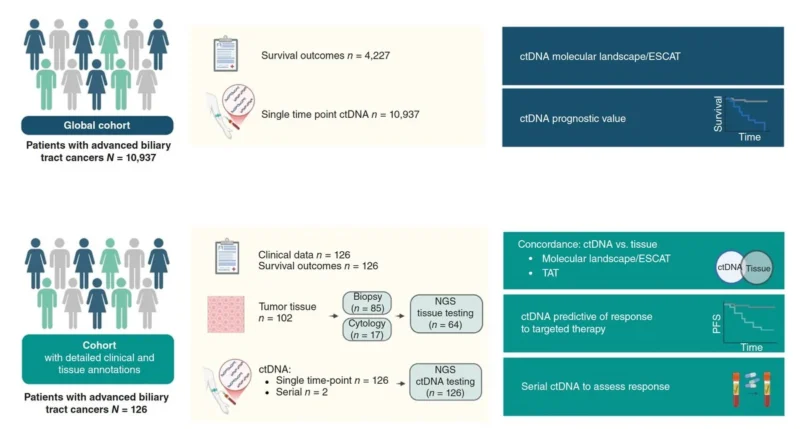
“NGS of ctDNA for Precision Medicine in Advanced Biliary Tract Cancers Clinical Cancer Reseach
10,937 pts
90% feasible vs 50% tissue
TAT 8 vs 27 days
83% ESCAT-I concordance
ctDNA prognostic: mOS 27.7 vs 13.6 mo
ctDNA can expand access, accelerate precision medicine
myESMO EASLnews ILCAnews”
Sarbajit Mukherjee, MD, MS — Chief of GI Medical Oncology | United States
“New work from our group just published in JCO Oncology Practice.
Huge congratulations to my colleague Kyaw Lwin Aung, who led this manuscript!
Cachexia affects up to 80% of patients with pancreatic cancer — driving worse treatment tolerance, quality of life, and survival — yet fewer than 1 in 5 clinicians use validated assessment tools. The review’s core message: cachexia is an active, modifiable process, not an inevitable endpoint.
Highlights:
Driven by systemic inflammation (IL-6, TNF-α), catabolic factors, and GDF-15 signaling
Standardized, early screening (PG-SGA, CT-based muscle assessment) closes the recognition gap
Mechanism-based therapies like Ponsegromab move beyond appetite stimulation”
Giovanni Marchegiani — MD, PhD; Academic Pancreas Surgeon, Hepato Pancreato Biliary and Liver Transplant Surgery, Padova University Hospital | Italy
“Pan-European Training Program for Robotic Pancreatoduodenectomy (LEARNBOT) out now in Annals of Surgery
486 PD performed, operative time 475 min, blood loss 200 ml
Our HPD Surgery – Chirurgia HPB e Trapianti di Fegato Padova successfully trained in 2023 by Marc Besselink and team”
Lynn Mazahreh — Medical Student; Student Researcher | Hungary
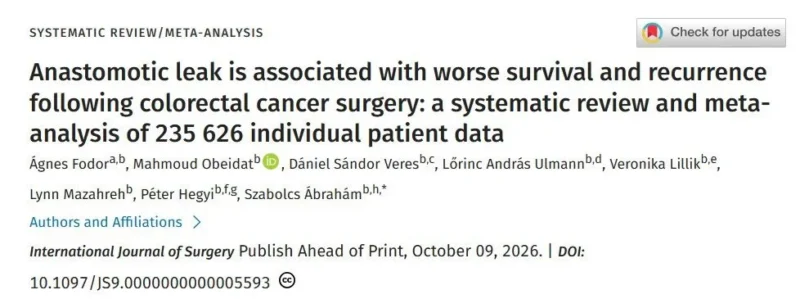
“I’m incredibly proud to share that our paper, ‘Anastomotic Leak is Associated with Worse Survival and Recurrence Following Colorectal Cancer Surgery: A Systematic Review and Meta-analysis of 235,626 Individual Patient Data,’ has been published in the International Journal of Surgery.
Our study analyzed data from over 235,000 patients to explore an important question in colorectal cancer surgery: whether anastomotic leakage following resection is associated not only with postoperative complications, but also with reduced overall survival and an increased risk of cancer recurrence.
I’m grateful to the entire research team, with a special thank you to Dr. Mahmoud Obeidat and Dr. Ágnes Fodor for their mentorship, guidance, and for giving me the opportunity to contribute to this work.”
Kyung Pil (Phil) Ko — Assistant Professor, Department of Cell Biology and Genetics, Texas A&M University College of Medicine | United States
“Excited to share our latest gastric cancer study, now available online in Nature Communications!
‘RhoA Y42C drives cell plasticity and PD-1-mediated immune evasion of diffuse gastric cancer’
Using gastric organoid models and single-cell and spatial transcriptomics, we show how RhoA Y42C drives cell plasticity and T-cell exhaustion through YAP1–AREG signaling, while revealing a potential therapeutic vulnerability to PD-1 blockade.
Ko Lab will continue focusing on esophageal and gastric cancers, with the goal of improving patients’ lives.
Many thanks to all our coauthors and collaborators!”
Henry Smith — Colorectal Fellow; Associate Professor, Bispebjerg Hospital, University of Copenhagen | Denmark
“Our commentary on the TESAR trial is now published.
TESAR found that adjuvant chemoradiotherapy is a safe alternative to completion total mesorectal excision (cTME) after initial local excision in patients high-risk pT1 or low-risk pT2 rectal cancers.
However, it doesn’t address the major challenge in patients with early rectal cancer: overtreatment of patients who don’t have locoregional spread.
Even in this highly selected group of ‘high-risk’ patients, only 30% were found to have lymph node metastases after cTME. That means 70% of patients were already cured by a local excision and didn’t need any further treatment – whether it’s surgery or chemoradiotherapy.
What is really needed to improve outcomes in early rectal cancer and to spare the majority of patients for overtreatment is better tools to identify patients with locoregional spread.”
Reza Ghalehtaki, MD — Associate Professor, Radiation Oncology, TUMS; H&N, GI and GU Cancers; Advanced Radiotherapy, IMRT/VMAT/SBRT; Clinical and Translational Research | Iran
“Adding immune checkpoint inhibitors to definitive chemoradiotherapy in unresectable/inoperable esophageal squamous cell carcinoma: what does the evidence say?
For patients with inoperable esophageal squamous cell carcinoma (ESCC), definitive chemoradiotherapy (dCRT) has long been the standard, and outcomes remain poor. Immune checkpoint inhibitors (ICIs) have already shown activity in esophageal cancer. The open question is whether adding them to definitive radiotherapy-based treatment helps.
Our new systematic review, published in Critical Reviews in Oncology/Hematology, pooled the available evidence. We searched PubMed, Scopus and Embase up to February 2026 and included 17 studies with 4,800 patients, of whom 1,659 received ICI as part of definitive treatment.
Key findings:
In comparative analyses, adding ICI was associated with better overall survival: pooled HR 0.61, 95% CI 0.49–0.76
Progression-free survival also improved: pooled HR 0.62, 95% CI 0.50–0.77
In ICI-treated patients, pooled 2-year OS was 68% and 2-year PFS was 48%
The pooled objective response rate was 75%
The benefit was regardless of PD-L1 status
Induction ICI was associated with higher 6-month PFS than other sequencing strategies
Toxicity remains clinically relevant and needs careful monitoring
Important caveats: Most of the included studies were non-randomized, heterogeneity was substantial, there were signs of possible small-study effects or publication bias, and the evidence is geographically concentrated in East Asia. These results are promising but not definitive.
The way forward: Prospective randomized trials are needed to define the optimal ICI sequencing, which patients benefit most, and the safety profile of combining ICIs with definitive radiotherapy.
Many thanks to my co-authors for their hard work on this project.”
Patrick Starlinger — Professor of Surgery; HPB Surgeon, Mayo Clinic, Rochester, MN | United States
“Vascular resection for intrahepatic cholangio is common practice – but should it be? And can chemo first help us decide who’s worth the risk?
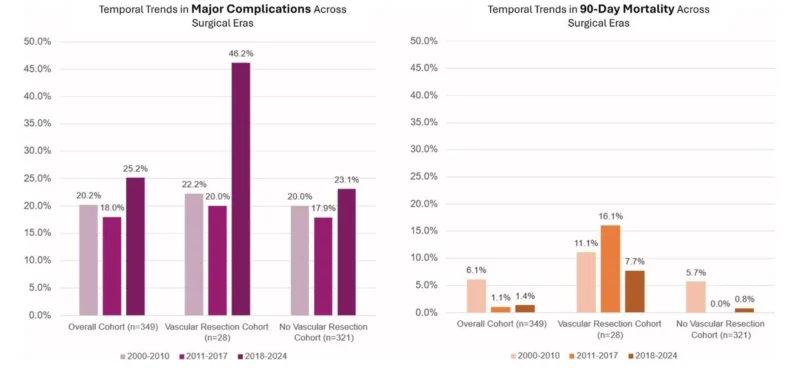
Intrahepatic cholangiocarcinoma (iCCA) invading the vena cava, portal vein, or major hepatic veins pushes surgery to its limits. Vascular resection (VR) is technically feasible at expert centers, but recurrence is high – so the real question is selection. We looked at whether neoadjuvant therapy (NAT) helps identify who benefits, in 349 iCCA resections at Mayo Clinic, including 28 requiring major VR.
Safe, and getting safer – VR carried higher 90-day mortality than standard hepatectomy: 11% vs 2%, but this fell to ~8% in the modern era, with failure-to-rescue dropping sharply over time.
Long-term survival held up – despite the added risk, overall survival was comparable between VR and non-VR patients.
NAT flipped the recurrence picture – within the VR group, NAT-treated patients appeared to recur far less often than upfront-surgery patients: 27% vs 82%, even though they started with worse disease.
NAT was linked to better recurrence-free survival specifically in the VR group: HR 0.21, and the NAT×VR interaction was borderline: p=0.05, hinting the benefit is strongest exactly where the surgery is hardest.
The takeaway: for locally advanced iCCA needing vascular resection, NAT may work as a biologic filter – letting the tumor declare itself before committing a patient to a high-risk operation, and sparing those whose disease progresses.”
Daisuke Kotani, MD, PhD — GI Medical Oncologist, National Cancer Center Hospital East | Japan
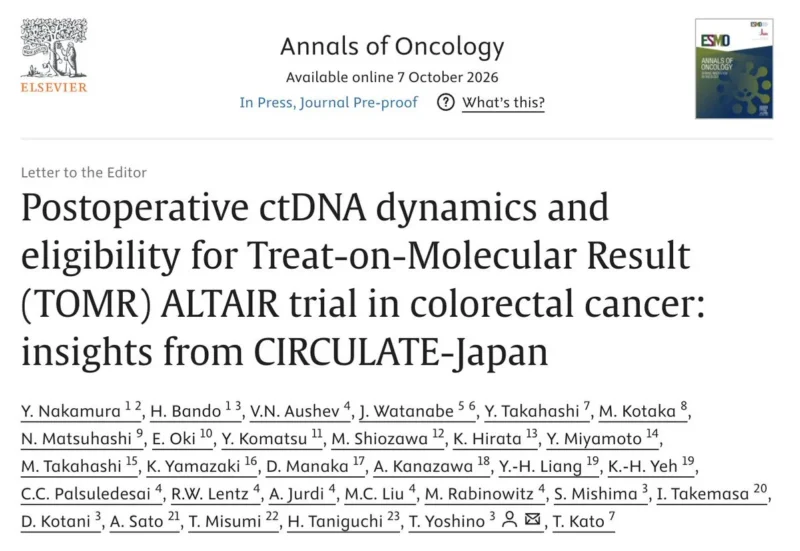
“A new study led by Dr. Nakamura from CIRCULATE-Japan is now online!
It provides practical insights into patient eligibility and enrollment in ctDNA-guided clinical trials.”
Erman Akkus — MD; Medical Oncology and Internal Medicine; GI Oncology | Turkey
“First-line durvalumab and tremelimumab in poor-prognosis unresectable hepatocellular carcinoma: Phase IIIb single-arm SIERRA study – Journal of Hepatology”
Find out 10 Must-Read Posts in GI Oncology from the September 28 to October 4 on OncoDaily.