 Kenya
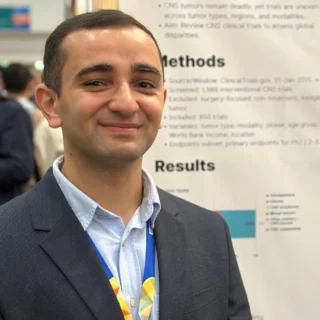
KENCO and the OncoDaily Kenya Hub were well represented at the Global Colorectal Cancer Congress, held in Nairobi, Kenya, on 5–6 November 2026. The Congress brought together a diverse global community of oncologists, gastroenterologists, surgeons, researchers, public health professionals, policymakers, patient advocates, cancer organizations, and people with lived experience to discuss colorectal cancer prevention, screening, early diagnosis, treatment, research, and survivorship.
As Kenya joined the global conversation, this was an important opportunity to amplify African perspectives, share experiences, strengthen partnerships and identify practical solutions to the growing colorectal cancer burden. Colorectal cancer is no longer a conversation we can afford to postpone in Kenya. It is a growing public health concern that demands greater attention, stronger collaboration and a coordinated national response. Yet, as we strengthen our cancer control efforts, one question deserves serious consideration: Are we working together to reach more people, or are we implementing fragmented initiatives that compete for visibility, resources and impact?
It is time to move from fragmentation to collaboration.
According to the latest GLOBOCAN 2024 estimates reported by the National Cancer Institute of Kenya (NCI-K), colorectal cancer accounts for approximately 2,525 new cases annually, making it the fifth most commonly diagnosed cancer in Kenya. The GLOBOCAN 2022 estimates, cited in Kenya’s National Cancer Screening and Early Diagnosis Guidelines, recorded 3,091 new cases and 2,116 deaths. These are estimates from different reporting periods and should not be interpreted as a direct year-on-year trend. Nevertheless, both underline the importance of strengthening prevention, screening and access to timely treatment. These numbers represent more than statistics. They represent individuals, families, livelihoods and communities whose lives are disrupted by a cancer that, in many cases, can be prevented or detected early.
Screening must become a national priority
One of the most important opportunities in colorectal cancer control is screening.
Unlike many cancers, colorectal cancer often develops from precancerous growths, commonly known as polyps. Identifying and removing these lesions before they become cancerous presents an important opportunity for prevention. Screening can also identify cancer at an earlier stage, when treatment is generally more effective. However, screening remains an area that requires greater investment, public education and coordinated implementation.
Kenya has already taken an important step through its National Cancer Screening and Early Diagnosis Guidelines, Second Edition, 2024. The guidelines recommend that average-risk individuals begin colorectal cancer screening at age 45 and continue through age 75. Annual faecal occult blood testing (FOBT), including the faecal immunochemical test (FIT), is recommended for average-risk individuals. A positive result requires further evaluation, including colonoscopy.
Individuals at increased or high risk, including those with relevant family histories, require appropriate risk assessment and may need earlier or more frequent colonoscopy.
This is an important policy foundation. The challenge now is implementation.
Screening should not remain an intervention available only to people who can afford private healthcare or live close to specialized facilities. It must become part of accessible, organized and sustainable cancer prevention services.
The problem is bigger than awareness
In Kenya, cancer awareness initiatives have increasingly become part of our public health calendar. We have awareness months, community outreaches, medical camps, media engagements and screening campaigns.
These efforts are valuable. However, we must ask ourselves whether awareness is consistently translating into access, early diagnosis and treatment.
A person may learn about colorectal cancer during an awareness campaign but have no idea where to access screening. Another may undergo a stool-based screening test, receive an abnormal result and struggle to access a colonoscopy. A patient may eventually receive a diagnosis but encounter financial barriers to surgery, chemotherapy or other indicated treatment.
This is where fragmentation becomes a major challenge.
We cannot have organizations conducting isolated awareness activities without clear referral pathways. We cannot mobilize communities for screening without ensuring that diagnostic services are available. We cannot celebrate the number of people reached without asking how many were screened, how many received their results and how many were successfully linked to care.
The entire patient pathway must matter.
Collaboration is not optional; it is the strategy
Kenya already has the institutions, expertise and partnerships needed to make meaningful progress. What is required is stronger alignment around shared priorities, clearly defined responsibilities and measurable outcomes. The Ministry of Health, through the National Cancer Control Programme and the National Cancer Institute of Kenya, has an important leadership and coordination role in setting standards, guiding implementation and strengthening accountability. County governments must integrate colorectal cancer awareness, risk assessment and appropriate screening services into primary healthcare and county cancer control plans. Healthcare professionals, including general practitioners, gastroenterologists, surgeons, oncologists, pathologists and nurses, must strengthen clinical suspicion, screening, referral and continuity of care.
Professional associations and academic institutions can contribute through training, research, clinical standards and evidence generation.
Civil society organizations and patient advocacy groups, including KENCO and its member organizations, have an important role in community mobilization, health education, addressing myths and stigma, patient navigation and ensuring that the experiences of patients inform policy decisions.
Development partners and the private sector can support infrastructure, equipment, workforce development, innovative screening approaches, research and sustainable financing.
Most importantly, patients, survivors and caregivers must be recognized as partners in designing and evaluating these interventions.
Collaboration should not mean more meetings or more partners appearing on event banners. It must mean pooling expertise, aligning resources, avoiding duplication and delivering measurable results.
Bringing screening closer to communities
One of the opportunities presented by Kenya’s primary healthcare reforms is the ability to bring cancer prevention and early detection closer to communities. The 2024 National Cancer Screening Guidelines provide a framework for a tiered approach to colorectal cancer screening. Community-level health workers can support awareness and mobilization, while appropriately equipped health facilities can undertake risk assessment and stool-based screening. Facilities with the necessary capacity can provide colonoscopy, biopsy and further management.
This approach creates an opportunity to integrate colorectal cancer screening into broader primary healthcare services rather than treating it as an isolated specialist intervention.
However, decentralization must be accompanied by investment in diagnostic capacity, trained personnel, reliable referral systems, pathology services and financial protection.
A screening programme without access to confirmatory diagnosis and treatment risks creating anxiety and unmet expectations among the very people it intends to help.
We must therefore plan for the complete pathway before expanding screening demand.
Addressing stigma and recognizing symptoms
Another critical component of our response is public education.
Conversations about bowel health are often uncomfortable. Rectal bleeding, changes in bowel habits and other gastrointestinal symptoms may be ignored because of embarrassment, stigma or the assumption that they are caused by minor digestive problems.
We must normalize conversations about colorectal health.
People should be encouraged to seek medical attention for persistent changes in bowel habits, blood in stool, unexplained weight loss, persistent abdominal discomfort, unusual fatigue and other concerning symptoms.
Importantly, the absence of symptoms does not necessarily mean the absence of colorectal cancer. Screening is intended for eligible people without symptoms, while those experiencing concerning symptoms need prompt clinical assessment rather than waiting for routine screening.
We must also challenge the misconception that colorectal cancer affects only older people. While risk increases with age, younger adults can also develop the disease. Persistent symptoms should never be dismissed simply because someone is young.
Financial protection must accompany early detection
Screening is only one part of the solution. We must also address what happens when an abnormal result leads to further investigations or a confirmed cancer diagnosis.
For many Kenyan households, cancer care carries substantial direct and indirect costs. Diagnostic procedures, pathology, medicines, surgery, transport, accommodation and loss of income can place families under considerable financial pressure.
As Kenya continues implementing health financing reforms under the Social Health Authority, colorectal cancer screening, diagnostic investigations and treatment must be considered within a comprehensive financial protection framework.
We must ensure that patients are not encouraged to seek early diagnosis only to encounter financial barriers at the next stage of care.
Financial protection is not separate from cancer control. It is an essential part of it.
A call to action: One agenda, shared responsibility
As we strengthen colorectal cancer prevention and control in Kenya, I believe we need a coordinated national collaboration agenda built around five priorities:
- A shared screening agenda: Align government, counties, healthcare providers, professional associations, civil society and development partners around the national screening guidelines and common targets.
- Integrated community education: Invest in sustained public education on bowel health, risk factors, symptoms and the importance of screening, rather than relying exclusively on annual awareness campaigns.
- Stronger referral and diagnostic systems: Ensure that every screening initiative has a clear pathway for confirmatory testing, colonoscopy, biopsy and treatment.
- Sustainable financing and equitable access: Advocate for affordable screening, accessible diagnostic services and comprehensive financial protection throughout the cancer journey.
- Data, accountability and patient participation: Track screening uptake, positive results, referral completion, stage at diagnosis and treatment outcomes. Involve patients and their organisations in assessing whether services are responding to real needs.
We should be able to measure not just how many people attended an awareness event, but how many accessed screening, received timely results, completed diagnostic investigations and entered appropriate treatment.
The time to act together is now
Kenya does not need more disconnected colorectal cancer awareness activities. It needs a coordinated movement that connects awareness to screening, screening to diagnosis, diagnosis to treatment and treatment to survivorship. At the Kenya Network of Cancer Organizations, we believe that organised advocacy, meaningful partnerships and patient-centred approaches are essential to improving cancer outcomes.
Our message to all stakeholders is clear: Let us stop working in silos. Let us align our investments, share our expertise, strengthen existing structures and hold ourselves accountable for the outcomes that matter to patients.
Colorectal cancer screening must become a shared national priority, not an isolated institutional activity.
The question is no longer whether we have enough stakeholders working in cancer control. The question is whether we are working together effectively enough to save lives.
It is time for collaboration, not fragmentation, because screening saves lives, but coordinated health systems make early detection count.