


Toripalimab (Loqtorzi): Mechanism of Action, Dosing, Clinical Uses, Trials, and Side Effects
Key takeaways
- Toripalimab is a humanized anti-PD-1 IgG4 monoclonal antibody.
- It blocks interactions between PD-1 and PD-L1/PD-L2.
- It received FDA approval in October 2023.
- The U.S. indications are restricted to specific nasopharyngeal carcinoma settings.
- First-line treatment combines toripalimab with cisplatin–gemcitabine.
- JUPITER-02: Median PFS 11.7 versus 8.0 months; HR 0.52.
- JUPITER-02: OS HR 0.63, demonstrating an overall survival benefit.
- POLARIS-02: ORR 21%, median response duration 14.9 months.
- First-line combination dosing is 240 mg every three weeks.
- Previously treated monotherapy dosing is 3 mg/kg every two weeks.
- The first infusion lasts at least 60 minutes, with subsequent infusions potentially shortened to 30 minutes.
- Immune-related adverse reactions can affect nearly any organ system.
Toripalimab-tpzi (Loqtorzi) is a humanized IgG4 monoclonal antibody targeting programmed cell death protein 1 (PD-1). By preventing PD-1 from interacting with PD-L1 and PD-L2, toripalimab blocks inhibitory immune checkpoint signaling and helps restore T-cell-mediated antitumor activity.
On October 27, 2023, toripalimab became the first FDA-approved immunotherapy specifically indicated for nasopharyngeal carcinoma (NPC). It was approved in combination with cisplatin and gemcitabine for first-line metastatic or recurrent locally advanced NPC, and as monotherapy for recurrent unresectable or metastatic NPC following platinum-containing chemotherapy.
Its clinical development has expanded into other malignancies, including non-small cell lung cancer, esophageal squamous cell carcinoma, renal cell carcinoma, and triple-negative breast cancer. However, these additional indications have differing regulatory status internationally and are not FDA-approved uses of Loqtorzi in the United States.
The pivotal studies supporting U.S. approval are JUPITER-02 and POLARIS-02. Other important trials include NEOTORCH, CHOICE-01, and JUPITER-06.
This article reflects U.S. prescribing information updated in July 2026 and clinical evidence available through November 2026.
Key Facts
- Generic name: Toripalimab-tpzi
- U.S. brand name: Loqtorzi
- Chinese brand name: Tuoyi
- Drug class: Immune checkpoint inhibitor
- Antibody type: Humanized IgG4 kappa monoclonal antibody
- Molecular target: PD-1 (CD279)
- Ligands blocked: PD-L1 and PD-L2
- Mechanism: Restores T-cell-mediated antitumor immunity
- First FDA approval: October 27, 2023
- Administration route: Intravenous infusion
- First-line NPC dosing: 240 mg every three weeks with cisplatin and gemcitabine
- Previously treated NPC dosing: 3 mg/kg every two weeks as monotherapy
- First infusion: At least 60 minutes
- Subsequent infusions: May be administered over 30 minutes if the first infusion was tolerated without an infusion reaction
- U.S. FDA indications: Two nasopharyngeal carcinoma settings
- Pivotal studies: JUPITER-02 and POLARIS-02
- Available formulation: 240 mg/6 mL single-dose vial (40 mg/mL)
- Major safety concerns: Immune-mediated pneumonitis, colitis, hepatitis, endocrinopathies, nephritis, severe dermatologic reactions, myocarditis, and infusion reactions
- Required predictive biomarker: No PD-L1 threshold required by the U.S. label
- Elimination half-life at steady state: Approximately 18 days
What Is Toripalimab?
Toripalimab is an immune checkpoint inhibitor that binds the PD-1 receptor on activated T lymphocytes.
PD-1 normally contributes to immune regulation by limiting excessive or prolonged T-cell activation. Its ligands, PD-L1 and PD-L2, can be expressed by malignant cells and other cells within the tumor microenvironment.
When these ligands bind PD-1, intracellular inhibitory signaling decreases T-cell proliferation, cytokine production, and cytotoxic activity.
Toripalimab prevents this interaction, helping T cells maintain their ability to recognize and destroy malignant cells.
Unlike antibody–drug conjugates, toripalimab does not carry a cytotoxic drug payload. Its principal anticancer effect is mediated through immune checkpoint blockade.
Why Is Toripalimab Important in Nasopharyngeal Carcinoma?
Nasopharyngeal carcinoma, particularly non-keratinizing NPC, is frequently associated with Epstein–Barr virus (EBV).
EBV-associated tumors may contain viral antigens and exhibit an immune-rich tumor microenvironment. These biological features provide a rationale for checkpoint inhibition.
However, EBV positivity alone does not guarantee response to toripalimab, and the approved indications do not require a particular plasma EBV DNA level or PD-L1 expression threshold.
What Is the Mechanism of Action of Toripalimab?
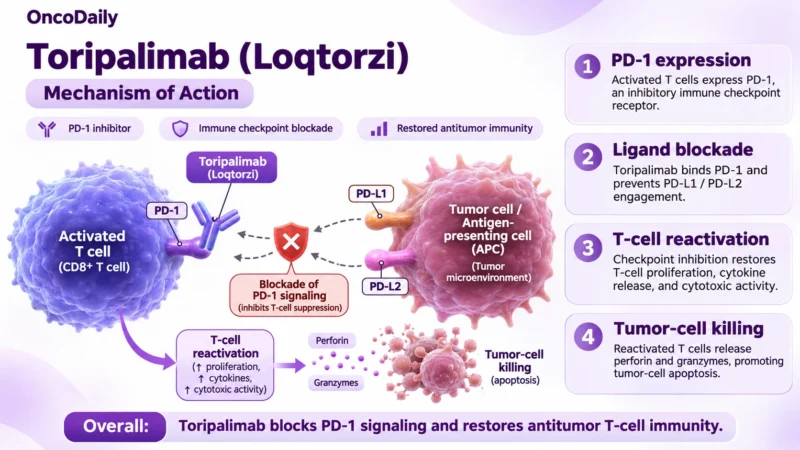
1. PD-1 Expression on Activated T Cells
Activated CD4+ and CD8+ T cells express PD-1, an immune inhibitory receptor that regulates immune responses.
2. Tumor-Mediated Immune Suppression
Tumor cells and antigen-presenting cells may express PD-L1 or PD-L2.
Interaction with PD-1 transmits inhibitory signals that limit T-cell activity.
3. Toripalimab Binds PD-1
Toripalimab binds directly to PD-1 on the T-cell surface.
This prevents engagement by both PD-L1 and PD-L2.
Toripalimab targets PD-1, not PD-L1 itself.
4. Restoration of T-Cell Function
Disruption of PD-1 signaling can enhance T-cell proliferation, cytokine production, and antitumor responses.
5. Immune-Mediated Tumor-Cell Killing
Activated cytotoxic T lymphocytes release perforin and granzymes and use other immune effector mechanisms to induce malignant-cell apoptosis.
6. Potential for Durable Disease Control
Some patients develop prolonged responses. Nevertheless, resistance can occur through impaired antigen presentation, tumor immune escape, or an immunosuppressive microenvironment.
Overall mechanism:
Toripalimab → PD-1 blockade → inhibition of PD-L1/PD-L2-mediated signaling → restored T-cell function → immune-mediated tumor-cell destruction.
What Is the Recommended Dose of Toripalimab?
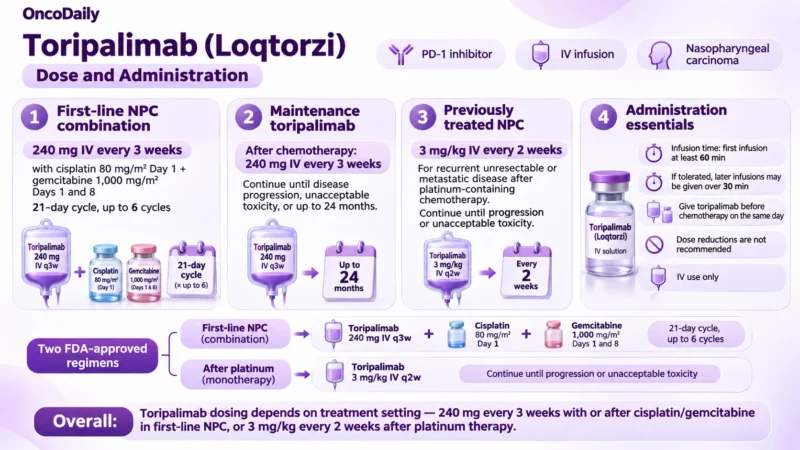
First-Line Metastatic or Recurrent Locally Advanced Nasopharyngeal Carcinoma
The FDA-approved regimen consists of:
Toripalimab 240 mg IV every three weeks, combined with:
- Cisplatin: 80 mg/m² IV on Day 1
- Gemcitabine: 1,000 mg/m² IV on Days 1 and 8
Each treatment cycle lasts 21 days.
The JUPITER-02 regimen includes up to six cycles of chemotherapy.
Following chemotherapy, continue:
Toripalimab 240 mg IV every three weeks as maintenance.
Continue toripalimab until disease progression, unacceptable toxicity, or a maximum of 24 months.
Chemotherapy dose modifications and supportive care should follow the individual cytotoxic drug protocols.
Previously Treated Recurrent Unresectable or Metastatic Nasopharyngeal Carcinoma
For adults with disease progression on or after platinum-containing chemotherapy:
Toripalimab 3 mg/kg IV every two weeks.
Continue until disease progression or unacceptable toxicity.
There is no fixed 24-month maximum specified for this U.S. monotherapy indication.
Important: The fixed 240-mg every-three-week and weight-based 3-mg/kg every-two-week schedules correspond to different FDA-approved treatment settings and should not be treated as automatically interchangeable.
How Should Toripalimab Be Administered?
Intravenous Infusion
Toripalimab must be administered as a diluted intravenous infusion.
First infusion: At least 60 minutes.
Subsequent infusions: May be given over 30 minutes if no infusion-related reaction occurred during the first infusion.
Do not administer as an intravenous push or bolus.
Available Strength
Each single-dose vial contains:
240 mg/6 mL (40 mg/mL).
Preparation
Withdraw the required volume and dilute in a 100-mL or 250-mL infusion bag containing 0.9% sodium chloride.
The final concentration should be 1–3 mg/mL.
Mix by gentle inversion. Do not shake.
Use a 0.2- or 0.22-micron in-line filter during administration.
Discard unused drug remaining in the single-dose vial.
Storage After Dilution
If not administered immediately, the diluted solution may be stored:
- At room temperature (20–25°C) for no longer than 8 hours, including the infusion period.
- Under refrigeration (2–8°C) for no longer than 24 hours, including the infusion period.
Do not freeze.
Administration With Chemotherapy
When toripalimab and cisplatin–gemcitabine are administered on the same day, administer toripalimab before chemotherapy.
Use appropriate chemotherapy-specific antiemetic prophylaxis, hydration, electrolyte replacement, and supportive care.
Premedication
Routine toripalimab-specific premedication is not required for every patient.
Patients receiving cisplatin–gemcitabine require antiemetic and other supportive measures consistent with the chemotherapy regimen.
What Should You Do If a Toripalimab Dose Is Missed?
If an infusion is missed:
- Contact the oncology team to reschedule.
- Identify whether the delay was caused by toxicity, infection, laboratory abnormalities, or logistical factors.
- Resume treatment according to the revised schedule.
- Avoid doubling the next dose.
There is no recommended self-administered replacement dose.
How Are Toripalimab Dose Reductions Managed?
Dose reductions are not recommended.
Immune-related toxicity is managed by treatment interruption, systemic corticosteroids when indicated, additional immunosuppression, or permanent discontinuation.
Grade 1 Toxicity
Some mild adverse reactions can be monitored without interrupting treatment.
Management depends on the affected organ and clinical circumstances.
Grade 2 Toxicity
Withhold toripalimab for important Grade 2 immune-mediated adverse reactions, including pneumonitis.
Systemic corticosteroids may be required.
Grade 3 Toxicity
Generally withhold toripalimab and initiate systemic corticosteroids for clinically significant immune-mediated inflammation.
Certain Grade 3 toxicities require permanent discontinuation.
Grade 4 Toxicity
Generally permanently discontinue toripalimab.
Selected endocrine toxicities adequately controlled with hormone replacement may be managed differently.
Specific High-Risk Toxicities
- Grade 3–4 pneumonitis: Permanently discontinue.
- Grade 2–4 myocarditis: Permanently discontinue.
- Grade 3–4 neurological toxicity: Permanently discontinue.
- Confirmed Stevens–Johnson syndrome, toxic epidermal necrolysis, or DRESS: Permanently discontinue.
- Grade 3–4 infusion reaction: Stop the infusion and permanently discontinue.
For patients receiving corticosteroids, resumption may be considered only after adequate improvement and tapering according to prescribing instructions.
What Drug Interactions Are Important With Toripalimab?
Corticosteroids and Immunosuppressive Agents
Systemic immunosuppressants can influence immune responses.
However, corticosteroids and other immunosuppressive agents are essential when treating significant immune-related adverse events.
Cisplatin and Gemcitabine
Combined treatment increases the potential for chemotherapy-associated toxicity, particularly:
- Myelosuppression
- Nausea and vomiting
- Nephrotoxicity
- Electrolyte abnormalities
- Peripheral neuropathy
- Infection
Other Immune Checkpoint Inhibitors
Combining checkpoint inhibitors may increase immune-mediated toxicity and should only be undertaken when supported by an appropriate regimen or clinical-trial protocol.
CYP450 Interactions
Toripalimab is not metabolized through conventional CYP450 pathways.
Clinically important direct CYP-mediated pharmacokinetic interactions are not expected.
Does Toripalimab Require Dose Adjustment in Renal or Hepatic Impairment?
Renal Impairment
Population pharmacokinetic analyses found no clinically significant exposure differences in mild renal impairment.
Effects of moderate and severe renal impairment have not been adequately studied.
For combination treatment, cisplatin eligibility and renal function may be more immediately dose-limiting than toripalimab pharmacokinetics.
Hepatic Impairment
Mild hepatic impairment did not meaningfully alter toripalimab pharmacokinetics.
The effects of moderate or severe hepatic impairment remain insufficiently characterized.
Careful evaluation is required for baseline liver abnormalities and suspected immune-mediated hepatitis.
What Is the Pharmacokinetic Profile of Toripalimab?
Molecular Structure
Toripalimab is a humanized IgG4 kappa monoclonal antibody with an approximate molecular weight of 150 kDa.
Distribution
Mean steady-state volume of distribution:
3.7 L
Half-Life
- After first dose: Approximately 10 days
- At steady state: Approximately 18 days
Clearance
- Initial clearance: Approximately 14.9 mL/hour
- Steady-state clearance: Approximately 9.5 mL/hour
Steady State
Steady-state concentrations are reached by approximately Week 7.
Metabolism
Toripalimab is expected to undergo proteolytic catabolism into smaller peptides and amino acids.
Immunogenicity
Antidrug antibodies can develop during treatment. Their incidence and clinical interpretation depend on the assay and the patient population studied.
What Are the Clinical Uses of Toripalimab?
1. First-Line Metastatic or Recurrent Nasopharyngeal Carcinoma
Toripalimab plus cisplatin–gemcitabine is indicated for adults with metastatic or recurrent locally advanced NPC.
It is particularly relevant for patients requiring systemic treatment because their disease is not amenable to curative local therapy.
The randomized JUPITER-02 study established improved progression-free survival and overall survival when toripalimab was added to chemotherapy.
2. Previously Treated Recurrent Unresectable or Metastatic NPC
Toripalimab monotherapy is approved after progression on or following platinum-containing chemotherapy.
This indication provides an option for patients who previously received platinum-based systemic treatment.
The pivotal POLARIS-02 population had generally received multiple prior systemic therapies.
3. Other Cancer Indications Outside the United States
Toripalimab was first developed and marketed in China, where regulatory approvals have expanded into several additional malignancies.
Important disease areas include:
- Esophageal squamous cell carcinoma
- Advanced non-small cell lung cancer
- Resectable NSCLC in the perioperative setting
- Extensive-stage small cell lung cancer
- Renal cell carcinoma
- Triple-negative breast cancer
- Melanoma
- Urothelial carcinoma
The exact approved patient populations, combination partners, and dosing schedules vary by indication and jurisdiction.
These indications should not be presented as FDA-approved uses of Loqtorzi.
4. Investigational and Emerging Uses
Additional studies continue to explore toripalimab in earlier-stage NPC, gastrointestinal cancers, and perioperative treatment.
Results from trials such as NEOTORCH and JUPITER-06 contribute to its broader international development.
What Biomarker Testing Is Required Before Toripalimab?
PD-L1 Expression
The FDA-approved NPC indications do not require a specific PD-L1 expression threshold.
PD-L1 expression may provide biological context, but it is not a mandatory eligibility criterion in the U.S. label.
Epstein–Barr Virus Testing
Plasma EBV DNA is an important prognostic and disease-monitoring biomarker in many patients with non-keratinizing NPC.
It may assist with:
- Baseline risk assessment
- Estimation of disease burden
- Evaluation of response
- Detection of possible recurrence
- Research-based risk stratification
However, EBV DNA measurement is not required to establish eligibility for toripalimab under the U.S. prescribing information.
Histopathological Confirmation
NPC diagnosis should be established histologically.
EBER in situ hybridization can assist with identification of EBV-associated non-keratinizing NPC.
Baseline Assessment
Before treatment, consider:
- Complete blood count
- Renal and hepatic function
- Thyroid function
- Blood glucose
- Electrolytes
- Hearing status and neuropathy assessment for cisplatin
- Autoimmune disease and transplant history
- Performance status
- Appropriate disease staging
What Did the Pivotal Clinical Trials Show?
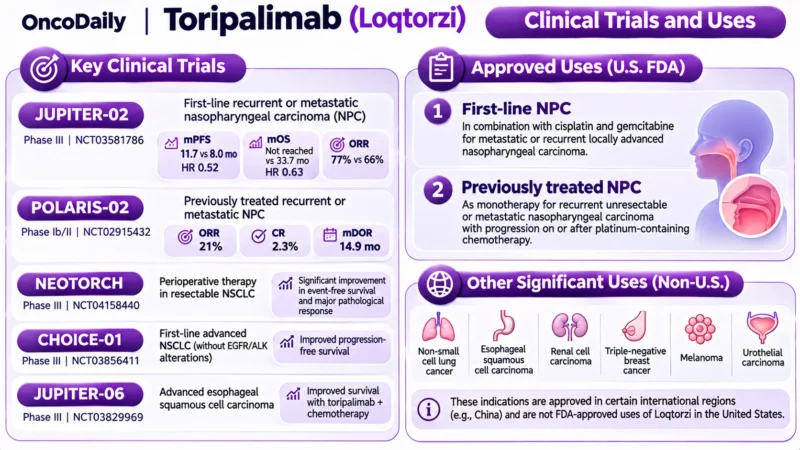
JUPITER-02 — First-Line Recurrent or Metastatic NPC
Phase III | NCT03581786 | 289 patients
JUPITER-02 was a randomized, double-blind, placebo-controlled phase III trial evaluating toripalimab plus gemcitabine–cisplatin versus placebo plus gemcitabine–cisplatin.
Patients were randomized to:
Toripalimab 240 mg every three weeks plus cisplatin–gemcitabine, followed by toripalimab maintenance.
Placebo plus cisplatin–gemcitabine, followed by placebo maintenance.
Chemotherapy was administered for up to six cycles. Maintenance continued until progression, unacceptable toxicity, or a maximum of two years.
Median Progression-Free Survival
- Toripalimab + chemotherapy: 11.7 months
- Chemotherapy alone: 8.0 months
PFS HR: 0.52 (95% CI 0.36–0.74)
p = 0.0003
Median Overall Survival
- Toripalimab + chemotherapy: Not reached
- Chemotherapy alone: 33.7 months
OS HR: 0.63 (95% CI 0.45–0.89)
p = 0.0083
Objective Response Rate
- Toripalimab combination: 77%
- Control: 66%
Complete Response Rate
- Toripalimab combination: 19%
- Control: 11%
Median Duration of Response
- Toripalimab combination: 10.0 months
- Control: 5.7 months
These results established a clinically meaningful benefit from adding toripalimab to chemotherapy in first-line metastatic or recurrent NPC.
Clinical implication: Toripalimab plus cisplatin–gemcitabine provides a first-line chemoimmunotherapy regimen with demonstrated PFS and OS advantages over chemotherapy alone.
Read More: JUPITER-02: Toripalimab + Chemotherapy Delivers 6-Year Survival Benefit in Metastatic Nasopharyngeal Carcinoma by OncoDaily.
Watch More: First-line treatment for recurrent or metastatic NPC: JUPITER-02 results
POLARIS-02 — Previously Treated NPC
Phase Ib/II | NCT02915432
POLARIS-02 was an open-label, single-arm study evaluating toripalimab monotherapy in previously treated recurrent or metastatic NPC.
For the FDA efficacy analysis, 172 patients were evaluated.
Patients received:
Toripalimab 3 mg/kg IV every two weeks.
Confirmed Overall Response Rate
- Overall response: 21%
- Complete response: 2.3%
- Median response duration: 14.9 months
Among the 36 responders:
- 83% had responses lasting at least six months.
- 39% had responses lasting at least 12 months.
Clinical implication: Although objective responses occurred in approximately one-fifth of patients, some responses were durable in a population with previously treated NPC.
NEOTORCH — Perioperative NSCLC
Phase III | NCT04158440
NEOTORCH evaluated perioperative toripalimab plus platinum-based chemotherapy in patients with resectable NSCLC.
The study investigated whether adding PD-1 inhibition before surgery, followed by continued postoperative treatment, could improve outcomes.
The trial reported significant event-free survival and major pathological response benefits in its initial analyses.
In May 2026, the sponsor announced that the final analysis met its principal endpoints.
Clinical implication: NEOTORCH supports toripalimab’s development in curative-intent lung cancer, but this is not a U.S. FDA-approved indication.
CHOICE-01 — First-Line Advanced NSCLC
Phase III | NCT03856411
CHOICE-01 evaluated toripalimab plus chemotherapy versus chemotherapy alone in advanced NSCLC without sensitizing EGFR or ALK alterations.
The study demonstrated improvements in progression-free survival and supported development of toripalimab-based chemoimmunotherapy in advanced lung cancer.
Clinical implication: CHOICE-01 provides randomized evidence outside NPC, but does not establish an FDA-approved Loqtorzi indication.
JUPITER-06 — Advanced Esophageal Squamous Cell Carcinoma
Phase III | NCT03829969
JUPITER-06 evaluated toripalimab plus paclitaxel–cisplatin in previously untreated advanced or metastatic esophageal squamous cell carcinoma.
The study demonstrated improvements in survival outcomes with the addition of toripalimab.
Clinical implication: These data contributed to its international development in esophageal cancer, but the indication is not approved by the U.S. FDA.
Does Toripalimab Have CNS Activity?
Toripalimab is not specifically approved for the treatment of brain metastases.
Robust prospective intracranial efficacy data in NPC are limited.
For patients with CNS involvement, treatment decisions should consider:
- Symptoms and neurological status
- Number and size of lesions
- Extracranial disease control
- Corticosteroid requirements
- Suitability for surgery or stereotactic radiotherapy
Toripalimab should not be regarded as a substitute for indicated CNS-directed therapy.
Is Toripalimab FDA Approved?
Yes.
The FDA approved toripalimab on October 27, 2023, for two adult NPC indications:
First-line: In combination with cisplatin and gemcitabine for metastatic or recurrent locally advanced NPC.
Previously treated: As monotherapy for recurrent unresectable or metastatic NPC with progression on or after platinum chemotherapy.
As of November 2026, no additional FDA oncology indications were identified in the current U.S. label.
What Is the Current Clinical Role of Toripalimab in 2026?
Toripalimab is an established treatment option for recurrent or metastatic nasopharyngeal carcinoma.
Its strongest randomized evidence comes from JUPITER-02, demonstrating improved PFS and OS when added to cisplatin–gemcitabine.
For patients who progress after platinum chemotherapy, toripalimab monotherapy offers a chance of durable response, although the objective response rate is substantially lower than with first-line combination therapy.
Its broader international development is clinically noteworthy, but the evidence, dosing, and regulatory approval for each additional malignancy must be assessed separately.
What Are the Major Side Effects of Toripalimab?
Immune-Mediated Pneumonitis
Toripalimab can cause inflammatory lung injury, presenting with cough, dyspnea, chest pain, or hypoxia.
Severe cases may be life-threatening.
Differentiate pneumonitis from pneumonia, radiation-induced lung injury, pulmonary embolism, and disease progression.
Immune-Mediated Colitis
Patients may develop diarrhea, abdominal pain, gastrointestinal bleeding, and dehydration.
Infection and other causes should be excluded before attributing symptoms to immunotherapy.
Immune-Mediated Hepatitis
Toripalimab can cause elevated AST, ALT, and bilirubin, occasionally leading to severe hepatic dysfunction.
Endocrinopathies
Recognized endocrine complications include:
- Hypothyroidism
- Hyperthyroidism or thyroiditis
- Hypophysitis
- Adrenal insufficiency
- Type 1 diabetes mellitus
Some endocrine adverse reactions require long-term hormone replacement.
Immune-Mediated Nephritis
Nephritis can produce acute kidney injury and increased serum creatinine.
In patients receiving cisplatin, differentiate immune-mediated nephritis from platinum-related nephrotoxicity.
Severe Dermatologic Reactions
Common effects include rash and pruritus.
Rare serious reactions include Stevens–Johnson syndrome, toxic epidermal necrolysis, and DRESS.
Myocarditis and Neurological Toxicity
Rare serious immune-related complications include myocarditis, myositis, encephalitis, and other neurological syndromes.
New chest pain, arrhythmias, muscle weakness, or neurological changes require urgent investigation.
Infusion-Related Reactions
Infusion reactions may include fever, chills, rash, hypotension, and dyspnea.
Severe reactions require permanent discontinuation.
Chemotherapy-Associated Toxicity
When toripalimab is combined with cisplatin and gemcitabine, overlapping toxicity may include:
- Nausea and vomiting
- Anemia
- Neutropenia
- Thrombocytopenia
- Fatigue
- Nephrotoxicity
- Electrolyte disturbances
- Peripheral neuropathy
- Infections
In JUPITER-02, serious adverse reactions occurred in approximately 43% of patients receiving the toripalimab-containing regimen.
Transplant-Related Complications
PD-1 inhibition can increase the risk of solid organ transplant rejection.
Severe complications may also occur when checkpoint inhibition is given before or after allogeneic hematopoietic stem cell transplantation.
Embryo-Fetal Toxicity
Toripalimab may cause fetal harm.
Patients of reproductive potential require appropriate counseling about pregnancy prevention during and following treatment.
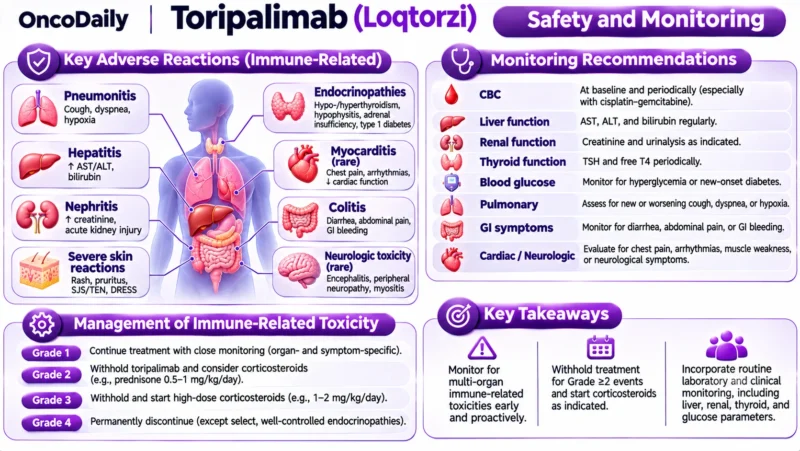
What Monitoring Is Required During Toripalimab Treatment?
Complete Blood Count
Monitor hemoglobin, neutrophils, and platelets, especially during cisplatin–gemcitabine treatment.
Liver Function
Evaluate AST, ALT, and bilirubin at baseline and periodically during treatment.
Renal Function
Monitor creatinine, estimated renal function, and urine findings when indicated.
Cisplatin requires additional attention to renal function, hydration, and electrolyte balance.
Thyroid Function
Monitor TSH and free T4 periodically.
Blood Glucose
Evaluate for hyperglycemia and new-onset immune-mediated diabetes.
Electrolytes
Monitor magnesium, potassium, sodium, and other electrolytes, particularly during cisplatin treatment.
Pulmonary Symptoms
Investigate new cough, dyspnea, hypoxia, or unexplained pulmonary infiltrates.
Gastrointestinal Symptoms
Evaluate diarrhea, abdominal pain, gastrointestinal bleeding, and unexplained weight loss.
Cardiovascular and Neurological Symptoms
Investigate chest pain, palpitations, weakness, confusion, or other unexplained neurological findings.
Hearing and Peripheral Neuropathy
Assess for ototoxicity and neuropathy during cisplatin-containing treatment.
Tumor Response
Perform appropriate clinical examination and imaging, following NPC-specific recommendations.
Plasma EBV DNA may provide complementary information in appropriate patients, but should not replace imaging or clinical assessment.