


Retifanlimab (Zynyz): Mechanism of Action, Dosing, Clinical Uses, Trials, and Side Effects
Key takeaways
- Retifanlimab is a humanized anti-PD-1 IgG4 monoclonal antibody.
- It blocks PD-1 interactions with PD-L1 and PD-L2.
- It was initially approved for advanced Merkel cell carcinoma in 2023.
- In May 2025, it gained two anal cancer indications.
- POD1UM-303 demonstrated improved first-line PFS: 9.3 versus 7.4 months; HR 0.63.
- Updated 2026 results showed median OS of 32.8 versus 22.2 months, without establishing definitive statistical significance.
- POD1UM-202 demonstrated a 14% ORR after platinum chemotherapy.
- POD1UM-201 demonstrated a 55% ORR in advanced MCC.
- Two SCAC dosing options are available: 500 mg every four weeks and 375 mg every three weeks.
- Serious immune-related adverse events can affect nearly any organ system.
Retifanlimab-dlwr (Zynyz) is a humanized IgG4 monoclonal antibody targeting programmed cell death protein 1 (PD-1). By preventing PD-1 from interacting with PD-L1 and PD-L2, retifanlimab reverses inhibitory immune signaling and helps restore T-cell-mediated antitumor activity.
Retifanlimab received its first FDA approval on March 22, 2023, for adults with metastatic or recurrent locally advanced Merkel cell carcinoma (MCC). On May 15, 2025, its indications expanded to squamous cell carcinoma of the anal canal (SCAC), both in combination with carboplatin–paclitaxel as first-line treatment and as monotherapy following progression on or intolerance to platinum-based chemotherapy.
The phase III POD1UM-303/InterAACT 2 trial demonstrated that adding retifanlimab to carboplatin–paclitaxel significantly improved progression-free survival in advanced anal cancer. Updated survival analyses published in 2026 further supported its clinical benefit.
A particularly important 2026 update is the addition of 375 mg every three weeks as an alternative to 500 mg every four weeks for anal cancer indications. The three-week regimen aligns retifanlimab administration with common carboplatin–paclitaxel treatment schedules.
Key Facts
- Generic name: Retifanlimab-dlwr
- Brand name: Zynyz
- Drug class: Immune checkpoint inhibitor
- Antibody type: Humanized IgG4 kappa monoclonal antibody
- Target: PD-1 (CD279)
- Ligands blocked: PD-L1 and PD-L2
- Mechanism: Restoration of antitumor T-cell immunity
- Initial FDA approval: March 22, 2023
- Anal cancer approval: May 15, 2025
- Administration: Intravenous infusion over 30 minutes
- SCAC dose: 500 mg every four weeks or 375 mg every three weeks
- MCC dose: 500 mg every four weeks
- Combination partners: Carboplatin and paclitaxel
- FDA indications: Advanced MCC; first-line inoperable locally recurrent/metastatic SCAC with chemotherapy; previously treated locally recurrent/metastatic SCAC as monotherapy
- Pivotal trials: POD1UM-201, POD1UM-202, POD1UM-303/InterAACT 2
- Routine predictive biomarker requirement: None specified in the FDA indications
- Major toxicities: Immune-mediated pneumonitis, colitis, hepatitis, endocrinopathies, nephritis, dermatologic reactions, and infusion reactions
- Available strength: 500 mg/20 mL (25 mg/mL), single-dose vial
The following dosing and indication information reflects the May 2026 U.S. prescribing information, including the March 2026 dosing revision.
What Is Retifanlimab?
Retifanlimab is a monoclonal antibody that inhibits the PD-1 immune checkpoint pathway.
PD-1 is expressed on activated T lymphocytes and helps regulate immune activation. When PD-L1 or PD-L2 binds PD-1, inhibitory intracellular signaling reduces T-cell activity.
Malignant cells can exploit this pathway to avoid immune recognition.
Retifanlimab binds PD-1 and blocks the interaction with both ligands, allowing antitumor immune responses to be reactivated.
Unlike an antibody–drug conjugate, retifanlimab does not carry a cytotoxic payload. Its antineoplastic effect depends primarily on immune-mediated cancer-cell destruction.
What Is the Mechanism of Action of Retifanlimab?
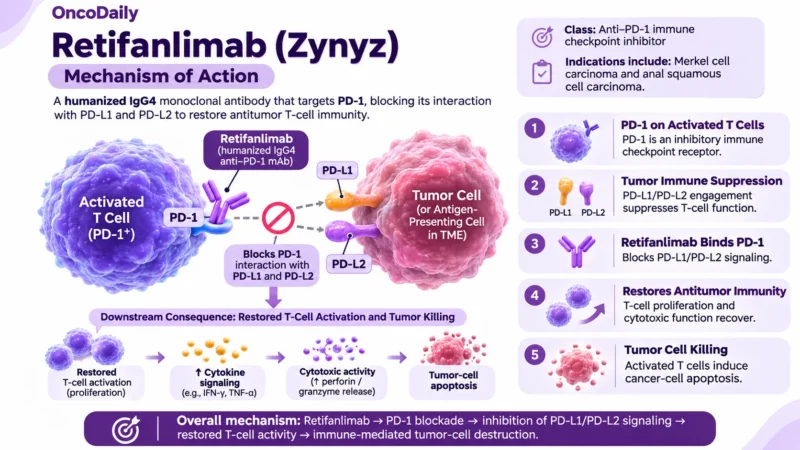
1. PD-1 Expression on Activated T Cells
PD-1 is an inhibitory receptor expressed on activated CD4+ and CD8+ T cells.
It contributes to peripheral immune tolerance and limits excessive immune activation.
2. Tumor-Mediated Immune Suppression
Tumor cells and immune cells within the tumor microenvironment may express PD-L1 or PD-L2.
When these ligands interact with PD-1, inhibitory signaling suppresses T-cell receptor activity.
This may reduce T-cell proliferation, cytokine production, and cytotoxic activity.
3. Retifanlimab Binds PD-1
Retifanlimab binds the PD-1 receptor on T cells.
It prevents PD-L1 and PD-L2 from engaging PD-1.
Retifanlimab does not bind directly to PD-L1 on tumor cells.
4. Restoration of T-Cell Function
Blocking the PD-1 pathway can restore T-cell activation and antitumor immune responses.
Activated T cells can increase production of immune mediators and cytotoxic molecules.
5. Immune-Mediated Tumor-Cell Destruction
Cytotoxic T lymphocytes release perforin and granzymes and engage additional immune-mediated killing mechanisms, leading to malignant-cell apoptosis.
6. Potential for Durable Responses
Some patients experience prolonged tumor control after PD-1 blockade, although many patients have primary resistance or subsequently develop acquired resistance.
Overall mechanism:
Retifanlimab → PD-1 blockade → inhibition of PD-L1/PD-L2 signaling → restored cytotoxic T-cell activity → tumor-cell destruction.
What Is the Recommended Dose of Retifanlimab?
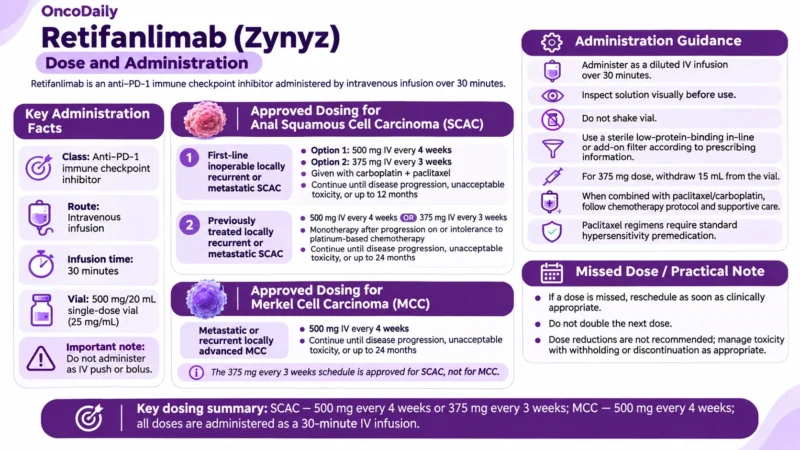
First-Line Inoperable Locally Recurrent or Metastatic Anal Squamous Cell Carcinoma
Retifanlimab is administered with carboplatin and paclitaxel.
Two retifanlimab schedules are FDA approved:
Option 1: 500 mg IV every four weeks.
Option 2: 375 mg IV every three weeks.
Continue until disease progression, unacceptable toxicity, or up to 12 months.
In the pivotal POD1UM-303 trial, retifanlimab was administered at 500 mg every four weeks, alongside six cycles of carboplatin–paclitaxel, followed by retifanlimab monotherapy.
Previously Treated Locally Recurrent or Metastatic Anal Squamous Cell Carcinoma
For adults progressing on or intolerant to platinum-based chemotherapy:
500 mg IV every four weeks, or 375 mg IV every three weeks.
Continue until progression, unacceptable toxicity, or up to 24 months.
Metastatic or Recurrent Locally Advanced Merkel Cell Carcinoma
500 mg IV every four weeks.
Continue until progression, unacceptable toxicity, or up to 24 months.
The 375-mg every-three-week schedule is approved for the anal cancer indications, not for MCC.
How Should Retifanlimab Be Administered?
Intravenous Administration
Retifanlimab is administered by intravenous infusion over 30 minutes, after appropriate dilution.
It must not be given as an IV push or bolus.
Available Formulation
Each single-dose vial contains:
500 mg/20 mL, equivalent to 25 mg/mL.
For a 375-mg dose, the corresponding drug volume is 15 mL.
Preparation and Infusion
Dilute the prescribed dose with a compatible infusion solution according to the product label.
Inspect visually for particulates or discoloration before administration.
Use an appropriate sterile, low-protein-binding in-line or add-on filter, following the prescribing information.
Do not shake the vial.
Combination With Chemotherapy
Retifanlimab is combined with carboplatin and paclitaxel in the first-line advanced SCAC setting.
Chemotherapy preparation, premedication, administration sequence, and supportive care should follow the selected chemotherapy regimen and relevant prescribing information.
Premedication
Routine retifanlimab-specific premedication is not required for every patient.
However, paclitaxel-containing regimens require appropriate hypersensitivity prophylaxis according to the chemotherapy protocol.
What Should You Do If a Retifanlimab Dose Is Missed?
If a scheduled infusion is missed:
- Contact the treating oncology team.
- Reschedule when clinically appropriate.
- Assess whether the delay was due to toxicity, infection, or another clinical problem.
- Continue the revised schedule as directed.
Do not double the next dose.
How Are Retifanlimab Dose Modifications Managed?
Dose reductions are not recommended.
Clinically significant immune-related toxicities are managed through interruption or discontinuation of treatment.
Grade 1 Toxicity
Treatment can often continue with close monitoring, depending on the affected organ.
Grade 2 Toxicity
Withholding therapy and systemic corticosteroids may be appropriate, depending on the type and severity of the reaction.
Grade 3 Toxicity
Generally withhold retifanlimab and initiate systemic corticosteroids when indicated.
Severe or recurrent reactions may necessitate permanent discontinuation.
Grade 4 Toxicity
Generally discontinue retifanlimab permanently, except for selected endocrine adverse reactions controlled with hormone replacement.
Steroid-Refractory Toxicity
Patients with persistent immune-related inflammation may require additional immunosuppressive therapy and specialist management.
Resuming Treatment
Resumption generally requires improvement to Grade 0–1 and an appropriate steroid taper.
Permanent discontinuation may be required if toxicity does not resolve or corticosteroids cannot be reduced sufficiently within the timeframe specified in the product label.
What Drug Interactions Are Important With Retifanlimab?
Corticosteroids and Other Immunosuppressants
Systemic immunosuppressants may influence immune activity.
Nevertheless, corticosteroids and other immune-modulating agents are essential when managing significant immune-mediated toxicity.
Cytotoxic Chemotherapy
When retifanlimab is combined with carboplatin–paclitaxel, additional toxicities may include:
- Neutropenia
- Anemia
- Thrombocytopenia
- Peripheral neuropathy
- Nausea
- Alopecia
- Infection
These adverse reactions require differentiation from immune-mediated toxicity.
Conventional CYP450 Interactions
Retifanlimab is a monoclonal antibody and does not rely on CYP450-mediated metabolism.
Clinically significant direct CYP-mediated pharmacokinetic interactions are not expected.
Does Retifanlimab Require Dose Adjustment in Renal or Hepatic Impairment?
Renal Impairment
No routine dose adjustment is recommended for mild or moderate renal impairment.
However, immune-mediated nephritis may develop and can cause acute kidney injury.
Hepatic Impairment
No routine dose adjustment is established for mild hepatic impairment.
Evidence in more severe hepatic dysfunction is limited.
Monitor carefully for immune-mediated hepatitis and other causes of liver dysfunction.
What Is the Pharmacokinetic Profile of Retifanlimab?
Molecular Structure
Retifanlimab is a humanized IgG4 kappa monoclonal antibody with an approximate molecular weight of 148 kDa.
Distribution
The geometric mean steady-state volume of distribution is approximately 6.0 L.
Half-Life
The steady-state elimination half-life is approximately 19 days.
Clearance
- Initial clearance: Approximately 0.30 L/day
- Steady-state clearance: Approximately 0.23 L/day
Clearance decreases over time, consistent with the pharmacokinetic characteristics of several therapeutic monoclonal antibodies.
Steady State
Steady-state concentrations are generally achieved after approximately three months, with around 1.3-fold systemic accumulation.
Metabolism
Retifanlimab undergoes proteolytic catabolism to smaller peptides and amino acids rather than CYP450 metabolism.
Immunogenicity
Treatment-emergent anti-drug antibodies were uncommon in clinical trials. Their clinical consequences remain incompletely characterized.
What Are the Clinical Uses of Retifanlimab?
1. First-Line Advanced Anal Squamous Cell Carcinoma
Retifanlimab plus carboplatin–paclitaxel is approved for adults with inoperable locally recurrent or metastatic squamous cell carcinoma of the anal canal.
This is an important development because platinum-based chemotherapy had been a major systemic treatment option for advanced anal cancer, while durable disease control remained challenging.
The addition of PD-1 blockade provides an immunotherapeutic component to first-line treatment.
The approval is for advanced or inoperable recurrent disease, not routine treatment of localized anal cancer receiving curative chemoradiotherapy.
2. Previously Treated Anal Squamous Cell Carcinoma
Retifanlimab monotherapy is indicated for patients whose locally recurrent or metastatic anal cancer progressed on, or who could not tolerate, platinum-based chemotherapy.
This indication is supported by the phase II POD1UM-202 study.
The objective response rate is modest, but responders may experience clinically meaningful disease control.
3. Merkel Cell Carcinoma
Retifanlimab is approved for adults with metastatic or recurrent locally advanced MCC.
MCC is an aggressive neuroendocrine skin cancer associated with ultraviolet radiation, immunosuppression, and Merkel cell polyomavirus in many cases.
The disease is particularly relevant to immune checkpoint inhibition because of its viral or UV-associated immunogenicity.
Retifanlimab has demonstrated durable activity in treatment-naïve advanced MCC.
4. Investigational and Emerging Uses
Research continues into retifanlimab-containing combinations in other solid tumors.
However, use outside the currently approved MCC and SCAC settings should be considered investigational unless supported by an appropriate clinical-trial or regulatory framework.
What Biomarker Testing Is Required Before Retifanlimab?
PD-L1 Testing
PD-L1 positivity is not an FDA-required eligibility criterion for either advanced MCC or anal cancer indications.
Although PD-L1 expression was assessed in pivotal trials, patients were not selected solely on the basis of a positive PD-L1 test.
HPV and p16 Status in Anal Cancer
Most anal squamous cell carcinomas are associated with high-risk human papillomavirus infection.
HPV-related antigens may contribute to tumor immunogenicity.
However, HPV or p16 positivity is not mandatory for retifanlimab eligibility.
In POD1UM-303, approximately 75% of centrally evaluated tumor specimens were p16 positive.
Merkel Cell Polyomavirus
Merkel cell polyomavirus status can provide important biological context in MCC.
Nevertheless, neither positive nor negative viral status is a required selection criterion for retifanlimab.
HIV Status
Patients with well-controlled HIV were eligible for the pivotal studies under defined immune and virological criteria.
HIV infection is not, by itself, a contraindication to PD-1 blockade.
Treatment selection should consider CD4 counts, viral suppression, antiretroviral treatment, infection risk, and overall clinical status.
What Did the Pivotal Clinical Trials Show?
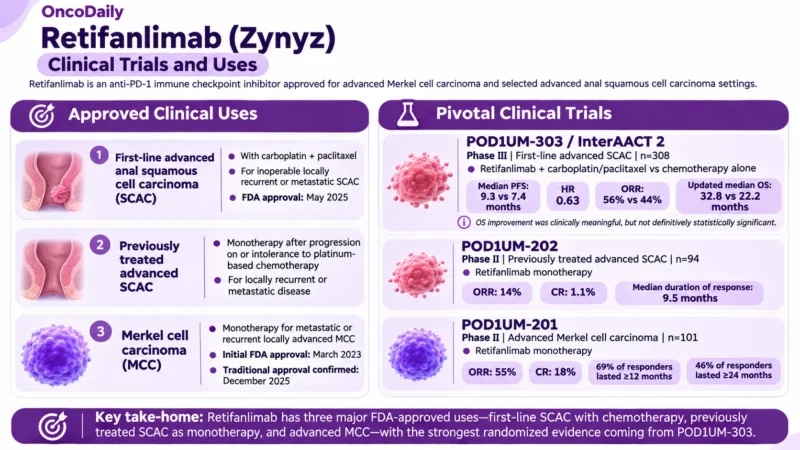
POD1UM-303 / InterAACT 2 — First-Line Advanced Anal Cancer
Phase III | NCT04472429 | 308 patients
POD1UM-303/InterAACT 2 was a randomized, double-blind, international trial comparing:
- Retifanlimab plus carboplatin–paclitaxel
- Placebo plus carboplatin–paclitaxel
Patients had chemotherapy-naïve inoperable locally recurrent or metastatic SCAC.
The regimen included carboplatin AUC 5 on Day 1 and paclitaxel 80 mg/m² on Days 1, 8, and 15 of a 28-day cycle for six cycles.
Retifanlimab 500 mg was administered every four weeks and continued as maintenance for a maximum total duration of 12 months.
Median Progression-Free Survival
- Retifanlimab + chemotherapy: 9.3 months
- Placebo + chemotherapy: 7.4 months
HR 0.63 (95% CI 0.47–0.84); p = 0.0006
Objective Response Rate
- Retifanlimab combination: 56%
- Control: 44%
Overall Survival — Initial Analysis
- Retifanlimab combination: 29.2 months
- Control: 23.0 months
OS HR: 0.70 (95% CI 0.49–1.01)
The initial overall survival comparison did not reach statistical significance. The progression-free survival improvement was the principal basis for the FDA approval.
Updated Overall Survival — 2026
Subsequent survival analysis reported:
- Retifanlimab combination: 32.8 months
- Control: 22.2 months
OS HR: 0.75 (95% CI 0.55–1.01)
The numerical improvement in median overall survival was clinically meaningful, but the confidence interval crossed 1.0 and the reported nominal p-value did not establish a definitive statistically significant OS benefit under the trial’s multiplicity-controlled testing framework.
The updated PFS benefit remained consistent:
HR: 0.62 (95% CI 0.47–0.81).
Clinical implication: POD1UM-303 established retifanlimab plus carboplatin–paclitaxel as a first-line treatment option for advanced SCAC, with a clear PFS advantage and encouraging longer-term survival results.
Read More: POD1UM-303/InterAACT-2 Trial: Retifanlimab plus Chemo in 1L Advanced Squamous Anal Cancer by OncoDaily.
Watch More: Retifanlimab Plus Chemotherapy Shows PFS Benefit in Advanced Anal Cancer.
POD1UM-202 — Previously Treated Advanced Anal Cancer
Phase II | NCT03597295 | 94 patients
POD1UM-202 was a single-arm trial evaluating retifanlimab monotherapy in patients with locally recurrent or metastatic SCAC progressing on or intolerant to platinum chemotherapy.
Patients received 500 mg IV every four weeks, up to 24 months.
Objective Response Rate
14%
Complete Response Rate
1.1%
Median Duration of Response
9.5 months
Among responding patients, approximately 65% maintained a response for six months or longer, although these estimates were based on a small number of responders.
Clinical implication: Retifanlimab provides a non-cytotoxic systemic treatment option after platinum-based chemotherapy, with the potential for durable benefit in a subset of patients.
POD1UM-201 — Advanced Merkel Cell Carcinoma
Phase II | NCT03599713 | 101 patients
POD1UM-201 evaluated retifanlimab in adults with metastatic or recurrent locally advanced MCC without previous systemic treatment for advanced disease.
Patients received 500 mg IV every four weeks.
Objective Response Rate
55%
Complete Response Rate
18%
Partial Response Rate
37%
Duration of Response
Among 55 responding patients:
- 69% had responses lasting at least 12 months.
- 46% had responses lasting at least 24 months.
These results demonstrated substantial antitumor activity with the potential for long-lasting responses in advanced MCC.
Does Retifanlimab Have CNS Activity?
Retifanlimab is not approved specifically for CNS metastases.
Patients with active or symptomatic brain metastases were generally not the focus of its pivotal registrational studies, and robust intracranial response data are lacking.
For MCC or anal cancer with brain metastases, decisions regarding local CNS treatment and systemic therapy should be individualized.
Retifanlimab should not be presented as a proven substitute for neurosurgery or stereotactic radiotherapy when those interventions are indicated.
Is Retifanlimab FDA Approved?
Yes. Its main U.S. regulatory milestones are:
- March 22, 2023: Initial accelerated approval for metastatic or recurrent locally advanced MCC.
- May 15, 2025: Approval with carboplatin–paclitaxel for first-line inoperable locally recurrent or metastatic SCAC.
- May 15, 2025: Approval as monotherapy after progression on or intolerance to platinum chemotherapy in locally recurrent or metastatic SCAC.
- March 2026: Approval of the alternative 375-mg every-three-week dosing schedule for SCAC.
The May 2026 prescribing information also reflects a December 2025 regulatory update to the MCC indication.
What Is the Current Clinical Role of Retifanlimab in 2026?
Retifanlimab has a particularly important place in two uncommon but clinically challenging malignancies.
In metastatic or inoperable recurrent SCAC, it has expanded first-line treatment from chemotherapy alone to chemoimmunotherapy. The benefit is supported by randomized phase III evidence, with updated survival analyses strengthening the clinical rationale.
For previously treated advanced SCAC, retifanlimab monotherapy provides an option after platinum-based chemotherapy, although only a minority of patients experience objective responses.
In advanced MCC, retifanlimab is one of the available PD-1/PD-L1-directed immunotherapies, alongside other established agents such as pembrolizumab and avelumab. Selection depends on regulatory availability, prior therapy, patient factors, and clinical circumstances.
What Are the Major Side Effects of Retifanlimab?
Immune-Mediated Pneumonitis
Retifanlimab may cause inflammatory lung injury.
Symptoms include new or worsening cough, dyspnea, chest discomfort, and hypoxia. Severe pneumonitis can be life-threatening.
Immune-Mediated Colitis
Immune-mediated gastrointestinal inflammation can cause diarrhea, abdominal pain, blood in the stool, and dehydration.
In anal cancer patients, distinguish immune-mediated colitis from infection, previous radiation-related bowel injury, tumor-associated symptoms, and chemotherapy toxicity.
Immune-Mediated Hepatitis
Retifanlimab may cause elevations in AST, ALT, and bilirubin.
Severe hepatitis can progress to hepatic failure.
Endocrinopathies
Important complications include:
- Hypothyroidism
- Hyperthyroidism and thyroiditis
- Hypophysitis
- Primary adrenal insufficiency
- Type 1 diabetes mellitus
Some endocrine toxicities require long-term hormone replacement.
Immune-Mediated Nephritis
Acute interstitial nephritis and other immune-related renal abnormalities may lead to elevated creatinine and impaired renal function.
Dermatologic Adverse Reactions
Common reactions include rash and pruritus.
Rare severe reactions include Stevens–Johnson syndrome, toxic epidermal necrolysis, and drug reaction with eosinophilia and systemic symptoms.
Myocarditis and Neurological Toxicity
Although uncommon, serious immune-mediated complications can include myocarditis, myositis, encephalitis, and neurological syndromes.
New chest pain, arrhythmia, proximal muscle weakness, or neurological deficits require prompt evaluation.
Infusion-Related Reactions
Symptoms may include fever, chills, hypotension, rash, and dyspnea.
Interrupt or slow infusion for mild or moderate reactions; severe reactions may require permanent discontinuation.
Chemotherapy-Associated Adverse Reactions
In POD1UM-303, the combination with carboplatin–paclitaxel was associated with common adverse reactions including fatigue, peripheral neuropathy, nausea, alopecia, diarrhea, constipation, and musculoskeletal pain.
Bone marrow suppression and infection also require monitoring during chemotherapy.
Transplantation-Related Complications
PD-1 inhibition may increase the risk of solid-organ transplant rejection and serious complications following allogeneic hematopoietic stem cell transplantation.
Embryo-Fetal Toxicity
Retifanlimab can cause fetal harm.
Females of reproductive potential should use effective contraception during treatment and for four months after the final dose. Breastfeeding is not recommended during treatment or for four months afterward.
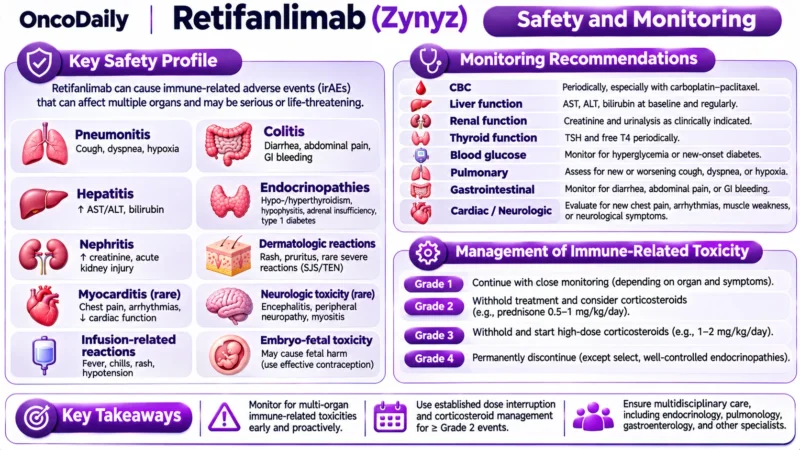
What Monitoring Is Required During Retifanlimab Treatment?
Complete Blood Count
Monitor hemoglobin, white blood cells, neutrophils, and platelets, particularly with carboplatin–paclitaxel.
Liver Function
Measure AST, ALT, and bilirubin at baseline and periodically.
Renal Function
Monitor creatinine and evaluate unexplained changes in renal function.
Thyroid Function
Monitor TSH and free T4 periodically and investigate symptoms suggesting other endocrine dysfunction.
Blood Glucose
Assess hyperglycemia and symptoms of new-onset immune-mediated diabetes.
Pulmonary Symptoms
Evaluate cough, dyspnea, chest pain, and unexplained hypoxia.
Gastrointestinal Symptoms
Monitor diarrhea, bleeding, abdominal pain, and changes in bowel function.
Neurological and Cardiac Symptoms
Investigate new weakness, confusion, arrhythmia, or chest discomfort.
Tumor Response
Perform response assessments using appropriate clinical examination and imaging, generally according to disease-specific protocols.
For anal cancer, assess pelvic disease, nodal involvement, and distant metastases. For MCC, include careful skin and regional lymph-node assessment.