


Nivolumab (Opdivo): Mechanism of Action, Dosing, Clinical Uses, Trials, and Side Effects
Key takeaways
- Nivolumab is a fully human IgG4 monoclonal antibody targeting PD-1.
- It blocks PD-1 interactions with PD-L1 and PD-L2, restoring antitumor immune activity.
- It received initial FDA approval in December 2014.
- The standard adult intravenous monotherapy dose is 240 mg every two weeks or 480 mg every four weeks.
- Nivolumab has established clinical applications in combination with ipilimumab.
- Opdivo Qvantig provides an alternative subcutaneous formulation.
- Important biomarkers include PD-L1, MSI-H, and dMMR.
- Five landmark clinical trials are CheckMate 067, CheckMate 214, CheckMate 816, CheckMate 8HW, and SWOG S1826.
- Nivolumab plus AVD received FDA approval for previously untreated advanced-stage classical Hodgkin lymphoma in March 2026.
- Immune-mediated adverse reactions represent its principal characteristic toxicity.
- Routine dose reductions are not recommended.
- Dual checkpoint inhibition may increase immune-mediated toxicity.
- Nivolumab remains an important component of modern immunotherapy and combination anticancer treatment.
Nivolumab (Opdivo) is a fully human monoclonal antibody that targets programmed cell death protein 1 (PD-1), an inhibitory immune checkpoint receptor expressed primarily on activated T lymphocytes. By preventing the interaction between PD-1 and its ligands, PD-L1 and PD-L2, nivolumab restores antitumor immune activity and promotes immune-mediated destruction of malignant cells.
Unlike conventional cytotoxic chemotherapy, nivolumab does not directly damage cancer-cell DNA or interfere with cell division. Instead, it enhances the immune system’s ability to recognize and eliminate malignant cells.
Nivolumab belongs to a class of immunotherapies known as immune checkpoint inhibitors (ICIs). It is administered as monotherapy or in combination with ipilimumab, chemotherapy, or targeted therapies across several malignancies.
The FDA initially approved nivolumab on December 22, 2014, for selected patients with unresectable or metastatic melanoma. Its indications have subsequently expanded to include lung cancer, renal cell carcinoma, colorectal cancer, hepatocellular carcinoma, urothelial carcinoma, gastrointestinal malignancies, and classical Hodgkin lymphoma.
In December 2024, the FDA approved Opdivo Qvantig (nivolumab and hyaluronidase-nvhy), providing a subcutaneous administration option for eligible patients.
On March 20, 2026, the FDA approved nivolumab combined with doxorubicin, vinblastine, and dacarbazine (AVD) for previously untreated Stage III or IV classical Hodgkin lymphoma in patients aged 12 years and older.
Key Facts
- Generic name: Nivolumab
- Brand name: Opdivo
- Subcutaneous formulation: Opdivo Qvantig
- Drug class: Immune checkpoint inhibitor
- Antibody type: Fully human IgG4 monoclonal antibody
- Target: Programmed cell death protein 1 (PD-1)
- Mechanism: PD-1 blockade and restoration of antitumor T-cell activity
- Initial FDA approval: December 22, 2014
- Administration: Intravenous infusion
- Alternative administration: Subcutaneous injection with Opdivo Qvantig
- Standard adult monotherapy dose: 240 mg every two weeks or 480 mg every four weeks
- Combination dosing: Indication-specific
- Standard infusion duration: 30 minutes
- Treatment duration: Dependent on malignancy and treatment regimen
- Major biomarkers: PD-L1, MSI-H, and dMMR
- Landmark trials: CheckMate 067, CheckMate 214, CheckMate 816, CheckMate 8HW, and SWOG S1826
- Boxed warning: None
- Major risks: Immune-mediated adverse reactions, infusion-related reactions, transplant complications, and embryo-fetal toxicity
- Monitoring: Liver function, renal function, thyroid function, blood glucose, immune-mediated symptoms, and tumor response
- Elimination half-life: Approximately 25 days
- Intravenous formulation: 10 mg/mL solution
What Is Nivolumab?
Nivolumab is a recombinant, fully human IgG4 monoclonal antibody designed to recognize and bind the PD-1 receptor.
PD-1 is an inhibitory receptor that regulates immune responses and helps prevent excessive immune activation and damage to normal tissues.
PD-L1 and PD-L2 are ligands that interact with PD-1 and suppress T-cell activity.
Many malignant cells exploit this regulatory pathway by expressing PD-L1, allowing them to escape immune surveillance.
Nivolumab interrupts this inhibitory signaling pathway and restores antitumor immune activity.
Like pembrolizumab and cemiplimab, nivolumab targets PD-1. In contrast, atezolizumab, durvalumab, and avelumab target PD-L1.
One of nivolumab’s most important clinical characteristics is its established use in combination with ipilimumab, a CTLA-4-directed immune checkpoint inhibitor.
What Is the Mechanism of Action of Nivolumab?
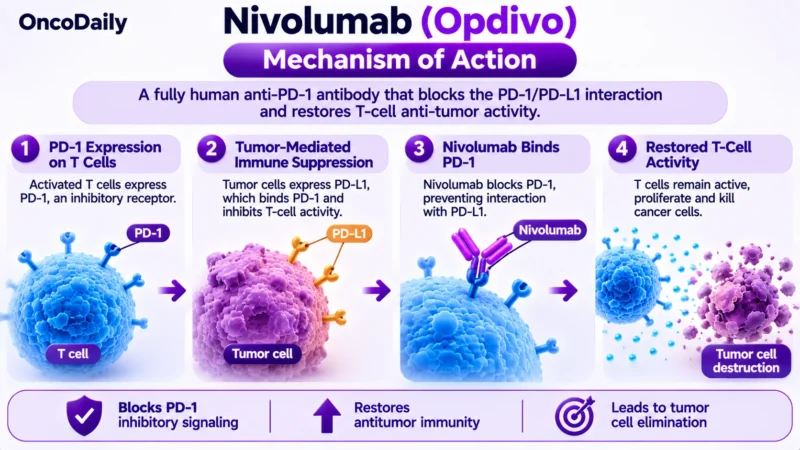
1. PD-1 Receptor Recognition
Nivolumab selectively binds PD-1 receptors expressed on activated T lymphocytes.
This prevents PD-1 from interacting with its natural ligands, PD-L1 and PD-L2.
2. Inhibition of Immune Checkpoint Signaling
Under physiological conditions, PD-1 activation suppresses T-cell receptor and costimulatory signaling through intracellular pathways involving phosphatases such as SHP-2.
This reduces T-cell proliferation, cytokine production, and cytotoxic activity.
Tumor cells may exploit this mechanism to escape immune-mediated destruction.
3. Restoration of T-Cell Activity
By blocking PD-1, nivolumab reduces inhibitory signaling and restores functional activity in responsive antitumor T-cell populations.
This promotes:
- T-cell proliferation
- Cytokine production
- Cytotoxic activity
- Antitumor immune surveillance
4. Tumor-Cell Recognition
Activated T cells recognize tumor-associated antigens presented through major histocompatibility complex (MHC) molecules.
Nivolumab enhances immune recognition of these antigens rather than directly targeting a tumor-specific surface protein.
5. Immune-Mediated Tumor-Cell Killing
Activated cytotoxic T lymphocytes release perforin and granzymes and produce inflammatory cytokines, including interferon-gamma.
These mechanisms contribute to malignant-cell apoptosis and tumor regression.
6. Durable Antitumor Immune Responses
Immune checkpoint inhibition may produce prolonged antitumor responses and sustained immune surveillance.
Some patients experience durable remission even after completing or discontinuing treatment.
However, primary and acquired resistance to immunotherapy may occur.
Overall mechanism:
Nivolumab → PD-1 receptor blockade → inhibition of PD-L1/PD-L2 signaling → restoration of T-cell activity → enhanced antitumor immunity → malignant-cell destruction.
Why Is Nivolumab Combined With Ipilimumab?
One of nivolumab’s most distinctive clinical applications is dual immune checkpoint blockade with ipilimumab.
Nivolumab and ipilimumab target different inhibitory immune pathways.
PD-1 Blockade
Nivolumab inhibits PD-1-mediated immune suppression and restores T-cell activity within the tumor microenvironment.
CTLA-4 Blockade
Ipilimumab blocks CTLA-4, enhancing T-cell priming and activation.
Combined Immune Activation
Simultaneous inhibition of PD-1 and CTLA-4 may enhance antitumor immune responses through complementary mechanisms.
This combination has established clinical applications in melanoma, renal cell carcinoma, non-small cell lung cancer, malignant pleural mesothelioma, hepatocellular carcinoma, and MSI-H/dMMR colorectal cancer.
However, dual checkpoint inhibition may increase the frequency and severity of immune-mediated adverse reactions compared with nivolumab monotherapy.
What Is the Recommended Dose of Nivolumab?
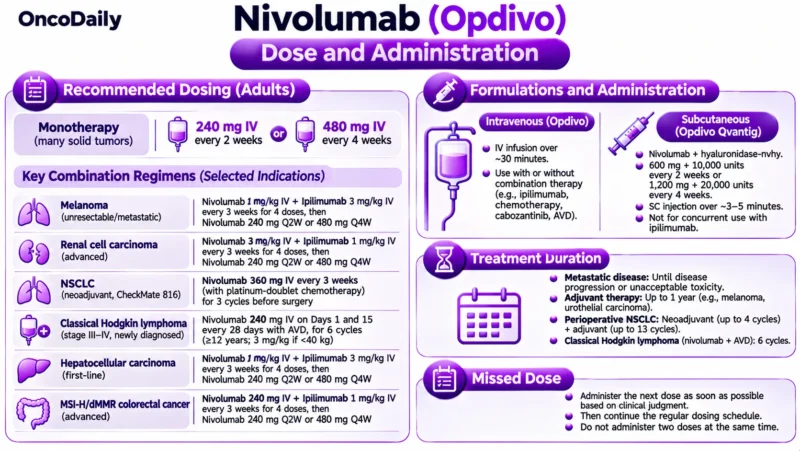
Standard Adult Intravenous Dose
For most monotherapy indications:
- 240 mg IV every two weeks, or
- 480 mg IV every four weeks
Both dosing schedules are generally administered as a 30-minute intravenous infusion.
Unresectable or Metastatic Melanoma
Monotherapy
Nivolumab 240 mg every two weeks or 480 mg every four weeks.
Combination with ipilimumab
- Nivolumab 1 mg/kg plus ipilimumab 3 mg/kg every three weeks for four doses.
- Followed by nivolumab 240 mg every two weeks or 480 mg every four weeks.
Adjuvant Melanoma
Nivolumab 240 mg every two weeks or 480 mg every four weeks for up to one year.
Non-Small Cell Lung Cancer
Neoadjuvant treatment
Nivolumab 360 mg with platinum-doublet chemotherapy every three weeks for three cycles.
Neoadjuvant and adjuvant treatment
- Nivolumab 360 mg with platinum-doublet chemotherapy every three weeks for up to four cycles before surgery.
- Followed by nivolumab 480 mg every four weeks for up to 13 cycles after surgery.
Metastatic disease
Depending on the indication:
- Nivolumab 360 mg every three weeks plus ipilimumab 1 mg/kg every six weeks.
- The same immunotherapy combination with two cycles of platinum-doublet chemotherapy.
- Nivolumab monotherapy at 240 mg every two weeks or 480 mg every four weeks following eligible previous treatment.
Advanced Renal Cell Carcinoma
Combination with ipilimumab
- Nivolumab 3 mg/kg plus ipilimumab 1 mg/kg every three weeks for four doses.
- Followed by nivolumab 240 mg every two weeks or 480 mg every four weeks.
Combination with cabozantinib
Nivolumab 240 mg every two weeks or 480 mg every four weeks, combined with cabozantinib 40 mg orally once daily.
Malignant Pleural Mesothelioma
Nivolumab 360 mg every three weeks plus ipilimumab 1 mg/kg every six weeks, for up to two years or until disease progression or unacceptable toxicity.
Classical Hodgkin Lymphoma
Previously untreated Stage III or IV disease
For adults and eligible pediatric patients weighing at least 40 kg:
– Nivolumab 240 mg with AVD chemotherapy every two weeks for six cycles.
For eligible pediatric patients weighing less than 40 kg:
– Nivolumab 3 mg/kg with AVD every two weeks for six cycles.
Each chemotherapy cycle consists of two administrations over 28 days.
Relapsed or refractory disease
Nivolumab 240 mg every two weeks or 480 mg every four weeks in eligible adults.
MSI-H or dMMR Colorectal Cancer
For adults and eligible pediatric patients weighing at least 40 kg:
- Nivolumab 240 mg plus ipilimumab 1 mg/kg every three weeks for a maximum of four doses.
- Followed by nivolumab 240 mg every two weeks or 480 mg every four weeks.
Weight-based dosing is used in eligible pediatric patients weighing less than 40 kg.
Hepatocellular Carcinoma
- Nivolumab 1 mg/kg plus ipilimumab 3 mg/kg every three weeks for four doses.
- Followed by nivolumab 240 mg every two weeks or 480 mg every four weeks.
Gastric, Gastroesophageal Junction, and Esophageal Adenocarcinoma
- Nivolumab 240 mg every two weeks with fluoropyrimidine- and platinum-containing chemotherapy, or
- Nivolumab 360 mg every three weeks with the corresponding chemotherapy schedule.
Subcutaneous Nivolumab — Opdivo Qvantig
For eligible monotherapy or maintenance indications:
- 600 mg nivolumab plus 10,000 units hyaluronidase every two weeks, or
- 1,200 mg nivolumab plus 20,000 units hyaluronidase every four weeks.
A three-week dosing schedule is available for selected combination regimens.
Opdivo Qvantig is not indicated for concurrent treatment with ipilimumab. Intravenous and subcutaneous nivolumab doses are not interchangeable on a milligram-for-milligram basis.
Treatment Duration
Treatment duration depends on the malignancy and treatment regimen.
Many advanced cancer regimens continue until progression or unacceptable toxicity, although selected combinations have a maximum treatment duration of two years.
Adjuvant treatment commonly continues for up to one year.
Refer to the current prescribing information for complete indication-specific and pediatric dosing schedules.
How Should Nivolumab Be Administered?
Intravenous Infusion
Nivolumab is generally administered over 30 minutes through an intravenous line equipped with a sterile, low-protein-binding filter.
It must not be administered as an intravenous push or bolus.
Preparation and Dilution
The intravenous formulation contains nivolumab at a concentration of 10 mg/mL.
The required dose is prepared using an appropriate volume of:
- 0.9% sodium chloride solution
- 5% dextrose solution
The infusion solution should be mixed gently without shaking.
Administration With Ipilimumab
When nivolumab and ipilimumab are scheduled on the same day, nivolumab is administered first.
Each medication should be prepared and administered separately.
Subcutaneous Administration
Opdivo Qvantig is administered by a healthcare professional into the abdomen or thigh over approximately three to five minutes.
Injection sites should be rotated.
The subcutaneous formulation must not be administered intravenously.
Premedication
Routine premedication with corticosteroids, antihistamines, or antipyretics is not generally required for nivolumab monotherapy.
Premedication may be considered according to previous infusion reactions and the requirements of concomitant anticancer therapy.
Hospitalization
Routine hospitalization is not required.
Treatment is generally administered in an outpatient oncology setting equipped to manage infusion reactions and other treatment-related complications.
What Should You Do If a Nivolumab Dose Is Missed?
If a scheduled dose is missed:
- Contact the treating oncology team.
- Determine the reason for treatment interruption.
- Reschedule treatment according to clinical circumstances.
- Confirm adequate resolution of treatment-related toxicities when applicable.
- Do not administer a double dose.
Nivolumab does not require a step-up dosing schedule after routine treatment interruptions.
How Are Nivolumab Dose Modifications Managed?
Routine dose reductions are not recommended.
Treatment-related toxicities are managed through temporary interruption, supportive care, immunosuppressive therapy, or permanent discontinuation.
Immune-Mediated Pneumonitis
Grade 2: Withhold treatment.
Grade 3–4: Permanently discontinue treatment.
Alternative causes such as infection, pulmonary embolism, radiation pneumonitis, and disease progression should be investigated.
Immune-Mediated Colitis
Nivolumab monotherapy is generally withheld for Grade 2–3 colitis and permanently discontinued for Grade 4 colitis.
Combination treatment with ipilimumab may require permanent discontinuation at a lower toxicity grade.
Corticosteroids are used for clinically significant colitis. Infliximab or vedolizumab may be considered in corticosteroid-refractory cases following appropriate infectious evaluation.
Immune-Mediated Hepatitis
Treatment modifications depend on AST, ALT, bilirubin, baseline hepatic function, hepatic tumor involvement, and concomitant treatment.
Severe hepatotoxicity may require permanent discontinuation.
Mycophenolate mofetil may be considered for corticosteroid-refractory immune-mediated hepatitis.
Immune-Mediated Endocrinopathies
Patients may require temporary treatment interruption until clinically stable.
Hormone replacement may include levothyroxine, glucocorticoids, mineralocorticoids, or insulin.
Permanent discontinuation is not always necessary when endocrine dysfunction is adequately controlled.
Immune-Mediated Nephritis
- Grade 2–3 creatinine elevation: Withhold treatment.
- Grade 4 creatinine elevation: Permanently discontinue treatment.
Immune-Mediated Myocarditis
Suspected myocarditis requires immediate treatment interruption and urgent cardiac evaluation.
Confirmed clinically significant myocarditis generally requires permanent discontinuation and specialist management.
Infusion-Related Reactions
Mild or moderate reactions may require interruption or slowing of the infusion.
Severe or life-threatening reactions require permanent discontinuation.
Systemic corticosteroids are frequently used to manage clinically significant immune-mediated adverse reactions, followed by gradual tapering.
Treatment interruption and resumption criteria differ according to organ involvement, severity, and combination regimen.
What Drug Interactions Are Important With Nivolumab?
CYP450-Metabolized Medications
Nivolumab is not primarily metabolized through CYP450 enzymes.
Conventional CYP450-mediated pharmacokinetic interactions are therefore not expected.
Corticosteroids
Systemic corticosteroids may suppress antitumor immune responses.
Unnecessary baseline immunosuppressive corticosteroid exposure should generally be minimized when clinically feasible.
However, corticosteroids remain essential for managing clinically significant immune-mediated adverse reactions.
Immunosuppressive Agents
Concomitant systemic immunosuppressants may influence immune checkpoint inhibitor activity.
Individualized assessment is particularly important in patients with autoimmune disease or previous organ transplantation.
Ipilimumab
Combining nivolumab with ipilimumab may increase the risk of:
- Immune-mediated colitis
- Hepatitis
- Endocrinopathies
- Pneumonitis
- Dermatological toxicity
Cabozantinib
Combination treatment with cabozantinib may increase hepatotoxicity and introduce additional risks, including hypertension, diarrhea, proteinuria, and palmar-plantar erythrodysesthesia.
Immunomodulatory Agents in Multiple Myeloma
Combining PD-1 or PD-L1 inhibitors with a thalidomide analogue and dexamethasone is not recommended in multiple myeloma outside controlled clinical trials because of an increased mortality risk.
Does Nivolumab Require Dose Adjustment in Renal or Hepatic Impairment?
Renal Impairment
Population pharmacokinetic analyses have not demonstrated clinically significant changes in nivolumab clearance in patients with an estimated glomerular filtration rate of at least 15 mL/min/1.73 m².
Routine dose adjustment is generally unnecessary within the studied range.
Clinical evidence remains limited in patients with end-stage renal disease requiring dialysis.
Hepatic Impairment
Mild and moderate hepatic impairment do not appear to have a clinically significant effect on nivolumab clearance.
Nivolumab has not been adequately studied in patients with severe hepatic impairment.
Pre-existing hepatic impairment should be distinguished from treatment-emergent immune-mediated hepatitis.
What Is the Pharmacokinetic Profile of Nivolumab?
Molecular Structure
Nivolumab is a fully human IgG4 monoclonal antibody with an approximate molecular weight of 146 kDa.
Distribution
Estimated steady-state volume of distribution:
6.8 L
Elimination Half-Life
Approximately:
25 days
Clearance
Estimated geometric mean steady-state clearance in patients with metastatic tumors:
8.2 mL/hour
Metabolism
Nivolumab undergoes proteolytic degradation into small peptides and amino acids through normal antibody catabolic pathways.
Steady-State Exposure
Steady-state concentrations are reached after approximately 12 weeks when nivolumab is administered at 3 mg/kg every two weeks.
The prolonged half-life supports extended dosing intervals.
What Are the Clinical Uses of Nivolumab?
Melanoma
Nivolumab is approved for adults and eligible pediatric patients aged 12 years and older with unresectable or metastatic melanoma.
It may be administered as monotherapy or in combination with ipilimumab.
It is also approved as adjuvant treatment following complete resection of Stage IIB, IIC, III, or IV melanoma.
Non-Small Cell Lung Cancer
Nivolumab has several indications in non-small cell lung cancer (NSCLC).
Resectable NSCLC
Nivolumab is administered with platinum-doublet chemotherapy before surgery in patients with tumors measuring at least 4 cm or with lymph node involvement.
A separate perioperative indication includes neoadjuvant nivolumab with chemotherapy followed by adjuvant nivolumab after surgery in eligible patients without known EGFR mutations or ALK rearrangements.
Metastatic NSCLC
Treatment options include:
- Nivolumab plus ipilimumab in eligible patients with PD-L1 expression ≥1% and no EGFR or ALK genomic aberrations.
- Nivolumab plus ipilimumab and two cycles of platinum-doublet chemotherapy, irrespective of PD-L1 expression, in eligible patients without EGFR or ALK genomic aberrations.
- Nivolumab monotherapy following progression during or after platinum-based chemotherapy.
Malignant Pleural Mesothelioma
Nivolumab combined with ipilimumab is approved as first-line treatment for adults with unresectable malignant pleural mesothelioma.
This provides a chemotherapy-free immunotherapy option for eligible patients.
Renal Cell Carcinoma
Nivolumab has three established treatment strategies in advanced renal cell carcinoma (RCC):
- First-line combination with ipilimumab in patients with intermediate- or poor-risk disease.
- First-line combination with cabozantinib.
- Monotherapy following previous antiangiogenic treatment.
Classical Hodgkin Lymphoma
Nivolumab has demonstrated meaningful clinical activity in classical Hodgkin lymphoma, which frequently exhibits increased PD-L1 and PD-L2 expression associated with chromosome 9p24.1 alterations.
In March 2026, nivolumab combined with AVD chemotherapy received FDA approval for adults and pediatric patients aged 12 years and older with previously untreated Stage III or IV classical Hodgkin lymphoma.
Nivolumab monotherapy is also approved for adults whose disease has relapsed or progressed following:
- Autologous hematopoietic stem cell transplantation and brentuximab vedotin.
- Three or more systemic treatment lines, including autologous stem cell transplantation.
The previously accelerated approvals for these relapsed or refractory indications were converted to traditional approval in March 2026.
Head and Neck Squamous Cell Carcinoma
Nivolumab is approved for adults with recurrent or metastatic squamous cell carcinoma of the head and neck following disease progression during or after platinum-based therapy.
Urothelial Carcinoma
Nivolumab is used in several treatment settings:
- Adjuvant treatment in adults at high risk of recurrence following radical surgical resection.
- First-line treatment with cisplatin and gemcitabine in unresectable or metastatic disease.
- Monotherapy following progression during or after platinum-containing chemotherapy.
- Monotherapy for eligible patients experiencing recurrence within 12 months of perioperative platinum-containing chemotherapy.
MSI-H or dMMR Colorectal Cancer
Nivolumab combined with ipilimumab is approved for adults and pediatric patients aged 12 years and older with unresectable or metastatic MSI-H or dMMR colorectal cancer.
Nivolumab monotherapy is also approved following progression after treatment with fluoropyrimidine, oxaliplatin, and irinotecan.
The combination received FDA approval on April 8, 2025.
Hepatocellular Carcinoma
Nivolumab combined with ipilimumab is approved for adults with unresectable or metastatic hepatocellular carcinoma (HCC).
The combination may be used as first-line treatment or in eligible patients previously treated with sorafenib.
Baseline hepatic function, underlying liver disease, and the risk of immune-mediated hepatitis require careful assessment.
Esophageal Cancer
Nivolumab has several indications in esophageal cancer.
Adjuvant treatment
Nivolumab is administered following complete surgical resection in patients with residual pathological disease after neoadjuvant chemoradiotherapy for esophageal or gastroesophageal junction cancer.
Advanced esophageal squamous cell carcinoma
First-line treatment options in eligible patients with PD-L1-positive tumors include:
- Nivolumab plus fluoropyrimidine- and platinum-containing chemotherapy.
- Nivolumab plus ipilimumab.
Nivolumab monotherapy is also approved following previous fluoropyrimidine- and platinum-based chemotherapy.
Gastric and Gastroesophageal Junction Adenocarcinoma
Nivolumab is approved in combination with fluoropyrimidine- and platinum-containing chemotherapy for eligible adults with advanced or metastatic gastric cancer, gastroesophageal junction cancer, or esophageal adenocarcinoma expressing PD-L1 at the qualifying threshold.
The precise biomarker and treatment eligibility requirements should be assessed according to the current prescribing information.
What Biomarker Testing Is Required Before Nivolumab?
PD-L1 Expression
PD-L1 expression is assessed using immunohistochemistry.
It may help identify patients eligible for specific nivolumab-containing treatment regimens.
Depending on the malignancy, assessment may involve:
- Tumor-cell PD-L1 expression
- Tumor proportion score (TPS)
- Combined positive score (CPS)
PD-L1 positivity is not required for every nivolumab indication.
Microsatellite Instability Testing
MSI status is particularly important in colorectal cancer.
Testing may be performed using:
- Polymerase chain reaction
- Next-generation sequencing
- Validated molecular testing platforms
MSI-H colorectal cancers may demonstrate increased susceptibility to immune checkpoint inhibition.
Mismatch Repair Testing
Mismatch repair deficiency is commonly assessed using immunohistochemistry for:
- MLH1
- MSH2
- MSH6
- PMS2
Loss of expression of one or more mismatch repair proteins may indicate mismatch repair deficiency.
Additional investigations may be necessary to evaluate potential Lynch syndrome.
Oncogenic Driver Testing
In NSCLC, molecular testing should assess clinically relevant oncogenic alterations before selecting immunotherapy.
Important alterations include EGFR mutations, ALK rearrangements, and other actionable genomic drivers.
The presence of an actionable driver may favor targeted therapy over initial immune checkpoint inhibition.
BRAF Mutation Testing
BRAF V600 mutation testing is important in advanced melanoma because it may identify patients eligible for BRAF- and MEK-directed targeted therapies.
However, BRAF mutation positivity is not required for nivolumab treatment.
Renal Cell Carcinoma Risk Assessment
The International Metastatic Renal Cell Carcinoma Database Consortium (IMDC) risk classification helps guide treatment selection in advanced RCC.
Nivolumab combined with ipilimumab has an established first-line indication in intermediate- and poor-risk disease.
Baseline Clinical Evaluation
Before starting nivolumab, assess complete blood count, renal and hepatic function, thyroid function, blood glucose, performance status, autoimmune disease history, previous transplantation, and current immunosuppressive medications.
What Did the Pivotal Clinical Trials Show?
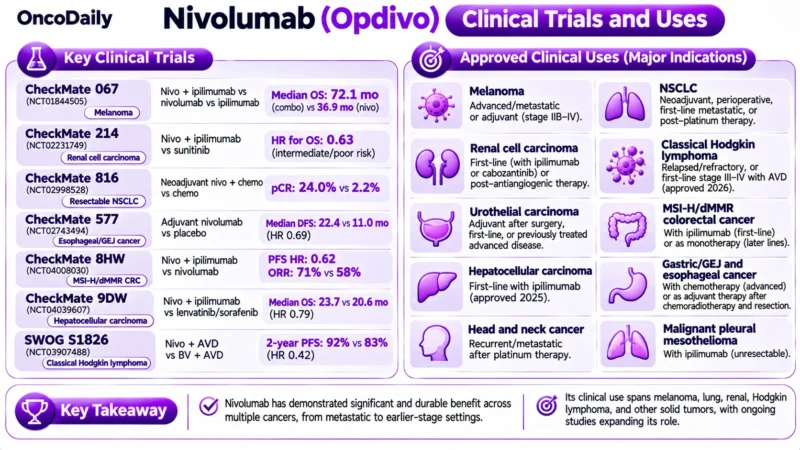
CheckMate 067 — Nivolumab Plus Ipilimumab in Advanced Melanoma
CheckMate 067 (NCT01844505) was a randomized phase III trial involving 945 patients with previously untreated advanced melanoma.
The study compared nivolumab plus ipilimumab, nivolumab monotherapy, and ipilimumab monotherapy.
The final 10-year follow-up was published in the New England Journal of Medicine.
Median Overall Survival
- Nivolumab plus ipilimumab: 71.9 months
- Nivolumab monotherapy: 36.9 months
- Ipilimumab monotherapy: 19.9 months
Overall Survival Hazard Ratio
- Nivolumab plus ipilimumab versus ipilimumab: HR 0.53 (95% CI, 0.44–0.65)
- Nivolumab versus ipilimumab: HR 0.63 (95% CI, 0.52–0.76)
Median Melanoma-Specific Survival
- Nivolumab plus ipilimumab: More than 120 months (not reached)
- Nivolumab monotherapy: 49.4 months
- Ipilimumab monotherapy: 21.9 months
The results demonstrated sustained long-term survival benefits with nivolumab-containing treatment.
The study was not designed for a formal statistical comparison between nivolumab monotherapy and nivolumab plus ipilimumab.
CheckMate 214 — Nivolumab Plus Ipilimumab in Advanced Renal Cell Carcinoma
CheckMate 214 (NCT02231749) was a randomized phase III study involving 1,096 patients with previously untreated advanced renal cell carcinoma.
The study compared nivolumab plus ipilimumab with sunitinib.
The extended eight-year follow-up was published in Annals of Oncology in 2024.
Among patients with intermediate- or poor-risk disease:
Median Overall Survival
- Nivolumab plus ipilimumab: 46.7 months
- Sunitinib: 26.0 months
HR: 0.69 (95% CI, 0.59–0.81)
Overall Response Rate
- Nivolumab plus ipilimumab: 42.4%
- Sunitinib: 27.5%
Complete Response Rate
- Nivolumab plus ipilimumab: 11.8%
- Sunitinib: 2.6%
Median Duration of Response
- Nivolumab plus ipilimumab: 82.8 months
- Sunitinib: 19.8 months
The findings demonstrated durable survival and response benefits, supporting dual checkpoint inhibition as an important first-line treatment for intermediate- and poor-risk advanced RCC.
CheckMate 816 — Neoadjuvant Nivolumab in Resectable NSCLC
CheckMate 816 (NCT02998528) was a randomized phase III trial involving 358 patients with resectable Stage IB–IIIA NSCLC.
The study compared three cycles of neoadjuvant nivolumab plus platinum-doublet chemotherapy with chemotherapy alone, followed by surgery.
The final overall survival analysis was published in the New England Journal of Medicine in 2025.
Five-Year Overall Survival
- Nivolumab plus chemotherapy: 65.4%
- Chemotherapy alone: 55.0%
Overall Survival Hazard Ratio
HR: 0.72 (95% CI, 0.523–0.998)
P = 0.048
Median Follow-Up
68.4 months
The findings established a significant overall survival benefit from a short course of neoadjuvant chemoimmunotherapy in eligible patients with resectable NSCLC.
No new safety signals were observed in the final survival analysis.
CheckMate 8HW — Nivolumab Plus Ipilimumab in MSI-H/dMMR Colorectal Cancer
CheckMate 8HW (NCT04008030) was a randomized phase III trial comparing nivolumab plus ipilimumab, nivolumab monotherapy, and chemotherapy in patients with MSI-H or dMMR metastatic colorectal cancer.
A total of 839 patients were randomized across treatment lines.
Two-Year Progression-Free Survival in the Initial First-Line Analysis
- Nivolumab plus ipilimumab: 72%
- Chemotherapy: 14%
Updated Overall Survival Analysis in 2026
At a median follow-up of 68 months:
- Nivolumab plus ipilimumab versus first-line chemotherapy: HR 0.37 (95% CI, 0.24–0.57)
- Nivolumab plus ipilimumab versus nivolumab monotherapy across treatment lines: HR 0.61 (95% CI, 0.46–0.82)
Both comparisons demonstrated statistically significant overall survival benefits.
The first-line comparison between combination immunotherapy and nivolumab monotherapy favored the combination numerically but did not meet its prespecified statistical significance threshold.
The findings established dual checkpoint inhibition as a major treatment option for MSI-H/dMMR metastatic colorectal cancer.
SWOG S1826 — Nivolumab Plus AVD in Advanced Classical Hodgkin Lymphoma
SWOG S1826 (NCT03907488) was a randomized phase III trial involving 994 patients aged 12 years and older with previously untreated Stage III or IV classical Hodgkin lymphoma.
The study compared:
- Nivolumab plus doxorubicin, vinblastine, and dacarbazine (N-AVD).
- Brentuximab vedotin plus doxorubicin, vinblastine, and dacarbazine (BV-AVD).
Two-Year Progression-Free Survival
- Nivolumab plus AVD: 92%
- Brentuximab vedotin plus AVD: 83%
HR: 0.45 (95% CI, 0.30–0.65)
Median Follow-Up
2.1 years
Nivolumab-containing treatment demonstrated superior progression-free survival and a more favorable overall tolerability profile.
These findings supported the March 2026 FDA approval of nivolumab plus AVD in previously untreated advanced-stage classical Hodgkin lymphoma.
Watch More: ASCO 2023 Highlights: Nivolumab in Advanced Classical Hodgkin Lymphoma — SWOG S1826.
Does Nivolumab Have CNS Activity?
Nivolumab has demonstrated intracranial antitumor activity in selected patients with brain metastases, particularly melanoma.
Although its large monoclonal antibody structure limits passive penetration across an intact blood–brain barrier, its therapeutic effects are mediated through immune activation.
The combination of nivolumab and ipilimumab has demonstrated clinically meaningful activity in selected patients with asymptomatic melanoma brain metastases.
Treatment selection depends on:
- Neurological symptoms
- Intracranial tumor burden
- Corticosteroid requirements
- Previous local treatment
- Extracranial disease
Patients with symptomatic brain metastases may require surgery, stereotactic radiosurgery, or other local interventions.
Nivolumab is not an established standard treatment for primary CNS malignancies such as glioblastoma.
Is Nivolumab FDA Approved?
Yes.
Nivolumab received its initial FDA approval on December 22, 2014, for selected patients with unresectable or metastatic melanoma following previous treatment.
Important regulatory milestones include:
- 2014: Initial melanoma approval.
- 2015: Expansion into NSCLC and renal cell carcinoma.
- 2016: Approval in selected patients with classical Hodgkin lymphoma and head and neck cancer.
- 2018: Approval of nivolumab plus ipilimumab in advanced RCC.
- 2020: Approval of nivolumab plus ipilimumab in unresectable malignant pleural mesothelioma.
- 2022: Approval of neoadjuvant nivolumab plus chemotherapy in resectable NSCLC.
- 2024: Approval of subcutaneous nivolumab as Opdivo Qvantig.
- 2025: Expansion of combination immunotherapy indications in colorectal cancer and hepatocellular carcinoma.
- 2026: Approval of nivolumab plus AVD in previously untreated advanced-stage classical Hodgkin lymphoma.
Regulatory indications vary according to malignancy, treatment line, biomarker status, formulation, and geographical region.
What Is the Current Clinical Role of Nivolumab in 2026?
Dual Immune Checkpoint Inhibition
Nivolumab combined with ipilimumab remains an important treatment strategy across several malignancies.
The combination targets two distinct immune checkpoints, potentially enhancing antitumor activity but increasing immune-mediated toxicity.
First-Line Immunotherapy
Nivolumab is incorporated into first-line treatment regimens for melanoma, NSCLC, renal cell carcinoma, hepatocellular carcinoma, colorectal cancer, and other selected malignancies.
Neoadjuvant and Adjuvant Immunotherapy
Nivolumab has expanded into earlier-stage treatment settings, particularly melanoma, resectable NSCLC, urothelial carcinoma, and esophageal or gastroesophageal junction cancer.
Biomarker-Driven Treatment
Nivolumab has an established role in MSI-H/dMMR colorectal cancer.
Unlike pembrolizumab, nivolumab does not have an equivalent broad FDA-approved tumor-agnostic indication based solely on MSI-H, dMMR, or TMB-H status.
First-Line Treatment of Classical Hodgkin Lymphoma
The 2026 approval of nivolumab plus AVD represents an important expansion of checkpoint inhibition into the initial treatment of advanced-stage classical Hodgkin lymphoma.
Read More: Hodgkin Lymphoma (HL) in 2026: What the New EHA Guidelines Recommend by OncoDaily.
Subcutaneous Immunotherapy
Opdivo Qvantig provides a shorter administration option for eligible adult patients with solid tumors.
It does not eliminate the need for monitoring or management of immune-mediated adverse reactions.
What Are the Major Side Effects of Nivolumab?
Immune-Mediated Adverse Reactions
Immune-mediated adverse reactions are the most characteristic toxicities associated with nivolumab.
PD-1 blockade may disrupt physiological immune tolerance and permit activated immune cells to attack normal tissues.
These reactions may affect almost any organ system and can occur during treatment or after discontinuation.
The risk of severe immune-mediated toxicity is generally greater with combined nivolumab and ipilimumab than with nivolumab monotherapy.
Immune-Mediated Pneumonitis
Symptoms include:
- New or worsening cough
- Dyspnea
- Hypoxia
- Chest discomfort
- Fever
Immune-mediated pneumonitis occurred in approximately 3.1% of 1,994 patients receiving nivolumab monotherapy.
In a separate NSCLC population receiving nivolumab plus ipilimumab, the incidence was approximately 9%.
These figures represent different treatment populations and should not be interpreted as a direct randomized comparison.
Severe and fatal cases have been reported.
Immune-Mediated Colitis
Colitis may present with diarrhea, abdominal pain, gastrointestinal bleeding, fever, and dehydration.
The risk is particularly important when nivolumab is combined with ipilimumab.
Severe complications may include gastrointestinal perforation.
Immune-Mediated Hepatitis
Possible manifestations include:
- Elevated AST and ALT
- Hyperbilirubinemia
- Fatigue
- Jaundice
- Right upper quadrant discomfort
Hepatotoxicity requires particular attention during combination treatment with ipilimumab or cabozantinib.
Thyroid Dysfunction
Nivolumab may cause:
- Hypothyroidism
- Hyperthyroidism
- Thyroiditis
Transient thyrotoxicosis followed by hypothyroidism may occur.
Long-term thyroid hormone replacement may be necessary.
Adrenal Insufficiency
Symptoms include fatigue, hypotension, nausea, vomiting, hyponatremia, and hypoglycemia.
Severe adrenal insufficiency may result in adrenal crisis requiring urgent treatment.
Hypophysitis
Immune-mediated pituitary inflammation may cause deficiencies in ACTH, TSH, gonadotropins, and other pituitary hormones.
Patients may present with headache, fatigue, visual disturbances, or hypotension.
Hypophysitis is particularly relevant during combination treatment with ipilimumab.
Type 1 Diabetes Mellitus
Nivolumab may cause immune-mediated pancreatic beta-cell destruction.
Patients may develop insulin-dependent diabetes or present with diabetic ketoacidosis.
Immune-Mediated Nephritis
Possible findings include increased serum creatinine, acute kidney injury, and electrolyte abnormalities.
Other potential causes of renal dysfunction should be excluded.
Immune-Mediated Dermatological Toxicity
Dermatological adverse reactions include:
- Rash
- Pruritus
- Vitiligo
- Psoriasiform eruptions
- Bullous pemphigoid
Rare but serious reactions include Stevens–Johnson syndrome, toxic epidermal necrolysis, and DRESS.
Immune-Mediated Myocarditis
Myocarditis is uncommon but potentially life-threatening.
Symptoms may include chest pain, dyspnea, palpitations, syncope, and fatigue.
Clinical manifestations may include arrhythmias, conduction abnormalities, elevated troponin, and heart failure.
Neurological and Musculoskeletal Toxicity
Potential complications include:
- Myasthenia gravis
- Guillain–Barré syndrome
- Encephalitis
- Myelitis
- Peripheral neuropathy
- Myositis
- Inflammatory arthritis
Myositis may occur alongside myocarditis or myasthenia gravis.
Infusion-Related Reactions
Symptoms may include fever, chills, rash, flushing, wheezing, hypotension, and dyspnea.
Severe reactions require permanent treatment discontinuation.
Transplant-Related Complications
Nivolumab may cause solid organ transplant rejection.
Serious and fatal complications, including graft-versus-host disease, have occurred in patients receiving allogeneic hematopoietic stem cell transplantation before or after PD-1 blockade.
Other Common Adverse Reactions
- Fatigue
- Musculoskeletal pain
- Rash
- Pruritus
- Diarrhea
- Nausea
- Decreased appetite
- Constipation
- Fever
- Cough
The adverse-effect profile varies according to the malignancy and concomitant anticancer agents.
Embryo-Fetal Toxicity
Nivolumab may cause fetal harm.
Females of reproductive potential should use effective contraception during treatment and for at least five months after the last dose.
Breastfeeding is not recommended during treatment and for five months afterward.
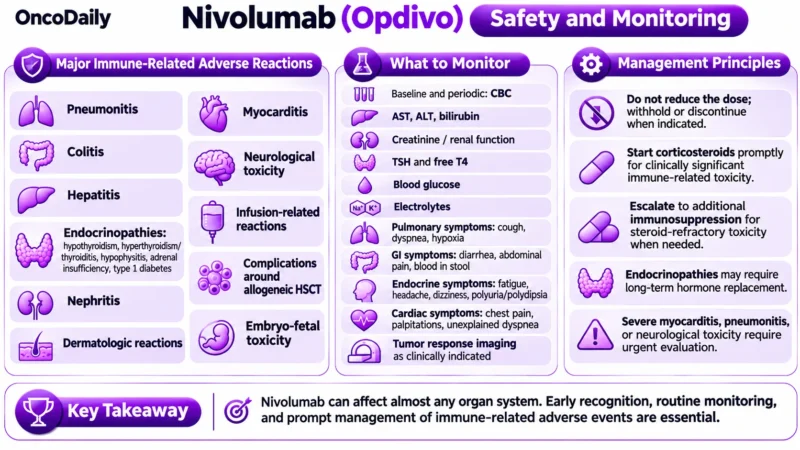
What Monitoring Is Required During Nivolumab Treatment?
Thyroid Function
Monitor TSH and free T4 at baseline and periodically during treatment.
Evaluate symptoms suggesting hypothyroidism, hyperthyroidism, or thyroiditis.
Adrenal and Pituitary Function
Assess morning cortisol, ACTH, electrolytes, and other pituitary hormones when clinically indicated.
Patients with unexplained fatigue, hypotension, or hyponatremia should be evaluated for adrenal insufficiency.
Liver Function
Monitor AST, ALT, bilirubin, and other relevant hepatic biochemical parameters.
Monitoring is particularly important when nivolumab is combined with ipilimumab or cabozantinib.
Renal Function
Monitor serum creatinine, estimated glomerular filtration rate, and electrolytes.
Urinalysis and additional nephrological evaluation may be required in suspected immune-mediated nephritis.
Blood Glucose
Monitor for new hyperglycemia, insulin-dependent diabetes, and diabetic ketoacidosis.
Pulmonary Monitoring
Evaluate new or worsening cough, dyspnea, hypoxia, and respiratory symptoms.
Chest imaging should be obtained when pneumonitis is suspected.
Gastrointestinal Monitoring
Monitor stool frequency, diarrhea, abdominal pain, and gastrointestinal bleeding.
Early recognition of colitis is particularly important during dual checkpoint inhibition.
Cardiovascular Monitoring
Investigate new cardiac symptoms promptly.
Electrocardiography, cardiac troponin, echocardiography, or cardiac magnetic resonance imaging may be necessary when myocarditis is suspected.
Neurological Monitoring
Assess for new muscle weakness, sensory abnormalities, headache, visual symptoms, confusion, and swallowing difficulties.
Complete Blood Count
Monitor hematological parameters, particularly during combination treatment with chemotherapy.
Combination-Specific Monitoring
Additional monitoring depends on the accompanying treatment.
- Ipilimumab: Immune-mediated gastrointestinal, hepatic, endocrine, and other toxicities.
- Cabozantinib: Blood pressure, proteinuria, liver function, and dermatological toxicity.
- AVD chemotherapy: Blood counts, cardiac function, and other chemotherapy-associated toxicities.
Tumor Response
Assess treatment response using appropriate imaging and disease-specific clinical criteria.
Immune-related response patterns may occasionally include pseudoprogression.
However, apparent radiological progression should not automatically be attributed to pseudoprogression.
Reproductive Monitoring
Verify pregnancy status when appropriate and provide contraception and breastfeeding counseling.
FAQ
What Is Nivolumab Used For?
What Is Its Mechanism of Action?
Is Nivolumab Chemotherapy?
It may be administered as monotherapy or in combination with chemotherapy and other anticancer agents.
What Is the Standard Dose?
Combination regimens use indication-specific dosing.
Why Is Nivolumab Combined With Ipilimumab?
Blocking both immune checkpoints may enhance antitumor immune responses but can also increase immune-mediated toxicity.
How Long Is Nivolumab Treatment?
Many advanced cancer regimens continue until disease progression or unacceptable toxicity, although selected regimens have a two-year treatment limit.
Adjuvant therapy commonly continues for up to one year.
Can Nivolumab Be Administered Subcutaneously?
Does Nivolumab Require PD-L1 Positivity?
PD-L1 testing is required for selected treatment regimens.
What Is the Most Important Side Effect?
Does Nivolumab Have a Boxed Warning?
How Is Nivolumab Different From Pembrolizumab?
Nivolumab is a fully human monoclonal antibody, whereas pembrolizumab is a humanized monoclonal antibody.
They differ in approved indications, dosing schedules, combination regimens, and supporting clinical evidence.