





Nab-Paclitaxel: Understanding Its Mechanism, Dosing, and Clinical Role in Cancer
Key takeaways
- Nab-paclitaxel is an albumin-bound nanoparticle formulation of paclitaxel that does not contain Cremophor EL.
- Its mechanism involves microtubule stabilization, mitotic spindle disruption, and cancer-cell death.
- It is FDA-approved for selected metastatic breast cancer, advanced NSCLC, and metastatic pancreatic adenocarcinoma indications.
- The recommended pancreatic cancer regimen is 125 mg/m² on Days 1, 8, and 15 every 28 days, followed by gemcitabine.
- Routine corticosteroid and antihistamine premedication is generally unnecessary.
- The US label does not specify routine filtration, while European product information specifies a 15-micron filter.
- Severe myelosuppression is the principal boxed warning.
- Peripheral neuropathy remains an important dose-limiting toxicity.
- The MPACT trial established the survival benefit of nab-paclitaxel plus gemcitabine in metastatic pancreatic cancer.
- - Nab-paclitaxel and conventional paclitaxel are not interchangeable on a dose-for-dose basis.
Nab-paclitaxel (Abraxane) is an albumin-bound formulation of paclitaxel and a microtubule-stabilizing taxane chemotherapy used in breast cancer, non-small cell lung cancer (NSCLC), and pancreatic adenocarcinoma. It combines the established cytotoxic activity of paclitaxel with nanoparticle albumin-bound technology, allowing administration without the solvent system used in conventional paclitaxel formulations.
Unlike solvent-based paclitaxel, nab-paclitaxel does not contain polyoxyl 35 castor oil (Cremophor EL). This distinction influences its administration, pharmacokinetics, hypersensitivity precautions, and dosing.
Nab-paclitaxel has become particularly important in metastatic pancreatic cancer, where its combination with gemcitabine demonstrated an overall survival benefit in the phase III MPACT trial. It is also used in selected breast cancer and NSCLC treatment strategies, including immunotherapy-containing regimens.
This article reviews nab-paclitaxel’s mechanism of action, dosing, preparation, administration, clinical trials, pharmacokinetics, safety profile, and current clinical role.
Key Facts
- Generic name: Paclitaxel protein-bound particles for injectable suspension (albumin-bound)
- Common name: Nab-paclitaxel
- Brand name: Abraxane
- Drug class: Taxane; microtubule inhibitor
- Formulation: Albumin-bound paclitaxel nanoparticles
- Route: Intravenous infusion
- Initial FDA approval: January 7, 2005
- FDA-approved indications: Metastatic breast cancer, locally advanced or metastatic NSCLC, and metastatic pancreatic adenocarcinoma
- Breast cancer dose: 260 mg/m² IV every 3 weeks
- NSCLC dose: 100 mg/m² IV on Days 1, 8, and 15 of a 21-day cycle
- Pancreatic cancer dose: 125 mg/m² IV on Days 1, 8, and 15 of a 28-day cycle
- Infusion duration: Usually 30 minutes; 30–40 minutes for pancreatic cancer
- Reconstituted concentration: 5 mg/mL
- Major mechanism: Microtubule stabilization and inhibition of mitosis
- Premedication: Routine corticosteroid and antihistamine premedication is generally unnecessary
- Major toxicities: Myelosuppression, peripheral neuropathy, alopecia, fatigue, and gastrointestinal toxicity
- Boxed warning: Severe myelosuppression
- Key caution: Nab-paclitaxel must not be substituted for conventional paclitaxel on a dose-for-dose basis.
What Is Nab-Paclitaxel?
Nab-paclitaxel is a solvent-free, albumin-bound nanoparticle formulation of paclitaxel.
The formulation contains paclitaxel bound to human serum albumin in nanoparticles with a mean particle size of approximately:
130 nanometers.
Each 100 mg vial contains paclitaxel formulated with approximately 900 mg of human albumin.
Albumin acts as a carrier that allows the poorly water-soluble paclitaxel molecule to be administered without the Cremophor EL solvent required in conventional paclitaxel injection.
The albumin-bound formulation changes the distribution and pharmacokinetic characteristics of paclitaxel, including its unbound fraction in plasma.
However, the underlying cytotoxic mechanism remains the same: inhibition of microtubule depolymerization and disruption of mitosis.
Importantly, albumin binding should not be interpreted as a guarantee of selective delivery to malignant cells.
What Is the Mechanism of Action of Nab-Paclitaxel?
Nab-paclitaxel combines a modified drug-delivery formulation with the established microtubule-stabilizing activity of paclitaxel.
1. Albumin-Bound Drug Delivery
Paclitaxel is formulated as albumin-bound nanoparticles.
The formulation enables intravenous administration without Cremophor EL and influences paclitaxel distribution and exposure.
2. Binding to β-Tubulin
After delivery to tissues and cells, paclitaxel interacts with β-tubulin within microtubules.
Microtubules are essential components of the cellular cytoskeleton and the mitotic spindle.
3. Microtubule Stabilization
Paclitaxel promotes microtubule assembly and prevents their normal depolymerization.
This creates excessively stable microtubules that cannot undergo the dynamic reorganization required for normal cell division.
4. Mitotic Spindle Disruption
Microtubule stabilization interferes with mitotic spindle formation and chromosome separation.
Cancer cells become unable to complete mitosis normally.
5. Cell-Cycle Arrest and Apoptosis
Prolonged mitotic dysfunction activates cellular checkpoint and cell-death pathways.
This can produce mitotic arrest and apoptosis.
The mechanism can be summarized as:
Albumin-bound paclitaxel delivery → β-tubulin binding → microtubule stabilization → mitotic spindle disruption → mitotic arrest → cancer-cell death.
The albumin-bound formulation changes drug delivery, but it does not create a fundamentally different molecular target from conventional paclitaxel.
What Is the Dose of Nab-Paclitaxel?
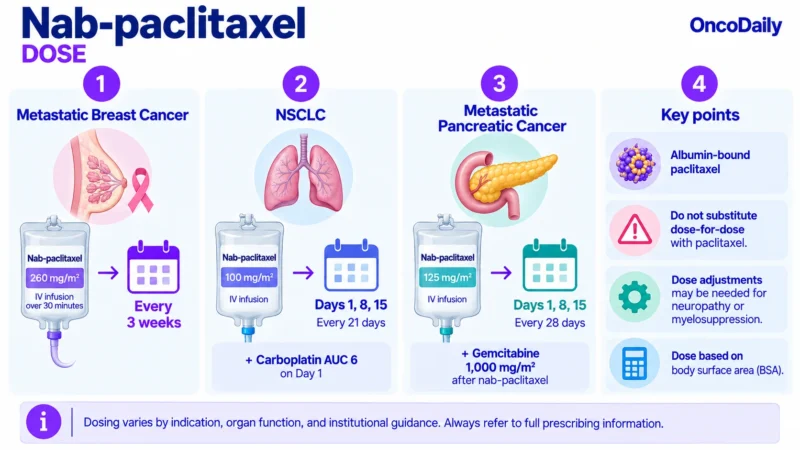
Nab-paclitaxel dosing depends on the cancer type and treatment regimen.
Metastatic Breast Cancer
The FDA-recommended dose is:
260 mg/m² IV over 30 minutes every 3 weeks.
This labeled regimen is intended for patients with metastatic breast cancer after failure of combination chemotherapy for metastatic disease or relapse within six months of adjuvant chemotherapy.
Previous treatment should have included an anthracycline unless contraindicated.
Weekly schedules are also used in selected breast cancer protocols, but these differ from the FDA-labeled three-weekly monotherapy regimen.
Non-Small Cell Lung Cancer
The recommended regimen is:
Nab-paclitaxel 100 mg/m² IV over 30 minutes on Days 1, 8, and 15 of each 21-day cycle.
It is administered with:
Carboplatin AUC 6 on Day 1 every 21 days.
Carboplatin is administered immediately after nab-paclitaxel on Day 1.
Metastatic Pancreatic Adenocarcinoma
The recommended regimen is:
Nab-paclitaxel 125 mg/m² IV over 30–40 minutes on Days 1, 8, and 15 of each 28-day cycle.
It is combined with:
Gemcitabine 1,000 mg/m² IV on Days 1, 8, and 15.
Gemcitabine is administered immediately after nab-paclitaxel.
This regimen was established through the phase III MPACT trial.
How Is Nab-Paclitaxel Administered?
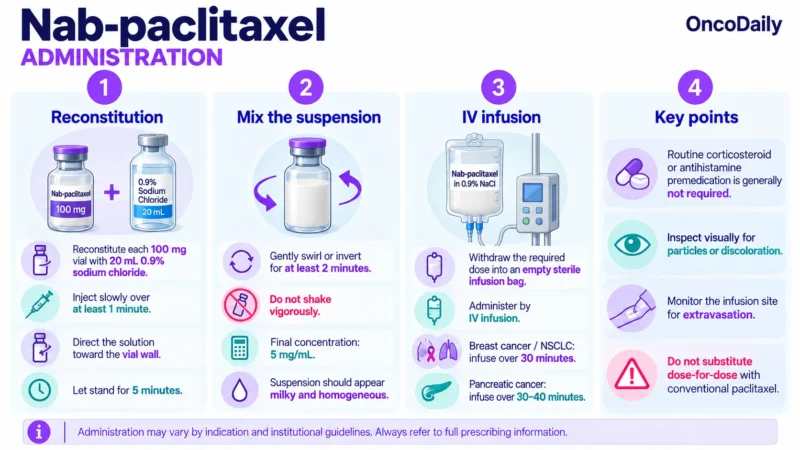
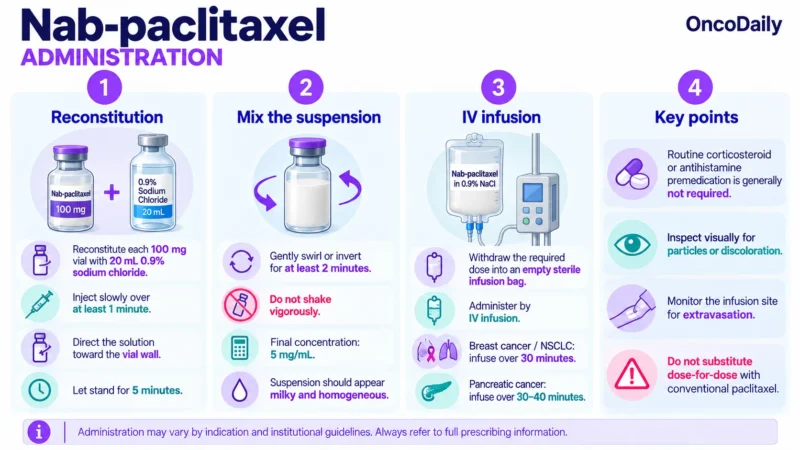
Nab-paclitaxel is administered by intravenous infusion.
Unlike conventional paclitaxel, which is supplied as a liquid concentrate, Abraxane is supplied as a sterile lyophilized powder that must be reconstituted before administration.
Available Formulation
The US Abraxane presentation contains:
100 mg of paclitaxel per vial.
The powder is white to yellow.
Reconstitution
Each 100 mg vial is reconstituted with:
20 mL of 0.9% sodium chloride injection.
The saline should be injected slowly over at least one minute, directing the solution toward the inside wall of the vial rather than directly onto the powder.
The vial should then stand for at least five minutes.
The contents should be gently swirled or inverted for at least two minutes until a homogeneous suspension is obtained.
Do not shake vigorously.
The final concentration is:
5 mg/mL.
The reconstituted suspension should appear milky and homogeneous, without visible precipitates.
Preparation of the Infusion
The required dose is calculated according to body surface area.
The corresponding volume of the 5 mg/mL suspension is withdrawn and transferred into an empty sterile infusion bag.
Unlike conventional paclitaxel, Abraxane does not require the use of specially designed DEHP-free administration containers or sets.
Infusion Duration
- Breast cancer: 30 minutes
- NSCLC: 30 minutes
- Pancreatic cancer: 30–40 minutes
The infusion site should be monitored for extravasation and infiltration.
Does Nab-Paclitaxel Require an In-Line Filter?
Filtration requirements differ between the US and European prescribing information.
The US Abraxane prescribing information does not specify routine use of an in-line filter. It requires visual inspection and discarding the suspension if proteinaceous strands, particles, or discoloration are observed.
The European and UK product information specifies a:
15-micron in-line filter.
This filter is intended to prevent administration of proteinaceous strands that may form during preparation.
Filters with smaller pore sizes may become blocked.
The ≤0.22-micron filter required for conventional paclitaxel should not be automatically applied to nab-paclitaxel.
Administration should follow the locally approved product information and the specific formulation supplied.
Does Nab-Paclitaxel Require Premedication?
Routine corticosteroid and antihistamine premedication is generally not required.
This is an important difference from conventional solvent-based paclitaxel.
Because nab-paclitaxel does not contain Cremophor EL, the formulation avoids an important contributor to solvent-associated hypersensitivity reactions.
However, severe hypersensitivity reactions can still occur.
The US prescribing information advises considering premedication in patients who have previously experienced hypersensitivity reactions to nab-paclitaxel.
Patients who develop a severe hypersensitivity reaction should not be rechallenged.
What Is the Stability of Nab-Paclitaxel?
The reconstituted suspension should preferably be used immediately.
If necessary, the US prescribing information allows refrigerated storage at:
2–8°C for up to 24 hours.
The prepared infusion bag may subsequently be kept at approximately 25°C for up to four hours.
The combined refrigerated storage time in the vial and infusion bag must not exceed 24 hours.
The suspension should be protected from bright light during refrigerated storage.
Are Dose Reductions Used?
Yes.
Dose reduction or treatment interruption may be required because of:
- Neutropenia
- Thrombocytopenia
- Peripheral neuropathy
- Febrile neutropenia
- Severe mucositis
- Severe diarrhea
- Hepatic impairment.
Breast Cancer
For severe neutropenia lasting at least seven days or severe sensory neuropathy, the labeled dose-reduction sequence is:
260 → 220 → 180 mg/m².
Non-Small Cell Lung Cancer
The labeled weekly dose reductions include:
100 → 75 → 50 mg/m².
Carboplatin may also require dose modification according to the toxicity.
Pancreatic Cancer
The labeled dose-reduction sequence is:
125 → 100 → 75 mg/m².
Corresponding gemcitabine dose reductions are:
1,000 → 800 → 600 mg/m².
For Grade 3–4 peripheral neuropathy in pancreatic cancer, nab-paclitaxel should be withheld until neuropathy improves to Grade 1 or lower before resuming at a reduced dose.
What Is the Pharmacokinetic Profile of Nab-Paclitaxel
Distribution
Nab-paclitaxel demonstrates extensive extravascular distribution.
The reported total volume of distribution is approximately:
1,741 L.
Paclitaxel is approximately:
94% protein bound.
In a within-patient comparison, the unbound paclitaxel fraction was approximately 6.2% with nab-paclitaxel versus 2.3% with solvent-based paclitaxel.
Metabolism
Paclitaxel is metabolized primarily in the liver.
The principal enzyme is:
CYP2C8.
CYP3A4 also contributes to metabolism.
Elimination
Nab-paclitaxel undergoes predominantly nonrenal elimination.
Approximately 4% of the administered dose is recovered unchanged in urine.
Half-Life
The mean terminal elimination half-life is approximately:
13–27 hours, depending on the evaluated dose and treatment conditions.
Does Nab-Paclitaxel Require Renal or Hepatic Dose Adjustment?
Renal Impairment
No starting-dose adjustment is required for patients with mild to moderate renal impairment:
Creatinine clearance 30 to <90 mL/min.
There are insufficient data to establish a standard dose recommendation for patients with severe renal impairment or end-stage renal disease.
Hepatic Impairment
Hepatic dysfunction may increase paclitaxel exposure and the risk of severe myelosuppression.
For metastatic breast cancer and NSCLC, the US label recommends the following starting doses when AST is below 10 × ULN:
Moderate hepatic impairment: bilirubin >1.5 to ≤3 × ULN
- Breast cancer: 200 mg/m²
- NSCLC: 80 mg/m².
Severe hepatic impairment: bilirubin >3 to ≤5 × ULN
- Breast cancer: 200 mg/m²
- NSCLC: 80 mg/m².
Nab-paclitaxel is not recommended when:
Bilirubin >5 × ULN or AST >10 × ULN.
For metastatic pancreatic adenocarcinoma, nab-paclitaxel is not recommended in patients with moderate to severe hepatic impairment.
These recommendations apply to the specified labeled regimens and should not be automatically transferred to other treatment schedules.
What Are the Clinical Uses of Nab-Paclitaxel?
Metastatic Breast Cancer
Nab-paclitaxel is approved for patients with metastatic breast cancer following previous chemotherapy.
It can be particularly relevant when a taxane is appropriate but the conventional paclitaxel solvent formulation is undesirable.
Nab-paclitaxel is also incorporated into selected breast cancer treatment protocols, including immunotherapy-containing regimens for triple-negative breast cancer.
Metastatic Pancreatic Cancer
Gemcitabine plus nab-paclitaxel is an established first-line systemic treatment for metastatic pancreatic adenocarcinoma.
The combination may also be used in selected locally advanced or neoadjuvant treatment strategies according to multidisciplinary assessment and institutional protocols, although these are distinct from its labeled metastatic indication.
Non-Small Cell Lung Cancer
Nab-paclitaxel plus carboplatin is approved for first-line treatment of locally advanced or metastatic NSCLC in patients who are not candidates for curative surgery or radiation therapy.
The combination may also serve as a chemotherapy backbone in selected immunotherapy-containing regimens.
Triple-Negative Breast Cancer
Nab-paclitaxel was one of the chemotherapy options evaluated with pembrolizumab in the phase III KEYNOTE-355 trial.
The trial supported pembrolizumab plus chemotherapy for selected patients with previously untreated locally recurrent unresectable or metastatic triple-negative breast cancer expressing PD-L1 with a combined positive score of at least 10.
The nab-paclitaxel schedule evaluated in the trial was:
100 mg/m² IV on Days 1, 8, and 15 every 28 days.
This is a protocol-specific combination regimen rather than the labeled Abraxane monotherapy schedule.
What Did Nab-Paclitaxel Clinical Trials Show?
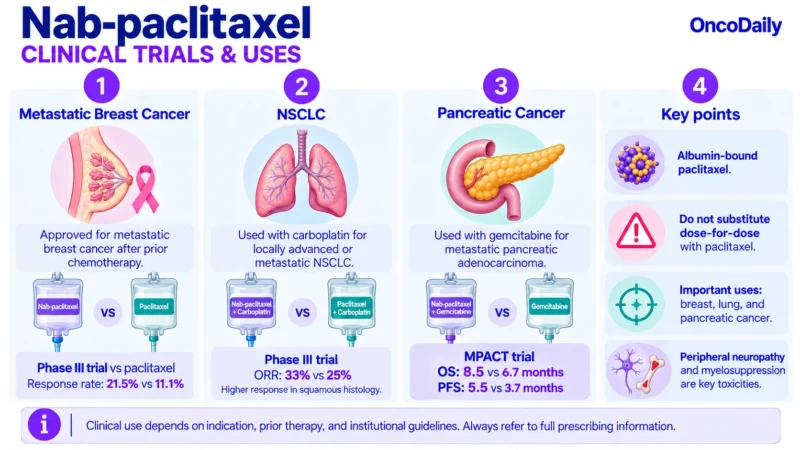
MPACT: Nab-Paclitaxel Plus Gemcitabine in Pancreatic Cancer
The phase III MPACT trial evaluated nab-paclitaxel plus gemcitabine versus gemcitabine alone in patients with previously untreated metastatic pancreatic adenocarcinoma.
The study enrolled:
861 patients.
Patients received nab-paclitaxel 125 mg/m² followed by gemcitabine 1,000 mg/m² on Days 1, 8, and 15 of each 28-day cycle.
Median overall survival:
- Nab-paclitaxel + gemcitabine: 8.5 months
- Gemcitabine alone: 6.7 months.
Median progression-free survival:
- Nab-paclitaxel + gemcitabine: 5.5 months
- Gemcitabine alone: 3.7 months.
Overall response rate:
- Combination: 23%
- Gemcitabine alone: 7%.
The hazard ratio for overall survival was 0.72.
These findings demonstrated improved survival and response rates with the combination and supported the pancreatic cancer indication.
Phase III Trial: Nab-Paclitaxel Versus Conventional Paclitaxel in Breast Cancer
A randomized phase III trial compared nab-paclitaxel with solvent-based paclitaxel in patients with metastatic breast cancer.
The trial enrolled:
460 patients.
Patients received:
- Nab-paclitaxel 260 mg/m² over 30 minutes every three weeks.
- Solvent-based paclitaxel 175 mg/m² over three hours every three weeks.
The reconciled target-lesion response rates reported in the US prescribing information were:
- Nab-paclitaxel: 21.5%
- Conventional paclitaxel: 11.1%.
The trial demonstrated improved tumor response with nab-paclitaxel, although there was no statistically significant overall survival difference between the treatment groups.
The original trial publication reported investigator-assessed overall response rates of approximately 33% versus 19%; these figures use a different response assessment from the reconciled target-lesion rates in the label.
Phase III Trial: Nab-Paclitaxel Plus Carboplatin in NSCLC
The phase III trial conducted by Socinski and colleagues compared weekly nab-paclitaxel plus carboplatin with conventional paclitaxel plus carboplatin in patients with advanced NSCLC.
The study enrolled:
1,052 patients.
Overall response rate:
- Nab-paclitaxel + carboplatin: 33%
- Conventional paclitaxel + carboplatin: 25%.
Among patients with squamous histology, response rates were:
- Nab-paclitaxel combination: 41%
- Conventional paclitaxel combination: 24%.
Median overall survival:
- Nab-paclitaxel combination: 12.1 months
- Conventional paclitaxel combination: 11.2 months.
The overall survival difference was not statistically significant.
The study met its primary endpoint of improved overall response rate.
GeparSepto: Nab-Paclitaxel in Early Breast Cancer
The phase III GeparSepto trial compared neoadjuvant nab-paclitaxel with solvent-based paclitaxel, followed by epirubicin and cyclophosphamide.
The trial randomized 1,229 women with early breast cancer.
Pathological complete response:
- Nab-paclitaxel: 38%
- Conventional paclitaxel: 29%.
The initial nab-paclitaxel dose was reduced during the study because of increased sensory neuropathy and treatment discontinuation.
Grade 3–4 sensory neuropathy occurred in approximately 10% of patients receiving nab-paclitaxel versus 3% receiving conventional paclitaxel.
These findings illustrate that the albumin-bound formulation may improve efficacy in particular treatment settings but does not eliminate taxane-associated neurologic toxicity.
Watch more: The Taxane of Choice for Managing NSCLC Is Nab-Paclitaxel — Dr. Heather Wakelee, ImedexCME.
Is Nab-Paclitaxel FDA Approved?
Yes.
Nab-paclitaxel received its initial FDA approval on January 7, 2005, for metastatic breast cancer.
Additional FDA approvals followed:
- 2012: First-line treatment of locally advanced or metastatic NSCLC in combination with carboplatin.
- 2013: First-line treatment of metastatic pancreatic adenocarcinoma in combination with gemcitabine.
Its approval history reflects the development of albumin-bound drug delivery as a clinically established approach to taxane chemotherapy.
What Is the Current Clinical Role of Nab-Paclitaxel?
Nab-paclitaxel remains an important chemotherapy agent across breast, lung, and pancreatic cancers.
Its combination with gemcitabine continues to be a treatment option in metastatic pancreatic adenocarcinoma.
In NSCLC, nab-paclitaxel plus carboplatin is an established platinum-doublet regimen that can be incorporated into selected modern systemic treatment strategies.
In breast cancer, nab-paclitaxel provides an alternative taxane formulation and has been evaluated in combination with immunotherapy.
An important consideration is that nab-paclitaxel is not simply conventional paclitaxel without premedication. Its formulation, doses, infusion procedures, and clinical evidence must be considered separately.
Nab-paclitaxel is frequently combined with gemcitabine in pancreatic cancer. Learn more about gemcitabine, its mechanism of action, dosing, and clinical role on OncoDaily.
What Are the Major Side Effects of Nab-Paclitaxel?
Nab-paclitaxel can cause significant hematologic and nonhematologic toxicity.
Common adverse reactions include:
- Neutropenia
- Anemia
- Thrombocytopenia
- Peripheral neuropathy
- Alopecia
- Fatigue
- Myalgia and arthralgia
- Nausea and vomiting
- Diarrhea
- Mucositis
- Elevated liver enzymes
- Infections
- Hypersensitivity reactions.
The frequency and severity of adverse reactions depend on the administered dose, schedule, cancer type, and combination regimen.
Myelosuppression
Severe myelosuppression is the principal boxed warning for nab-paclitaxel.
Neutropenia is a major dose-limiting toxicity.
In the clinical studies summarized in the US label, Grade 3–4 neutropenia occurred in approximately:
- 34% of patients with metastatic breast cancer
- 47% of patients with NSCLC
- 38% of patients with pancreatic cancer.
These frequencies reflect different regimens and patient populations and are not directly interchangeable.
Nab-paclitaxel is contraindicated in patients with baseline neutrophil counts below:
1,500 cells/mm³.
Peripheral Neuropathy
Peripheral neuropathy is one of the most important cumulative toxicities of nab-paclitaxel.
Symptoms may include:
- Numbness
- Tingling
- Burning sensations
- Sensory loss
- Difficulty with fine motor activities.
Neuropathy is dose-dependent and may require treatment interruption or dose reduction.
In MPACT, Grade ≥3 peripheral neuropathy occurred in approximately 17% of patients receiving nab-paclitaxel plus gemcitabine versus 1% receiving gemcitabine alone.
Alopecia
Hair loss is common during treatment.
It may affect scalp hair, eyebrows, eyelashes, and body hair.
Fatigue
Fatigue may result from treatment-related systemic effects, anemia, nutritional changes, or the underlying malignancy.
In MPACT, Grade ≥3 fatigue occurred in approximately:
- 17% with nab-paclitaxel + gemcitabine
- 7% with gemcitabine alone.
Gastrointestinal Toxicity
Nab-paclitaxel may cause:
- Nausea
- Vomiting
- Diarrhea
- Constipation
- Mucositis
- Reduced appetite.
Severe gastrointestinal toxicity may require dose interruption or reduction.
Hypersensitivity Reactions
Although nab-paclitaxel avoids Cremophor EL, hypersensitivity reactions can still occur.
Potential manifestations include:
- Rash
- Flushing
- Dyspnea
- Hypotension
- Bronchospasm
- Anaphylaxis.
Severe hypersensitivity requires immediate discontinuation.
Infections and Sepsis
Myelosuppression may increase susceptibility to serious infections.
Sepsis has been reported in patients receiving nab-paclitaxel with gemcitabine, including patients without neutropenia.
Fever or suspected infection requires prompt assessment.
Pneumonitis
Pneumonitis is an important potential complication, particularly with nab-paclitaxel plus gemcitabine.
Symptoms may include:
- Dyspnea
- Cough
- Hypoxemia
- New pulmonary infiltrates.
The US prescribing information recommends permanent discontinuation of nab-paclitaxel and gemcitabine in patients who develop pneumonitis attributed to the combination.
Hepatotoxicity
Elevated AST, ALT, alkaline phosphatase, and bilirubin may occur.
Hepatic impairment may increase paclitaxel exposure and treatment-related toxicity.
Extravasation
Nab-paclitaxel is administered intravenously, and the infusion site should be monitored for infiltration or extravasation.
Local symptoms may include pain, swelling, erythema, and tissue injury.
Pregnancy and Reproductive Toxicity
Nab-paclitaxel can cause fetal harm.
Patients should receive appropriate contraception and reproductive counseling according to the current product information.
What Monitoring Is Required?
Monitoring should include:
- CBC with differential
- Neutrophil count
- Hemoglobin and platelet count
- Liver function
- Renal function
- Peripheral neuropathy assessment
- Infection and fever monitoring
- Assessment for diarrhea and dehydration
- Respiratory symptoms
- Infusion-site assessment
- Treatment response and overall tolerance.
CBC monitoring is particularly important before treatment cycles and before weekly doses in pancreatic cancer and NSCLC regimens.