





Ipilimumab (Yervoy): Mechanism of Action, Dosing, Clinical Uses, Trials, and Side Effects
Key takeaways
- Ipilimumab is a fully human anti-CTLA-4 monoclonal antibody.
- It enhances T-cell activation by blocking CTLA-4 interactions with CD80 and CD86.
- It was the first immune checkpoint inhibitor approved by the FDA.
- Ipilimumab is frequently combined with nivolumab to provide complementary CTLA-4 and PD-1 blockade.
- The dose varies by indication, most commonly 1 mg/kg or 3 mg/kg.
- CheckMate 067, CheckMate 214, CheckMate 8HW, CheckMate 9DW, and CheckMate 743 provide important clinical evidence supporting its use across several malignancies.
- Immune-mediated colitis, hepatitis, and endocrinopathies are major safety concerns.
Ipilimumab (Yervoy) is a fully human IgG1 monoclonal antibody targeting cytotoxic T-lymphocyte-associated protein 4 (CTLA-4), an inhibitory immune checkpoint receptor that regulates T-cell activation.
By blocking CTLA-4 interactions with CD80 and CD86 on antigen-presenting cells, ipilimumab enhances T-cell activation, proliferation, and antitumor immune responses.
Unlike PD-1 and PD-L1 inhibitors, which predominantly restore T-cell activity within peripheral tissues and the tumor microenvironment, ipilimumab acts importantly during T-cell priming and activation, particularly in lymphoid tissues.
Ipilimumab became the first FDA-approved immune checkpoint inhibitor on March 25, 2011, initially for unresectable or metastatic melanoma. Its approval marked a major advance in cancer immunotherapy by demonstrating that immune checkpoint blockade could improve overall survival.
Ipilimumab may be administered as monotherapy in melanoma or combined with nivolumab (Opdivo) in several malignancies, including melanoma, renal cell carcinoma, colorectal cancer, hepatocellular carcinoma, non-small cell lung cancer, malignant pleural mesothelioma, and esophageal squamous cell carcinoma.
Important recent developments include the April 2025 FDA approvals of nivolumab plus ipilimumab for MSI-H/dMMR unresectable or metastatic colorectal cancer and first-line unresectable or metastatic hepatocellular carcinoma.
As of November 2026, dual CTLA-4/PD-1 inhibition remains an established treatment strategy across multiple tumor types, although its increased immune-related toxicity requires careful patient selection and monitoring.
Key Facts
- Generic name: Ipilimumab
- Brand name: Yervoy
- Drug class: Immune checkpoint inhibitor
- Antibody type: Fully human IgG1 monoclonal antibody
- Molecular target: CTLA-4 (CD152)
- Mechanism: Inhibition of CTLA-4/CD80-CD86 signaling, enhancing T-cell activation
- Initial FDA approval: March 25, 2011
- Administration: Intravenous infusion
- Infusion duration: 30 minutes
- Common doses: 1 mg/kg or 3 mg/kg, depending on indication
- Combination partner: Nivolumab
- Treatment duration: Indication-dependent; frequently four induction doses or dosing every six weeks
- FDA-approved cancer categories: Melanoma, RCC, MSI-H/dMMR CRC, HCC, NSCLC, malignant pleural mesothelioma, and ESCC
- Major trials: CheckMate 067, CheckMate 214, CheckMate 8HW, CheckMate 9DW, and CheckMate 743
- Key biomarkers: MSI-H/dMMR, PD-L1, EGFR/ALK, and disease-specific molecular features
- Boxed warning: None in the current U.S. label
- Major risks: Immune-mediated colitis, hepatitis, dermatitis, endocrinopathies, pneumonitis, nephritis, and myocarditis
- Monitoring: Liver enzymes, renal function, ACTH, thyroid function, and clinical symptoms
- Elimination half-life: Approximately 15.4 days
- Available vial strengths: 50 mg/10 mL and 200 mg/40 mL
- Concentration: 5 mg/mL
What Is Ipilimumab?
Ipilimumab is a monoclonal antibody that inhibits CTLA-4, a negative regulator of T-cell activation.
CTLA-4 is expressed on activated T lymphocytes and constitutively on regulatory T cells (Tregs).
Its principal ligands, CD80 (B7-1) and CD86 (B7-2), are expressed on antigen-presenting cells.
During normal immune responses, CTLA-4 helps maintain immune tolerance and prevents excessive T-cell activation.
However, this inhibitory pathway can also limit antitumor immune responses.
Ipilimumab blocks CTLA-4-mediated suppression, enhancing the activation and expansion of antitumor T lymphocytes.
CTLA-4 blockade may also affect regulatory T-cell function and the balance between effector and suppressive immune cells.
How Does Ipilimumab Differ From Nivolumab?
Ipilimumab targets CTLA-4, primarily influencing early T-cell activation and immune priming.
Nivolumab targets PD-1, reducing inhibitory signaling experienced by activated T cells, including within the tumor microenvironment.
Combining the two agents provides complementary checkpoint inhibition, potentially increasing antitumor activity.
However, dual checkpoint blockade also increases the risk of severe immune-mediated adverse reactions.
What Is the Mechanism of Action of Ipilimumab?
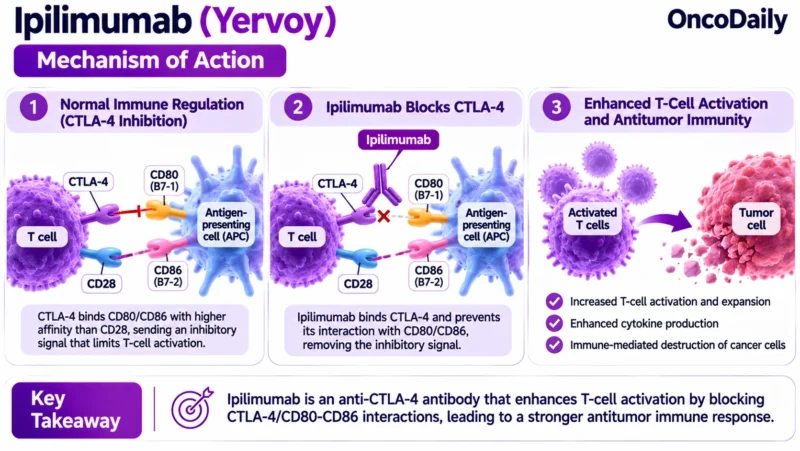
1. Antigen Presentation and T-Cell Activation
Antigen-presenting cells, particularly dendritic cells, present tumor-associated antigens to T lymphocytes through peptide–MHC complexes.
Effective T-cell activation requires antigen recognition and costimulatory signaling.
2. CD28-Mediated Costimulation
CD28 receptors on T cells interact with CD80 and CD86 on antigen-presenting cells.
This interaction promotes T-cell activation, proliferation, survival, and cytokine production.
3. CTLA-4-Mediated Inhibition
Following T-cell activation, CTLA-4 expression increases.
CTLA-4 binds CD80 and CD86 with higher affinity than CD28, limiting costimulatory signaling.
CTLA-4 also contributes to the suppressive functions of regulatory T cells.
4. Ipilimumab Binds CTLA-4
Ipilimumab selectively binds CTLA-4 and prevents its interaction with CD80 and CD86.
This removes an inhibitory signal that limits T-cell activation.
5. Enhanced T-Cell Priming and Expansion
CTLA-4 blockade increases the activation and proliferation of responsive T-cell populations.
Potential effects include:
- Increased T-cell expansion
- Enhanced cytokine production
- Increased antitumor immune responsiveness
- Alterations in regulatory T-cell activity
6. Immune-Mediated Tumor Destruction
Activated cytotoxic T cells recognize malignant cells and induce apoptosis through perforin, granzymes, and other immune pathways.
This can result in tumor regression and durable disease control.
7. Complementary PD-1 Blockade
When combined with nivolumab, ipilimumab promotes immune activation while nivolumab reduces PD-1-mediated suppression.
This dual approach may strengthen both T-cell priming and effector activity.
Overall mechanism:
Ipilimumab → CTLA-4 binding → blockade of CTLA-4/CD80-CD86 interactions → increased CD28 costimulation → T-cell activation and expansion → enhanced antitumor immunity → tumor-cell destruction.
What Is the Recommended Dose of Ipilimumab?
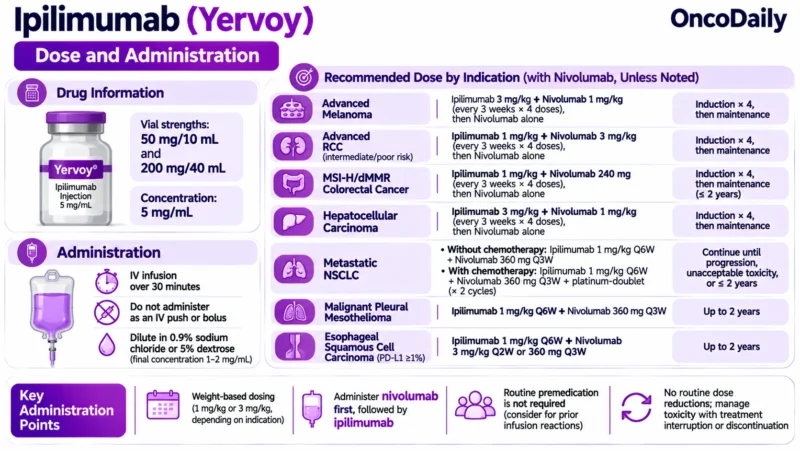
Ipilimumab is administered intravenously using weight-based dosing.
The regimen depends on the malignancy and whether ipilimumab is used alone or with nivolumab.
Unresectable or Metastatic Melanoma — Monotherapy
Ipilimumab 3 mg/kg IV every three weeks for four doses.
Treatment is discontinued after the planned four doses or earlier for unacceptable toxicity.
Advanced Melanoma — Combination With Nivolumab
Induction treatment:
- Ipilimumab: 3 mg/kg IV every three weeks
- Nivolumab: 1 mg/kg IV every three weeks
- Duration: Four induction doses
Following induction, nivolumab is continued as monotherapy until disease progression or unacceptable toxicity.
Adjuvant Treatment of Melanoma
The U.S. label includes ipilimumab monotherapy after complete resection of eligible node-positive cutaneous melanoma.
Induction: 3 mg/kg every three weeks for four doses.
Maintenance: 3 mg/kg every 12 weeks for up to four additional doses.
Although FDA-approved, adjuvant ipilimumab is rarely preferred over contemporary PD-1-based approaches because of its toxicity profile.
Advanced Renal Cell Carcinoma
For previously untreated intermediate- or poor-risk advanced RCC:
- Ipilimumab: 1 mg/kg every three weeks
- Nivolumab: 3 mg/kg every three weeks
- Duration: Four combination doses
Following induction, continue nivolumab monotherapy until progression or unacceptable toxicity.
MSI-H/dMMR Unresectable or Metastatic Colorectal Cancer
For adults and adolescents aged 12 years and older weighing at least 40 kg:
- Ipilimumab: 1 mg/kg every three weeks
- Nivolumab: 240 mg every three weeks
- Duration: Four combination doses
Following induction, continue nivolumab monotherapy according to the approved dosing schedule, generally until progression, unacceptable toxicity, or up to two years.
For adolescents weighing less than 40 kg, nivolumab is administered using weight-based dosing.
Unresectable or Metastatic Hepatocellular Carcinoma
For first-line treatment or eligible patients previously treated with sorafenib:
- Ipilimumab: 3 mg/kg every three weeks
- Nivolumab: 1 mg/kg every three weeks
- Duration: Four induction doses
Continue nivolumab alone after induction until progression or unacceptable toxicity.
Metastatic NSCLC — Without Chemotherapy
For eligible adults with PD-L1 expression ≥1% and no EGFR or ALK genomic tumor aberrations:
- Ipilimumab: 1 mg/kg every six weeks
- Nivolumab: 360 mg every three weeks
Continue until disease progression, unacceptable toxicity, or up to two years in patients without progression.
Metastatic or Recurrent NSCLC — With Chemotherapy
For eligible patients without EGFR or ALK genomic tumor aberrations:
- Ipilimumab: 1 mg/kg every six weeks
- Nivolumab: 360 mg every three weeks
- Platinum-doublet chemotherapy: Every three weeks for two cycles
Continue nivolumab and ipilimumab according to the approved schedule for up to two years in patients without progression.
Unresectable Malignant Pleural Mesothelioma
First-line treatment:
- Ipilimumab: 1 mg/kg every six weeks
- Nivolumab: 360 mg every three weeks
Continue until progression, unacceptable toxicity, or up to two years.
Advanced or Metastatic Esophageal Squamous Cell Carcinoma
For eligible tumors expressing PD-L1 ≥1%:
- Ipilimumab: 1 mg/kg every six weeks
- Nivolumab: 3 mg/kg every two weeks or 360 mg every three weeks
Continue until progression, unacceptable toxicity, or up to two years.
These schedules are based on the August 2026 U.S. prescribing information.
How Should Ipilimumab Be Administered?
Intravenous Infusion
Ipilimumab is administered as a 30-minute intravenous infusion.
It must not be administered as an intravenous push or bolus.
Preparation and Dilution
Yervoy is supplied in single-dose vials:
- 50 mg/10 mL
- 200 mg/40 mL
Both contain 5 mg/mL ipilimumab.
Dilute the required dose using:
0.9% sodium chloride, or
5% dextrose
The final concentration should be between 1 and 2 mg/mL.
Do not shake the solution.
Administration With Nivolumab
When given together:
- Administer nivolumab first
- Administer ipilimumab afterward.
When platinum-doublet chemotherapy is included, the sequence is:
Nivolumab → Ipilimumab → Chemotherapy.
Use separate infusion bags and filters.
Premedication
Routine premedication is generally unnecessary.
Patients with previous mild infusion reactions may require individualized precautions.
What Should You Do If an Ipilimumab Dose Is Missed?
If a dose is missed:
- Contact the treating oncology team.
- Evaluate the cause of treatment interruption.
- Reassess unresolved toxicities.
- Reschedule treatment according to the prescribed regimen.
- Do not administer an additional or double dose.
For combination treatment, coordinate scheduling with nivolumab.
How Are Ipilimumab Dose Modifications Managed?
Routine dose reductions are not recommended.
Management depends on toxicity severity and the affected organ.
Immune-Mediated Colitis
Grade 2: Withhold treatment.
Grade 3–4: Permanently discontinue ipilimumab.
Systemic corticosteroids are generally recommended for clinically significant colitis.
Infliximab or vedolizumab may be considered in selected corticosteroid-refractory cases.
Immune-Mediated Hepatitis
Withhold treatment for significant elevations in liver enzymes or bilirubin.
Severe hepatitis requires permanent discontinuation.
Modification thresholds differ in patients with HCC or hepatic tumor involvement.
Immune-Mediated Pneumonitis
Grade 2: Withhold treatment.
Grade 3–4: Permanently discontinue.
Endocrinopathies
Significant endocrine toxicity may require treatment interruption and hormone replacement.
Permanent discontinuation is not always necessary when the endocrinopathy becomes clinically stable.
Immune-Mediated Nephritis
Grade 2–3 creatinine elevation: Withhold treatment.
Grade 4: Permanently discontinue.
Myocarditis
Grade 2–4 myocarditis: Permanently discontinue.
Infusion-Related Reactions
Grade 1–2: Interrupt or slow the infusion.
Grade 3–4: Permanently discontinue.
Corticosteroid Management
For severe immune-mediated toxicity, initial corticosteroid treatment commonly consists of prednisone or methylprednisolone equivalent 1–2 mg/kg/day, adjusted to the organ involved and clinical severity.
Following improvement, corticosteroids are generally tapered over at least four weeks.
If toxicity does not adequately improve, specialist-directed additional immunosuppression may be necessary.
What Drug Interactions Are Important With Ipilimumab?
CYP450-Metabolized Medications
Ipilimumab is not primarily metabolized by hepatic cytochrome P450 enzymes.
Conventional CYP-mediated pharmacokinetic interactions are unlikely.
Systemic Corticosteroids
Baseline immunosuppression may affect immune checkpoint inhibitor efficacy.
However, corticosteroids remain essential for treating immune-mediated adverse reactions.
Other Immunosuppressive Medications
Concomitant immunosuppression requires individualized evaluation, particularly in patients with autoimmune diseases or organ transplants.
Nivolumab
Combining ipilimumab with nivolumab increases the risk of immune-mediated toxicities, particularly colitis, hepatitis, endocrinopathies, and dermatitis.
Chemotherapy
When combined with chemotherapy in NSCLC, additional toxicities may include myelosuppression, infection, nausea, nephrotoxicity, and neuropathy.
Does Ipilimumab Require Dose Adjustment in Renal or Hepatic Impairment?
Renal Impairment
Population pharmacokinetic analyses have not demonstrated clinically meaningful changes in ipilimumab clearance in patients with renal impairment and an estimated GFR of at least 15 mL/min/1.73 m².
Routine renal dose adjustment is not required within the studied range.
Hepatic Impairment
Mild hepatic impairment does not significantly alter ipilimumab pharmacokinetics.
Data in moderate or severe hepatic impairment remain limited.
Patients with HCC or liver metastases require careful assessment of baseline hepatic function and immune-mediated hepatitis risk.
What Is the Pharmacokinetic Profile of Ipilimumab?
Molecular Structure
Ipilimumab is a fully human IgG1κ monoclonal antibody with an approximate molecular weight of 148 kDa.
Distribution and Metabolism
As a large monoclonal antibody, ipilimumab is primarily distributed within vascular and interstitial compartments.
It is degraded through proteolytic catabolism into peptides and amino acids.
Elimination Half-Life
Approximately 15.4 days.
Clearance
Mean systemic clearance is approximately 16.8 mL/hour.
Pharmacokinetic Behavior
Ipilimumab demonstrates approximately linear pharmacokinetics across the studied dose range of 0.3–10 mg/kg.
Steady-state concentrations are generally reached by the third dose when administered every three weeks.
Immunogenicity
Anti-ipilimumab antibodies may develop, although their clinical impact varies by study and treatment regimen.
What Are the Clinical Uses of Ipilimumab?
Unresectable or Metastatic Melanoma
Ipilimumab is approved as monotherapy or with nivolumab for patients aged 12 years and older with unresectable or metastatic melanoma.
The combination may provide prolonged disease control, particularly in patients requiring more intensive immunotherapy.
Adjuvant Melanoma
Ipilimumab retains an FDA-approved adjuvant indication for selected adults with completely resected, node-positive cutaneous melanoma.
However, anti-PD-1 treatment is generally preferred in contemporary practice because of a more favorable toxicity profile.
Advanced Renal Cell Carcinoma
Ipilimumab plus nivolumab is approved for previously untreated intermediate- or poor-risk advanced RCC.
The regimen combines CTLA-4 and PD-1 blockade and may produce durable complete responses.
MSI-H/dMMR Colorectal Cancer
Ipilimumab plus nivolumab is approved for unresectable or metastatic MSI-H/dMMR colorectal cancer in adults and patients aged 12 years and older.
The April 2025 FDA approval expanded the combination’s role based on the CheckMate 8HW trial.
Hepatocellular Carcinoma
Ipilimumab plus nivolumab is approved in unresectable or metastatic HCC, including as first-line treatment.
The 2025 first-line approval was supported by CheckMate 9DW.
Metastatic NSCLC
Ipilimumab is approved with nivolumab for selected metastatic NSCLC with PD-L1 expression ≥1% and no EGFR or ALK genomic tumor aberrations.
It is also approved with nivolumab and two cycles of platinum-doublet chemotherapy in eligible metastatic or recurrent NSCLC without those genomic aberrations.
Malignant Pleural Mesothelioma
Ipilimumab plus nivolumab is approved for first-line treatment of unresectable malignant pleural mesothelioma.
The regimen has demonstrated survival benefit, with clinically important outcomes in non-epithelioid histology.
Esophageal Squamous Cell Carcinoma
Ipilimumab plus nivolumab is approved for first-line treatment of unresectable advanced or metastatic ESCC with tumor-cell PD-L1 expression ≥1%.
What Molecular Testing Is Required Before Ipilimumab?
MSI-H/dMMR Testing
For colorectal cancer, MSI-H or dMMR status must be confirmed using an FDA-authorized test.
Common methods include mismatch repair protein immunohistochemistry and molecular MSI testing.
PD-L1 Testing
PD-L1 expression is required for the approved chemotherapy-free NSCLC combination regimen and the specified ESCC indication.
The relevant threshold is PD-L1 ≥1%, with interpretation dependent on the tumor type and validated assay.
EGFR and ALK Testing
NSCLC patients should undergo molecular profiling before selecting systemic therapy.
The relevant ipilimumab-containing NSCLC regimens exclude known EGFR or ALK genomic tumor aberrations.
Melanoma Molecular Testing
BRAF V600 testing is important for treatment planning, although BRAF mutation status is not required to administer ipilimumab.
Renal Cell Carcinoma
Determine histological subtype and IMDC risk category.
The labeled indication is for intermediate- or poor-risk advanced RCC.
Hepatocellular Carcinoma
Evaluate liver function, Child–Pugh classification, hepatitis status, performance status, and underlying cirrhosis.
These assessments influence treatment safety and eligibility.
What Did the Pivotal Clinical Trials Show?
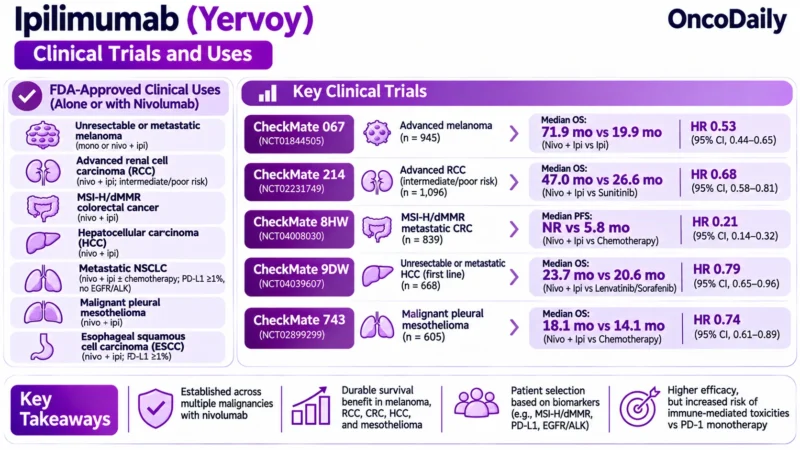
1. CheckMate 067 — Advanced Melanoma
CheckMate 067 (NCT01844505) was a randomized phase III trial involving 945 patients with previously untreated unresectable or metastatic melanoma.
Patients received nivolumab plus ipilimumab, nivolumab alone, or ipilimumab alone.
Median Overall Survival — 10-Year Follow-Up
- Nivolumab + ipilimumab: 71.9 months
- Nivolumab alone: 36.9 months
- Ipilimumab alone: 19.9 months
Overall Survival Hazard Ratio vs Ipilimumab
HR: 0.53 (95% CI, 0.44–0.65) for the combination.
The long-term results demonstrated durable survival benefits with dual checkpoint inhibition, establishing nivolumab plus ipilimumab as an important treatment option in advanced melanoma.
Watch More: CheckMate 067 Outcomes: Nivolumab Plus Ipilimumab in Advanced Melanoma — ecancer.
2. CheckMate 214 — Advanced Renal Cell Carcinoma
CheckMate 214 (NCT02231749) was a randomized phase III trial comparing nivolumab plus ipilimumab with sunitinib in previously untreated advanced RCC.
The trial enrolled 1,096 patients, including an intermediate- or poor-risk population central to the approved indication.
Median Overall Survival — Five-Year Follow-Up, Intermediate/Poor-Risk Population
- Nivolumab + ipilimumab: 47.0 months
- Sunitinib: 26.6 months
The combination demonstrated durable survival benefits, higher complete response rates, and long-term disease control.
CheckMate 214 established dual checkpoint inhibition as a first-line treatment option for intermediate- or poor-risk advanced RCC.
3. CheckMate 8HW — MSI-H/dMMR Metastatic Colorectal Cancer
CheckMate 8HW (NCT04008030) was a randomized phase III study evaluating nivolumab plus ipilimumab against chemotherapy or nivolumab monotherapy in MSI-H/dMMR metastatic colorectal cancer.
First-Line Progression-Free Survival
- Nivolumab + ipilimumab: Not reached
- Chemotherapy: 5.8 months
Progression-Free Survival Hazard Ratio
HR: 0.21 (95% CI, 0.14–0.32)
P < 0.0001
All-Line Comparison Against Nivolumab Monotherapy
- Median PFS: Not reached vs 39.3 months
- HR: 0.62 (95% CI, 0.48–0.81)
- ORR: 71% vs 58%
These findings demonstrated substantial improvement in progression-free survival and supported the April 2025 FDA approval.
Read More: CheckMate 8HW at ESMO 2026: Final Overall Survival Results With Nivolumab Plus Ipilimumab in MSI-H/dMMR Metastatic Colorectal Cancer by OncoDaily.
4. CheckMate 9DW — First-Line Hepatocellular Carcinoma
CheckMate 9DW (NCT04039607) was a randomized phase III trial involving 668 adults with previously untreated unresectable or metastatic HCC.
Patients received nivolumab plus ipilimumab or lenvatinib/sorafenib.
Median Overall Survival
- Nivolumab + ipilimumab: 23.7 months
- Lenvatinib or sorafenib: 20.6 months
Overall Survival Hazard Ratio
HR: 0.79 (95% CI, 0.65–0.96)
P = 0.018
Overall Response Rate
- Nivolumab + ipilimumab: 36%
- Control: 13%
The trial established a survival benefit for first-line dual checkpoint blockade and supported the April 2025 FDA approval in HCC.
5. CheckMate 743 — Malignant Pleural Mesothelioma
CheckMate 743 (NCT02899299) was a randomized phase III trial involving 605 patients with previously untreated unresectable malignant pleural mesothelioma.
Patients received nivolumab plus ipilimumab or platinum–pemetrexed chemotherapy.
Median Overall Survival
- Nivolumab + ipilimumab: 18.1 months
- Chemotherapy: 14.1 months
Overall Survival Hazard Ratio
HR: 0.74 (95% CI, 0.61–0.89)
P = 0.002
Two-Year Overall Survival
- Nivolumab + ipilimumab: 41%
- Chemotherapy: 27%
The combination significantly improved overall survival and established a chemotherapy-free first-line option for unresectable mesothelioma.
Does Ipilimumab Have CNS Activity?
Ipilimumab combined with nivolumab has demonstrated clinically meaningful intracranial activity in selected patients with melanoma brain metastases.
Responses are particularly relevant in patients with asymptomatic brain metastases who do not require substantial corticosteroid treatment.
Intracranial responses are generally less favorable in symptomatic patients or those requiring corticosteroids.
Ipilimumab does not directly target a CNS-specific oncogenic alteration. Its intracranial activity depends on immune-mediated antitumor responses.
Brain-directed treatment decisions should consider symptoms, lesion size, neurological risk, and the need for surgery or stereotactic radiosurgery.
Is Ipilimumab FDA Approved?
Yes.
Ipilimumab received its first FDA approval in March 2011 for unresectable or metastatic melanoma.
Its labeled uses subsequently expanded to multiple additional malignancies, predominantly in combination with nivolumab.
Important milestones include:
- 2011: Unresectable or metastatic melanoma.
- 2015: Adjuvant melanoma.
- 2018: First-line intermediate- or poor-risk advanced RCC.
- 2020: Metastatic NSCLC, malignant pleural mesothelioma, and previously treated HCC.
- 2022: Advanced or metastatic ESCC.
- April 2025: MSI-H/dMMR unresectable or metastatic CRC and first-line unresectable or metastatic HCC.
What Is the Current Clinical Role of Ipilimumab in 2026?
Ipilimumab remains a major component of dual immune checkpoint inhibition.
Its strongest established applications include advanced melanoma, intermediate- or poor-risk RCC, MSI-H/dMMR colorectal cancer, HCC, selected NSCLC, and unresectable malignant pleural mesothelioma.
Treatment selection balances the potential for durable responses against the higher rate of immune-mediated adverse events compared with PD-1 monotherapy.
In melanoma, newer neoadjuvant approaches are also changing treatment strategies for selected patients with resectable macroscopic disease. These approaches must be distinguished from the currently labeled ipilimumab regimens.
What Are the Major Side Effects of Ipilimumab?
Immune-Mediated Adverse Reactions
Severe and potentially fatal immune-mediated toxicities are the major safety concern with ipilimumab.
CTLA-4 blockade increases immune activation and can disrupt tolerance to normal tissues.
Toxicities may affect almost any organ system and can appear during treatment or after discontinuation.
Immune-Mediated Colitis
Colitis is a particularly important toxicity of ipilimumab.
Symptoms include:
- Diarrhea
- Abdominal pain
- Blood or mucus in stool
- Fever
- Dehydration
Severe cases may cause intestinal perforation.
In a pooled melanoma monotherapy population receiving ipilimumab 3 mg/kg, immune-mediated colitis occurred in approximately 12% of patients, including severe cases.
Immune-Mediated Hepatitis
Ipilimumab may cause inflammatory liver injury.
Manifestations include elevated AST, ALT, bilirubin, jaundice, fatigue, and abdominal discomfort.
Risk is particularly important with nivolumab combinations and in patients with HCC or underlying hepatic disease.
Dermatological Toxicity
Common reactions include:
- Rash
- Pruritus
- Dermatitis
- Vitiligo
Rare serious complications include Stevens–Johnson syndrome, toxic epidermal necrolysis, and DRESS syndrome.
Hypophysitis
Hypophysitis is a characteristic endocrine toxicity of CTLA-4 blockade.
Symptoms may include headache, fatigue, hypotension, visual disturbances, and pituitary hormone deficiencies.
Patients may require lifelong hormone replacement.
Thyroid Dysfunction
Ipilimumab may cause hypothyroidism, hyperthyroidism, and thyroiditis.
Thyroid abnormalities may coexist with other endocrine toxicities.
Adrenal Insufficiency
Adrenal insufficiency may occur independently or as a consequence of hypophysitis.
Severe cases may lead to adrenal crisis.
Type 1 Diabetes Mellitus
Immune-mediated pancreatic beta-cell injury may cause insulin-deficient diabetes and diabetic ketoacidosis.
Immune-Mediated Pneumonitis
Symptoms include cough, dyspnea, hypoxia, and inflammatory pulmonary infiltrates.
Patients with prior thoracic radiotherapy or underlying pulmonary disease require careful assessment.
Immune-Mediated Nephritis
Patients may develop increased serum creatinine and acute kidney injury.
Alternative causes of renal dysfunction should be excluded.
Immune-Mediated Myocarditis
Myocarditis is uncommon but can be life-threatening.
Potential manifestations include chest pain, arrhythmias, heart failure, and elevated troponin.
Suspected myocarditis requires urgent assessment and treatment interruption.
Neurological Toxicity
Rare complications include myasthenia gravis, Guillain–Barré syndrome, encephalitis, myelitis, and immune-mediated neuropathies.
Infusion-Related Reactions
Possible symptoms include chills, fever, rash, dyspnea, and hypotension.
Severe reactions require permanent discontinuation.
Transplant-Related Complications
Checkpoint inhibition may increase the risk of solid organ transplant rejection.
Serious complications, including graft-versus-host disease, have been reported after allogeneic hematopoietic stem-cell transplantation.
Other Common Adverse Reactions
Common adverse reactions include fatigue, diarrhea, nausea, pruritus, rash, decreased appetite, and abdominal pain.
Embryo-Fetal Toxicity
Ipilimumab may cause fetal harm.
Females of reproductive potential should use effective contraception during treatment and for three months after the final dose.
Breastfeeding is not recommended during treatment and for three months afterward.
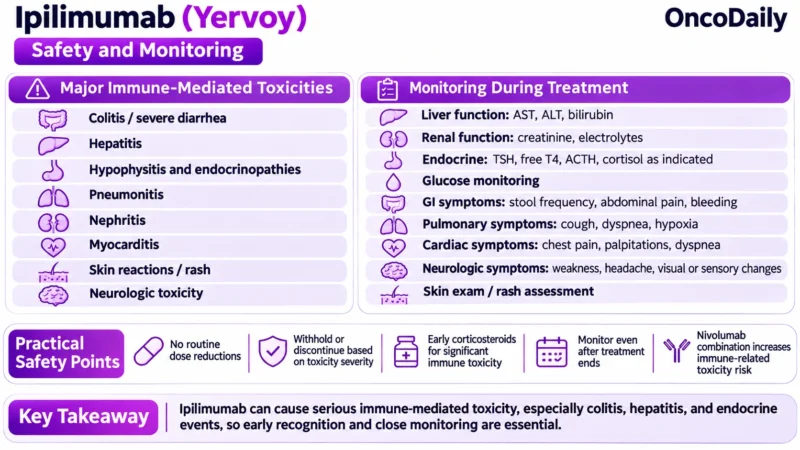
What Monitoring Is Required During Ipilimumab Treatment?
Baseline Assessment
Before treatment, evaluate:
- Complete blood count
- Liver function
- Renal function
- Thyroid function
- ACTH and other endocrine parameters
- Blood glucose
- Autoimmune disease and transplantation history
Liver Function
Monitor AST, ALT, and bilirubin before each dose.
Additional monitoring may be necessary in patients with HCC, liver metastases, or suspected hepatitis.
Renal Function
Monitor serum creatinine and electrolytes before treatment and periodically thereafter.
Investigate suspected immune-mediated nephritis.
Thyroid and Pituitary Function
Monitor TSH, free T4, and ACTH according to prescribing guidance.
Assess cortisol and additional pituitary hormones when clinically indicated.
Gastrointestinal Monitoring
Assess stool frequency, diarrhea, abdominal pain, and gastrointestinal bleeding.
Early recognition of colitis is especially important during ipilimumab-containing induction regimens.
Pulmonary Monitoring
Evaluate new cough, dyspnea, and hypoxia.
Investigate suspected pneumonitis with appropriate imaging.
Cardiovascular Monitoring
Investigate chest pain, palpitations, syncope, and unexplained dyspnea.
ECG, troponin, echocardiography, or cardiac MRI may be indicated.
Neurological Monitoring
Assess weakness, headache, visual symptoms, sensory abnormalities, and swallowing difficulties.
Dermatological Monitoring
Monitor for rash, pruritus, blistering, mucosal lesions, and other inflammatory reactions.
Tumor Response
Assess treatment response using disease-specific imaging and clinical criteria.
Immune-related pseudoprogression may occur but should not be assumed in patients with progressive disease.
Long-Term Monitoring
Immune-mediated adverse reactions may occur after ipilimumab discontinuation.
Patients require continued symptom assessment and appropriate endocrine follow-up.