At the Community Oncology Global Congress (COGC 2026), organized by OncoDaily, Sergio Contreras Garduño, medical oncologist from Mexico City, turned to a question that sits at the heart of cancer care in Latin America:
“Can the patient reach the right treatment, at the right center, at the right time?”
Using Mexico as a case study, he explored how fragmented health systems, delayed referrals, unequal access to technology, and geography can stand between diagnosis and treatment.
His starting point was the system itself, and why availability does not always mean accessibility.
A Fragmented System for Cancer Care
Mexico is divided into 32 federal entities, with major political, economic, and cultural differences across the country. Its healthcare system is similarly divided, made up of several public institutions that serve different populations and operate under different eligibility criteria, often determined by employment status.
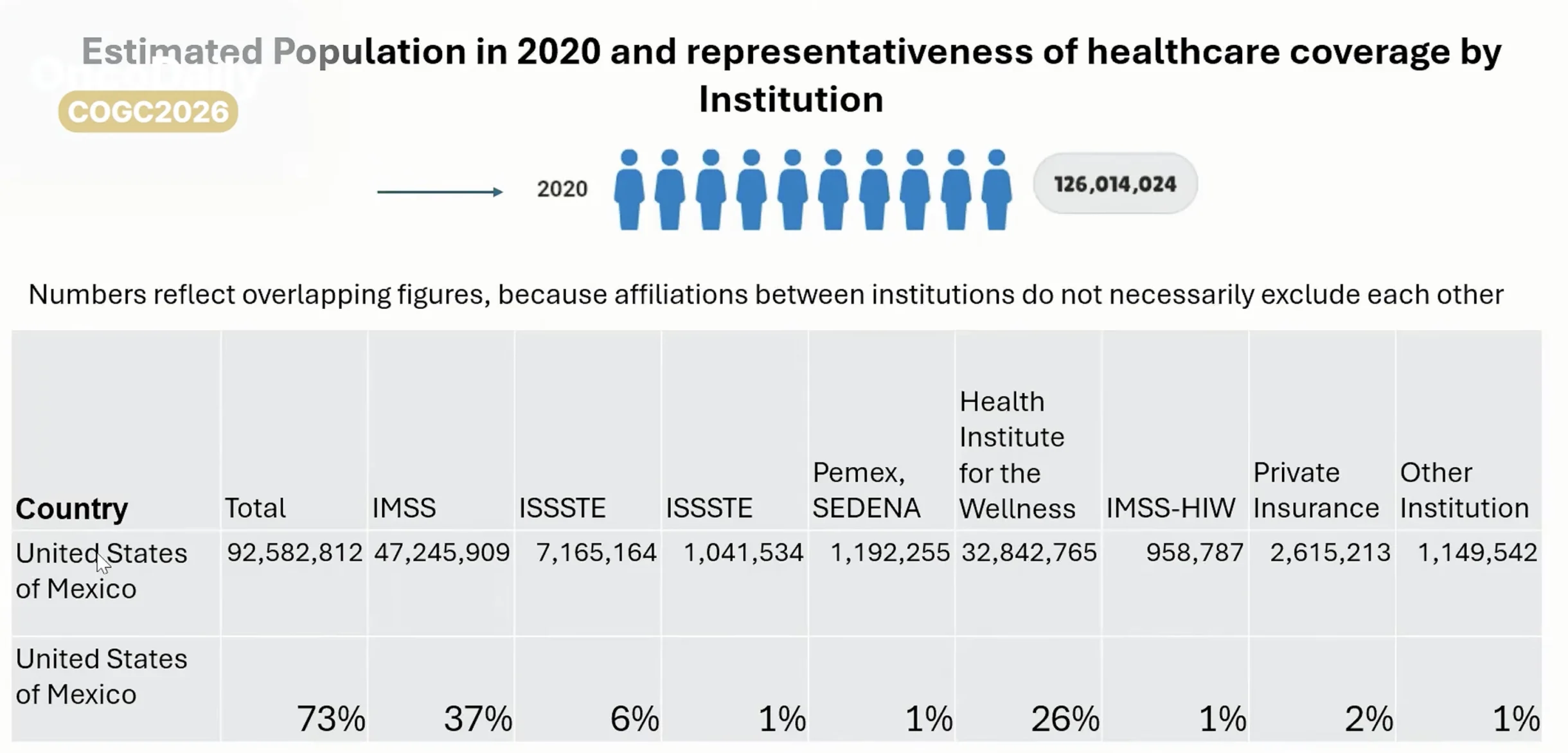
The Mexican Social Security Institute (IMSS) covers the largest population, primarily formally employed workers, while other institutions serve people in the informal sector or those without employment-based coverage.
Each institution operates independently, with its own health records, resources, infrastructure, referral pathways, and administrative processes.
The problem is that no single institution has every resource an oncology patient may need.
One system may have access to a certain treatment or specialist service, while another may have the infrastructure required to deliver a different part of care. In principle, these systems can complement one another. In practice, moving between them can be difficult.
Communication may be limited, referral pathways can be complex, and patients can end up coordinating their own care between institutions. For cancer patients, who may need several specialists, diagnostic services, and treatment modalities, that fragmentation becomes particularly important.
Where the Oncology Pathway Begins to Break Down
Cancer care in Mexico is delivered across three levels.
The first level focuses mainly on prevention, screening, health promotion, and identifying patients who may have cancer. Screening coverage, however, remains inadequate.
The second level provides diagnosis, assessment, and referral to specialists, but delays can arise because of logistical barriers or limited access to diagnostic resources depending on the region.
The third level provides highly specialized diagnosis and treatment, multidisciplinary management, and follow-up.
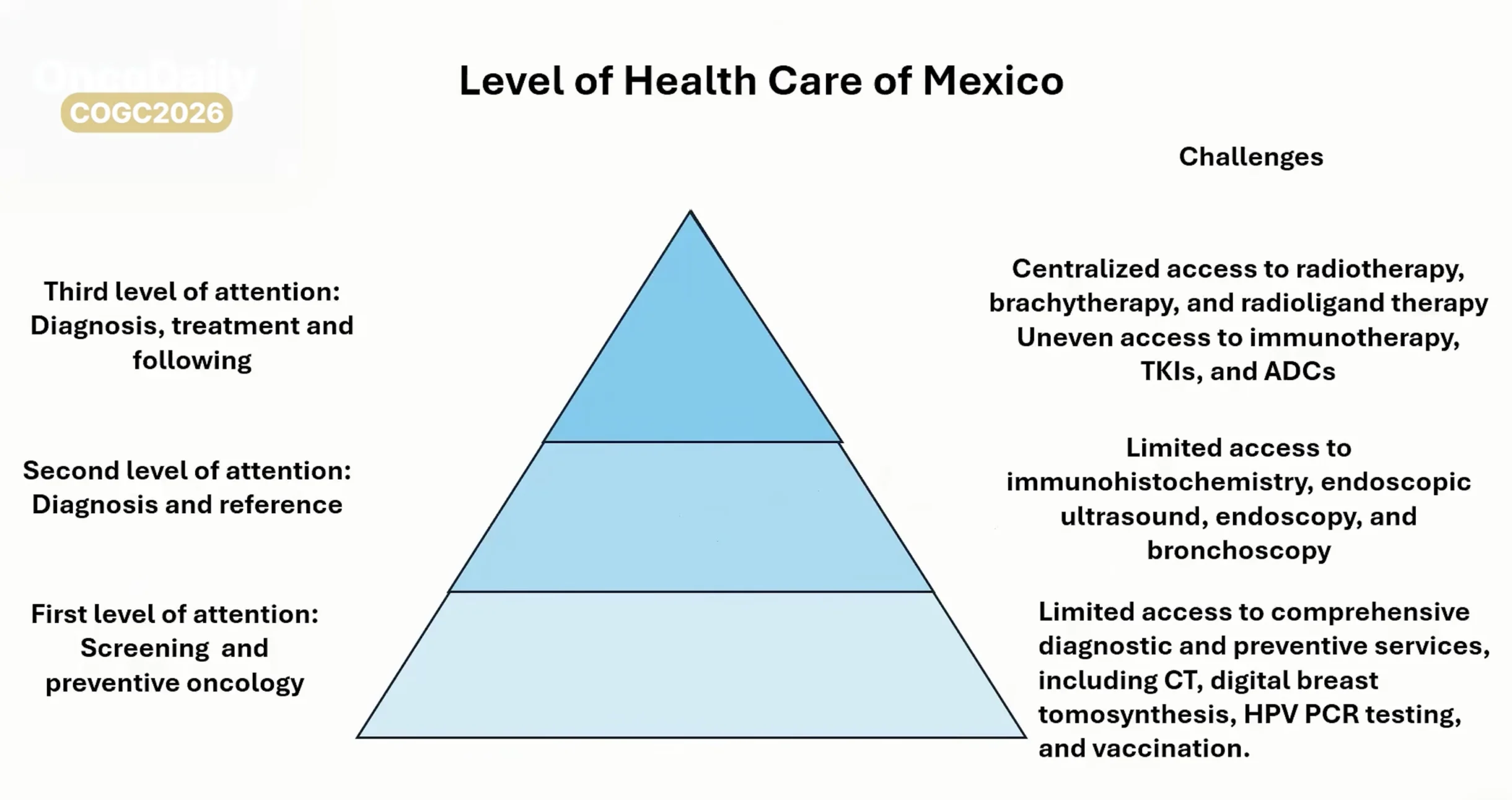
In principle, patients should move through these levels according to their clinical needs. But oncology has become increasingly complex, while the resources needed to deliver modern cancer care are not distributed equally.
Some are concentrated in specialized referral centers.
That changes the question. It’s not just whether a treatment exists, but whether the patient can actually reach the testing, expertise, infrastructure, and care required in time.
Three Ways Access Can Fail
Three clinical cases show where that difference becomes real.
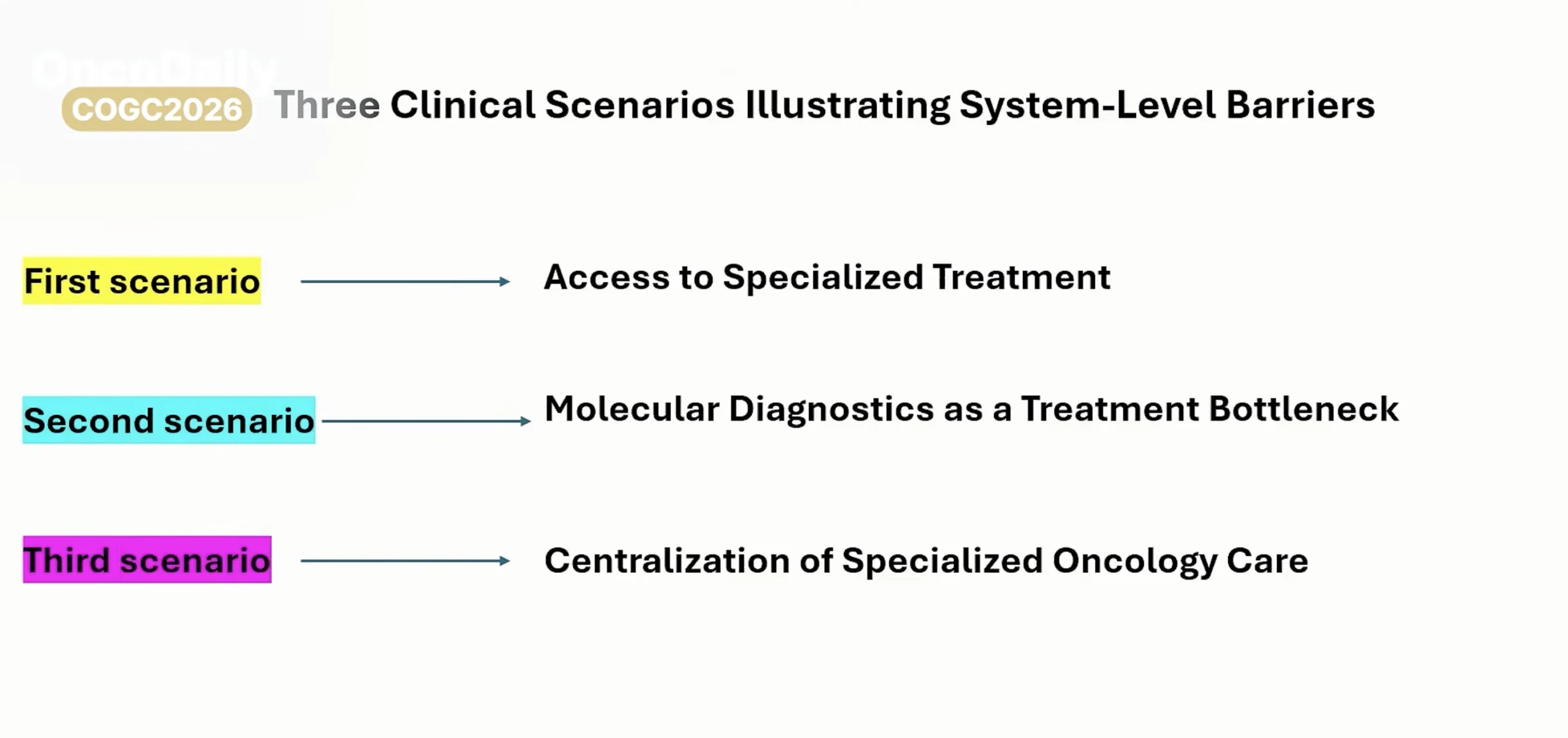
- When Availability Is Not Accessibility
The first involved a 60-year-old man with metastatic acral melanoma and oligometastatic disease in the central nervous system.
His needs went beyond confirming metastatic melanoma. He required additional CNS imaging, multidisciplinary evaluation, and specialized local treatment. Around one month passed between diagnosis and MRI assessment, while approximately three months passed between diagnosis and Gamma Knife treatment.
The treatment existed within the healthcare system. The problem was reaching the infrastructure needed to deliver it.
The hospital treating him had access to immunotherapy and external beam radiation therapy, but not Gamma Knife technology. Another institution had Gamma Knife capability but did not have access to the immunotherapy he needed.
This is where availability and accessibility become two different things. A treatment may technically exist, but if the necessary imaging, expertise, equipment, or referral pathway cannot be reached in time, it is not truly accessible when the patient needs it.
2. When Molecular Testing Becomes Part of Treatment
The second case involved a 73-year-old woman with stage IV non-small cell lung cancer who was symptomatic and a nonsmoker.
For her, molecular characterization was essential to determine treatment.
Approximately one month passed before next-generation sequencing was performed. Many institutions do not have access to validated molecular sequencing for clinical use, meaning patients may depend on testing provided through pharmaceutical industry support programs.
After an EGFR mutation was identified, roughly another two months passed before targeted therapy was initiated.
In modern oncology, molecular testing is often part of deciding the treatment itself, not just confirming the diagnosis.
Clinical diagnosis must be followed by molecular characterization before the most appropriate therapy can be selected. Every delay in that sequence becomes clinically meaningful.
The structure of the health system can complicate this further. A patient may have access to more than one institution, but those institutions may not offer the same resources. Starting care in the system that happens to have the required medication or diagnostic service can make an enormous difference.
Early referral is therefore critical, but even referral does not guarantee that treatment will begin within the ideal timeframe.
3. When Geography Becomes a Clinical Barrier
The third case involved a 69-year-old man with metastatic uveal melanoma and oligometastatic liver disease.
Approximately seven months passed from the onset of visual symptoms to ophthalmologic and radiological assessment. By the time he reached tertiary-level care, around 12 months had passed.
Reaching specialty care required approximately eight hours of ground travel and a journey of about 460 kilometers.
In this case, distance itself became part of the clinical problem.
Some cancers require expertise and infrastructure that must remain concentrated in specialized centers. Centralization is not necessarily the problem. For highly specialized diseases, it may be necessary to maintain quality.
The problem begins when there is no efficient pathway for patients to reach those centers. Then the patient is no longer facing only a medical problem.
The problem becomes geographical, logistical, and socioeconomic as well.
Healthcare services can exist within a country and still remain inaccessible to a significant part of its population.
What the Barriers Reveal – and How to Fix Them
Across the three cases, the diseases were different, but the underlying problem was the same: a gap between what modern oncology can theoretically provide and what the healthcare system can practically deliver.
The major challenges can be grouped into six areas:
- Time to an appropriate diagnosis
- Time required to fully characterize the disease
- Time to access the best available therapies
- Fragmented communication between institutions
- Cultural and socioeconomic barriers
- Lack of institutions capable of meeting the complete needs of oncology patients
The question then becomes: what can be done differently?
The solution is not for every hospital to have every technology.
Instead, the goal should be to build coordinated oncology networks that allow patients to reach the resource they need when they need it.
Not every hospital requires its own sequencing platform. But every patient who needs molecular characterization should be able to reach an appropriate regional or centralized laboratory.
The same principle can apply to highly specialized treatments.
Hub-and-spoke oncology networks could keep complex procedures concentrated in referral centers while allowing diagnosis, follow-up, supportive care, and selected systemic therapies to be delivered closer to the patient’s community.
Communication between these levels is just as important.
Virtual multidisciplinary tumor boards could connect community oncology practices with specialist referral centers, allowing complex cases to be discussed without requiring patients to travel for every decision.
Tele-oncology could strengthen those connections further, alongside patient navigation and social support.
Making the System Work Around the Patient
A fragmented health system should not become the patient’s responsibility to understand. The system itself should help patients move through it.
That includes clinical referrals, but also practical needs such as accommodation, telemedicine, communication between providers, and navigation through different institutions.
Patient navigation already exists in some centers in Mexico, but access remains limited enough that it can still feel more like a luxury than a standard component of cancer care.
The goal is not to move all cancer care away from specialized centers, but to make the system work together.
That means connecting community hospitals, secondary care institutions, tertiary referral centers, molecular laboratories, radiotherapy facilities, specialist surgical teams, and multidisciplinary oncology services into a system that works together.
Community oncology is not about putting every technology in every hospital. It is about making sure patients can reach the technology they need, when they need it.
Written by Eliz Baloyan, MD, Features Writer and Editor at OncoDaily and CancerWorld