Key takeaways
- Global cancer care is shaped by six major barriers: workforce shortages, limited diagnostics and infrastructure, affordability, geographic concentration and fragmented care, governance and policy gaps, and health literacy.
- Access gaps exist in both high- and lower-resource settings.
- Technology, including AI, may strengthen cancer care, but they can also widen existing inequalities if access is unequal.
- Physicians need a stronger role in leadership and public education.
- Faster diagnosis, shorter waiting times, and quicker access to the right treatment can improve outcomes even without a new therapeutic breakthrough.
At the Community Oncology Global Congress (COGC 2026), organized by OncoDaily, Roupen Odabashian, medical oncologist at Abbotsford Regional Hospital and Cancer Centre in Canada, approached global cancer care from a perspective shaped across very different health systems.
From Syria and Lebanon to Canada and the United States, he has seen how workforce shortages, infrastructure, cost, geography, policy, and health literacy can shape what happens to a patient long before treatment begins.
His focus was not on one country or one system, but on six barriers that continue to stand between patients and cancer care around the world.
“We’re going to talk about six barriers, and I’m going to give you my own experience with each of them: workforce; diagnostics and infrastructure; affordability; geographic concentration; governance and policy; and social, cultural, and health literacy barriers.”
The Workforce Crisis and the Limits of AI
The first barrier is the oncology workforce itself.
The workforce crisis is not just about numbers. It is also about where trained healthcare professionals are – and where they are not.
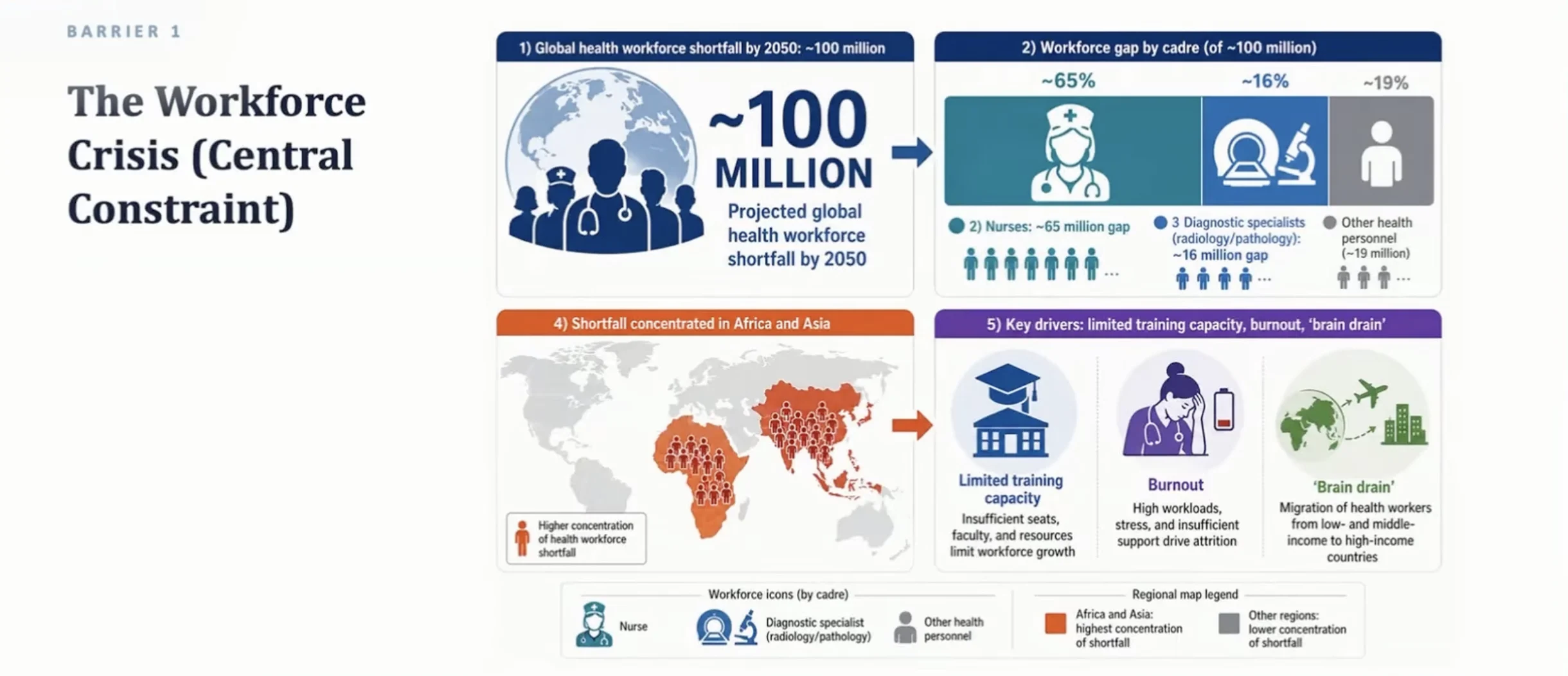
The presentation cited a projected global health workforce shortfall of 100 million, with low- and middle-income countries facing some of the greatest pressure. In many of these settings, the problem begins with limited capacity to train enough physicians and other healthcare professionals in the first place. It is then compounded by burnout, difficult working conditions, and brain drain, as trained professionals leave for countries where there may be greater stability, resources, or career opportunities.
“I’m probably the biggest example here. I left Syria because of the war and moved to Canada, and I’m probably not going back for multiple personal reasons.”
Artificial intelligence is often presented as one possible answer to workforce shortages, but the picture is more complicated.
AI can make physicians more capable and support clinical decision-making, but cancer care does not always fit neatly into guidelines or published evidence. Many patients have circumstances that require judgment, conversation, and decisions that cannot simply be pulled from the literature.
There is also the question of who has access to these tools in the first place. Platforms already available to clinicians in countries such as the United States and Canada may not be equally accessible elsewhere. So AI may actually deepen existing inequalities if doctors in wealthier countries have access to advanced tools that remain unavailable in lower- and middle-income countries.
The Diagnostic and Infrastructure Gap
Modern oncology depends on far more than having a physician available.
Diagnosis may require CT scans, MRI, pathology, molecular testing, and other technologies that are routine in some health systems but difficult to obtain in others.
Working with refugees in Lebanon made that difference particularly visible. Even obtaining a CT scan or MRI could be unrealistic, forcing physicians to rely much more heavily on physical examination and basic imaging such as X-rays.
The gap continues along the entire cancer pathway. A patient first has to recognize that something is wrong, reach someone who can guide the diagnostic process, obtain the necessary investigations, and then reach a system where the appropriate treatment is actually available.
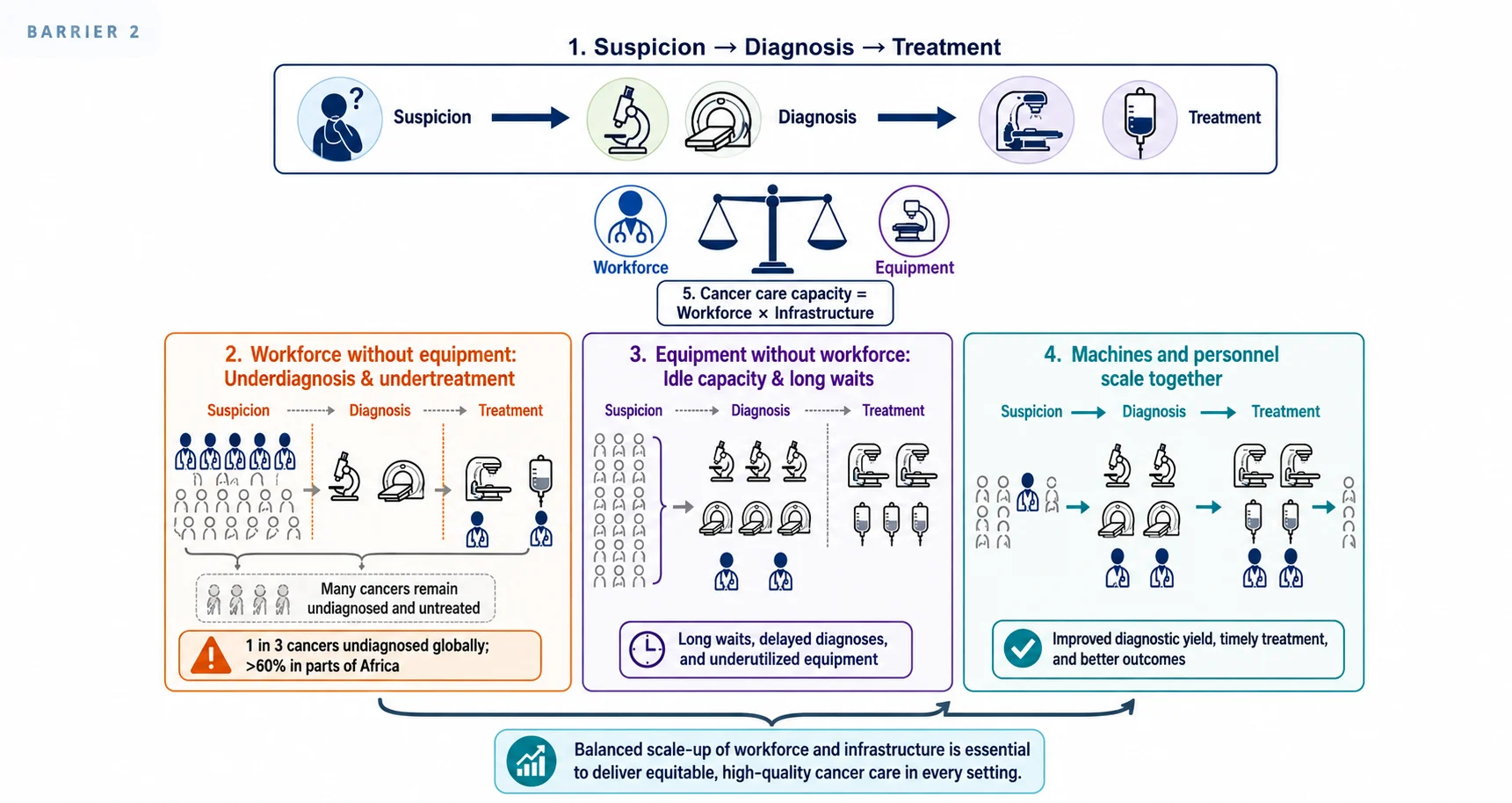
A failure at any one of those points can delay everything that follows.
The goal is that technology itself eventually becomes cheaper and easier to distribute.
“My hope is that in the next 20 or 30 years, the price of technology drops and it becomes available for everyone in the world. MRIs should become so cheap that, just like you can stand on a scale in your bathroom, you could walk through an MRI machine and scan your body. Scales were once expensive technology too, but eventually they became part of everyday life.”
The larger idea is simple: advances in oncology have limited value if the infrastructure needed to use them remains concentrated in only a small part of the world.
When Affordability Determines Access.
Affordability creates another barrier, and it does not disappear in wealthy countries.
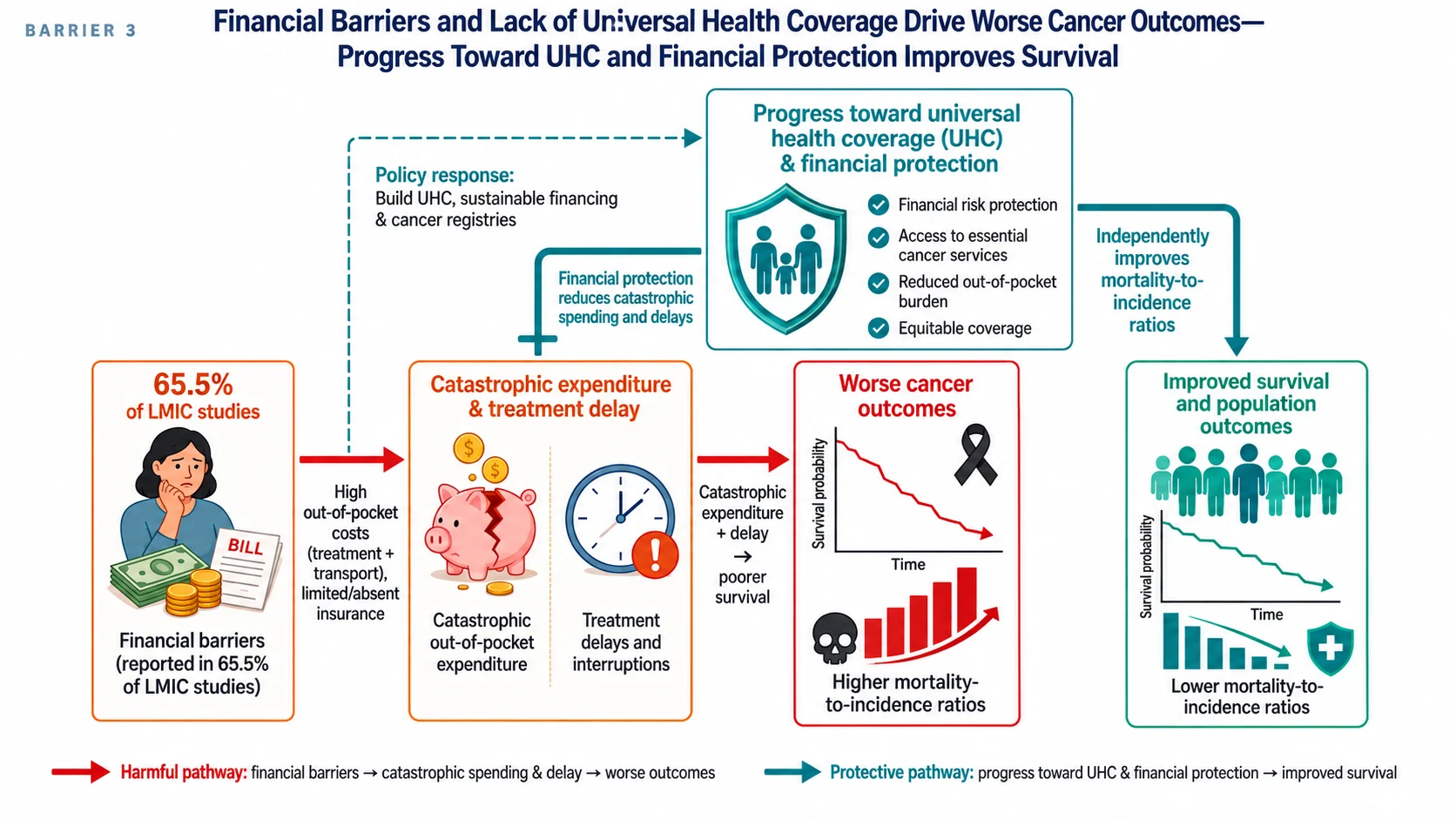
The United States was one of the examples raised most strongly. Patients can find themselves in a financial gray zone – earning too much to qualify for certain forms of public support while still lacking insurance coverage capable of absorbing the cost of cancer treatment.
In low- and middle-income countries, the same problem may take an even more basic form: some cancer drugs are simply unavailable because their cost puts them beyond the reach of the health system.
Financial toxicity goes beyond the cost of medication. Diagnostic tests, travel, time away from work, and delays in reaching the next step of care can all add to the financial burden of cancer.
Oncology often celebrates new therapies that extend survival by a few months.
Meaningful gains do not always require another breakthrough drug, sometimes they come from making the care that already exists easier and faster to reach.
Shortening the wait for a PET scan from three or four weeks, speeding up investigations, reducing treatment costs, and moving patients through the system without unnecessary delays can all affect outcomes. In that sense, improving access to existing cancer care may be just as important as developing the next treatment.
Geography and Fragmented Care
Geography can become a barrier to cancer care, especially for patients who live far from major treatment centers.
Patients living near large cities generally have easier access to specialized treatment and diagnostic services than those in rural areas. That distance creates its own form of financial toxicity. And even in large countries like Canada, a patient may need to travel more than an hour to Vancouver for a PET scan. The cost is not simply fuel. It may mean losing an entire day of work, arranging transportation, and reorganizing family responsibilities around a single appointment.
And geography is only one part of the problem.
Cancer care can remain fragmented even when patients are treated within the same broader health system. Different hospitals may use different electronic medical records, information may not move easily between institutions, and clinicians may be working without access to the complete history of the patient in front of them.
In lower-resource systems, the problem may be the absence of the electronic infrastructure needed to share information at all. In higher-income countries, incompatible systems, institutional incentives, or proprietary electronic records can create different versions of the same barrier.
The result is still fragmentation.
When Guidelines Do Not Fit the System
Clinical guidelines are only useful when they reflect the population and resources of the health system expected to follow them.
The United States and Canada have numerous oncology guidelines, sometimes enough that keeping up with them becomes difficult in itself. But those recommendations are built around particular populations, healthcare structures, available therapies, and resources.
Low- and middle-income countries may not have similarly developed national guidance or policy frameworks for cancer care, particularly when governments are already managing multiple competing health priorities.
“It’s similar to anemia of chronic disease. When the body is sick, it focuses on dealing with other problems rather than making red blood cells.”
In the same way, when a health system is under strain, cancer policy and the development of dedicated guidelines may be pushed behind more immediate needs.
Health Literacy Can Change the Stage of Diagnosis
The final barrier may appear simpler than advanced diagnostics or national policy, but its consequences can be just as severe: whether people recognize the warning signs of cancer.
One example was intentionally basic.
“It’s not normal to have blood in the stool. People should know that.”
Patients may live with symptoms for long periods without understanding that they need medical attention. Something that might have been found as a treatable polyp can eventually present as advanced colorectal cancer.
The same issue appears across countries and income levels. Basic knowledge about red flags is still not reaching enough people.
Social media could help close that gap, but it has created a second problem. People who speak confidently online can build large audiences regardless of whether their medical advice is evidence-based. Physicians, meanwhile, are often less visible. That leaves room for misinformation – including unsupported treatments being promoted to people with advanced cancer.
More oncologists therefore need to participate in public education, explain warning signs, and make credible medical information easier to find. But the algorithms governing social platforms are usually designed to maximize engagement and entertainment, not cancer prevention or public health education.
That makes the task harder, but also more necessary.
What Will Stronger Oncology Leadership Require?
Many of these barriers ultimately lead to the same question: who is making the decisions that shape cancer care?
Physicians are often reluctant to pursue leadership positions, yet healthcare systems are increasingly influenced by administrators, financial structures, and corporate interests that may not understand what happens inside an oncology clinic. That becomes especially visible when productivity expectations collide with the reality of caring for people with cancer.
“How can you hurry up when you are telling a patient that they will die in the next month, you’re running out of treatments, and they are crying in that room?”
A cancer consultation cannot always fit comfortably into a fixed number of minutes. Some conversations involve telling someone that treatment is no longer working or that their life may be measured in weeks. Those realities do not always align with systems built around throughput and efficiency.
“We need more physicians to take leadership positions, more physicians to be active on social media, and try to change policy. We have to take back oncology care in our hands.”
It also means creating more opportunities for oncologists to work across borders, share knowledge, and help clinicians in lower-resource settings learn how to deliver the best possible cancer care with the resources available to them.
Workforce, infrastructure, affordability, geography, policy, and health literacy may look like separate barriers. In practice, they overlap at almost every point in a patient’s journey. Addressing them will require more than new treatments. It will require stronger systems, better access to knowledge, and more physicians willing to help shape how cancer care is delivered.
That means taking a more active role in leadership, policy, education, and the decisions that shape cancer care.
“We have to take back oncology care in our hands.”
Written by Eliz Baloyan, MD, Features Writer and Editor at OncoDaily and CancerWorld