





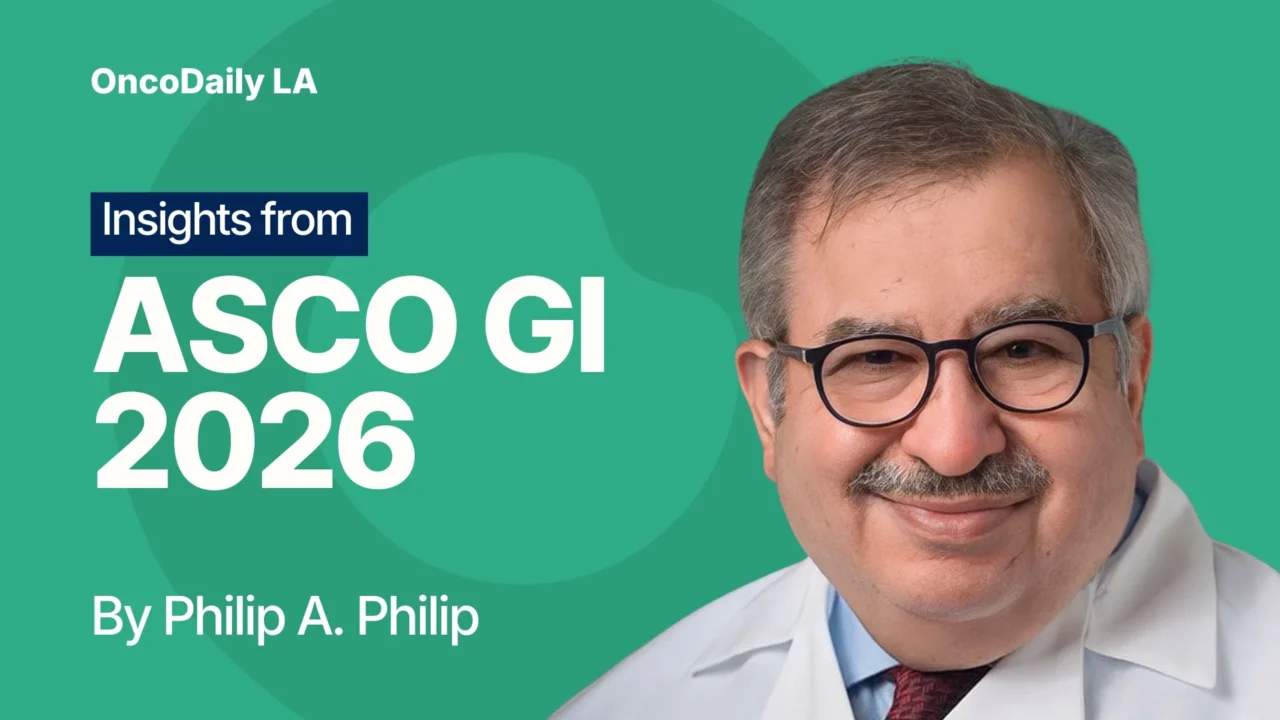
The ASCO Gastrointestinal Cancers Symposium 2026 brought together leading clinicians, researchers, and global oncology experts to discuss the evolving landscape of GI malignancies. Among the voices shaping this year’s meeting was Philip A. Philip, MD, PhD, Director of Gastrointestinal and Neuroendocrine Oncology at the Henry Ford Cancer Institute, whose long-standing contributions to pancreatic cancer research and multidisciplinary care continue to influence the field.
In an interview hosted by Dr. Martin Harutyunyan, medical oncologist, palliative care specialist, and Director of OncoDaily LA, Dr. Philip A. Philip offered a grounded perspective on current treatment strategies, ongoing advancements, and the broader themes emerging from ASCO GI 2026.
Pancreatic Cancer: Steady Progress Through Research and Collaboration
Pancreatic cancer remains one of the most challenging malignancies in oncology, and Dr. Philip A. Philip emphasized that meaningful progress continues to come from incremental improvements, smarter trial design, and a deeper understanding of tumor biology.
He highlighted how the field is gradually shifting toward more personalized approaches, integrating molecular profiling, combination strategies, and multidisciplinary decision‑making to improve outcomes.
Although ASCO GI 2026 showcased encouraging developments in GI oncology, Dr. Philip A. Philip stressed the need for real‑world applicability so that progress in therapy and clinical research truly benefits patients.
The Role of Mentorship and International Collaboration
Beyond scientific updates, Dr. Philip A. Philip spoke about his ongoing involvement in complex case discussions with young Armenian physicians. These sessions, conducted regularly, create a platform for early‑career oncologists to present challenging cases, receive expert guidance, and strengthen their clinical reasoning.
He described this work as an essential part of global oncology: supporting education, fostering mentorship, and ensuring that expertise is shared across borders to improve cancer care in diverse settings.
Watch Dr. Philip A. Philip’s previous appearance on OncoDaily, including the Walk & Talk with Celene Philip, hosted by Tatev Margaryan