Key takeaways
- Molecular diagnostics is an entire system, not a single test, and quality depends on every step from sample collection to interpretation, reporting, storage, and digital integration.
- Precision medicine is a success only when the diagnostic workflow is as precise as the therapy
- The molecular pathway begins at the biopsy or surgery - not at DNA extraction and not in the laboratory.
- Liquid biopsy may be minimally invasive for the patient, but it is not operationally simple for the laboratory
- Digital pathology and AI should support, not replace, pathologists, with human oversight remaining central to quality and safety.
At the Community Oncology Global Congress (COGC 2026), Nicola Fusco, Professor of Pathology at the University of Milan, focused on what it takes to make molecular diagnostics reliable in everyday cancer care.
His presentation moves through the full molecular diagnostic pathway – from sample handling and biomarker testing to outsourcing, digital pathology, biobanking, and AI – with one central idea running through all of it:
“Molecular diagnostics is a system that should be considered beyond a single test.”
Molecular Diagnostics Is More Than a Single Test
“Its quality depends on the entire pathway, from sample acquisition to interpretation, reporting, storage, and today, digital integration. I will use our experience at the European Institute of Oncology as a framework and then translate it into principles that can be applied across different healthcare settings.
Traditional medicine was largely designed around the average patient. One treatment was offered to a broad population, with benefit for some patients, no benefit for others, and toxicity for others again.
Stratified medicine improved this model, allowing us to group patients according to specific clinical features, risk profiles, disease subtypes, and, of course, biomarkers. Today, precision medicine takes this to the next step. It connects treatment decisions to the biological characteristics of the individual patient and to a companion diagnostic biomarker or diagnostic strategy.
This changes the role of pathology. A biomarker result should now be considered an additional layer of information that may determine access to a specific treatment. Therefore, the result of a molecular pathology analysis must be analytically correct, but most importantly, clinically meaningful and accessible.
Precision medicine is a success only when the diagnostic workflow is as precise as the therapy.
And that level of precision cannot come from one person or one part of the laboratory alone. Molecular diagnostics is intrinsically multidisciplinary – both inside the laboratory and beyond it.
Within the pathology laboratory, different specialists work together: medical doctors, pathologists, oncologists, computational biologists, computational pathologists, molecular technicians, and others.
Before a molecular test begins, there is patient registration, correct specimen accessioning, tissue sampling, and preparation of the FFPE samples. Blood sampling for liquid biopsy involves nurses and clinicians and follows a different preparation pathway specifically dedicated to liquid biopsy.
Laboratory technicians connect these steps to the analytical phase, while pathologists, molecular biologists, and molecular pathologists provide morphological assessment, biomarker testing, molecular analysis, and, most importantly, interpretation.
The pre-analytical phase includes the request from the clinician, the sample, and the choice of the appropriate test.
The analytical phase includes sample preparation and the test run.
The post-analytical phase includes validation, interpretation, reporting, and quality control.
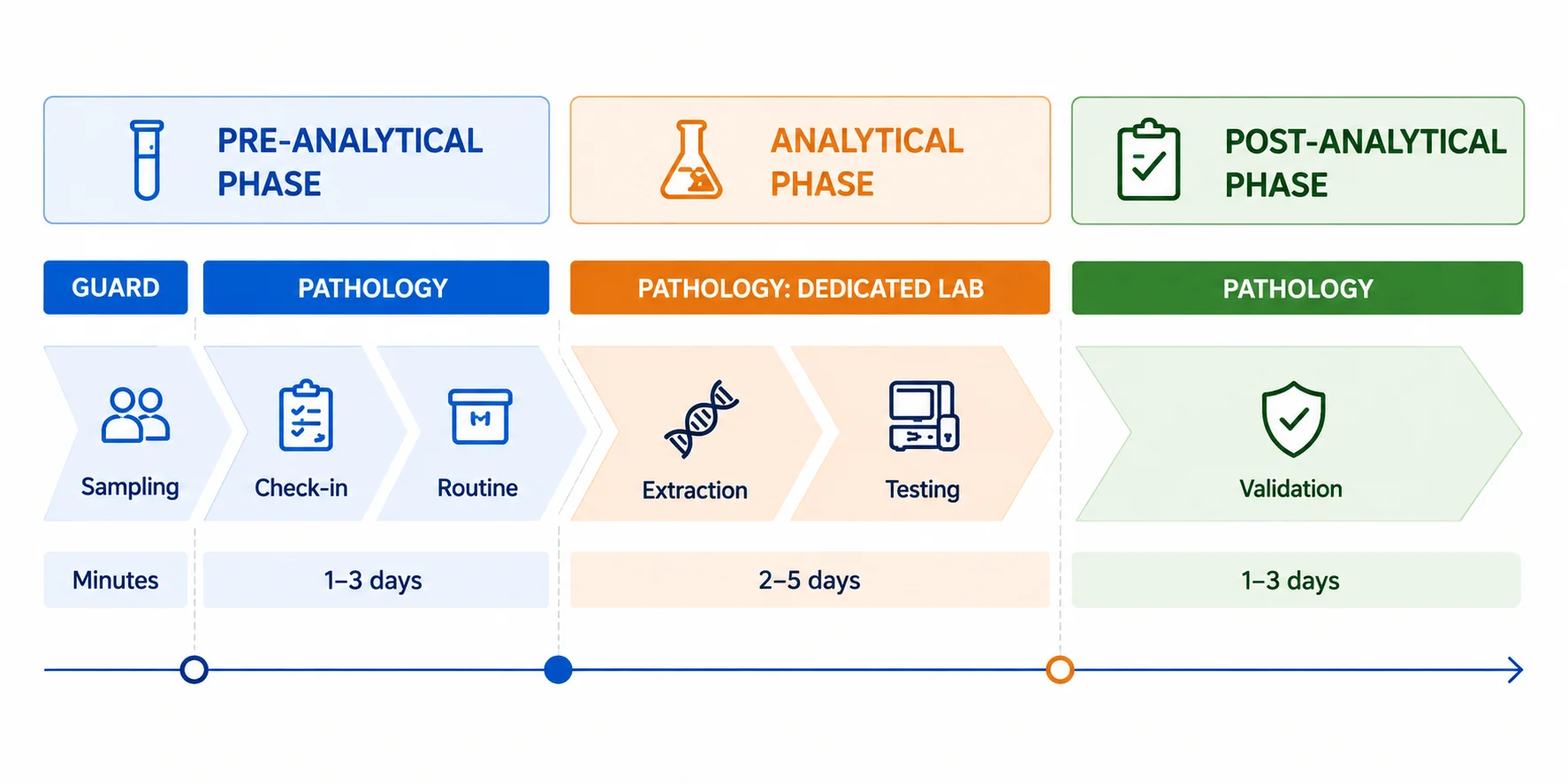
Only a small part of the total turnaround time is instrument time. Days might be spent in check-in, routine laboratory workflow, extraction, testing, reporting, or repeating results on different platforms for orthogonal validation.
Measuring only the analytical run gives an incomplete picture of laboratory performance. A structured workflow must monitor the whole patient journey, including each step. Quality indicators should cover all of these phases.”
Where The Molecular Pathway Begins
“The molecular pathway begins at the biopsy or surgery – not at DNA extraction and not in the laboratory.
Fixation must preserve both morphology and molecular integrity.
FFPE embedding and, most importantly, sectioning of the block must be controlled and fully tracked.
Histopathological review must confirm the diagnosis, identify representative tumor areas, define tumor cell content, and so on.
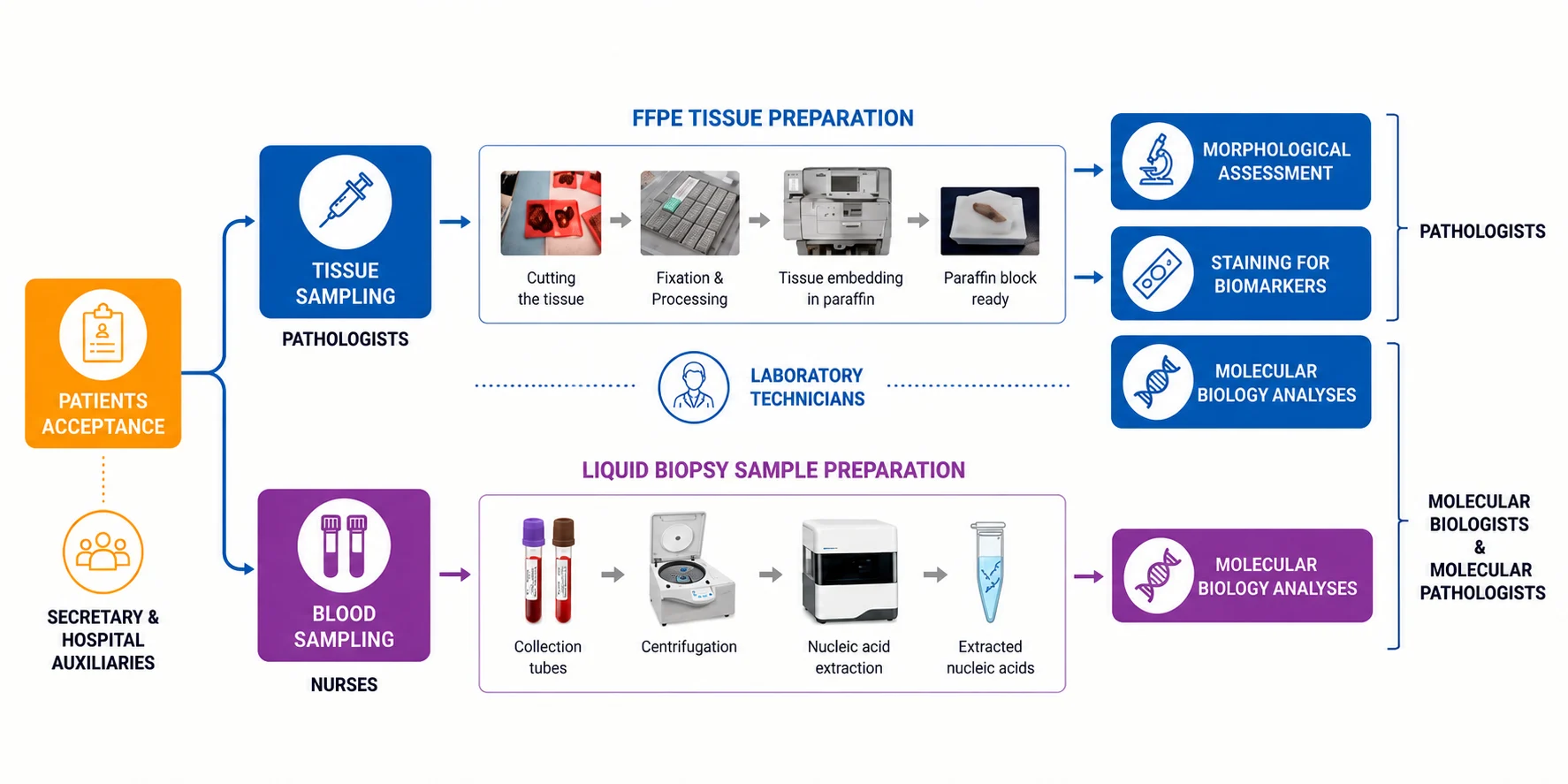
Only after these steps should we consider DNA or RNA extraction, analysis, and interpretation. This sequence explains why the pathologist remains the central manager of molecular diagnostics.
The pre-analytical phase is part of the diagnostic act. Standardizing fixation, processing, tissue selection, and the other pre-analytical steps is extremely important for the reliability of the data and reproducibility of the test, regardless of the analytical platform being used.”
The Hidden Work Behind Liquid Biopsy
“Liquid biopsy follows a slightly different pathway, but the same principle applies: quality is created before the test run.
The process starts with peripheral blood collection in the appropriate tubes.
It continues with timely, temperature-controlled transport and standardized handling.
Plasma separation requires a controlled procedure, typically including double centrifugation to obtain cell-free plasma.
The plasma must then be aliquoted and stored at a minimum of minus 80 degrees Celsius, avoiding repeated freeze-thaw cycles.
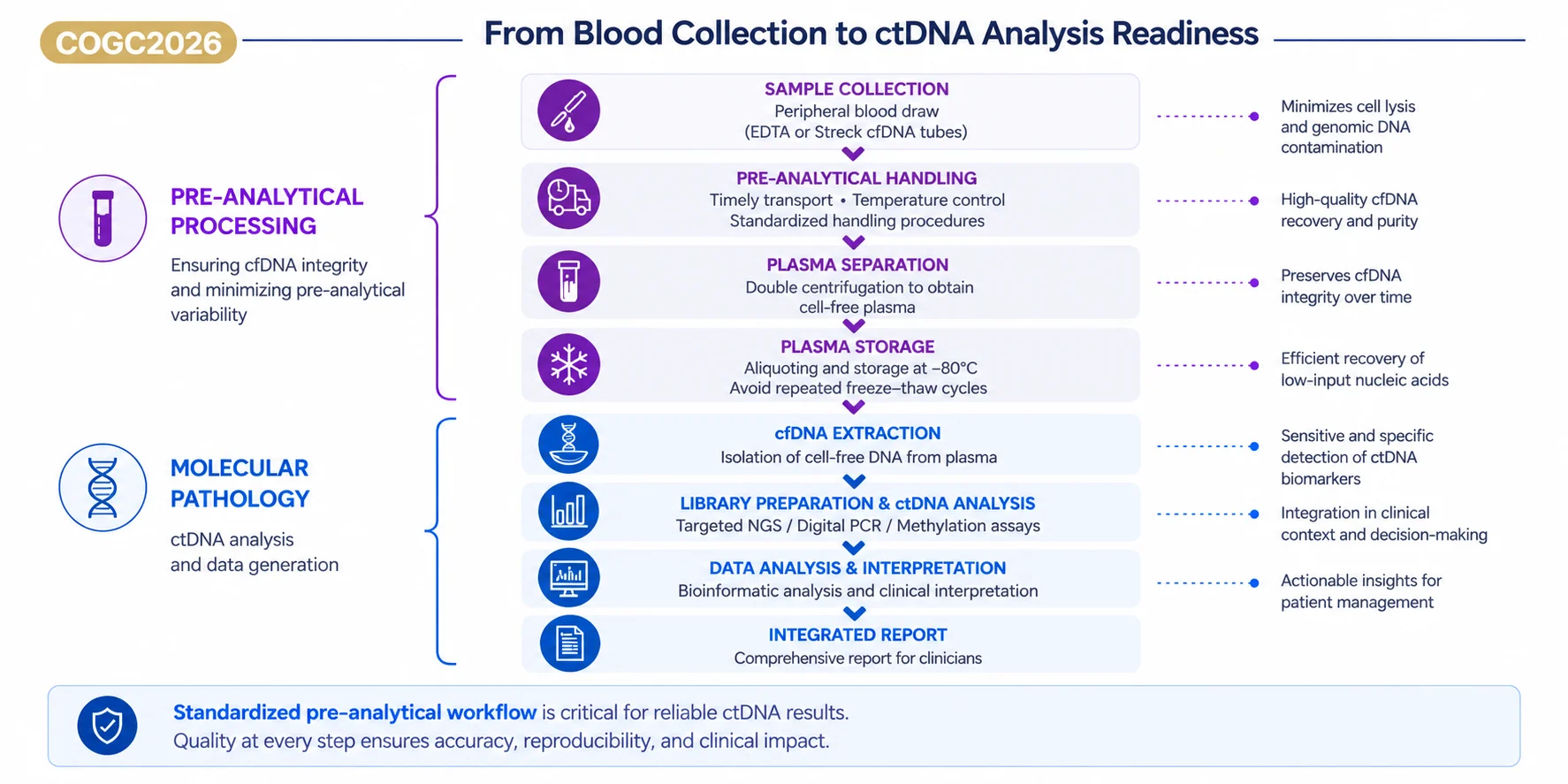
Only after this chain can we proceed with cell-free DNA extraction, library preparation, targeted sequencing, digital PCR, or methylation assays.
The key message is that liquid biopsy may be minimally invasive for the patient, but it is not operationally simple for the laboratory.
Its adoption becomes extremely valuable when collection sites, transport services, pathology, and the entire molecular laboratory ecosystem operate under a shared procedure. In this way, liquid biopsy becomes a reliable complement to tissue and supports a more flexible molecular assessment of the patient.”
What Should Be Done In-House and What Should Be Outsourced?
“This brings us to a central question for community oncology, and probably the most frequent question I receive from collaborators and patients: Which tests should be performed in-house, and which should or can be outsourced?
Neither option is universally superior.
In-house testing builds local know-how and offers greater control over workflow and turnaround times, but it requires laboratory staff, infrastructure, validation, maintenance, and sufficient testing volumes.
Outsourcing reduces the local analytical burden and can provide economies of scale, but it increases administrative coordination, transport dependence, and the risk of rejection when samples or documentation are inadequate.”
From Hybrid Networks to Digital Pathology and AI
“The best solution, in my opinion – and this is the solution I built for my laboratory – is a hybrid network.
In a hub-and-spoke model, the spokes retain responsibility for appropriate sampling, collection, tubes, storage, and so on. But I believe the point-to-point model can work when sites have inadequate capability.
Instead of thinking only about hub-and-spoke, let us start thinking about point-to-point. Let us decentralize what is possible to decentralize and centralize what is the best choice to centralize.
The aim is to place each test where it can deliver the highest clinical value with the lowest variability.
The same logic applies to digital pathology. Digital pathology is not a scanner, and it is not simply IT. It is a multidisciplinary project involving general pathologists, molecular pathologists, laboratory technicians, computational biologists, and others.
The technical infrastructure must provide security and scalability, while the service infrastructure must provide user support, training, system integration, and process optimization.
And this also changes the role of pathologists and molecular pathologists in an AI ecosystem for diagnostics.
Some may say that at some point AI will replace pathologists, but I think of it more like the autopilot on an airplane. The autopilot does not replace the human pilot. It has evolved the role of the human pilot into that of a manager of the technology and a gatekeeper of quality and safety.
Digital pathology is not standalone. It is an integrated ecosystem that also involves the molecular pathology laboratory.”
Why Biobanks Matter
“Integration also changes the meaning of storage.
The pathology archive provides secure, organized, barcode-tracked, long-term preservation of slides and reports. The biobank systematically stores tissue samples and body fluids together with the associated clinical data.
These are not passive biosample repositories. They are a structural part of the diagnostic and research infrastructure. High-quality archiving and biobanking preserve sample integrity, enable traceability, support data integration, and make future analysis possible.
For a community oncology network, this means that material and information must remain retrievable and usable across time and across institutions, with the same attention to quality that we apply to the original test.
The Bianca project is a concrete example of what becomes possible when these components are connected. It is an institutional digital biobank designed to identify and validate digital biomarkers for personalized diagnosis in solid tumors.
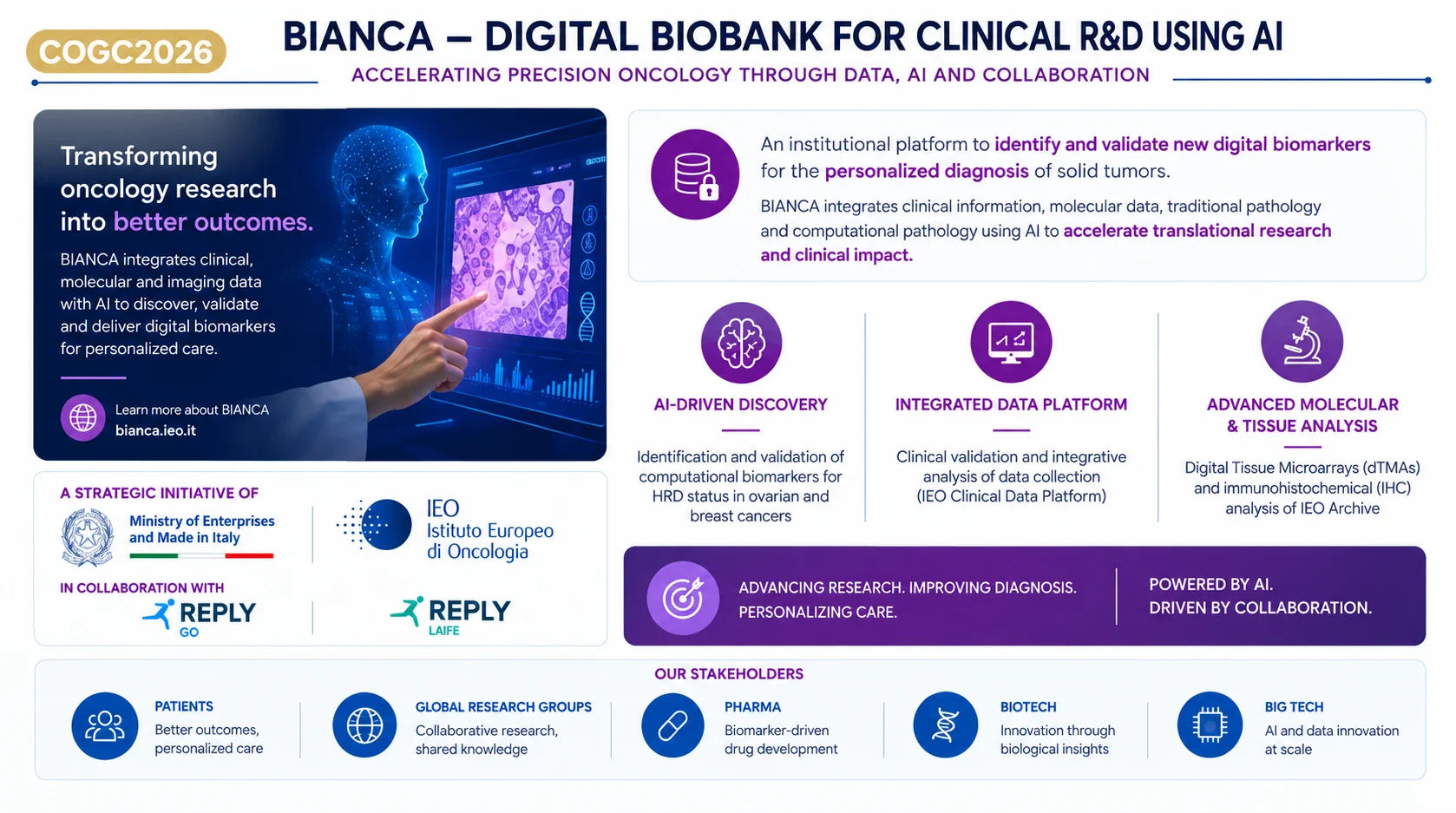
The platform integrates clinical information, molecular data, traditional pathology, and computational pathology. These are pillars for AI-driven discovery.
The broader message is more important than the individual project: a biobank creates value when biomaterial, curated data, digital images, analytical methods, molecular pathology data, and clinical questions are connected.
AI accelerates discovery when the underlying ecosystem is traceable and designed for validation and clinical impact.”
The Future Depends on the Foundation We Build Today
“A foundation model is trained on broad datasets, often using self-supervised learning, and then adapted or fine-tuned for specific downstream tasks. In digital pathology, this may improve generalizability across domains and new applications.
The ambition is to connect morphological patterns with molecular information and clinically relevant mechanisms. These models may support biomarker prediction, patient stratification, therapeutic insights, and much more, but the clinical credibility of a foundation model will depend on the same principles discussed throughout this talk: quality, integration, traceability, and responsible implementation driven by pathology.
To conclude:
Optimizing molecular diagnostics requires standardized pre-analytics, the right network model, integrated people and data, and future-ready archives and people.”
Written by Eliz Baloyan, MD, Features Writer and Editor at OncoDaily and CancerWorld
Watch the full video on YouTube.