





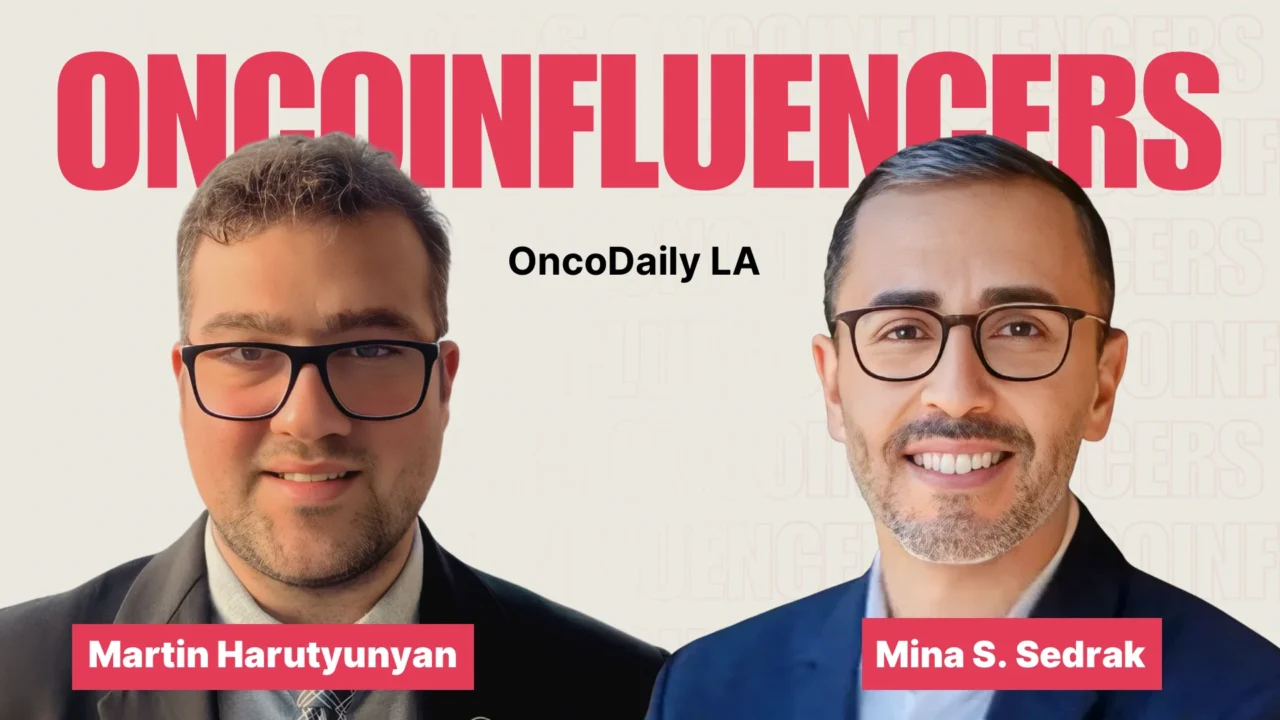
OncoDaily LA features oncology specialists working in Los Angeles who are creating the future of cancer care. Our guest today is Dr. Mina S. Sedrak, Associate Professor of Medicine at UCLA, Director of the Cancer and Aging Program, and Co‑Leader of the Cancer Control and Survivorship Program at the UCLA Jonsson Comprehensive Cancer Center. Interview conducted by Dr. Martin Harutyunyan.
A Recognition That Carries History
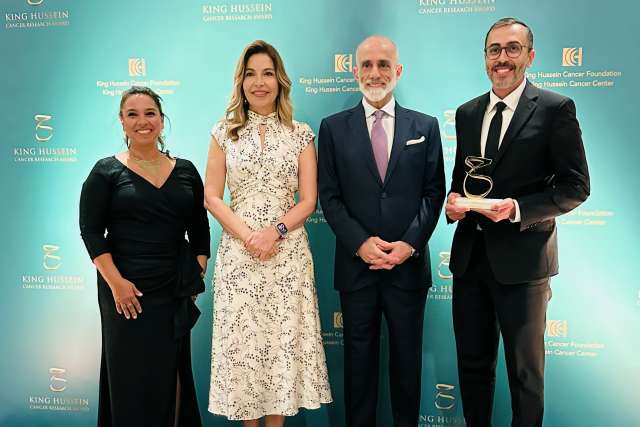
On November 14, 2025, in Amman, Jordan, Dr. Mina S. Sedrak received the King Hussein Cancer Research Award’s Young Investigator Award. The ceremony gathered researchers, clinicians, and advocates from across the Arab world, celebrating innovation and resilience in cancer science. For Sedrak, standing on that stage was more than professional validation. It was a moment that connected his scientific work to his personal journey, from childhood in Egypt, through years of training across the United States, to his leadership today at UCLA.
Dr. Mina S. Sedrak often reflects on his parents’ determination. Both were teachers in Egypt, but when they immigrated to the United States, they worked tirelessly to secure a brighter future for their children. Their sacrifices instilled in him a sense of responsibility to give back, not only to patients but to communities worldwide. “They worked tirelessly to build a brighter future for us,” he says. “Their sacrifices laid the foundation for everything I have been able to achieve.”
A Career Shaped by Science and Humanity
Dr. Mina S. Sedrak grew up in St. Louis, Missouri, before moving to Chicago for undergraduate studies at the University of Chicago. He completed medical school at Rush University, then pursued residency and fellowship at the University of Pennsylvania, where he also earned a Master’s in Health Policy Research.
This blend of clinical training and policy education gave him a dual lens, the rigor of science and the responsibility of translating it into care that truly serves patients. It was at City of Hope in Los Angeles, under the mentorship of Dr. Arti Hurria, that Dr. Mina S. Sedrak discovered his calling in geriatric oncology.
Dr. Hurria, a pioneer in the field, showed him how little data existed to guide care for older adults, despite cancer being predominantly a disease of aging. Dr. Mina S. Sedrak recalls those early years as transformative. “Cancer is a disease of aging,” he often says. “We must ensure older adults have a seat at the table when trials are designed.” That realization became the compass for his career.
Innovation at UCLA: Cancer and Aging Research Led by Dr. Mina S. Sedrak
Today, Dr. Mina S. Sedrak directs the Cancer and Aging Program at UCLA and co‑leads the Cancer Control and Survivorship Program. His clinical focus is breast oncology, but his research is broader, understanding how cancer and its treatments accelerate biological aging, and developing interventions to slow or reverse those effects.
He helped create the CARG‑BC score, a tool that predicts chemotherapy toxicity in older women with breast cancer. Validated internationally, it is now widely used to guide treatment decisions. For Dr. Sedrak, it represents the kind of evidence clinicians need: practical, predictive, and rooted in the realities of patient care.
His work is not only about preventing toxicity but about redefining survivorship. At UCLA, he has built a nurse practitioner‑led program that supports patients beyond diagnosis, ensuring they thrive long after treatment. Survivorship, in his view, is not an afterthought but a central measure of success.
Collaboration Across Borders
Dr. Mina S. Sedrak’s work thrives on collaboration. He partners with Dana‑Farber Cancer Institute, the University of Rochester Medical Center, and the University of North Carolina Lineberger Comprehensive Cancer Center to test senolytics, novel agents that target cellular aging. These studies aim to reduce persistent fatigue and functional decline in survivors, offering hope for interventions that improve life after cancer.
For Dr. Sedrak, collaboration is not just about sharing data. It is about building networks of trust and innovation. “Collaboration accelerates discovery and ensures findings benefit patients everywhere,” he explains. His partnerships reflect a belief that science must be global, inclusive, and focused on outcomes that matter to patients.
Representation and Responsibility
Dr. Mina S. Sedrak is outspoken about the underrepresentation of older adults in clinical trials. Despite being the majority of patients, they often make up less than ten percent of trial participants. “We must design trials that reflect real demographics,” he insists. “Only then can we deliver truly evidence-based care.”
This advocacy positions him as a leader in geriatric oncology, pushing the field to adapt to demographic shifts and to ensure that science serves the patients most affected. His voice is part of a growing movement to align research with reality, ensuring that the evidence guiding care reflects the people most in need.
Mentorship and Balance
Dr. Sedrak describes oncology as one of the most rewarding professions. “There are not many jobs where you can hold a patient’s hand and provide support during the hardest time in their life,” he says. He encourages trainees to embrace the field’s challenges and opportunities, reminding them that oncology is constantly evolving.
He also speaks openly about balance. His wife, three children, and parents keep him grounded. “Family keeps me grounded,” he says. “Even on the hardest days, they remind me that health and love are what truly matter.”
For Dr. Mina S. Sedrak, mentorship is not only about guiding careers but about instilling values of compassion, resilience, and perspective. He urges young oncologists to see beyond protocols and trials, to remember that every patient encounter is a chance to make a difference.
The Science of Time
Dr. Mina S. Sedrak’s research is often described as being at the intersection of oncology and aging, but he frames it more poetically, the science of time. Cancer treatments, he explains, can accelerate biological aging, shortening the span of health even in patients who are cured of their disease. His mission is to understand and counteract that process, giving survivors not just years of life, but years of vitality.
“We are learning that cancer care is not only about survival,” he says. “It is about ensuring that patients thrive, that they maintain strength, independence, and quality of life. That is the future of oncology.”
A Vision for the Future
Dr. Mina S. Sedrak’s story is one of resilience, mentorship, and innovation. From his family’s sacrifices in Egypt to his leadership at UCLA, he embodies the values of service and vision. His research at the intersection of cancer and aging is redefining survivorship, while his insistence on inclusivity in trials ensures that older adults are no longer overlooked.
His journey is not just about science, but about humanity, about the connections between family, patients, and colleagues that sustain him. It is about building a future where cancer care is compassionate, evidence-based, and reflective of the real people it serves.
OncoDaily LA is proud to feature Dr. Mina S. Sedrak, whose work is transforming cancer care for patients today and for generations to come.
Interview conducted by Dr Martin Harutyunyan for OncoDaily LA.