
Key takeaways
- All bispecifics are not created equal. There may be some that cannot be given as an outpatient, but there are some that can be.
- Think about the adverse events that you are looking for and in what window they are likely to occur.
- Define algorithms for a local hospital safety pathway, so that the patients who do need evaluation already know exactly what to do.
At the Community Oncology Global Congress (COGC 2026), organized by OncoDaily, Melissa Johnson, Director of Lung Cancer Research at Sarah Cannon Research Institute, focused on a practical question that is becoming increasingly important as bispecific therapies move into routine oncology care: when can these treatments be delivered safely in the outpatient setting?
Her presentation centered on three points:
- Which bispecifics can be given as outpatients,
- How their adverse-event profiles guide that decision,
- What safety systems are needed to make outpatient treatment work.
Not Every Bispecific Belongs Outpatient
“First, remember that all bispecifics are not the same, and so the adverse-event profile and the likelihood of CRS or not is critically important to deciding if and when you can deliver these as outpatients.
I’m going to use two examples, tarlatamab in small cell lung cancer and teclistamab in multiple myeloma, where we are successfully delivering outpatient T-cell engagers.
And I’m going to show you the framework that we use to decide whether a drug can be given as an outpatient or as an inpatient.
Everything I’ve learned has really come from my Sarah Cannon transplant and cellular therapy colleagues. We have a large network of transplant and cellular therapy programs across the U.S. and the U.K., with more than 1,300 cellular therapies delivered since 2016, and more than 300 since 2024. Most importantly, the vast majority of those have been delivered as outpatients.
So everything that I have learned, I have taken from my colleagues who do cellular therapy for a living.
What they have really taught me is that you have to boil this down to the side effects.
What are the side effects that we are worried about in general with bispecifics? It is primarily CRS.
Here you see the parameters and the different grades of CRS that we are concerned about.
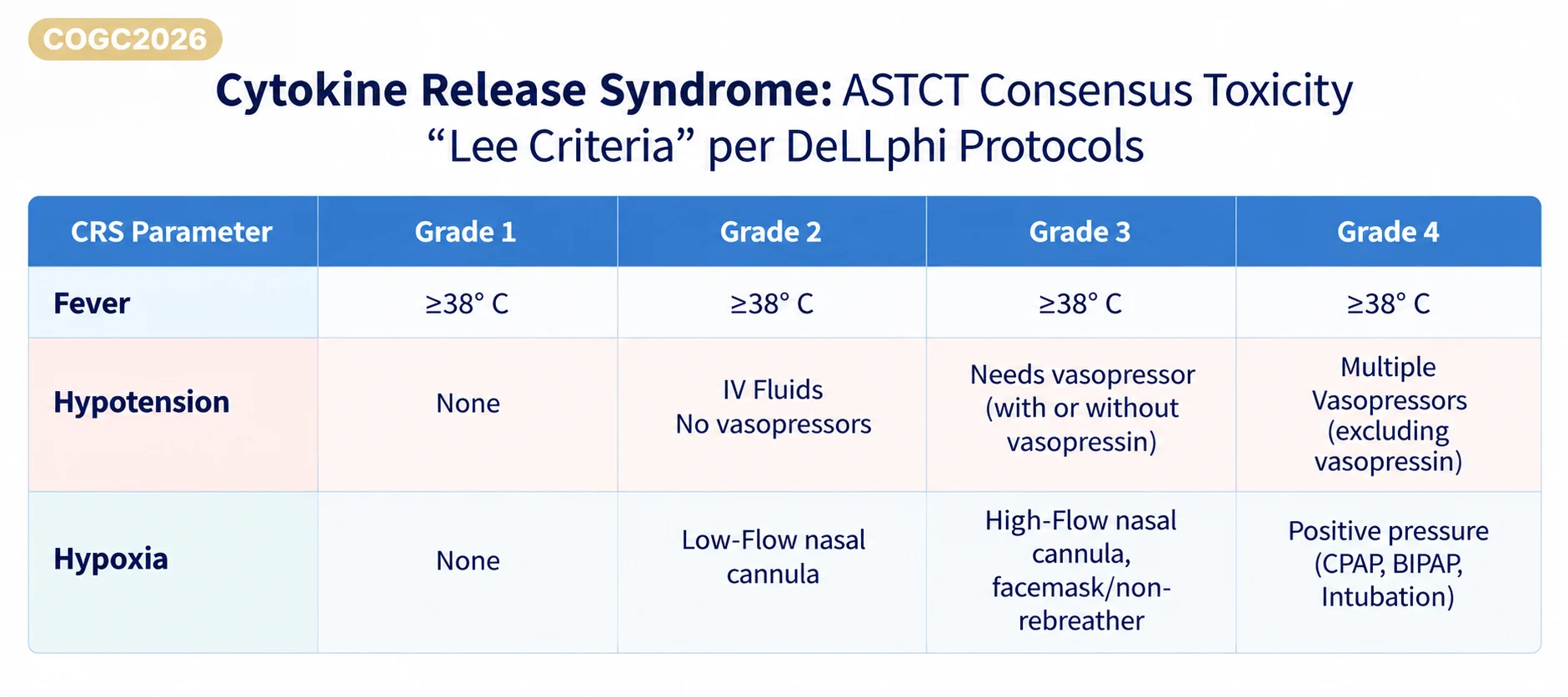
The critical point is that when you have grade 1 and grade 2 CRS, which is largely fever and maybe a little hypotension, that can often be tolerated safely as an outpatient, with a clinic visit the next day for follow-up.
However, when the main side effects are more severe – grade 2 or grade 3 events requiring vasopressors or high-flow oxygen, and certainly requiring treatment with tocilizumab and dexamethasone – then that may not be as good a drug to give in the outpatient setting.”
A Framework for Safe Outpatient Treatment
“First, define the adverse events.
Then ask: what is the data that you need in order to ensure safety?
For CRS and ICANS we are largely looking at:
- blood pressure
- oxygen saturation
- temperature
- mental status.
Much of that can actually be measured by caregivers in the outpatient setting and then communicated to the doctor or the nurse on call, but it is always important to have a safety net.
You need to remain within about 30 to 60 minutes of a hospital so that any emerging complications can be assessed promptly.
That safety framework can also be supported with simple, practical tools for patients and caregivers. One example is a BiTE bag, which contains the equipment needed for home monitoring.
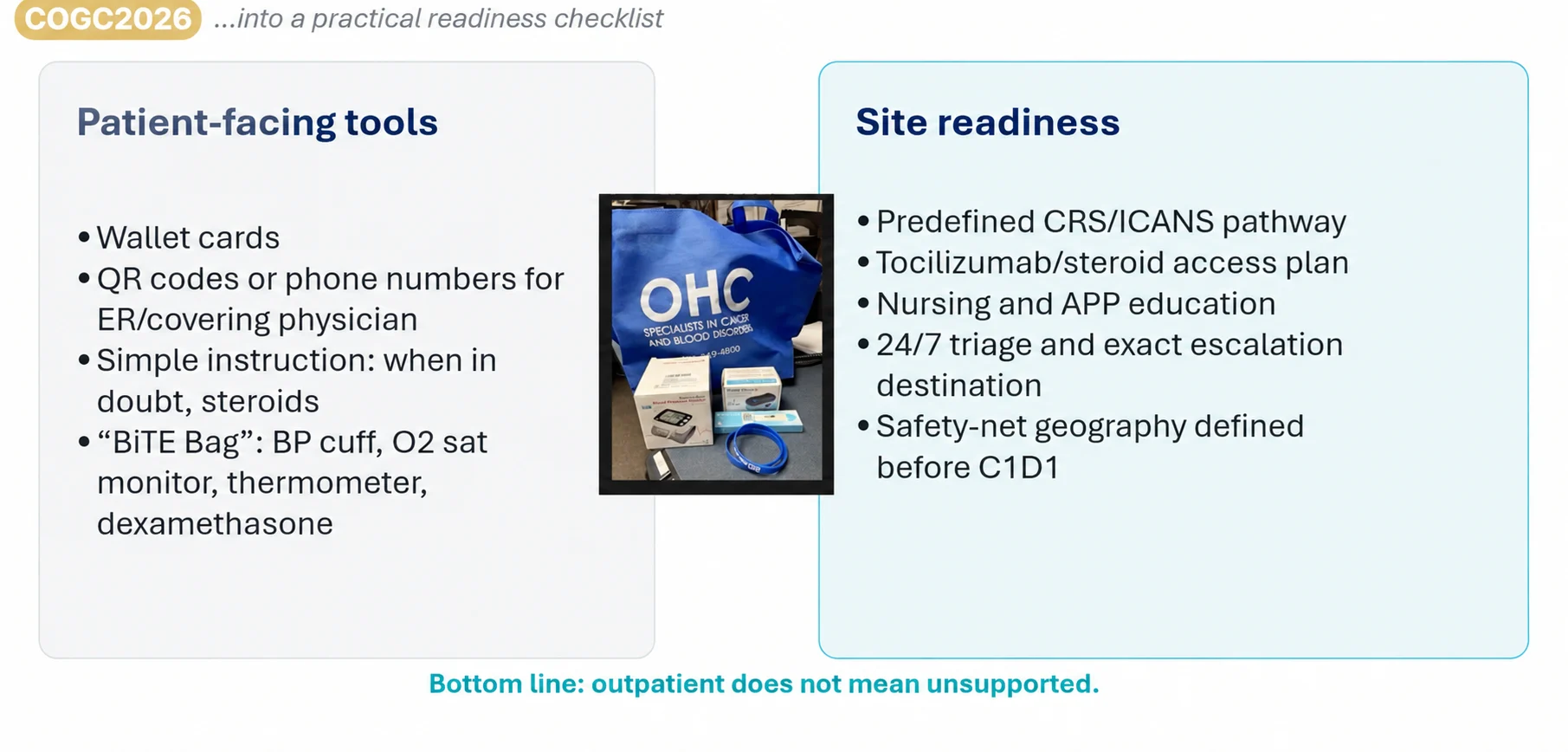
This is compliments of one of our practices in Cincinnati. They provide patients receiving tarlatamab with supplies including a blood pressure cuff, an oxygen saturation monitor, a thermometer, and a single tablet of dexamethasone, so that patients can safely go home and be monitored there by a loved one.”
Tarlatamab: What DeLLphi-300 Showed
“The first example is the DeLLphi-300 study.
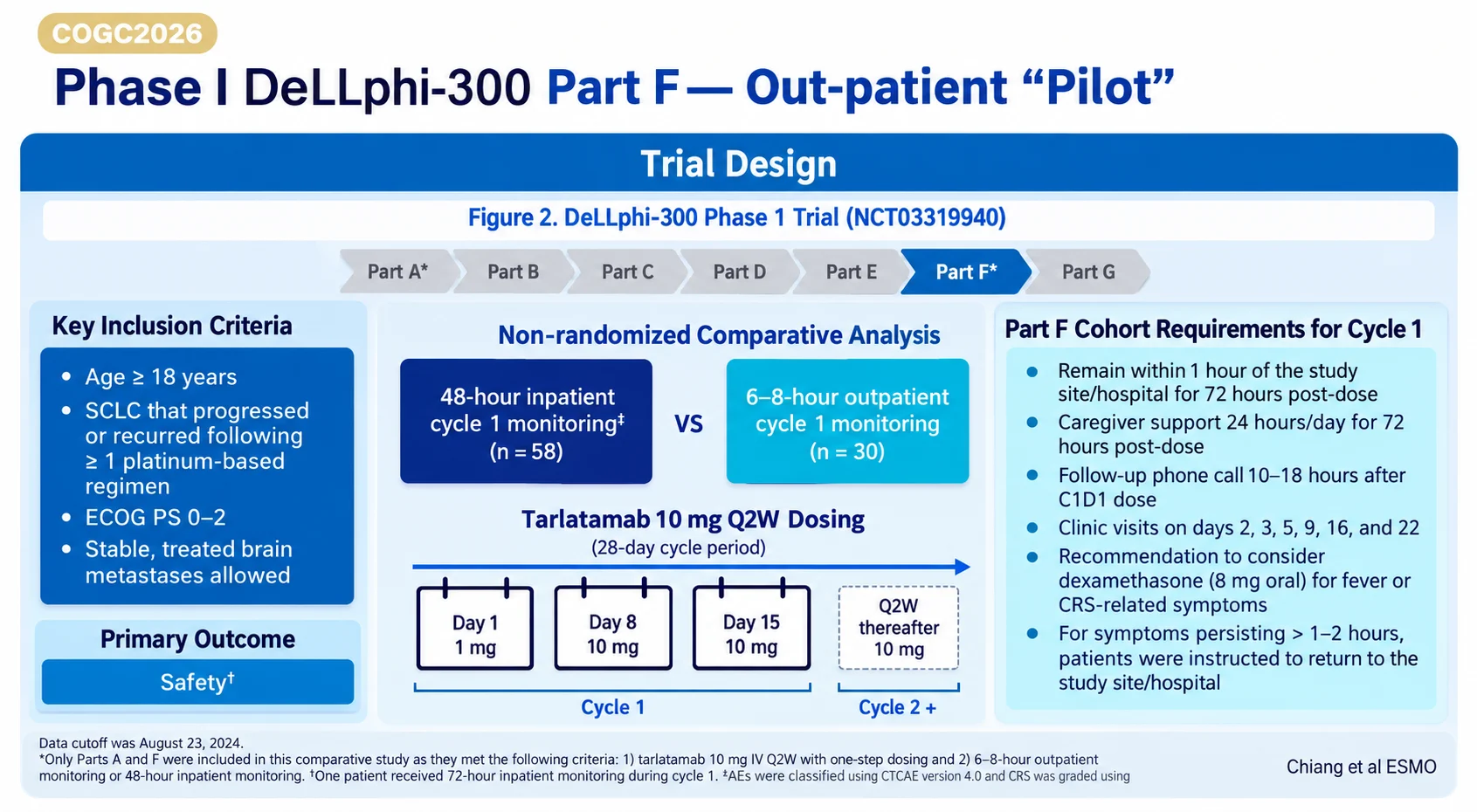
This was a phase 1 study that evaluated tarlatamab using either 48-hour inpatient monitoring during cycle 1, which was the standard at the time, or an experimental six- to eight-hour outpatient monitoring approach.
Patients in the outpatient group had to remain within an hour of the hospital, and their caregivers had access to support 24 hours a day by phone. The nurses also called the patients starting around 10 to 18 hours after the cycle 1, day 1 dose, which was designed to coincide with the expected beginning of CRS.
And here is the data showing treatment-related adverse events, along with hospitalizations and emergency room visits related to those events.
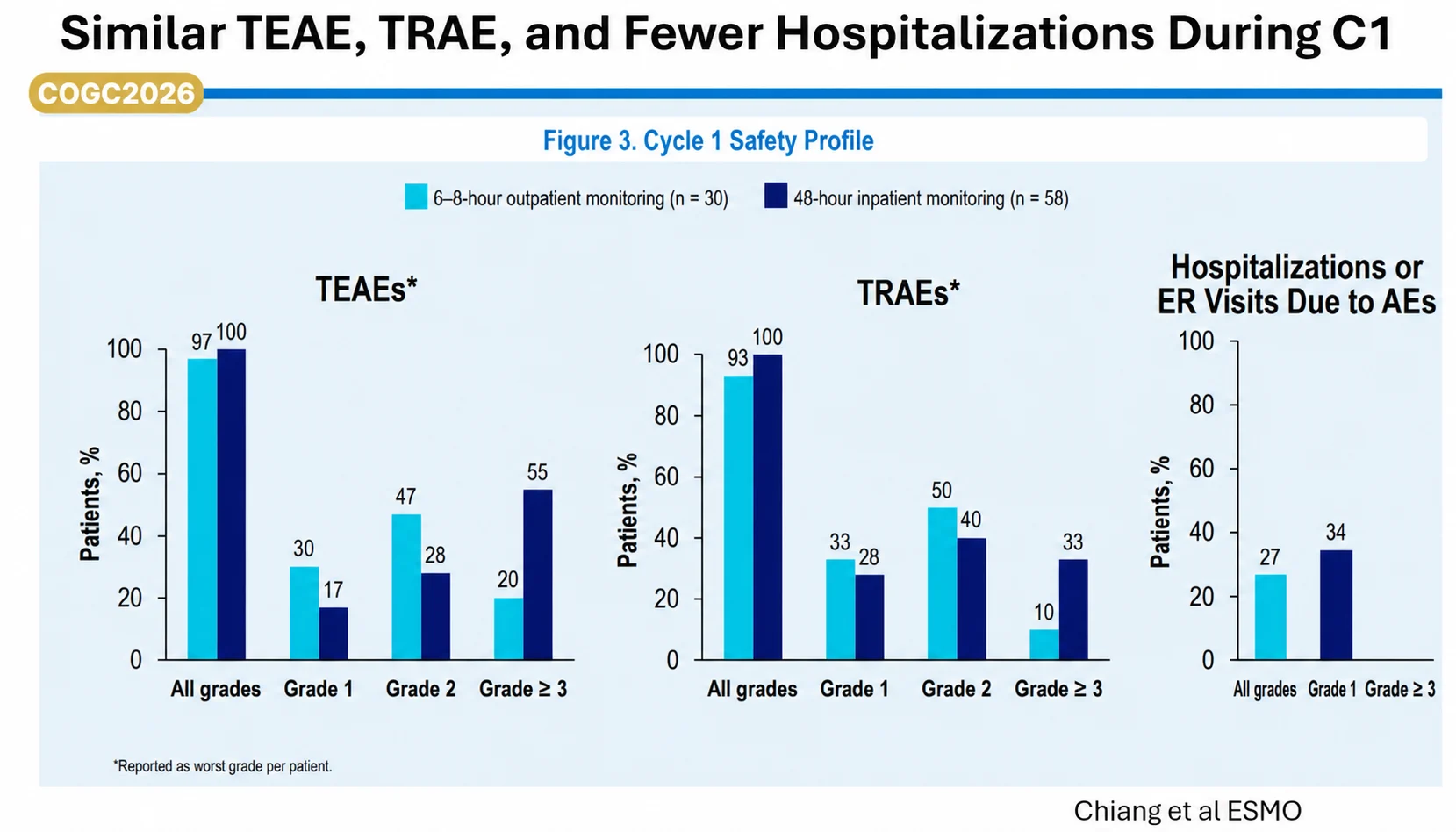
Overall, more low-grade adverse events were reported in the six- to eight-hour outpatient monitoring cohort. This may reflect the fact that caregivers were watching patients closely and escalating concerns early.
By contrast, more grade 3 treatment-related adverse events were reported in the 48-hour inpatient monitoring group. One possible explanation is that subtle changes, such as a drop in blood pressure or oxygen saturation, may have been recognized later in that setting.
Likewise, there were more hospital or emergency room visits among patients in the 48-hour inpatient monitoring cohort, suggesting that outpatient monitoring was at least as safe.
Looking specifically at cycle 1, patients monitored at home had more grade 1 CRS events, while grade 2 and grade 3 CRS were more common in the inpatient group. A similar pattern was seen with ICANS, with no indication that outpatient monitoring compromised safety.
The important point is that these patients were not simply sent home without support. They were closely monitored, caregivers knew what symptoms to watch for, and there was a clear pathway for escalation if a problem developed.”
Teclistamab and Talquetamab: Building Around Step-Up Dosing
“The second example is OPTec/OPTal, a phase 2 study evaluating whether teclistamab and talquetamab can be safely administered in the outpatient setting with close monitoring and prophylactic tocilizumab during step-up dosing.
These drugs are characterized by the need for step-up dosing, abbreviated here as SUD, and CRS becomes more common as we increase the dose of the medicines that are being given.
So in this study, patients were given a single dose of prophylactic tocilizumab before the administration of teclistamab or talquetamab in order to decrease the risk of CRS.
This was a two-arm, community-practice-only trial evaluating whether that approach could be done safely in the outpatient setting.
Here is the study design.
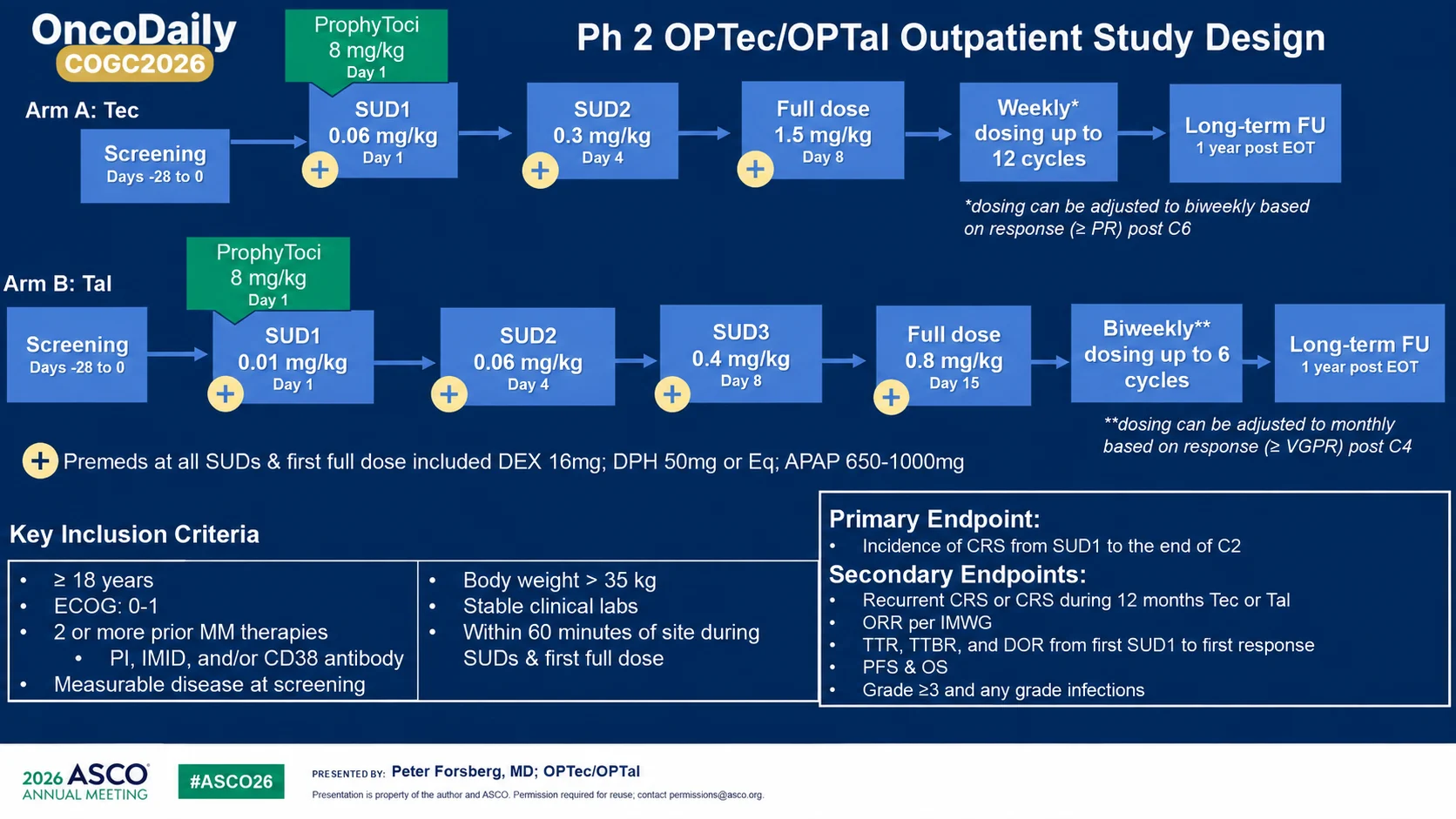
You can see that prophylactic tocilizumab was given on day 1 in both arms, in addition to dexamethasone, diphenhydramine, and Tylenol.
You then see the different step-up regimens leading to the full treatment dose by day 8 in both cases.
The feasibility of outpatient administration was really what was being evaluated, and again, the safety network was critical.
Patients needed to be within 60 minutes of the clinic and in the company of a competent adult who could help monitor for adverse events.
There was also home monitoring of temperature and oxygen saturation twice a day, along with neurologic examinations during the first two cycles.
With those systems in place, this could be done safely in that group of patients.”
The important point is that outpatient treatment does not simply mean giving the drug and sending the patient home. It depends on knowing which toxicities are expected, when they are most likely to occur, what can reasonably be monitored by patients and caregivers, and where the patient should go if something changes.
Written by Eliz Baloyan, MD, Features Writer and Editor at OncoDaily and CancerWorld
Watch the full video on YouTube.