Some careers follow one path. Others seem to branch off in every direction. Surgery, patient advocacy, national legislation, international cancer policy – any one of these could be a career on its own. Yet all these roles lead back to the same problem. Scientific advances mean little to patients who cannot access them.
For Dr. Maira Caleffi, the answer has meant looking increasingly beyond the operating room. The Brazilian breast surgeon heads the Breast Unit and Prevention Programmes at Hospital Moinhos de Vento in Porto Alegre, founded FEMAMA, and serves as president of the board of the Instituto de Governança e Controle do Câncer (IGCC). Her work has also brought her into international cancer leadership through UICC.
With so many responsibilities, one might expect a complicated explanation of how she manages them. Her answer is surprisingly simple.
“I do one thing. Many branches, but it’s one thing.”
Those branches developed over decades, often in directions she hadn’t originally planned. Long before surgery, advocacy or cancer policy entered the picture, Caleffi was a student fascinated by chemistry and the workings of the human body.
From Chemistry to the Women Behind the Diagnosis
Breast surgery was not Caleffi’s original plan.
Before medicine, there was pharmacy and biochemistry. She was drawn to the mechanisms of the human body, particularly hormones and endocrinology. Her interests eventually carried her into medicine and gynecology.
Her plans changed again when she arrived at Guy’s Hospital in London for what was supposed to be a one-year fellowship. One year turned into several. She specialized in breast disease and completed a PhD at the University of London, studying breast cancer and aging during the 1980s. It was a subject she had begun exploring decades before it became a major focus of cancer research.

Guy’s Hospital, London, photographed in 1980. Dr. Maira Caleffi completed her specialist training in breast disease and pursued doctoral research in London during the 1980s.
The next chapter took her across the Atlantic again, this time to Vanderbilt University in the United States. It was the early 1990s, and Caleffi had recently had her second child. She spent nearly two years in a molecular biology laboratory studying genetic predisposition to cancer, years before genetic testing became a familiar part of oncology. Motherhood was already part of the equation, though she mentions it almost casually, as if raising two children alongside an international medical career hardly needed explaining.
“…because I was a mother all the way through.”
The work at Vanderbilt helped establish her lasting interest in cancer genetics and precision medicine, which she says has also been a focus of her more recent research. But breast surgery appealed to her for reasons that went beyond the science.
“Treating the breast and breast cancer means more to me than only an organ or a disease. It means to me that I’m treating the woman.”
The Making of a Movement in Brazil
Returning to Brazil, Caleffi found that medical expertise was not the problem. What concerned her was how little women knew about breast cancer and how rarely patients had a voice in their own care.
Brazil had introduced universal healthcare in 1988, but the system was still developing, and many women were being diagnosed at advanced stages. Meanwhile, breast cancer mortality was beginning to decline in the UK and United States, showing what earlier detection and appropriate treatment could achieve.
“I realized that scientific knowledge alone would not change outcomes unless women had access to information and diagnosis.”
After years of training to treat breast cancer, Caleffi was seeing women who struggled to access the care they needed. She knew she couldn’t change that alone, so she began with her own patients.
She organized weekly meetings with psychologists and other professionals, giving women space to share their experiences. Those meetings became the foundation of IMAMA (Instituto da Mama do Rio Grande do Sul), established to raise breast cancer awareness and strengthen women’s voices in healthcare.
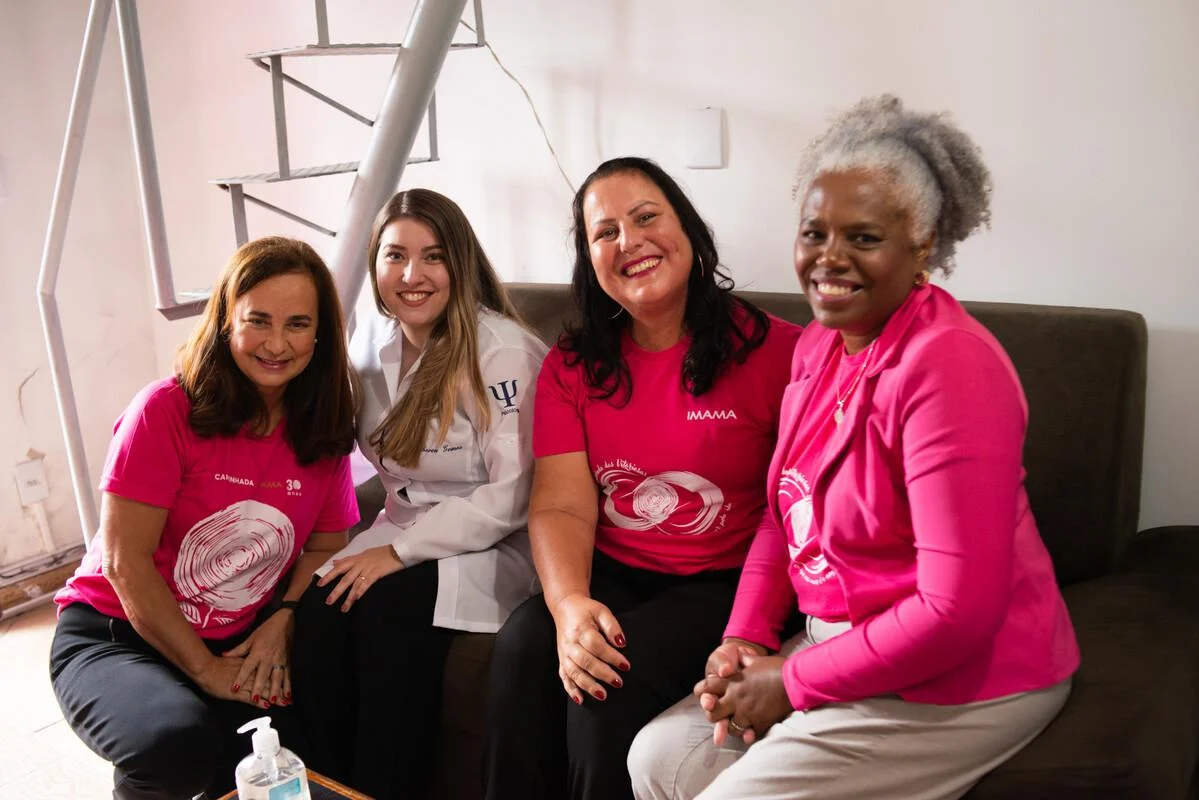
Women involved with IMAMA, alongside a psychologist, following a breast cancer support session in Porto Alegre, Brazil. Photo: Ramiro Sanchez/UICC.
The problems they were discussing were hardly confined to one city. Late diagnoses, treatment inequalities and limited patient involvement appeared throughout Brazil. The movement expanded into FEMAMA, which Caleffi says now brings together more than 70 nongovernmental organizations.
Its work has also expanded beyond breast cancer to address other cancers affecting women. What began with her own patients became a national network of organizations capable of bringing women’s experiences into discussions about healthcare policy.
“And for me the greatest challenge was to convince society that patients’ experiences matter.”
Caleffi also faced challenges as a young woman in the male-dominated field of surgery, both in Brazil and England. Her age made it even harder to establish herself.
“I had to study and to be very credible because I was very, very, very young when I started. And sometimes you wanted to feel older to be more credible.”
And as FEMAMA grew, its advocacy increasingly focused on changing healthcare policy. For Caleffi, the urgency was clear.
“I have always believed that high mortality from breast cancer represents a social debt owed to women. We shouldn’t be dying like that because of a disease that for a long time we know can be curable.”
In 2012, FEMAMA’s advocacy contributed to Brazil’s 60-Day Law, which established a deadline for patients to begin cancer treatment in the public health system. It was a major achievement for a movement that had begun with weekly meetings among Caleffi’s own patients, bringing women’s voices into national healthcare decisions.
A Law on Paper, a Challenge in Practice
The 60-Day Law had put treatment delays on the national agenda. But meeting that deadline depended on how well hospitals, diagnostic services and local health authorities worked together.
Caleffi was increasingly interested in improving that coordination. In 2014, while serving on the UICC board, she became involved in discussions about tackling global cancer challenges at the local level.
Those conversations eventually helped give rise to City Cancer Challenge (C/Can), an international initiative that brings cities and healthcare institutions together to strengthen cancer care.
In 2018, Porto Alegre became Brazil’s first C/Can city through a partnership involving FEMAMA, Hospital Moinhos de Vento and the municipal government. The initiative brought patient organizations into discussions about cancer care alongside healthcare professionals and local authorities.
Porto Alegre remained Brazil’s only participating city at the time of the interview. Caleffi is particularly proud that the work has continued through several changes in political leadership, keeping patients involved in decisions about their care.
To sustain that work, the Instituto de Governança e Controle do Câncer (IGCC) was established in 2022. Caleffi serves as president of its board.
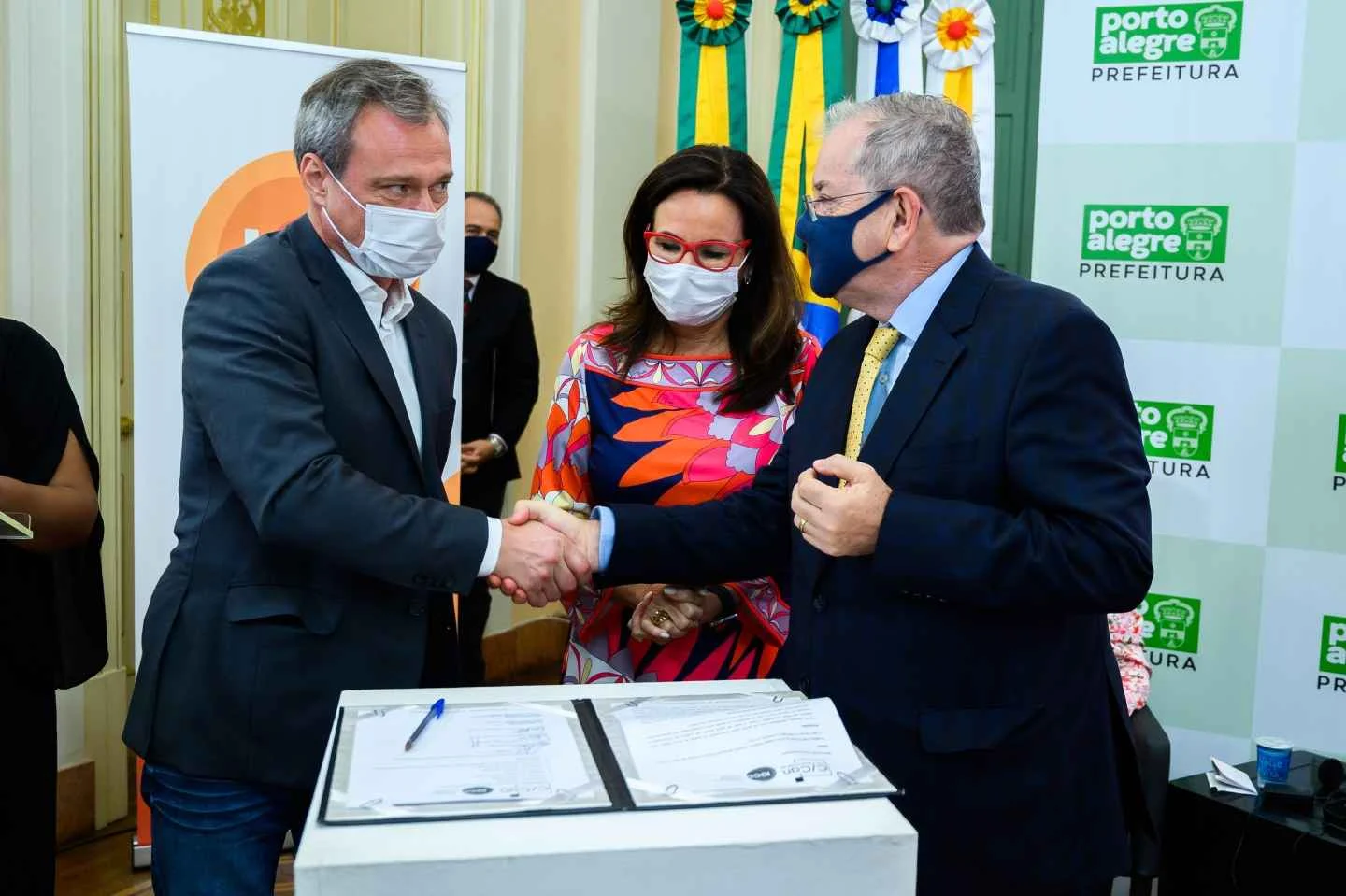
Representatives mark the signing of a memorandum of understanding with the Porto Alegre municipal government during the official launch of the Instituto de Governança e Controle do Câncer (IGCC) on February 16, 2022. Photo: Andréa Graiz/IGCC.
The institute brings together healthcare providers, civil society, government and other stakeholders to strengthen cancer governance and support the practical implementation of cancer policies. Its scope extends beyond breast cancer to the broader needs of cancer care.
“For me, the most important lesson from the C/Can experience is that advocacy must evolve into implementation, otherwise we’re not going to change numbers.”
The collaboration has extended across the region. In September 2026, Porto Alegre hosted representatives from seven Latin American C/Can cities to exchange experiences and discuss improvements in cancer care.
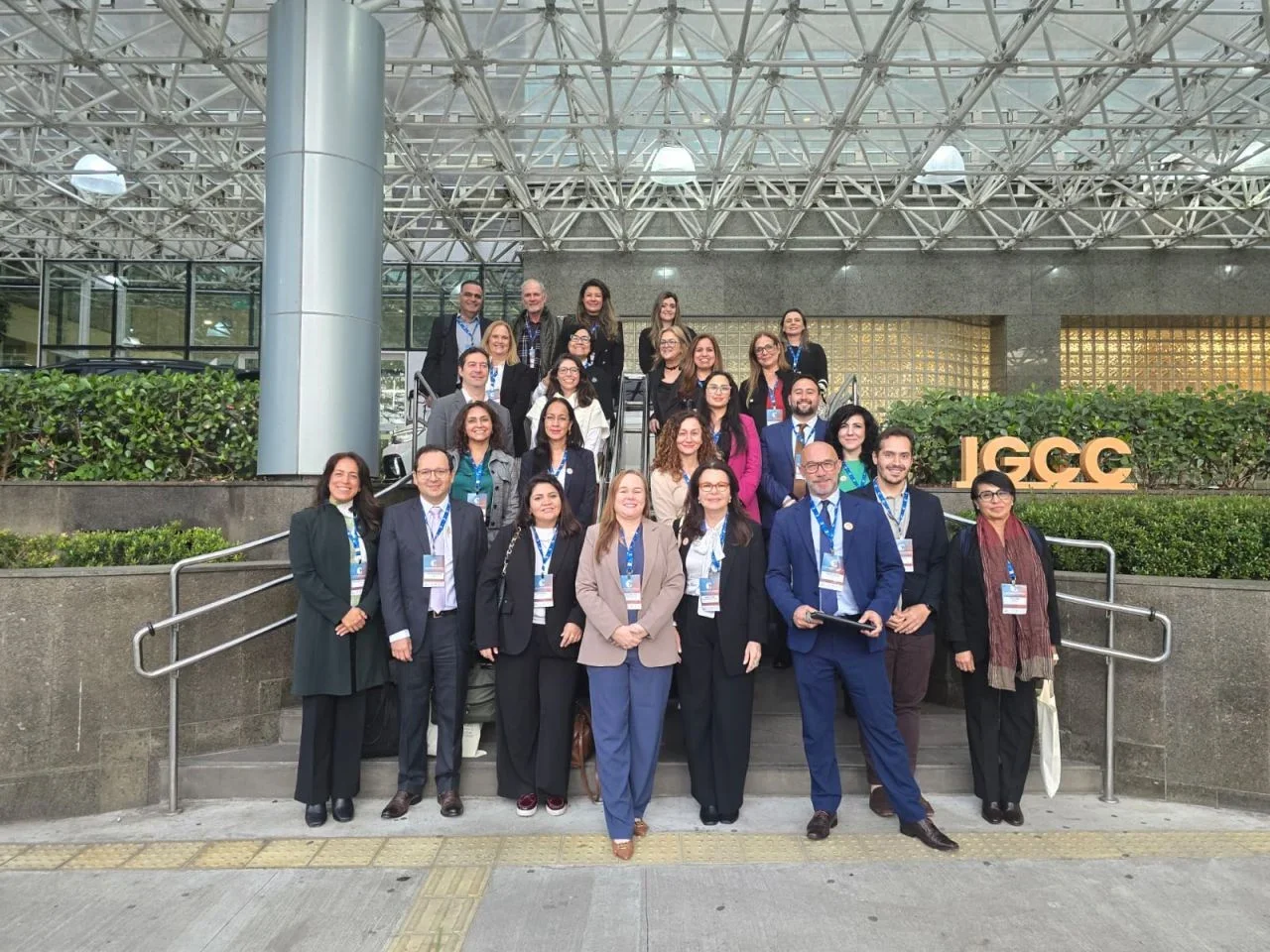
Representatives and healthcare leaders at the first Multilateral Summit of Latin American Cities on Cancer Control, held in Porto Alegre, Brazil, on September 9-10, 2026. Photo: C/Can.
Through this work, Caleffi has become particularly interested in how healthcare systems are managed and held accountable.
“And I think that one of the main problems that I see in cancer care is governance. Nobody’s measuring exactly what’s going on to see how we’re going to repair or to improve.”
The Inequalities That Keep Her Awake at Night
Caleffi’s work has also taken her into international cancer policy. She first joined the Union for International Cancer Control (UICC) board in 2014 and was elected to serve another term in October 2026.
She values the opportunity to bring Brazil’s experience into global discussions. During the interview, she drew a comparison with Armenia, noting that despite their differences in size, both countries can find themselves far from the usual centers of influence in international healthcare.
“It’s so important to be in the global arena, to see the trends, to see how we’re going to do this together because we are all the same.”
Since 2022, Caleffi has been particularly involved in UICC’s discussions on health equity. In Brazil, she sees these inequalities firsthand. At Hospital Moinhos de Vento, she treats privately insured patients who often have access to care that women relying on the public healthcare system struggle to receive, despite the country’s universal health coverage.
The contrast troubles her deeply.
“So these differences, I don’t sleep well. They take away my sleep.”
That frustration also helps explain why she values international collaboration. UICC gives her access to experiences from other countries and a platform from which to bring global discussions back into the Brazilian context. She describes the encouragement that comes from working with people facing similar challenges.
Caleffi’s international work includes the WHO Global Breast Cancer Initiative, which aims to reduce breast cancer mortality by 2.5% annually and save 2.5 million lives by 2040. She has taken that global target personally.
“That’s my own objective. You see, when you bring things to your own responsibility, this is not anybody else, it’s my responsibility too.”
She is also involved in the Access to Oncology Medicines (ATOM) Coalition, which works to improve access to cancer medicines, and UICC’s training programme for national cancer control planners.
These commitments come alongside her clinical work at Hospital Moinhos de Vento. Despite her many leadership roles, she points out that much of her advocacy work is voluntary.
“I was really a president, a volunteer president, and I’m still a volunteer on the council of IGCC. But my time, that’s where I pay my bills, is at the hospital.”
The Other Part of Her Life
With so many clinical, advocacy and international responsibilities, Caleffi is frequently asked how she manages her time. Her answer is surprisingly uncomplicated.
“I do one thing, many branches, many, but it’s one thing.”
The different organizations, projects and initiatives belong to the same larger purpose in her mind. She does not describe them as competing professional careers. But she makes a distinction when the subject turns to family.
“I also do another thing that is my family.”
Caleffi has two adult children who have lived away from her for more than a decade. And motherhood also changed the way Caleffi approached patient care. Raising two children while building her medical career gave her a different perspective on the women she treated.
“When you see a patient, you have to understand that she has a life on the other side of your consultation desk. And I had a life that I always had to protect.”
Caleffi has learned to be present wherever she is, giving her attention to her patients at work and to her children when they are together. But as she reflects on the years spent balancing those responsibilities, she becomes emotional.
“It’s not easy. Sometimes, I get emotional. Sometimes it’s very challenging. Sometimes I don’t know what to do next.”
Learning to delegate has helped. She is no longer president of IMAMA or FEMAMA, although she remains their founder, and both organizations continue their work. At the hospital, she relies on her team and a personal assistant when she travels.
But she remains personally accountable for the promises she makes to patients.
“If I say that I operate, it’s me operating there. So you have to be trustworthy and say the truth.”
Her insistence on honesty extends to colleagues and hospital management, too. She adds, with a touch of humor, that even after all these years of leadership, she still answers to someone.
“And for my boss, too. I still have a boss.”
The books she recommends reveal several of the interests that run through her professional and personal life. She names Being Mortal by Atul Gawande, which she values for its attention to what matters to people beyond the treatment of disease, and Invisible Women by Caroline Criado Perez, which examines the effects of gender inequalities on policy and institutional decisions.
Her third choice, How Change Happens by Duncan Green, connects directly to her current interest in cancer governance. She is particularly concerned with understanding why institutions struggle to implement improvements and how systems can be made more accountable. Even after decades of building organizations, she is still asking what she might work on next.
What Young Oncologists Should Remember
Asked what advice she would give young oncologists, Caleffi begins with a little humor.
“Advice costs a lot of money.”
Her advice starts with scientific curiosity and lifelong learning, but she also has a reminder about the human side of medicine.
“I think oncology is evolving so rapidly and lifelong learning is essential. So never let technology distance you from your patients. So if you want to be a medical doctor, if you want to be a doctor, you have to hold your patients’ hands once in a while because this is how you feel why you were there.”
She also encourages young physicians to understand the healthcare systems they work in, including the difficulties patients face in accessing treatment.
“A great oncologist should not only think about treatment, but also about how the patient is going to get that treatment.”
And when it comes to advocacy and public policy, she has little patience for the idea that doctors should stay out of politics.
“Everything we do is politics. We don’t need to be in any party. I’ve never been in any party, but the party that I am in favor of is good healthcare.”
After decades of working with patients and the systems responsible for their care, Caleffi leaves her audience with a simple thought about who should benefit from medical progress.
“It’s not everything for everybody. It’s everything for that person that needs it.”
Written by Eliz Baloyan, MD, Features Writer and Editor at OncoDaily
Interview by Shushan Hovsepyan, MD, Co-chair of SIOP GHN Research and Innovation Working group, SVP of OncoDaily
Watch the full interview on YouTube.