Key takeaways
- OncoHub is built around three practical pillars: education, professional connection, and opportunities for oncology professionals across Ukraine.
- The OncoHub Congress brings the national oncology community together not only around clinical topics, but also around issues such as bioethics, burnout, legal protection, and the role of oncology nurses.
- OncoHub Campus invests in young oncologists by developing leadership, communication, teamwork, project management, and critical-thinking skills alongside clinical expertise.
- Tumor Board Cafe turns evidence into practice by bringing different specialists together around real clinical cases and multidisciplinary decision-making.
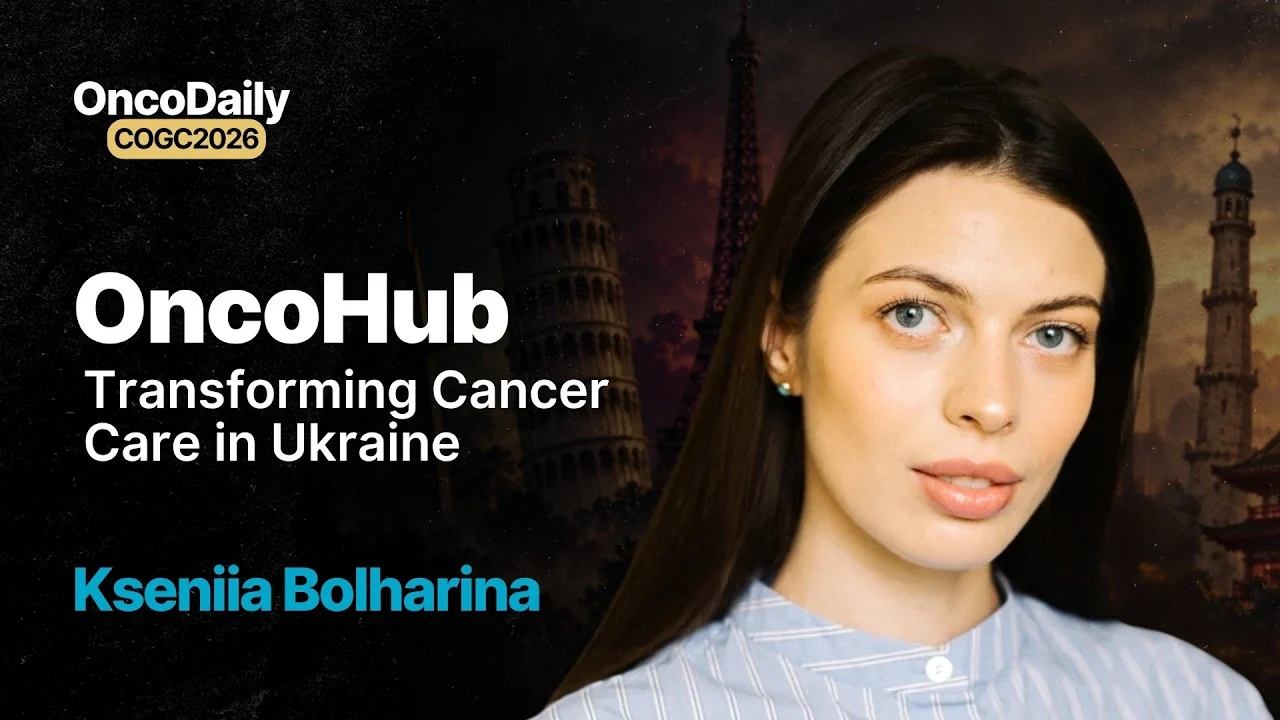
At the Community Oncology Global Congress (COGC 2026), organized by OncoDaily, Kseniia Bolharina, medical oncologist at NPO “National Cancer Institute”, shared how OncoHub is building a connected oncology community in Ukraine.
Her presentation focused on a broader idea of multidisciplinary care – not only bringing different specialists together around individual patients, but creating an ecosystem in which oncology professionals can learn from one another, communicate across institutions, develop leadership skills, and strengthen cancer care together.
OncoHub: Building an Oncology Ecosystem
“We understand that modern cancer care is too complex to be delivered by one specialist alone.
A patient may need a medical oncologist, a surgeon, a radiation oncologist, a radiologist, a pathologist, and supportive care professionals at different stages of the treatment journey.
The key question is not only whether all these experts are available. It is whether they are able to communicate, share information, and make coordinated decisions together.
This is why we need an ecosystem.
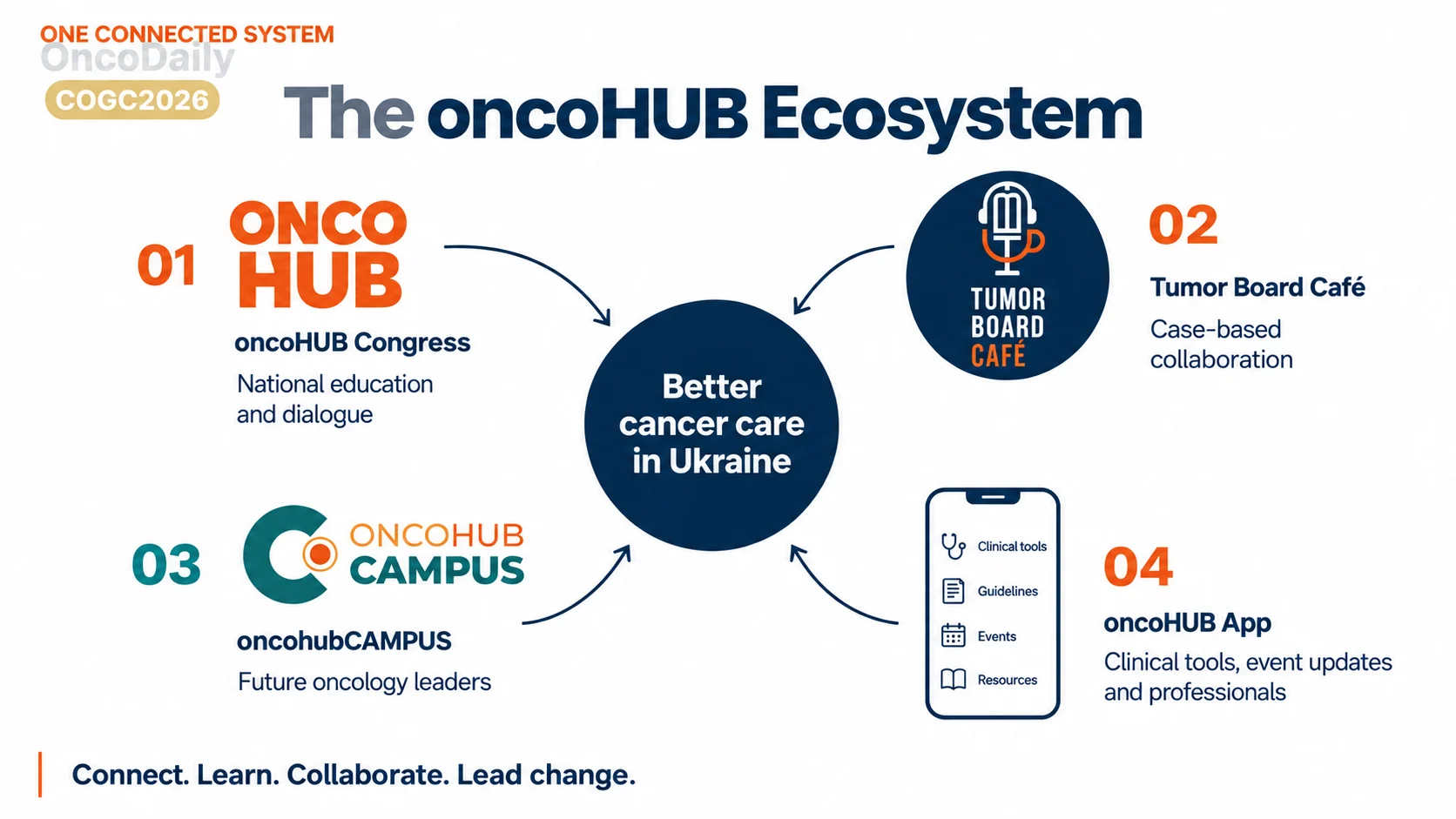
OncoHub is a non-profit professional community within the Ukrainian Society of Clinical Oncology. Our purpose is to unite oncology professionals across Ukraine around evidence-based education, modern standards of care, and meaningful professional collaboration.
We make this community practical through three connected areas.
- Education. We provide relevant scientific knowledge and support the implementation of evidence-based approaches in daily clinical practice.
- Connection. OncoHub creates dialogue between specialists from different regions, institutions, and oncology disciplines.
- Opportunities. Our Telegram channel, online platforms, and application keep the community active every day by sharing professional updates, educational events, international opportunities, and practice-changing content.
For us, community is a practical infrastructure that helps oncology professionals learn, communicate, and move forward together.”
The OncoHub Congress: Beyond Clinical Topics
“The OncoHub Congress brings the professional community together at a national level. More than 1,800 participants attended our Congress last year.
It is a space for evidence-based education, dialogue with experts, and discussion of the most relevant challenges in oncology and hematology.
Importantly, the Congress goes beyond clinical topics.
Alongside disease-specific and treatment-focused sessions, our program addresses broader professional issues that are essential for sustainable, patient-centered cancer care. This includes bioethics, harassment, burnout prevention, and the legal protection of healthcare professionals.
We also organize practical workshops designed to provide participants with skills and tools they can apply in everyday clinical work.
Last year, our scientific program received ESMO accreditation, which was an important recognition of the quality and educational value of the Congress. This year, we have submitted our program again and are awaiting ESMO’s decision.
This year, we are especially pleased to introduce a dedicated section for oncology nurses, recognizing their crucial role in multidisciplinary cancer care and in supporting patients throughout the treatment journey.”
OncoHub Campus: The Next Generation of Leaders
“I would like to say more about OncoHub Campus because it is our gold project.
It is a leadership school for young oncologists and a focused investment in the future of cancer care in Ukraine.
Each cohort brings together approximately 20 doctors under the age of 38 who demonstrate professional potential, motivation, and a willingness to take responsibility for change.
Participation is completely free of charge because we believe access to leadership development should depend on potential and commitment, not on financial resources.
At the same time, the program has a careful selection process. Every candidate completes an interview, and every participant agrees to follow the school’s shared rules and values. This helps us create a respectful, psychologically safe, and constructive learning environment for physicians who understand how the healthcare system works in practice, have meaningful questions about it, and are open to listening, dialogue, and reconsidering their own perspectives.
The program develops more than clinical knowledge. Participants strengthen leadership, communication, teamwork, and project development skills. They learn how to work within multidisciplinary teams, communicate across institutional boundaries, and turn shared challenges into practical improvement projects.
Our goal is that every participant returns to their institution not only as a stronger specialist, but also as someone who can initiate positive change.
Leadership is not developed through lectures alone. It grows when young oncologists can discuss difficult situations openly, learn from experts and from each other, and take responsibility for shared solutions. Together, they discuss issues such as delayed diagnosis, access to treatment, referral pathways, supportive care, patient communication, and multidisciplinary decision-making. They compare experiences and look for realistic solutions that can be adapted to different institutions.
This creates a culture of peer learning and collaborative problem-solving. When professionals listen to each other, communicate respectfully, and work toward a common goal, individual experience can become a shared solution.
Across four modules, the Campus also focuses on skills that are often missing from traditional medical training.
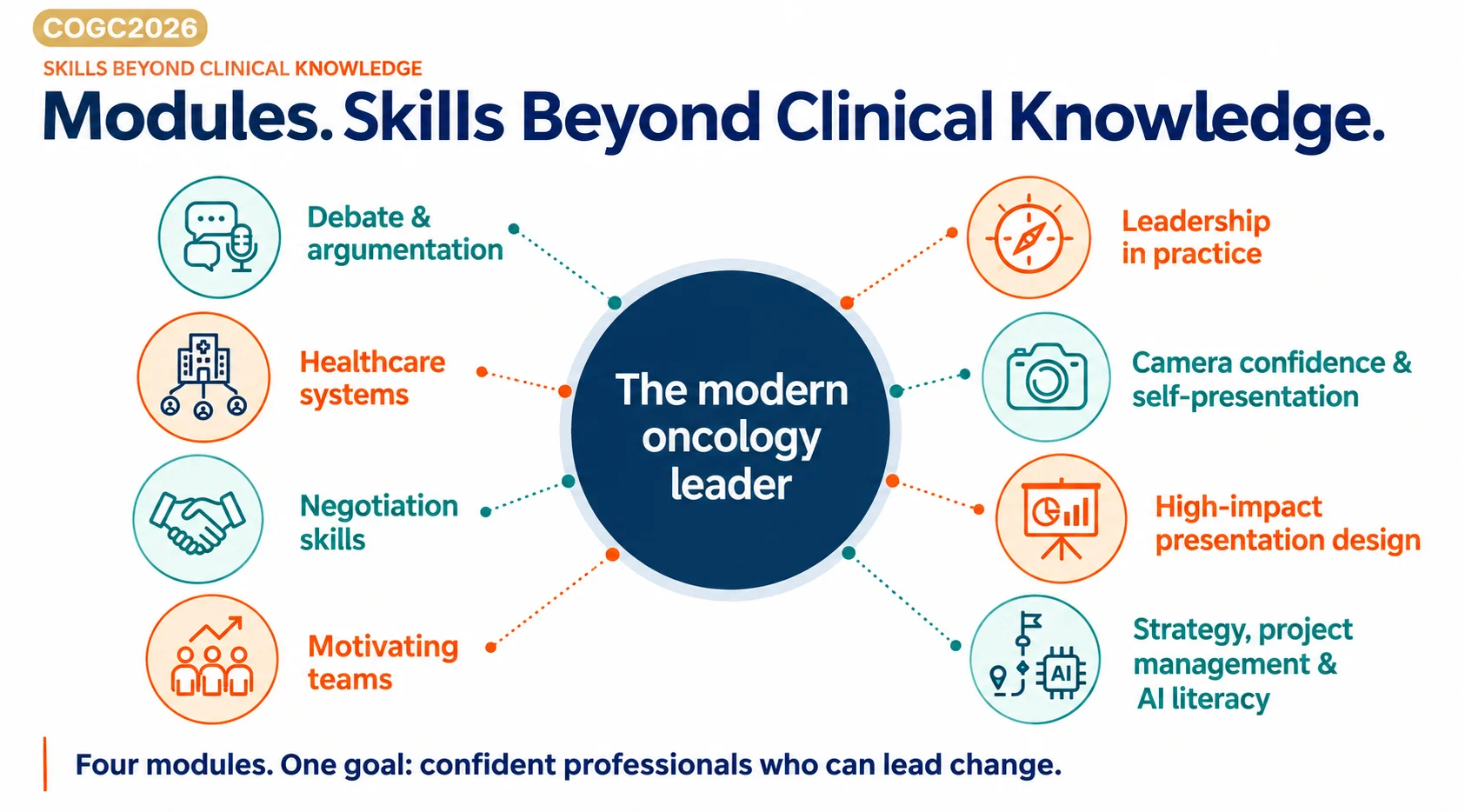
They learn how to debate respectfully, present and defend an idea, negotiate, motivate a team, and better understand how decisions are shaped within the healthcare system.
Participants also practice self-presentation in stressful situations, speaking confidently on camera, and creating clear, visually strong presentations, because even the best clinical idea needs to be communicated in a way that people can understand and trust.
The patient-centered perspective remains at the heart of the program. Our purpose is not only to educate individual doctors, but to support professionals who can improve the experience and continuity of care for patients in their own institutions.”
Tumor Board Cafe: Turning Knowledge Into Practice
“For OncoHub, multidisciplinary care is a working principle that we integrate into our educational formats and professional community.
Tumor Board Cafe is one of the clearest examples.
These are intensive one-day meetings focused on a specific cancer type or clinical field. Depending on the program, the focus may be breast cancer, oncogynecology, colorectal cancer, or hepatopancreatobiliary surgery.
Each meeting is based on current scientific evidence and practical clinical cases. Rather than discussing recommendations in theory alone, specialists analyze real decision-making situations and explore how evidence can be applied to an individual patient.
Medical oncologists, surgeons, radiation oncologists, radiologists, pathologists, and other experts contribute their perspectives. This makes the discussion clinically relevant, multidisciplinary, and directly applicable to daily practice.
We also organize theoretical and practical courses focused on breast cancer rehabilitation and supportive care.
These courses remind us that high-quality cancer care goes beyond tumor treatment. It includes physical recovery, symptom management, psychological support, and quality of life.”
Multidisciplinary Care as a Working Principle
“To conclude, multidisciplinary care should not be limited to clinical decision-making.
It should shape every action we take as an organization, from designing an international congress to creating small peer-learning meetings and strengthening our wider community.
When different perspectives come together, we create more relevant, connected, and patient-centered cancer care.
This is how OncoHub contributes to a stronger oncology ecosystem – by pioneering the future of cancer care, but together.”
Written by Eliz Baloyan, MD, Features Writer and Editor at OncoDaily and CancerWorld