Key takeaways
- Rural cancer disparities are driven by more than geography, including lower screening, lower treatment rates, fewer clinical trial opportunities, and greater socioeconomic barriers.
- Expanding rural oncology should focus on delivering care that is equivalent in quality to metropolitan cancer centers, not simply bringing care closer.
- Collaborative care works better than a simple hub-and-spoke model when separate rural and regional health systems share responsibility for patients.
- Rural programs should build around existing local resources, flexible staffing, primary care integration, and appropriate oncology training.
- Long-term success requires institutional commitment, local champions, realistic staffing, startup planning, and financial sustainability.
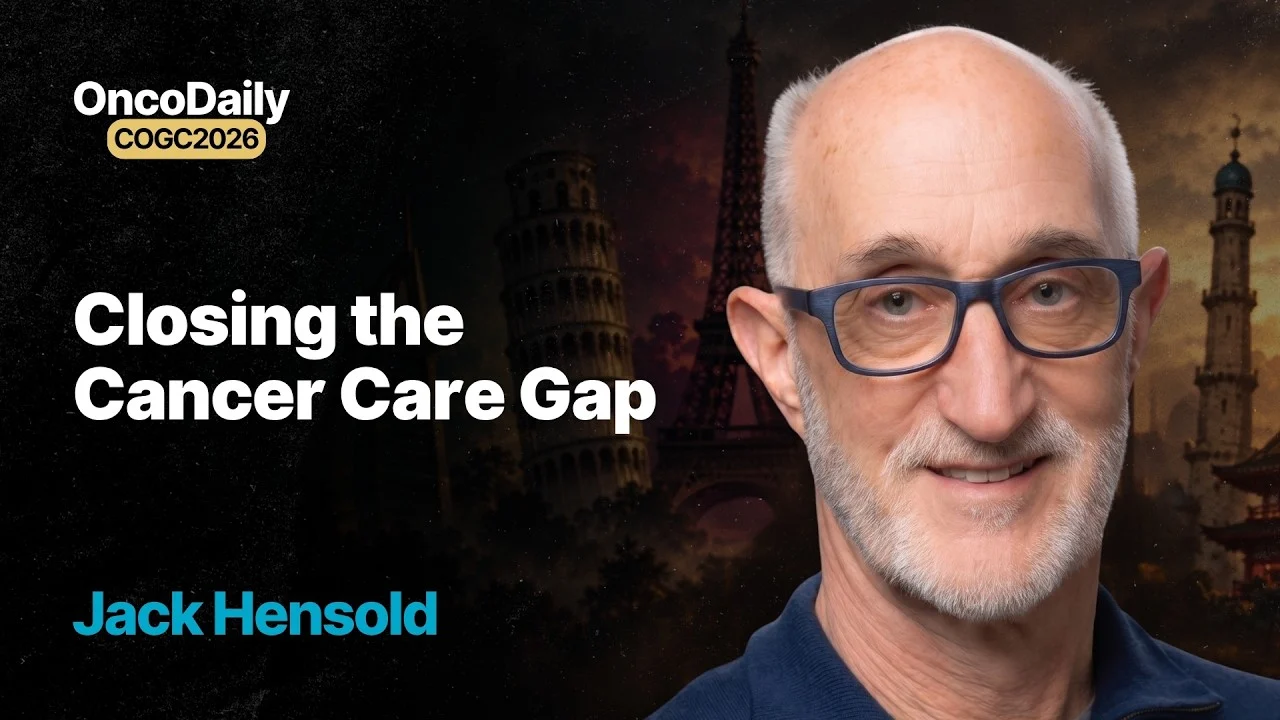
At the Community Oncology Global Congress (COGC 2026), organized by OncoDaily, Jack Hensold, President of the Montana State Oncology Society, focused on a persistent problem in cancer care: where a patient lives can still influence whether they receive treatment at all.
The question, then, is not simply how to bring oncology care into rural communities, but how to do it without lowering the standard of care.
Hensold’s presentation focused on what that requires in practice: building a collaborative local team, using the resources already available, connecting rural and regional centers, and creating a model in which patients can stay closer to home without receiving less because of where they live.
Some Rural Patients Are Not Receiving Treatment at All
“Why is it necessary to decentralize team-based care into rural settings?
Individuals diagnosed with cancer in rural areas of the United States have worse outcomes compared with those in metropolitan areas.
There are several proposed reasons for poorer outcomes in rural cancer care:
- Lower cancer screening rates, leading to diagnosis at more advanced stages
- Lower receipt of standard-of-care treatment
- Underrepresentation in clinical trials
Clinical trials are important here because participation in clinical research is also a component of quality cancer care.
But I want to make an important distinction.
When we talk about guideline-concordant care, we are talking about one way of assessing whether patients are receiving quality care. In some rural communities, however, the problem begins even earlier than whether the treatment follows the guideline.
We looked at five years of data from the Montana Tumor Registry, from 2014 through 2018, and asked a very simple question: after a cancer diagnosis, did the patient receive any cancer treatment at all – surgery, chemotherapy, hormonal therapy, or another treatment?
In the Montana counties with a community Commission on Cancer site, roughly 18% of patients received no treatment following diagnosis.
In the remaining counties without such a site, that proportion was more than 20.5%.
So we are not simply talking about patients failing to receive guideline-concordant care.
Some patients are not receiving cancer treatment at all.
The causes of these rural-urban disparities are complex:
- Poverty,
- Lack of insurance,
- Lower health literacy,
- Other socioeconomic barriers.
But there is also a major issue of access.
The problem is not necessarily that there are too few oncologists overall. It is that oncology care has become increasingly concentrated in metropolitan areas.
And when patients have to travel long distances for care, the travel itself worsens existing socioeconomic disparities and adds to the financial toxicity of cancer treatment.
For somebody who is already struggling financially or lacks adequate insurance, that additional burden can become another reason care is delayed or never received.”
Bringing Care Closer Cannot Mean Lowering the Standard
“If we want to address these disparities by bringing cancer care into rural communities, it is not enough to say, ‘I just want to provide care.’
We have to focus on the quality of the care we provide.
We do not want to deliver poor care simply because it is closer to the patient.
The care a patient receives at a rural site should be equivalent to what that patient would receive if they traveled to a regional cancer center.
That requires a staffed, trained, and coordinated care team.
One part of that team that is often overlooked is the primary care provider. Primary care is rarely discussed when we talk about cancer care teams, but it becomes particularly important when we are trying to build a functioning oncology model in a rural community.
Education is equally important. Every person who becomes part of that team has to be trained to work effectively in an oncology environment.”
From “Hub and Spoke” to Collaborative Care
“Much of this kind of work has traditionally been described as hub-and-spoke cancer care.
I prefer the term collaborative care.
Hub and spoke can imply that the rural site is somehow subservient to the regional center. That may make sense when the spoke is simply a satellite belonging to the same organization.
But when two separate healthcare systems are trying to work together, what we are really building is a collaboration.
The principles of building a good cancer care team do not change simply because there is a geographic or institutional divide. What changes is that you have to figure out how to cross that divide.
You also need a flexible workforce strategy.
Rural sites have fewer oncology-specific resources, so the first question should not always be, ‘Who do we need to hire?’
It should be: what resources already exist here, and how can they be integrated into cancer care?
If navigation already exists elsewhere in the rural hospital, can that resource be incorporated into oncology rather than building an entirely new position?
We also need to optimize the use of advanced practice providers because oncology resources are limited in rural settings.
And again, primary care providers need to be intentionally integrated into the model.
The goal is to create a team around the resources that actually exist in that community rather than designing a metropolitan cancer center on paper and expecting a rural hospital to reproduce it.”
Making Local Care Worth Staying For
“Community engagement is also essential.
Some of the health literacy challenges in rural areas come from a lack of good local information about what treatments are available and what modern cancer care can accomplish.
When you bring new resources into a community, people need to know those resources exist.
You are asking patients to change a pattern they may have followed for years – the assumption that if they want good cancer care, they have to travel somewhere else.
They also need to understand that effective cancer treatment can meaningfully change outcomes.
Again, I have no interest in delivering care simply for the sake of delivering care.
It has to be care equivalent to what the patient would receive at a metropolitan site.
But building that kind of trust also means building a program that can last.
None of this works without institutional commitment at both sites. There have to be champions at the regional cancer center and at the rural hospital who continue to move the project forward when problems arise.
A needs assessment at the beginning is also critical because staffing has to match the actual needs of the community. You do not want to overbuild a program with staffing levels that cannot eventually be supported by patient volume and revenue.
Financial sustainability has to be part of the design from the beginning.
There will also be startup expenses – recruitment, staff education, infrastructure, and sometimes technology.
In our case, we were able to use space that was already available at the critical access hospital. The hospital already had pharmacy infrastructure that could support chemotherapy preparation, and we repurposed underused clinical space for oncology visits.
One unexpected cost was expanding the electronic health record so that the rural site had the oncology-specific functionality it needed.
You also need to expect a startup period when patient volume is low, because patients may not immediately believe that they can receive the same quality of care locally that they previously traveled to receive.
But our experience was encouraging.
The local community accepted the program much more quickly than anticipated, and the expected lag before reaching patient volumes was reduced by approximately 50%.
Patients were happy to receive their care in their own community rather than repeatedly traveling for it.
So I would leave you with this:
Providing cancer care at a critical access hospital is possible despite limited rural resources. The key is not necessarily another regulation or another technology. It is the commitment to building the team, connecting the systems, and making high-quality care possible where the patient already lives.”
Written by Eliz Baloyan, MD, Features Writer and Editor at OncoDaily and CancerWorld