Key takeaways
- Access remains a major part of community oncology because newer standards are not available in every country or practice.
- Avelumab maintenance showed encouraging real-world effectiveness in patients who were more heterogeneous than those typically enrolled in randomized trials.
- Oligoprogression may not always require abandoning a systemic therapy that is still controlling most of the disease.
- VOLGA 2 is testing this strategy prospectively. The study is comparing SBRT plus continued avelumab with second-line therapy, but results have not yet been reported.
At the Community Oncology Global Congress (COGC 2026), organized by OncoDaily, Ilya Tsimafeyeu, medical oncologist and Director of the Bureau for Cancer Research (BUCARE), examined metastatic urothelial cancer from the perspective of community practice.
Over the past several years, the treatment landscape has changed dramatically. But having more effective therapies creates another challenge for oncologists outside highly selected clinical-trial settings:
“How can we translate clinical trial results into decisions for the patient sitting in front of us?”
From Few Options to a Changing Treatment Landscape
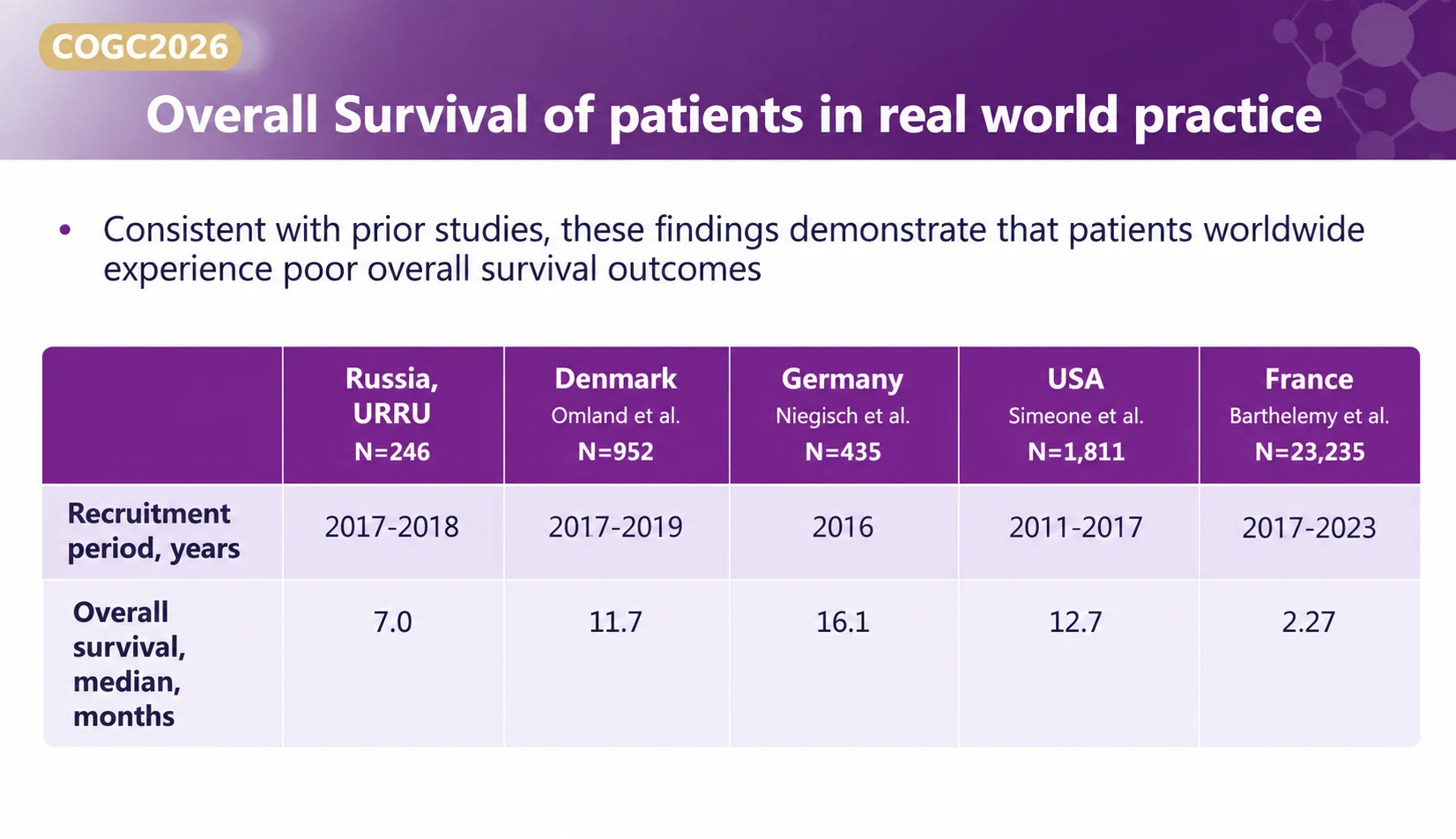
Before immunotherapy, metastatic urothelial cancer carried a very poor prognosis. Real-world data presented during the session showed one-year overall survival of roughly 31%, median overall survival of around seven months, and five-year survival below 3%.
After chemotherapy, community oncologists had few effective options. Similar patterns were seen across healthcare systems, with real-world studies from several countries showing rapid progression and limited access to subsequent treatment.
Even as new therapies became available, uptake remained uneven. One large French real-world analysis presented at ASCO, showed that the overwhelming majority of patients still received chemotherapy in the first line, while relatively few received immunotherapy or antibody-drug conjugates.
The arrival of immunotherapy began to change that treatment sequence.
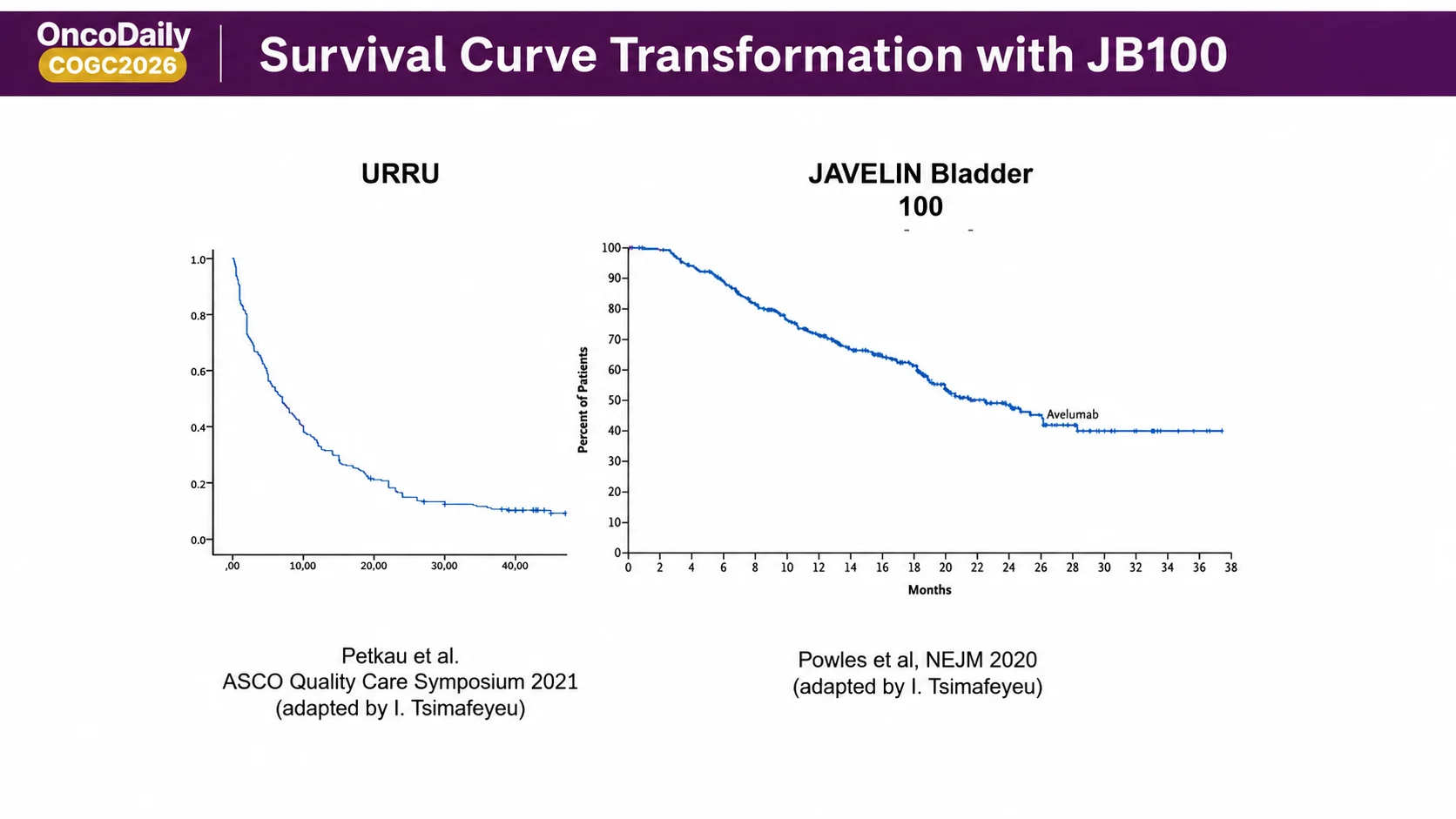
The JAVELIN Bladder 100 trial established avelumab maintenance for patients whose disease had not progressed after first-line platinum-based chemotherapy. Instead of completing chemotherapy and simply waiting for the disease to progress, eligible patients could move directly into maintenance immunotherapy.
But for community practice, the randomized trial was only the beginning.
Clinical-trial populations are selected. Patients seen in everyday oncology may be older, have more comorbidities, receive less standardized chemotherapy, or have disease characteristics that would make them less likely to enter a pivotal trial.
That is where real-world evidence becomes particularly important.
Can Trial Results Hold Up in the Real World?
The RAVE-Bladder study was designed to examine avelumab maintenance in routine practice among patients with metastatic urothelial cancer who had no disease progression after platinum-based chemotherapy.
The population was more heterogeneous than that enrolled in JAVELIN Bladder 100. Previous chemotherapy was less standardized, nearly one-quarter of patients had received cisplatin or carboplatin as a single agent, 63% had high-grade tumors, and 40% had disease involving more than two organs.
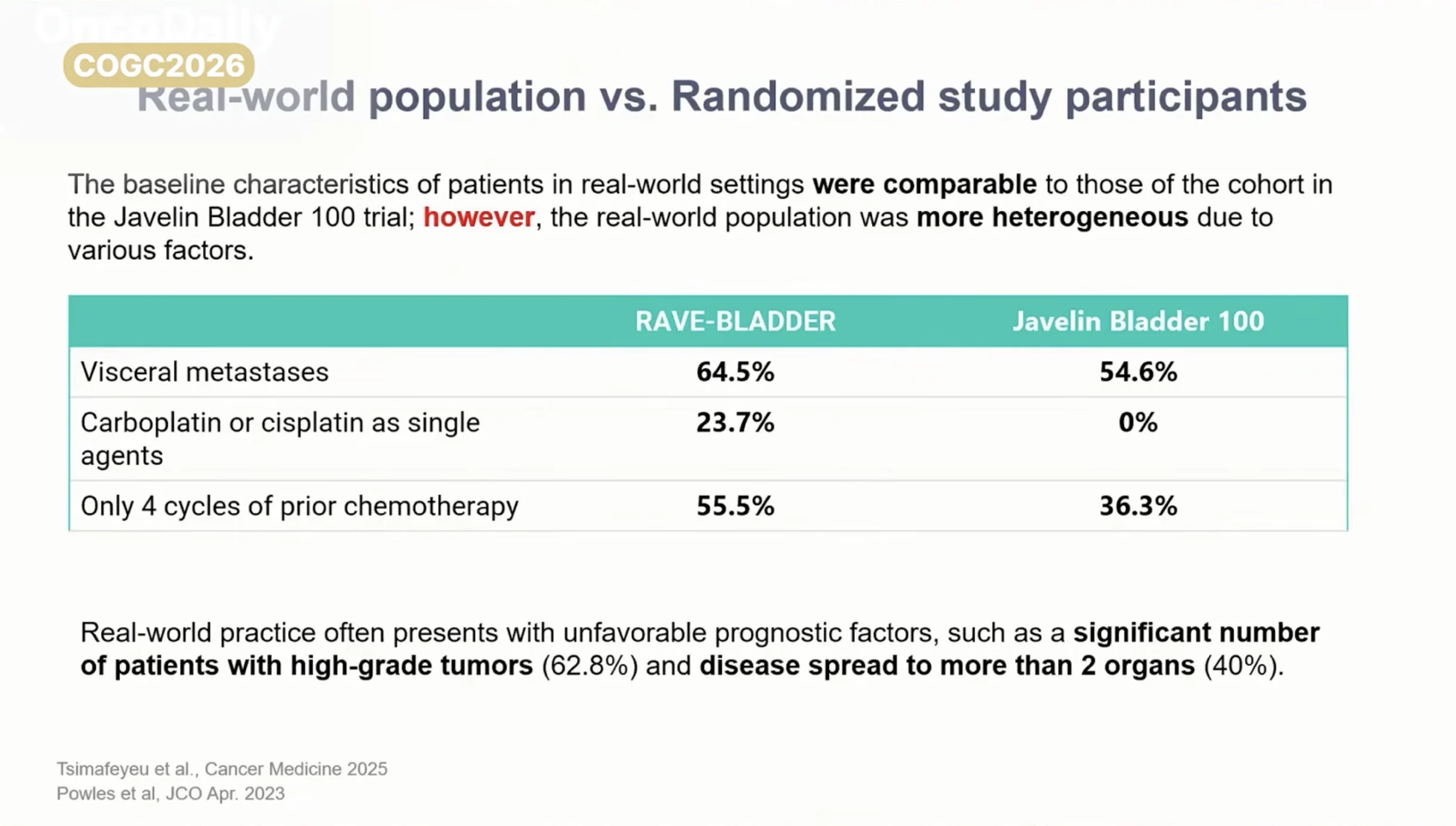
In other words, these were much closer to the patients encountered in everyday clinics.
The results were encouraging. The response rate to first-line chemotherapy was approximately 48%, and additional responses were seen during avelumab maintenance, including complete responses. Complete responses lasted a median of 16.5 months, while stable disease lasted around 12 months.
The one-year overall survival rate reached 78.7%, and median progression-free survival was 9.5 months. The published RAVE-Bladder study included 110 patients and reported similar efficacy and manageable safety compared with the pivotal trial.
Importantly, major differences in benefit were not identified according to age, sex, previous chemotherapy, number of chemotherapy cycles, or response to chemotherapy. Outcomes were also comparable between bladder and upper urinary tract primary tumors, as well as between patients with resected and unresected primary tumors.
That has a practical implication for community oncologists: the patient does not have to look like the “ideal” clinical-trial patient for maintenance therapy to remain relevant.
Safety also appeared manageable. About 81% of patients experienced treatment-related adverse events, but grade 3 or higher events occurred in approximately 12%. Similar findings across other real-world cohorts have strengthened the evidence that the benefit seen in randomized trials can translate into routine practice.
One Standard Does Not Fit Every Health System
The treatment landscape has continued to move forward. Enfortumab vedotin plus pembrolizumab has become an important first-line option in metastatic urothelial cancer.
But community oncology is also shaped by access.
Not every therapy is available in every country or every practice. During the presentation, Russia was given as an example where enfortumab vedotin plus pembrolizumab was not available as an approved treatment option.
That means oncologists cannot rely on one universal algorithm. They need to understand several evidence-based pathways and know how to use the treatments that are realistically available within their own healthcare system.
The issue becomes even more complicated when treatment is working almost everywhere – but not everywhere.
When Only Part of the Cancer Progresses
A clinical case illustrated that problem.
A 66-year-old man with urothelial carcinoma of the renal pelvis developed lung and bone metastases after surgery. He received four cycles of gemcitabine and cisplatin and achieved good disease control, followed by maintenance avelumab.
Three months later, most of the disease remained controlled. Some lung lesions had continued to shrink, but a bone lesion progressed and a new vertebral metastasis appeared.
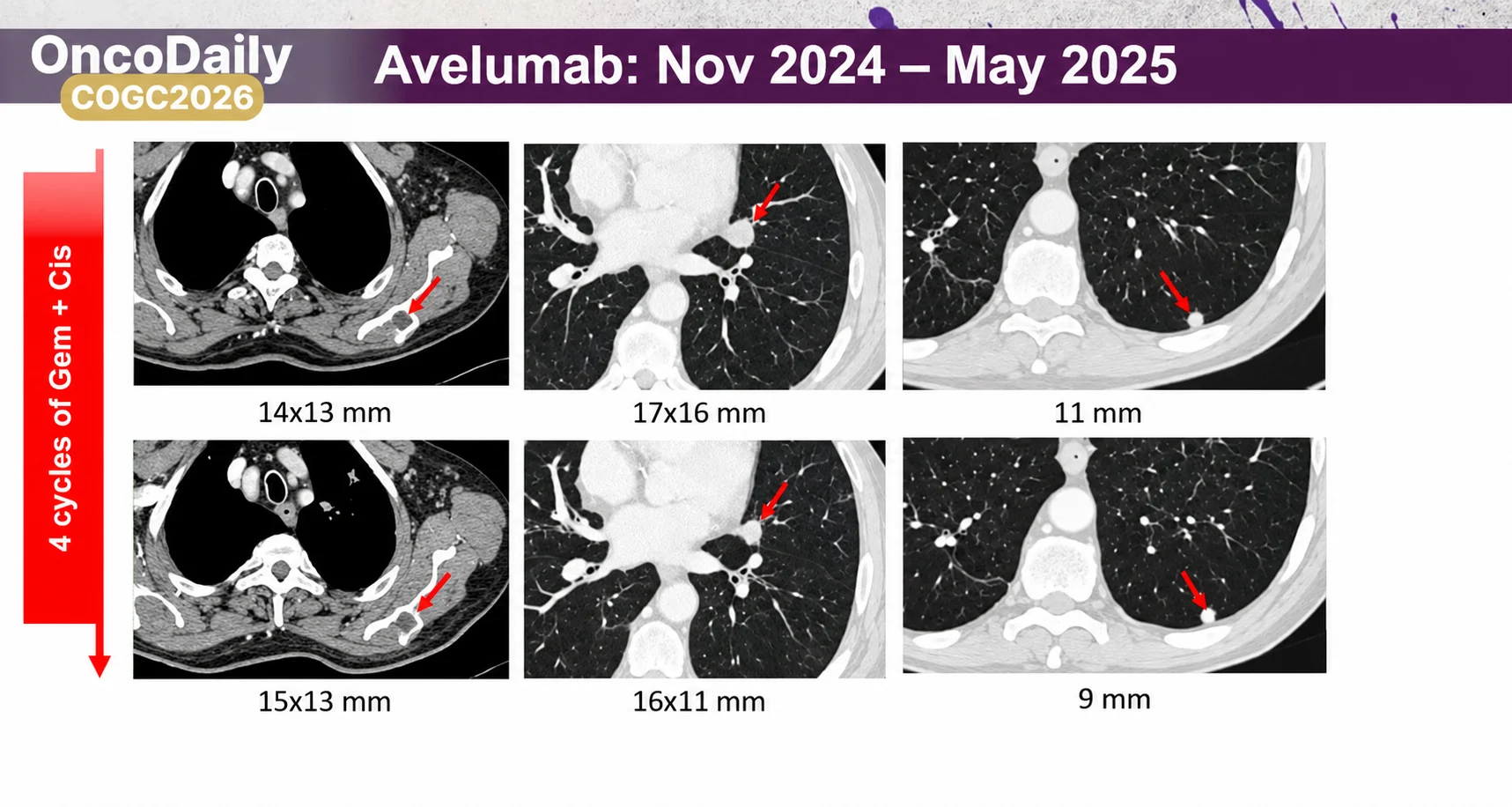
By RECIST criteria, this was progressive disease.
Traditionally, progression would trigger a change in systemic treatment. But the pattern raised a different question: if most metastases remain controlled and only a few sites are growing, has the systemic therapy truly failed – or have a small number of resistant tumor clones escaped control?
This is the concept of oligoprogression.
“Should we really stop a well-tolerated treatment that is still controlling almost all other lesions?”
For metastatic urothelial cancer, there is still no widely established consensus for this situation.
In a survey of 72 oncologists who regularly treated urothelial cancer, 71% supported treating oligoprogressive lesions with stereotactic body radiation therapy (SBRT) while continuing the existing systemic treatment.
The finding suggested that community practice was already moving toward a treatment strategy for which prospective evidence was still developing.
Can Local Treatment Keep Systemic Therapy Working?
That clinical question led to the VOLGA 2 trial, a randomized phase 2 study investigating SBRT in patients with metastatic urothelial cancer who develop oligoprogression while receiving maintenance avelumab.
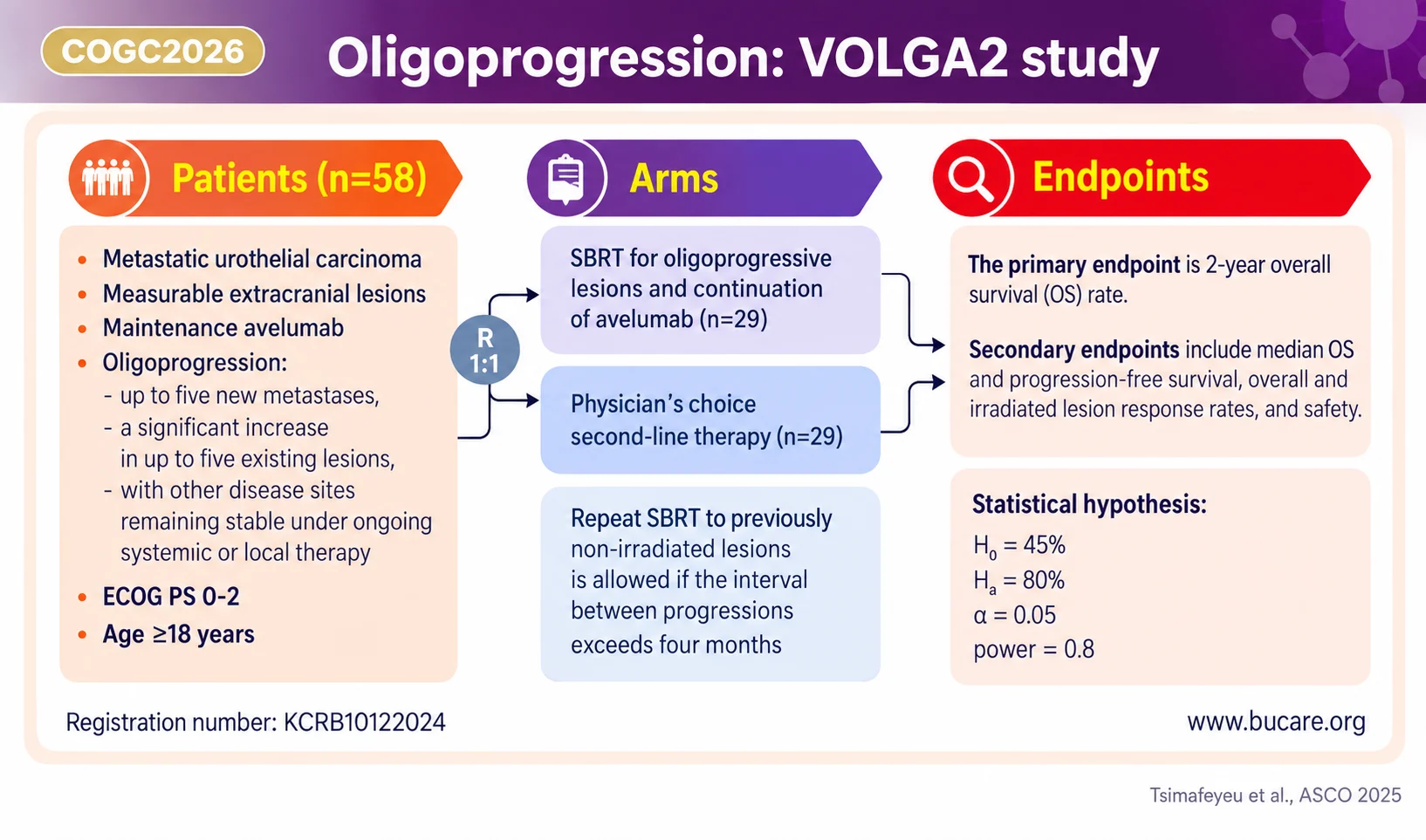
In the study, oligoprogression is defined as the appearance of up to five new metastases or significant growth in up to five existing lesions while the remaining sites of disease stay controlled.
Patients are randomized between two approaches: SBRT directed at the progressing lesions while avelumab is continued, or second-line systemic therapy chosen by the treating physician.
The primary endpoint is the two-year overall survival rate. Repeat SBRT to previously untreated lesions is also permitted when enough time has passed between episodes of progression.
The study addresses a clinically important question: whether a few resistant lesions can be treated locally without giving up a systemic therapy that is still benefiting the rest of the patient’s disease.
What Evidence Means in Practice
For community oncology, the challenge is not only knowing the standard, but knowing how well it holds up in real-world patients and what to do when guidelines become less clear.
RAVE-Bladder helped answer the first question by showing that avelumab maintenance could remain effective in a less selected population. VOLGA 2 is addressing the next: whether limited progression can be treated locally while an otherwise effective systemic therapy continues.
Ultimately, the value of evidence lies in how well it helps guide the treatment decision for the patient sitting in front of you.
Written by Eliz Baloyan, MD, Features Writer and Editor at OncoDaily and CancerWorld