Key takeaways
- Childhood leukemia is highly curable, but survival depends on access to care. Early diagnosis, uninterrupted treatment, supportive services, and long-term follow-up remain essential to improving outcomes.
- Albania faces major gaps in molecular diagnostics and patient tracking. More than half of the reviewed pediatric leukemia cohort transferred abroad for care, making reliable survival assessment and healthcare planning difficult.
- Displacement creates additional barriers to successful leukemia treatment. Jordan's experience demonstrates how delayed diagnosis, interrupted therapy, malnutrition, and infections complicate care for vulnerable children.
- Many causes of childhood leukemia treatment failure are preventable. Better diagnostic pathways, infection prevention, financial assistance, and patient-tracking systems can reduce treatment abandonment and treatment-related mortality.
- International collaboration can strengthen pediatric leukemia care. Shared expertise, regional referral networks, professional training, and stronger local healthcare capacity can help more children access effective treatment.
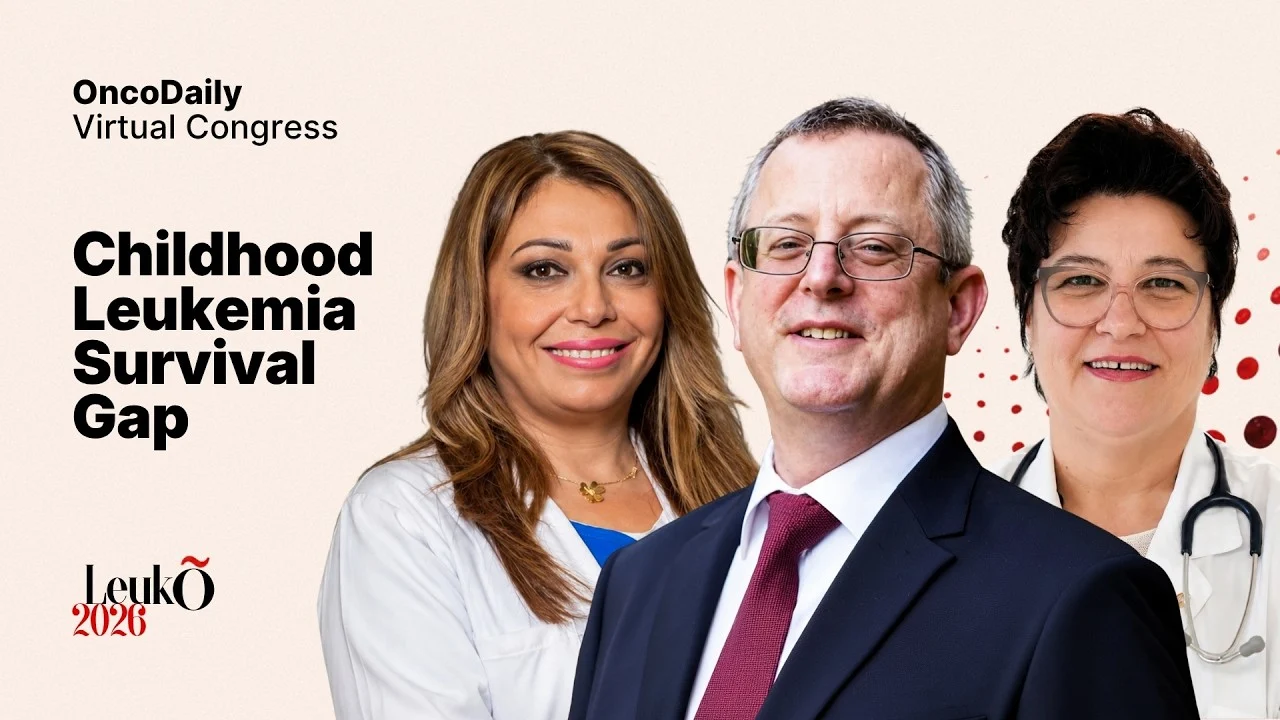
At LeukO 2026: Global Virtual Congress on Leukemias, organized by OncoDaily, Donjeta Bali Alia, Professor of Pediatrics and Pediatric Hematologist-Oncologist at the University Hospital Center “Mother Teresa” in Tirana, Albania; Rawad Rihani, Chairperson of the Department of Pediatrics and Director of the Pediatric Blood and Marrow Transplantation and Cellular Therapy Program at King Hussein Cancer Center in Jordan; and Scott Howard, CEO of Resonance, Deputy Director of the Yeolyan Hematology and Oncology Center in Armenia, and International Development Officer at Hospital Sant Joan de Déu Barcelona, held an expert discussion on the challenges and opportunities for improving childhood leukemia outcomes across different healthcare systems.
Their discussion moved between Albania, where many children travel abroad for specialized treatment; Jordan, where a major cancer center provides care to children from both local and displaced populations; and international examples of hospitals that have reduced preventable treatment failures through practical interventions.
Childhood leukemia is now highly curable in well-resourced settings. Yet access to diagnosis, uninterrupted treatment, supportive care, and long-term follow-up continues to vary considerably between countries.
Albania: When the Diagnosis Is Known, but the Outcome Is Not
Professor Donjeta Bali Alia began with a question that has become central to efforts to improve childhood leukemia care in Albania.
“Does every child have the same opportunity to be diagnosed, treated continuously and followed to cure?”
To examine that question, her team reviewed approximately a decade of national childhood leukemia data, covering 2015-2025.
The dataset included approximately 260 children with acute and chronic leukemias, with acute lymphoblastic leukemia (ALL) accounting for around 77-80% of cases.
Most patients were diagnosed between one and four years of age, and there was a slight predominance of boys.
The overall disease distribution was broadly consistent with international pediatric leukemia patterns, with B-lineage ALL representing the largest group.
However, Albania faces significant limitations in molecular diagnostics and comprehensive risk stratification.
At the time of the presentation, molecular testing was not routinely available within the national pediatric leukemia service. Risk assessment therefore depended heavily on clinical characteristics, including age, white blood cell count, leukemia immunophenotype when available, and central nervous system involvement.
These limitations make it harder to assign patients to the most appropriate risk categories and accurately assess their response to treatment.
Yet Bali Alia identified an even larger problem in the national data.
More than half of the children in the reviewed cohort were recorded as migrating or transferring abroad for care.
Many traveled to countries such as Italy, Greece, Austria, France, or Turkey to access specialized diagnostic services, treatment, or management of relapsed disease.
Some received support through arrangements involving relatives, hospitals, charitable organizations, or international assistance.
But after leaving Albania, many patients were no longer consistently followed through the national system.
As a result, clinicians could not always determine whether a child had achieved remission, experienced relapse, completed treatment, or remained in long-term follow-up.
This creates a serious limitation when evaluating national leukemia outcomes.
A hospital may know how many children were diagnosed, but if their subsequent treatment and survival data are incomplete, it cannot reliably determine how well the healthcare system is performing.
Bali Alia emphasized that the priority is not necessarily collecting more information, but improving the completeness of the information that matters.
“The next step is not more variables, it is better completeness of the variables that determine survival.”
Better longitudinal data could help Albania estimate survival more accurately, assess treatment pathways, and determine where investments in local services would have the greatest impact.
Going Abroad for Treatment Is Not the Same as Abandoning It
The movement of Albanian patients across borders prompted an important exchange between Bali Alia and Howard.
When children leave their home country for treatment, how should their outcomes be recorded?
Howard stressed that transferring to another hospital should not automatically be classified as treatment abandonment.
A child who travels to Italy for chemotherapy and successfully completes treatment has followed a different care pathway, not necessarily experienced treatment failure.
True treatment abandonment refers to stopping or failing to complete recommended curative treatment without continuing appropriate care elsewhere.
By contrast, international transfer may represent the family’s best available opportunity to receive effective treatment.
However, Bali Alia explained why the lack of information after transfer remains a major concern.
Without knowing where children are being treated, how long their treatment lasts, and whether they return for follow-up, national healthcare planners cannot accurately estimate future needs for medicines, specialized staff, or diagnostic services.
The distinction between treatment outcomes and healthcare planning is important.
A child receiving successful treatment abroad is not necessarily a clinical failure. But an incomplete national record still limits the country’s ability to improve its own services.
Howard suggested that structured shared-care arrangements could offer a solution.
Under such an approach, a child might receive specialized induction treatment abroad and later return to Albania for appropriate continuation therapy, maintenance treatment, or follow-up.
That would require formal communication between hospitals, shared clinical information, and agreement on responsibilities throughout the treatment pathway.
For Albania, the objective is not to eliminate international referrals.
Some children will continue to require treatments that cannot reasonably be provided locally.
Instead, Bali Alia described a strategy to reduce avoidable dependence on treatment abroad while strengthening local expertise and maintaining access to international centers when needed.
The country is working toward a more complete national registry, improved treatment protocols, stronger diagnostic capacity, and more reliable procurement of pediatric cancer medicines.
International partnerships are contributing to these efforts.
Bali Alia described collaborations involving Hospital Sant Joan de Déu, the Princess Máxima Center, and colleagues in Armenia, alongside work toward participation in the WHO Global Platform for Access to Childhood Cancer Medicines.
She also reported that more children had begun remaining in Albania for treatment since October 2023.
These are encouraging developments, although long-term outcome data will be needed to determine their impact on survival.
Jordan: Strong Cancer Care Meets the Challenges of Displacement
Dr. Rawad Rihani continued the discussion with the experience of King Hussein Cancer Center (KHCC) in Jordan.
While Albania is working to strengthen national treatment capacity and reduce unnecessary international referrals, Jordan offers an example of highly specialized cancer services operating within a region affected by conflict and population displacement.
Rihani explained that approximately 25-30% of the pediatric patients seen at KHCC are non-Jordanian.
Over the years, the center has cared for children from Syria, Iraq, Yemen, Palestine, and other countries experiencing instability or displacement.
More recently, patients arriving from Gaza have presented particularly difficult clinical challenges.
Some children reach the center after substantial delays in diagnosis. Others have already received partial chemotherapy, corticosteroids, or multiple treatment regimens before their referral.
These circumstances can complicate leukemia classification and risk assessment.
Prior treatment may alter the disease’s presentation, while incomplete medical records make it difficult to determine the child’s initial leukemia characteristics, central nervous system status, or previous response to therapy.
Some patients arrive with relapsed or refractory disease.
For Rihani, these challenges demonstrate how profoundly treatment outcomes can depend on the circumstances in which care is delivered.
KHCC has developed extensive capabilities in pediatric leukemia care, including flow cytometry, cytogenetics, measurable residual disease (MRD) testing, immunotherapy, transplantation, and comprehensive supportive care.
Rihani reported that ALL outcomes at the center exceed 90% in appropriately treated children who present early and receive the necessary care.
This is a center-specific observation, not a national survival estimate.
It illustrates the outcomes that specialized services can achieve, while also exposing the inequalities experienced by children who arrive later or have already undergone interrupted treatment.
For displaced patients, the challenges frequently extend beyond leukemia biology.
Malnutrition, inadequate hygiene, infections, and difficult living conditions can reduce tolerance to chemotherapy and increase the risk of treatment-related complications.
A treatment protocol that works well in a stable clinical environment may become much more difficult to deliver safely when the child is malnourished, has a serious infection, or has experienced long interruptions in care.
Rihani emphasized that these problems cannot be addressed through anticancer drugs alone.
Nutrition, infection prevention, supportive care, and specialized nursing are integral to successful treatment.
She also highlighted the importance of palliative care, including symptom relief and psychosocial support, from the beginning of the treatment journey.
For children with refractory disease, these services become especially important.
The conversation challenged the assumption that the most sophisticated cancer technologies should always be the highest priority.
In some settings, strengthening basic supportive care may have a more immediate impact on patient outcomes than introducing an advanced treatment that cannot be safely supported by the surrounding healthcare system.
Scott Howard: Why Children Are Still Dying of Curable Cancers
Professor Scott Howard approached the discussion from a different perspective.
Rather than focusing exclusively on national incidence figures or treatment protocols, he examined the specific points at which children can be lost along the path from diagnosis to cure.
He began by returning to the Albanian dataset.
The approximately 260 children diagnosed over the preceding decade were not simply statistical observations.
“That’s not a number. Those are human beings who need to be cured.”
For Howard, counting diagnoses is only the beginning.
The more useful question is why a child with a potentially curable malignancy might not receive an accurate diagnosis, begin treatment, complete it safely, or remain in remission.
The World Health Organization estimates that more than 80% of children with cancer are cured in high-income countries, compared with fewer than 30% in many low- and middle-income countries.
The difference cannot be explained by leukemia relapse alone.
Howard described several major pathways to preventable treatment failure:
- Failure or delay in diagnosis: Children may never reach an appropriate cancer service or may initially be treated for another condition.
- Incorrect diagnosis: Limited pathology, flow cytometry, and laboratory resources may prevent accurate disease classification.
- Treatment abandonment: Financial, logistical, social, or communication barriers may prevent families from completing treatment.
- Treatment-related mortality: Infections and other complications may become fatal when supportive care is inadequate.
- Avoidable relapse: Inappropriate treatment intensity, unavailable medicines, interruptions, or inadequate monitoring may compromise disease control.
Each problem requires a different intervention.
And improving outcomes means identifying which causes are most relevant in a particular country or hospital.
The Importance of Recognizing Leukemia Early
Howard illustrated diagnostic delays through the experience of countries where childhood infections are extremely common.
In malaria-endemic regions, children with leukemia may initially present with symptoms that resemble malaria, including fever, anemia, and general illness.
When healthcare facilities see enormous numbers of children with infectious diseases, rare diagnoses such as leukemia can be overlooked.
The challenge becomes greater when basic blood counts, pathology services, or referral pathways are not readily available.
Howard argued that these barriers can be reduced through education for healthcare workers, stronger laboratory services, appropriate referral systems, and financial support for diagnostic testing.
Incorrect diagnoses require additional solutions, including better pathology infrastructure, access to immunophenotyping, specialist consultation, and telepathology.
The principle is that clinicians must first identify where the diagnostic process is failing before selecting an intervention.
Sometimes the Most Effective Intervention Is a Phone Call
Among the most practical examples Howard presented were programs that reduced treatment abandonment.
He described a pediatric cancer support initiative in Brazil that addressed the financial and social difficulties families faced during prolonged treatment.
The program provided resources such as accommodation, transportation, food, and access to supportive services.
According to the experience he presented, treatment abandonment fell from approximately 16% to nearly zero as these interventions were implemented.
The example illustrated how assistance with everyday expenses can directly influence whether a child completes cancer treatment.
Howard also discussed a patient-tracking program in El Salvador.
Instead of relying entirely on families to return for scheduled appointments, the system identified patients who had missed visits and prompted staff to contact them.
That apparently simple intervention required three elements: software, people, and an organized process for responding to missed appointments.
The program reduced treatment abandonment from approximately 12% to 2%, according to the results he presented.
Howard emphasized that the improvement did not depend on developing a new cancer medicine.
It depended on recognizing an interruption in care and acting before that interruption became permanent.
These examples illustrate why preventable treatment failure is often a healthcare delivery problem.
The solutions may include financial support, reliable transport, better communication, patient navigation, or a social worker who follows up when a child misses an appointment.
Howard also drew attention to the prevention of toxic deaths, particularly those associated with infection.
Training nurses, improving infection-control practices, recognizing complications promptly, and ensuring adequate supportive care can all contribute to reducing treatment-related mortality.
The broader point was that major improvements in childhood cancer survival can come from making established treatments safer and more reliably accessible.
Why Collaboration Matters More Than Working Alone
The conversation eventually returned to a challenge shared by Albania, Jordan, and many other countries: no single hospital can maintain expertise in every difficult pediatric cancer case.
Rihani described how King Hussein Cancer Center has expanded its role as a regional training and consultation center.
Its fellowship and professional training programs have supported healthcare workers from countries and populations with more limited access to specialized care.
International study groups and professional networks can also help clinicians discuss unusual cases, review treatment decisions, and identify appropriate referral pathways.
Howard reinforced this point through his work with Resonance, which supports international clinical collaboration networks, including the Acute Leukemia Research and Care Network (ALRCaN).
These networks bring together clinicians from different institutions to discuss challenging cases and share practical expertise.
To illustrate their value, Howard shared an example from pediatric neuroblastoma rather than leukemia.
A child had responded to chemotherapy, but the treating surgeon had limited experience with the operation required to remove the remaining tumor.
Instead of immediately changing the treatment strategy, colleagues from another center offered direct surgical guidance.
An experienced pediatric surgeon, Khalil Ghandour from Jordan, discussed the operative plan with the local surgical team.
The operation was subsequently completed, demonstrating how specialist-to-specialist consultation can help a local team deliver treatment that might otherwise require referral elsewhere.
Although the example involved a solid tumor, its relevance to leukemia care was clear.
A difficult clinical decision does not always require transferring the patient or purchasing a new technology.
Sometimes the essential resource is access to a colleague who has managed the same problem before.
International networks can make that expertise available across institutional and national boundaries.
For Albania, these relationships may support diagnostic development, treatment protocols, and shared-care arrangements.
For Jordan, they provide opportunities both to receive expertise and to support clinicians treating displaced or underserved populations.
For smaller centers, they can create access to specialist knowledge that would be difficult to maintain locally.
As Rihani observed, clinicians do not need to have every answer themselves, but they need to know when and where to seek help.
From Better Data to Better Childhood Leukemia Care
The discussion closed with a shared emphasis on translating evidence and international cooperation into improvements that patients can experience.
For Albania, the priorities include reliable national outcome tracking, improved molecular diagnostics, uninterrupted access to essential medicines, and stronger local treatment capacity.
For Jordan, the challenge includes maintaining high-quality specialized care while responding to the complex needs of displaced children who may arrive with delayed diagnoses, incomplete treatment histories, and additional health vulnerabilities.
Howard’s international examples added another perspective: many barriers to successful treatment already have practical, evidence-informed solutions.
Patient-tracking systems, financial assistance, diagnostic training, infection prevention, and professional consultation networks can all address problems that prevent children from completing effective treatment.
The larger ambition is to make the best available childhood leukemia care accessible to more children, regardless of their country of residence, financial circumstances, or need to cross borders.
That requires good data, but also the willingness to act on what those data reveal.
As Bali Alia put it:
“What we do, not what we say we will do.”
Written by Eliz Baloyan, MD, Features Writer and Editor at OncoDaily and CancerWorld
Watch the full video on YouTube.