Key takeaways
- Small independent oncology practices are becoming harder to sustain as administrative burden, reimbursement pressure, and technology demands continue to grow.
- Value-based care has not expanded as broadly as expected, while declining reimbursement and shrinking margins continue to pressure community oncology.
- Advanced therapies such as CAR T-cell therapy, bispecific antibodies, and radioligand therapy require major investments in infrastructure, staffing, toxicity management, and operational capacity.
- Looking ahead, scale is becoming the price of survival for community oncology practices in the United States.
At the Community Oncology Global Congress (COGC 2026), organized by OncoDaily, Debra Patt, medical oncologist and Executive Vice President at Texas Oncology, examined how community oncology in the United States is being reshaped by several pressures arriving at the same time.
Independent practices are under growing financial and administrative pressure, while consolidation continues to reshape where cancer care is delivered. At the same time, complex therapies and digital tools demand new infrastructure, investment, and interoperability.
Together, these shifts point to the central questions running through the presentation: how practices can build enough scale, infrastructure, and technological capacity to keep innovation accessible in the community.
Scale Is Becoming the Price of Survival
“The defining trend over the last five years has been the erosion of the small independent practice model. That has been driven by regulatory complexity, rising administrative overhead, the need for negotiating leverage with payers, and the growing complexity of everything from revenue cycle management to technology integration and digital transformation.
As a result, network affiliation and integration have become much more common. Clinically integrated networks such as the U.S. Oncology Network, OneOncology, Navista, and others have become increasingly important to practice survival by providing technology, revenue cycle management, group purchasing power, and clinical pathways that smaller practices may struggle to build on their own.
We have also seen increasing private equity investment and greater vertical integration by payers, all of which are changing the structure of community oncology.
Digital tools and AI may help on the operational side, particularly in revenue cycle management, where authorization gaps, coding mismatches, and denied claims create additional work and contribute to burnout.
Looking ahead, scale is becoming the price of survival for community oncology practices in the United States.
Further consolidation is likely. Networks provide the scale needed to compete through technology, purchasing power, clinical pathways, and the infrastructure required to deliver increasingly complex therapies.
The challenge is to make sure that as community oncology becomes larger and more technologically sophisticated, that scale ultimately strengthens the ability to deliver innovative cancer care where patients already receive it.”
Value-Based Care Has Not Developed as Expected
“Ten years ago, many of us thought that by now we would be operating under value-based contracts with most commercial payers.
But that really has not happened to the extent we expected. We have seen the Oncology Care Model transition to the Enhancing Oncology Model, which is a smaller program, and participation in these models has declined over time.
These experiments have led practices to make investments in value-based care, and there have been savings, but the commercial environment has largely stagnated. Commercial payer value-based care arrangements remain relatively limited.
At the same time, we have several pressures that are converging to squeeze practice margins:
- declining reimbursement,
- continued cuts to the physician fee schedule,
- reductions in radiation oncology reimbursement despite inflation,
- decreasing drug margins.
For some practices, that means difficult decisions about whether they can keep certain locations or radiation facilities open, particularly in smaller or rural communities.”
Consolidation Is Changing Where Cancer Care Happens
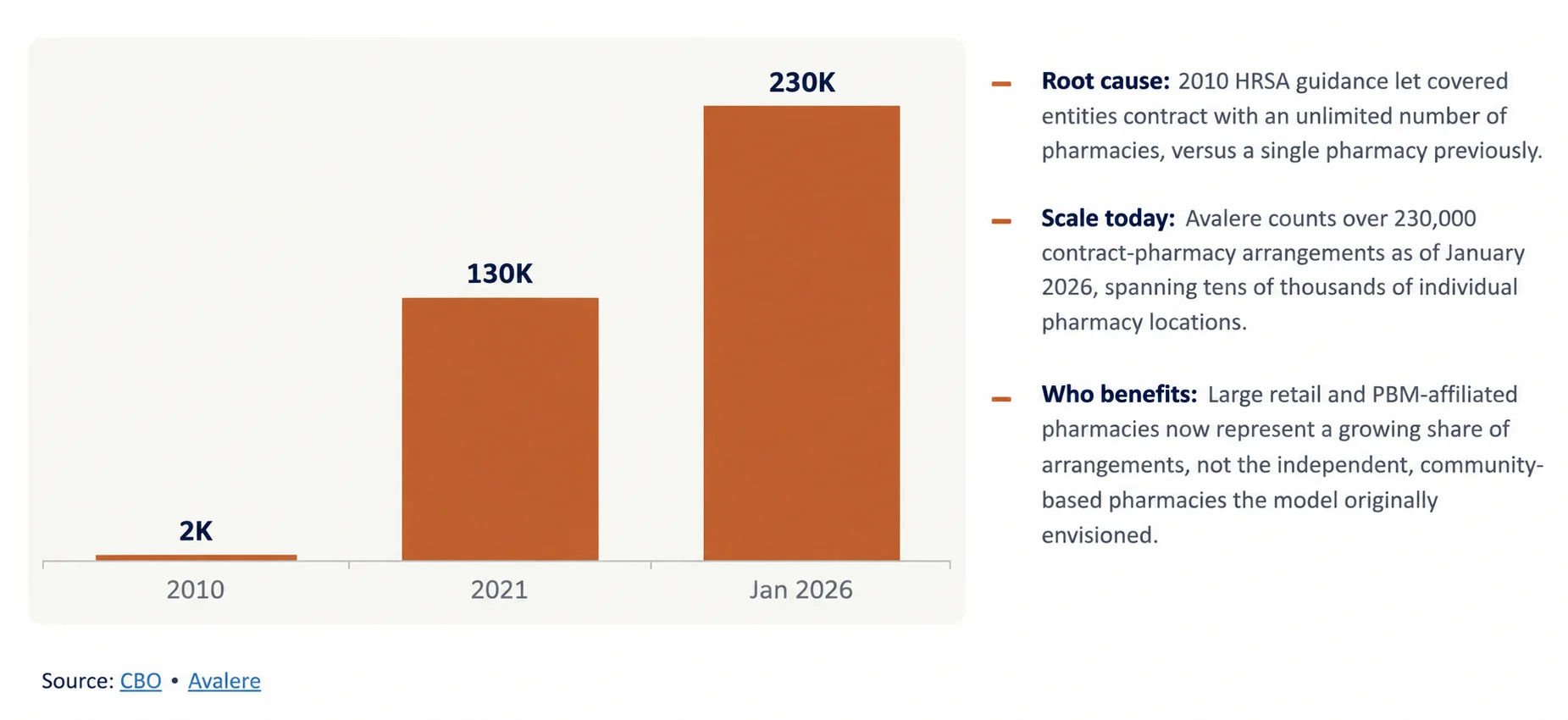
“Another major issue is the continued growth of the 340B program and the financial incentives around consolidation.
The program was originally designed to support vulnerable patient populations, but it has grown substantially. At the same time, we have seen increasing consolidation of oncology practices into hospital systems.
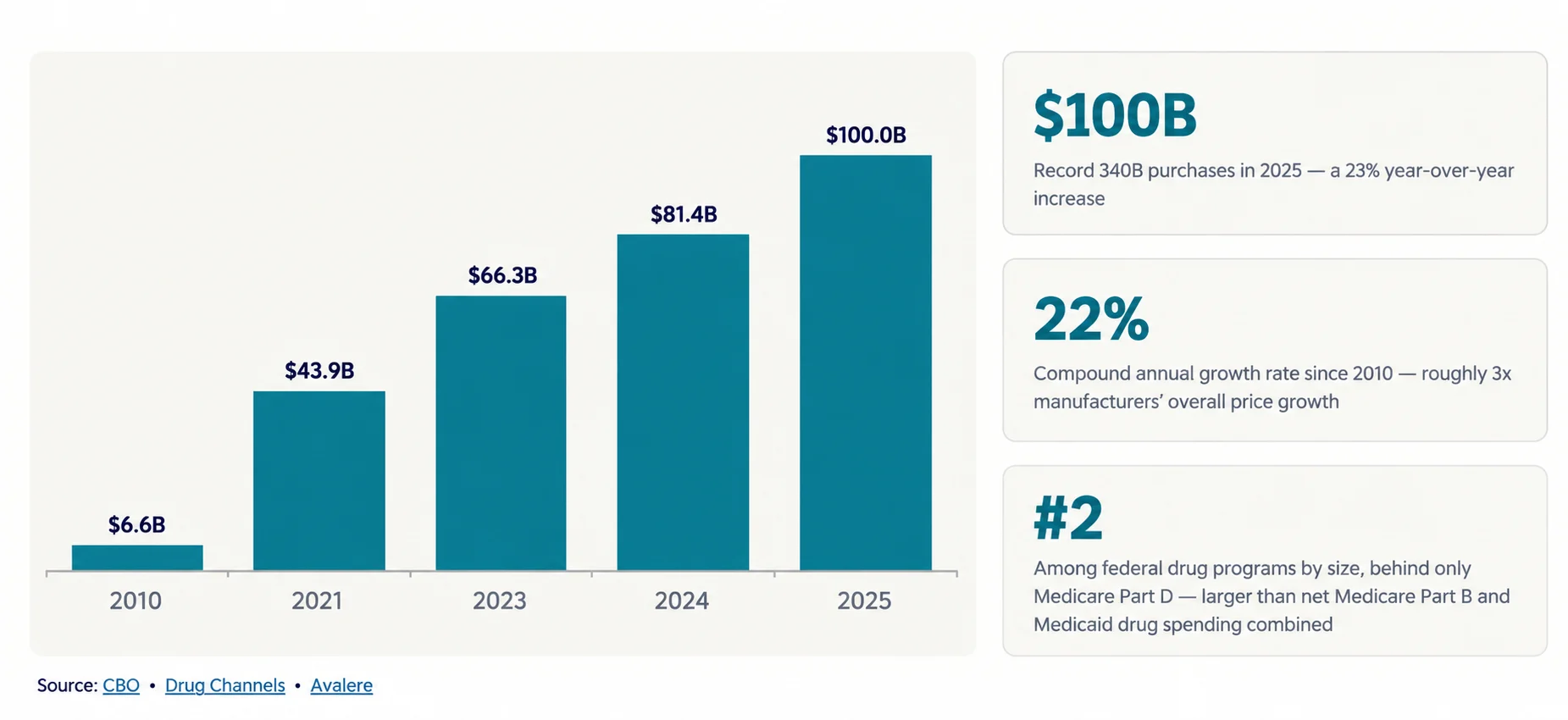
That matters because the site where cancer care is delivered affects cost. When oncology practices consolidate into hospital systems, the cost of care can increase substantially.
We have reached a point where the term ‘community oncology’ no longer means only independent community practices. It increasingly includes hospital-based outpatient facilities because so many community practices are now aligned with hospital systems.
So when we talk about strengthening community oncology, we have to understand that the structure of community care itself is changing.”
Advanced Therapies Need a Highway
“At the same time, this is an extraordinary period of innovation in cancer care.
I often say that novel therapies are like a Ferrari that needs a highway to drive on.
We have CAR T-cell therapies, bispecific antibodies that may require step-up dosing and careful monitoring, and radioligand therapies that require very specific infrastructure. Having the therapy itself is not enough. Practices need the operational capacity and capital investment to deliver these treatments safely and at scale.
Outpatient CAR T is one example of an emerging opportunity for community oncology. But delivering it outside the hospital requires clinical infrastructure for high-acuity patients, specialized nursing and pharmacy teams, robust toxicity-management protocols, capital investment, and payer agreements around site of care.
Community practices therefore need both therapeutic innovation and the infrastructure that makes that innovation actionable.”
Technology Should Work for People
“Digital tools are also tremendously exciting, but the goal should be technology in the service of people, not the other way around.
We want patients to navigate their cancer journey more easily. We want staff and clinicians to work at the top of their license. Tools such as clinical decision support and auto-contouring can help clinicians manage increasingly complex care.
But there need to be boundaries. Clinical decisions should remain between clinicians and patients.
Technology also has an important role in reducing the administrative burden that contributes to burnout. When clinicians lose joy in medicine, or when patients become frustrated with their care, a significant part of that experience can come from technology and administrative systems that are not working for them.
The opportunity is to make those systems easier rather than adding another layer of complexity.”
The Real Barrier Is Integration
“The barrier to AI adoption is not a lack of interest. The challenge is capital investment and interoperability.
There are many digital tools available, but they have to work together. You cannot keep adding separate platforms with different interfaces and expect patients or staff to navigate all of them successfully. Without proper integration, the result becomes noise.
That is why operational optimization matters.
Clinical decision support is particularly exciting in oncology. We are already seeing tools that can combine next-generation sequencing results with prior lines of therapy and current evidence to support treatment decisions.
But small and mid-sized practices may not have the capital or interoperable systems needed to implement these tools independently. That is one reason network affiliation or integration can become attractive – it provides access to infrastructure that would otherwise be difficult for an individual practice to build.”
Written by Eliz Baloyan, MD, Features Writer and Editor at OncoDaily and CancerWorld