





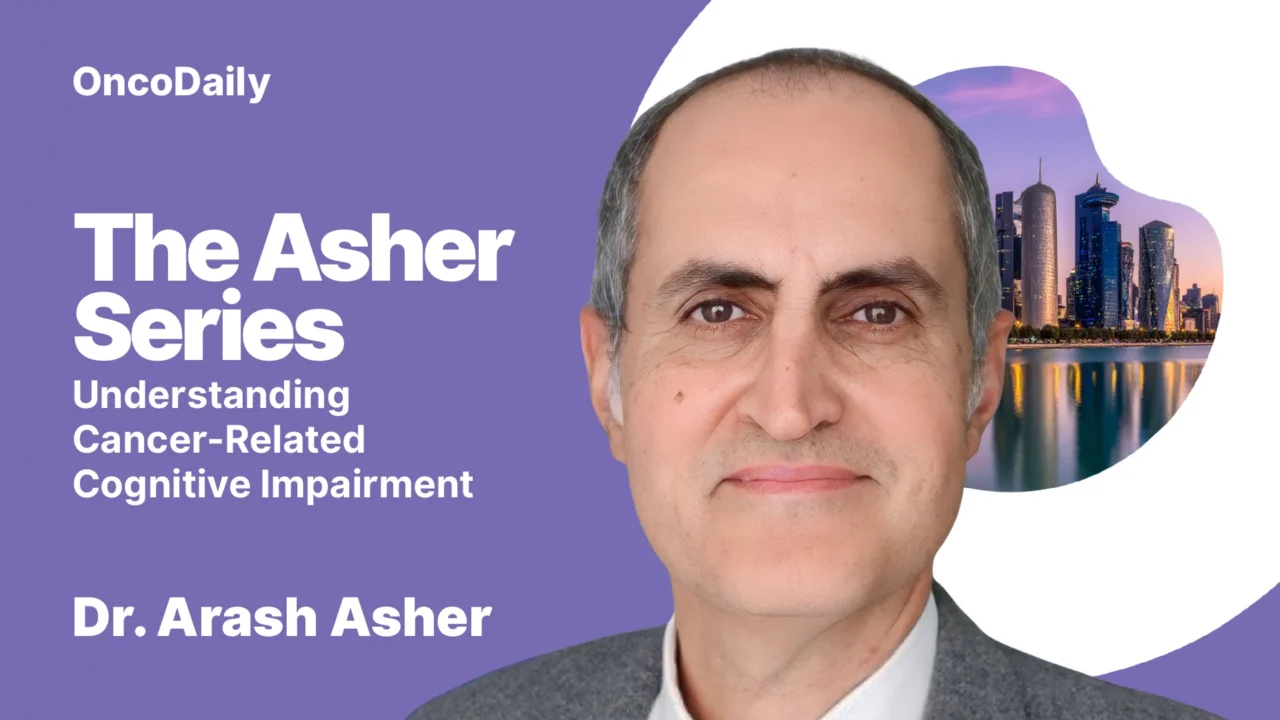
Cancer survivorship is not the end of a story — it is the beginning of a new chapter. In this episode of The Asher Series: Survivorship & Beyond, Dr. Arash Asher offers breakthrough clarity on cancer‑related cognitive impairment (CRCI), also known as chemo brain. For millions of survivors, cognitive fog, slowed thinking, and word‑finding difficulties can feel frightening and isolating. Dr. Arash Asher brings science, compassion, and practical strategies to help survivors understand what is happening and what recovery can look like.
Dr. Asher is Director of Cancer Survivorship and Rehabilitation at the Samuel Oschin Comprehensive Cancer Institute at Cedars‑Sinai. His work focuses on restoring function, easing symptoms, and helping survivors rebuild identity, confidence, and cognitive clarity after cancer treatment.
Understanding Chemo Brain: What Survivors Experience
Survivors often describe chemo brain as a frustrating mix of foggy thinking, trouble multitasking, slowed processing, and difficulty finding words that once came easily. These symptoms can appear during treatment and persist for months or even years afterward. What makes chemo brain especially challenging is that it affects not only memory or attention but also a person’s sense of competence and identity. Dr. Asher emphasizes that chemo brain is real, common, and treatable, and that survivors deserve validation rather than dismissal.
What’s Actually Happening in the Brain
One of the most reassuring messages Dr. Asher shares is that chemo brain is not dementia. Instead, he compares it to the cognitive fog people feel during influenza or COVID‑19 — a familiar experience that instantly makes the concept less frightening. The issue is not the virus itself; it’s the immune system’s inflammatory response.
Cancer treatments can trigger a similar cascade: inflammation, oxidative stress, and metabolic changes that temporarily disrupt cognitive clarity. When survivors understand this, the fear softens. They can see chemo brain not as a sign of decline but as a physiological response that can improve over time.
Mechanisms Behind Chemo Brain
Dr. Asher highlights several overlapping contributors:
- Inflammation from cancer or treatment
- Oxidative stress and mitochondrial dysfunction
- Sleep disruption, especially insomnia
- Loss of muscle mass and deconditioning
- Psychological distress, anxiety, and depression
CRCI is multifactorial, and the dominant mechanism varies from person to person.
Emerging From the Haze: A Program Built for Survivors
More than a decade ago, Dr. Asher and his colleagues in neuropsychology created Emerging From the Haze, a cognitive rehabilitation program designed to help survivors navigate chemo brain. What began as a small internal effort has grown into a multi‑center, virtual model with consistent improvements in perceived cognitive function.
The program works because it teaches agency — the things survivors can control:
- Cognitive strategies for memory and attention
- Behavioral tools for sleep, anxiety, and mood
- Exercise and activity to support neuroplasticity
- Education that normalizes and validates the experience
Why Loneliness Makes Chemo Brain Worse
One of the strongest findings across Dr. Asher’s studies is the link between loneliness and worse cognitive symptoms. Survivors who feel isolated often report more severe chemo brain. Group‑based programs help reduce this burden by creating connection, validation, and shared understanding.
Photobiomodulation: A New Frontier
Dr. Asher is now leading the first pilot study of photobiomodulation (PBM) for chemo brain. PBM uses specific wavelengths of light to reduce inflammation, support mitochondrial function, and potentially promote neurogenesis. If successful, PBM could become a scalable, low‑risk intervention for survivors experiencing CRCI.
At the end of our conversation, Dr. Asher offered a grounded, hopeful take‑home message for survivors and clinicians. Many people improve within 6–12 months after treatment, and simple, evidence‑based steps — regular exercise, treating insomnia, addressing depression or loneliness, and seeking structured cognitive rehabilitation — can meaningfully improve chemo brain symptoms. Survivorship is not just about extending life; it is about restoring clarity, confidence, and the ability to fully participate in one’s own story.
This interview was hosted by Dr. Martin Harutyunyan, OncoDaily LA.