Key takeaways
- Effective ALL treatment is achievable in resource-limited settings, with a Nepalese study reporting 89.4% three-year overall survival using a pediatric-inspired chemotherapy protocol in predominantly adolescent and adult patients.
- Financial toxicity remains a major barrier to completing treatment, with 30.3% of children in an earlier study abandoning therapy, often due to transportation costs, accommodation expenses, and lost family income.
- Limited access to advanced diagnostics creates critical gaps in leukemia care, particularly in MRD monitoring, molecular testing, and accurate risk stratification, even when modern chemotherapy protocols are available.
- Simple, affordable clinical tools can make a meaningful difference, with early prednisone response emerging as an important predictor of survival in the Civil Service Hospital cohort.
- Nepal is making important progress toward more equitable childhood cancer care, but lasting improvements will require combining expanded access to essential medicines with stronger diagnostic infrastructure, financial support, and standardized treatment pathways.
At LeukO 2026: Global Virtual Congress on Leukemias, organized by OncoDaily, Basanta Khatiwada, Assistant Professor in Clinical Haematology at the National Academy of Medical Sciences (NAMS) and Registrar in Transfusion Medicine and Cellular Therapy at Civil Service Hospital in Kathmandu, Nepal, examined the challenges of treating acute lymphoblastic leukemia (ALL) in a resource-limited healthcare system.
His presentation began with a deceptively simple question:
“What is the difference in between diagnosis and cure?”
In Nepal, the answer extends far beyond the choice of chemotherapy. Patients may receive treatment based on internationally established protocols, yet their outcomes are shaped by factors that have little to do with leukemia biology: access to diagnostic testing, trained specialists, reliable drug supplies, supportive care, and the financial resources needed to complete treatment.
Drawing on two published Nepalese hospital cohorts with strikingly different outcomes, Khatiwada explored what happens when modern leukemia treatment is delivered without all the resources that modern protocols assume.
The Challenge Is Not Always the Treatment Protocol
Acute lymphoblastic leukemia is among the most successfully treated childhood cancers in high-income countries, where survival now exceeds 90% in many pediatric treatment settings.
But replicating those outcomes requires more than adopting the same chemotherapy regimen.
In Nepal, specialized hematology and oncology services remain concentrated in a limited number of major urban centers, including Kathmandu, Bhaktapur, Bharatpur, and Lalitpur.
Patients living outside these areas may experience delays in diagnosis, referrals, and treatment initiation.
Diagnostic capabilities also vary considerably between institutions.
While bone marrow morphology remains an essential component of ALL diagnosis, access to flow cytometry, cytogenetics, molecular testing, and measurable residual disease (MRD) assessment is much more limited.
These limitations affect how accurately clinicians can classify leukemia, assess risk, and evaluate treatment response.
Hospitals frequently use adaptations of established international regimens, including the Berlin-Frankfurt-Münster and UK Medical Research Council protocols.
However, not every diagnostic test or supportive treatment included in these protocols is consistently available.
“We are delivering chemotherapy according to modern protocols but without the diagnostics that modern protocols assume.”
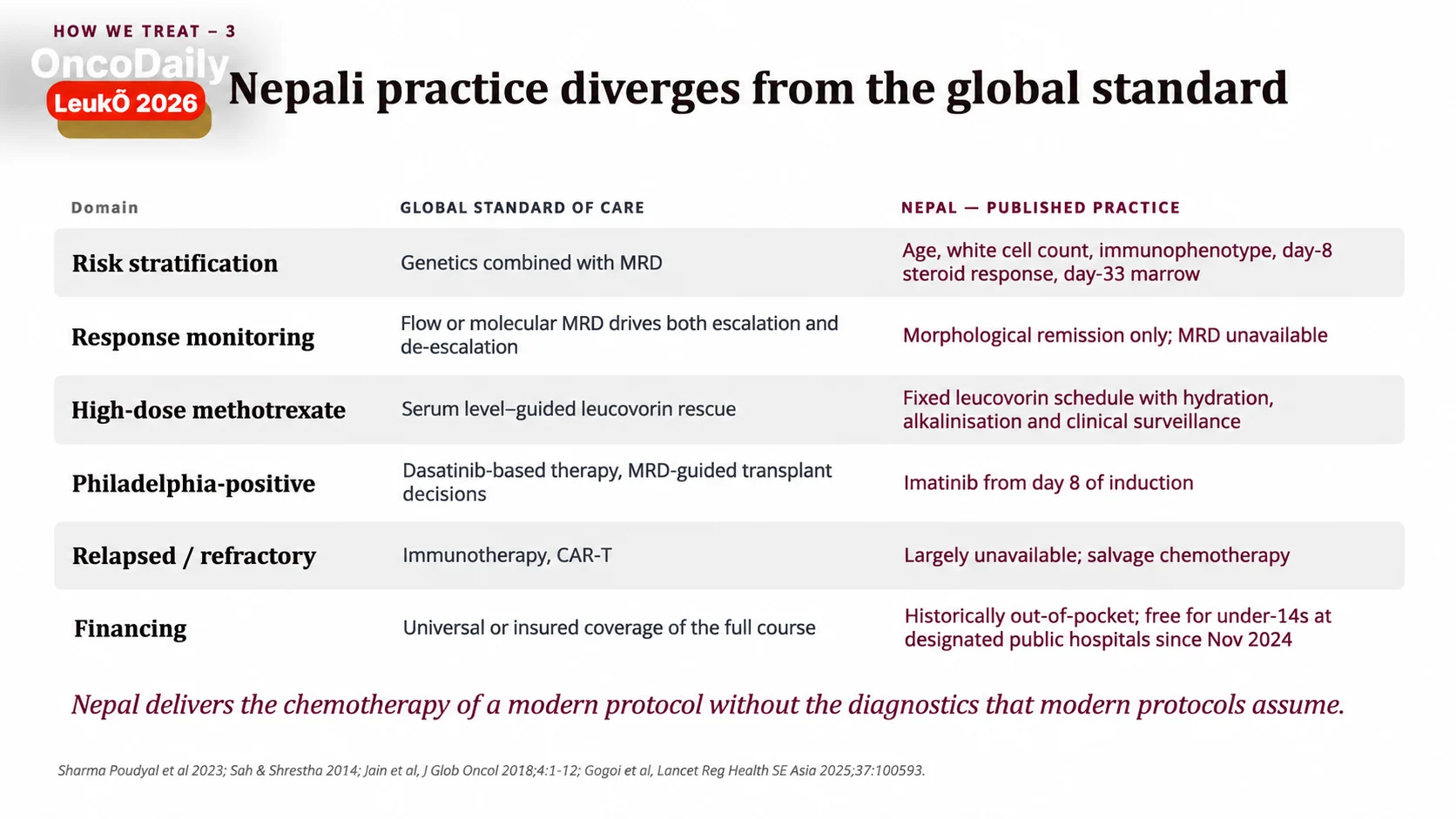
For example, when MRD testing is unavailable, clinicians may have to rely more heavily on age, initial white blood cell count, immunophenotyping when accessible, early steroid response, and bone marrow morphology to assess risk and response.
Similarly, limitations in methotrexate level monitoring require particularly careful supportive care and clinical surveillance.
The challenges extend to access to tyrosine kinase inhibitors for Philadelphia chromosome-positive ALL, newer immunotherapies for relapsed disease, and CAR-T cell therapy.
But Khatiwada identified another obstacle that can be even more consequential than the absence of advanced treatments.
For many families, the difficulty is not starting chemotherapy. It is being able to continue it.
When the Cost of Treatment Goes Beyond Chemotherapy
One of the most revealing studies discussed during the presentation came from Kanti Children’s Hospital, a major pediatric referral center in Kathmandu.
Published in the Journal of Nepal Paediatric Society in 2014, the retrospective study reviewed 300 children with ALL treated between 1998 and 2012.
The children were up to 14 years old, with a mean age of 7.3 years, and treatment was based on a UK MRC-derived protocol.
The outcomes illustrated the difficulties of delivering prolonged leukemia treatment in a resource-constrained setting.
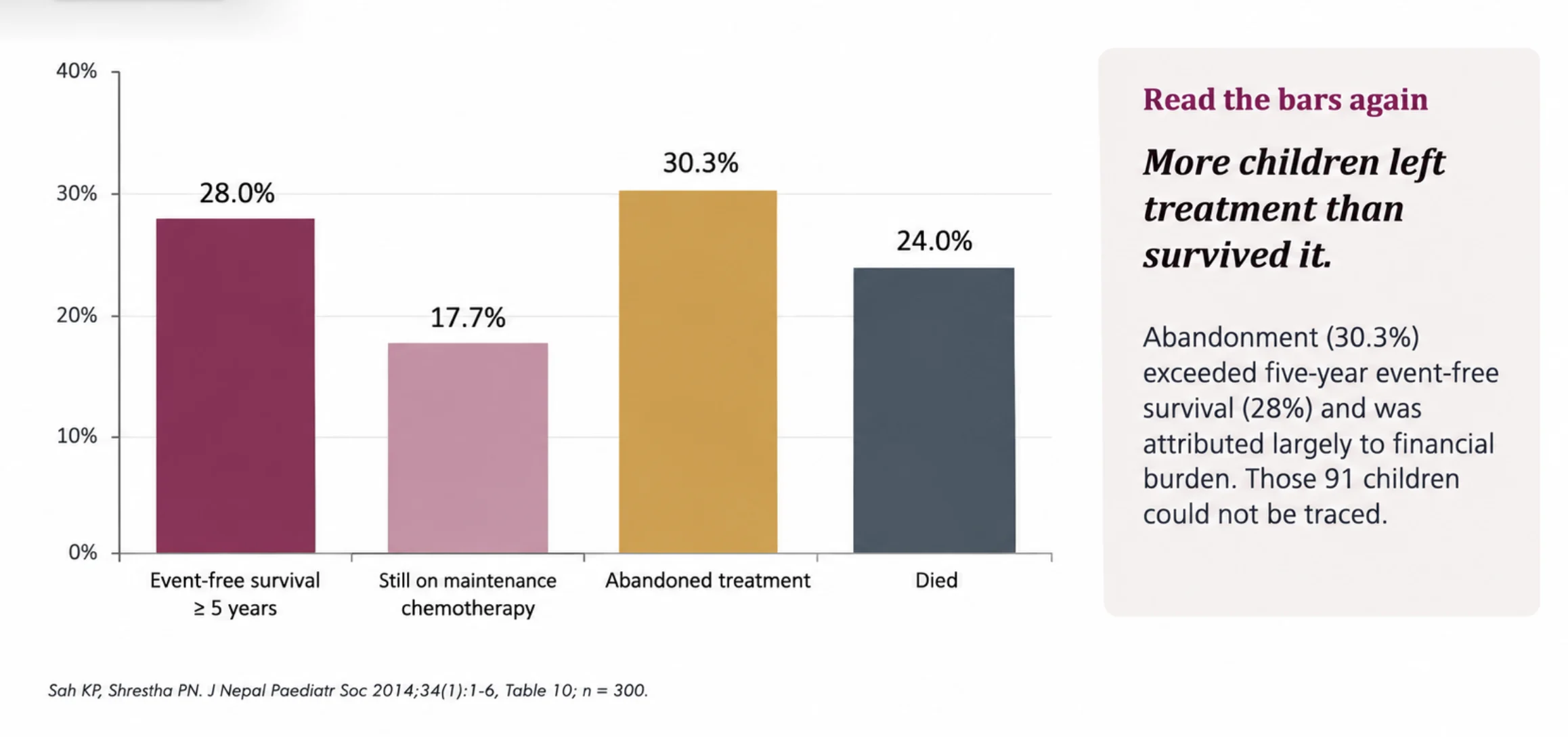
Only 28.3% of children were reported to be in remission at five years or longer.
Another 23.7% had died, while 17.7% remained on maintenance chemotherapy at the time of the study.
But one figure was particularly important.
30.3% of patients had abandoned treatment.
Nearly one in three children discontinued treatment before completing the prescribed course.
Khatiwada emphasized that this was not necessarily because effective chemotherapy was unavailable.
The hospital provided treatment without charging for it, but families continued to face substantial expenses associated with accessing care.
Transportation, accommodation, food, and lost earnings could become overwhelming during a treatment course lasting two to three years.
For families traveling from distant regions, attending repeated hospital visits could require extended periods away from employment and home.
The resulting financial pressure could make continued treatment impossible.
This distinction changes how treatment abandonment should be understood.
It is not simply a question of patient adherence or willingness to follow medical advice. It may reflect a family’s inability to sustain the costs of accessing care, even when chemotherapy itself is provided free of charge.
The study also highlighted the difficulty of accurately assessing outcomes when patients who discontinue treatment are subsequently lost to follow-up.
Their ultimate outcomes may remain unknown, meaning the recorded mortality figures do not necessarily capture the full consequences of interrupted treatment.
For Khatiwada, the findings demonstrated why financial support must extend beyond the price of anticancer medicines.
A treatment program cannot be considered fully accessible if families cannot afford to reach the hospital or remain in care long enough to complete it.
A Different Hospital, a Remarkably Different Result
The second study presented a substantially more encouraging picture.
Published in JCO Global Oncology in 2023, Outcome of ALL With ALL-BFM-95 Protocol in Nepal examined 103 consecutive patients treated at Civil Service Hospital between 2013 and 2016.
Unlike the earlier pediatric study, this cohort consisted predominantly of adolescents and adults.
The median age was 22 years, approximately 75% were aged 15-39, and fewer than 9% were younger than 14.
All patients received treatment based on the pediatric-inspired ALL-BFM-95 intermediate-risk protocol.
The investigators wanted to examine whether an intensive pediatric regimen could be delivered to adolescents and adults in a resource-limited setting without unacceptable toxicity.
The results were encouraging.
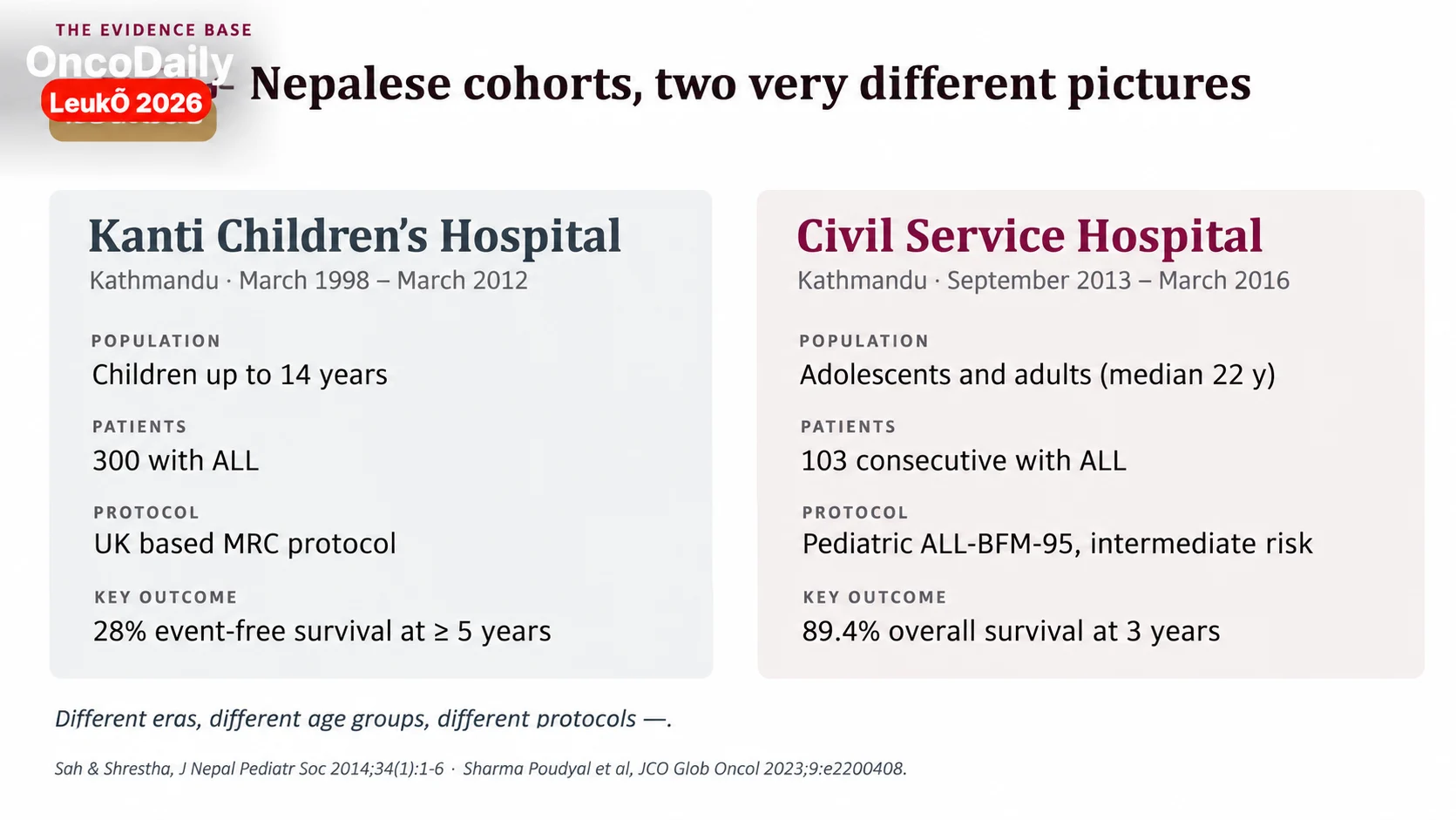
Three-year overall survival reached 89.4%, while three-year relapse-free survival was 87.3%.
These figures approached outcomes reported in some high-income settings and demonstrated that intensive pediatric-inspired ALL treatment could be delivered successfully to selected adolescent and adult patients in Nepal.
The findings were particularly notable because the center faced important diagnostic and monitoring limitations.
For instance, patients received high-dose methotrexate without routine measurement of serum methotrexate levels.
Instead, the clinical team relied on structured supportive measures, including hydration, urinary alkalinization, strict input-output monitoring, nursing surveillance, and protocol-directed leucovorin rescue.
The study reported a manageable toxicity profile within its patient population.
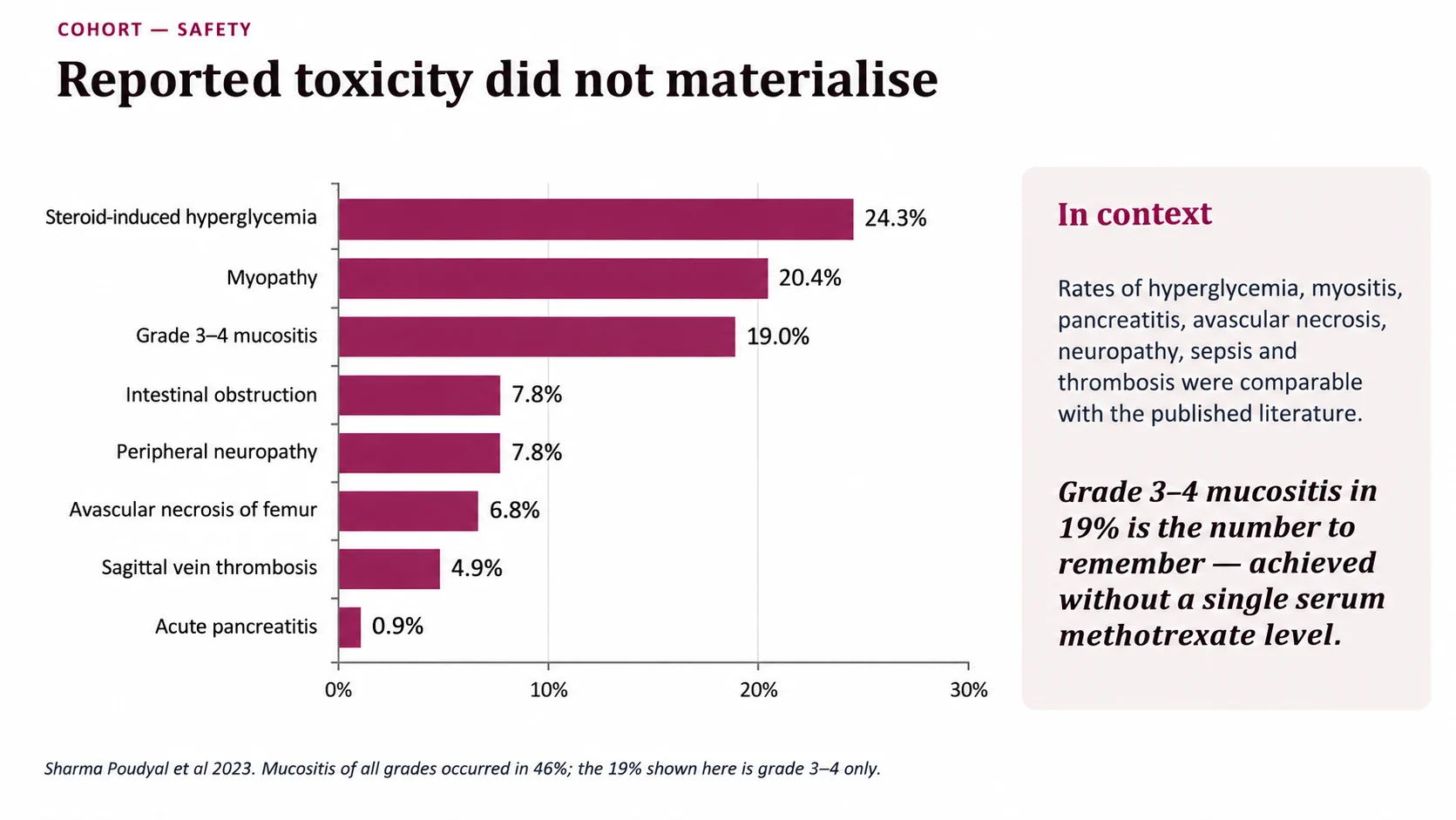
Steroid-induced hyperglycemia occurred in approximately 24% of patients, while 19% developed grade 3-4 mucositis. Other complications included myopathy, peripheral neuropathy, and thrombotic events.
These results supported the feasibility of the protocol in that center, although they do not establish that methotrexate monitoring can be safely omitted in other settings.
The study also highlighted the importance of appropriate patient selection, careful clinical monitoring, and a well-organized multidisciplinary team.
Importantly, however, the promising survival figures do not mean that all barriers to ALL treatment had been overcome.
The patients came from a single institution, the cohort was relatively small, and the findings could not automatically be generalized to the broader Nepalese population.
Why 28% and 89% Cannot Be Compared Directly
The contrast between the two studies was among the most striking elements of Khatiwada’s presentation.
One study reported 28.3% remission at five years or longer. The other reported 89.4% overall survival at three years.
At first glance, the difference might suggest a dramatic improvement in leukemia outcomes over time.
But Khatiwada cautioned against drawing that conclusion.
The cohorts differed in several important ways.
- The Kanti Children’s Hospital study involved children up to 14 years old, while the Civil Service Hospital cohort consisted predominantly of adolescents and adults.
- The treatment protocols were different, as were the institutions, study periods, and diagnostic resources available.
- Most importantly, the studies measured different outcomes.
The first reported the proportion of patients in remission after at least five years, alongside treatment abandonment, maintenance therapy, and deaths.
The second used three-year overall survival and relapse-free survival.
These are not interchangeable endpoints.
The higher survival reported in the later cohort therefore cannot be interpreted as evidence that Nepal’s national ALL survival improved from 28% to 89%.
Nor can the difference be attributed solely to the use of a pediatric-inspired protocol.
What the studies do demonstrate is that outcomes and the ability to deliver treatment can vary substantially between clinical settings.
They also reveal different aspects of the same problem: one study exposes the consequences of treatment abandonment and financial hardship, while the other demonstrates what a center can achieve through structured treatment and supportive care, despite resource limitations.
Together, they provide important evidence for improving clinical practice without overstating what retrospective single-center studies can establish.
When Simple Tests Make a Meaningful Difference
One of the most practical findings from the Civil Service Hospital study concerned a relatively inexpensive measurement: the patient’s response to prednisone during the first week of treatment.
In ALL, early steroid response provides information about leukemia sensitivity to treatment and can help clinicians identify patients at greater risk of poor outcomes.
In the Civil Service Hospital cohort, approximately 72% of patients demonstrated a good prednisone response by day eight.
Around 71% achieved complete bone marrow response by day 33.
When investigators analyzed factors associated with survival, good prednisone response emerged as an independent predictor of overall survival.
This finding was particularly relevant to Khatiwada’s discussion because measuring early steroid response does not require the same sophisticated laboratory infrastructure as molecular MRD testing.
It cannot replace modern MRD assessment, but it can provide useful prognostic information when more advanced technologies are unavailable.
The study also identified sagittal vein thrombosis as an independent predictor of poorer relapse-free survival, emphasizing how treatment-related complications and interruptions can affect outcomes.
Patients with Philadelphia chromosome-positive ALL had poorer relapse-free survival than those without the abnormality, despite receiving imatinib.
However, the Philadelphia-positive subgroup was small, limiting the strength of conclusions that could be drawn about differences between tyrosine kinase inhibitors.
The authors discussed the potential benefit of improved access to dasatinib, particularly given its activity in the central nervous system, but the study did not directly compare the two drugs.
For Khatiwada, the broader lesson was that useful clinical information should not be overlooked simply because a center cannot offer every advanced diagnostic technology.
At the same time, the success of simpler monitoring strategies does not eliminate the need to expand access to MRD, cytogenetics, and molecular testing.
These technologies are essential components of contemporary ALL risk assessment and increasingly influence the selection and intensity of treatment.
Nepal Is Expanding Access, but Financial Toxicity Remains
Khatiwada also highlighted important changes in Nepal’s approach to childhood cancer treatment.
In November 2024, the government introduced free cancer treatment for children up to age 14 at designated institutions.
Another major development followed in February 2025, when Nepal received its first shipment of essential childhood cancer medicines through the Global Platform for Access to Childhood Cancer Medicines, a partnership involving the World Health Organization (WHO), St. Jude Children’s Research Hospital, and procurement support from UNICEF.
Under the initiative, Nepal is expected to receive 35 types of essential, quality-assured childhood cancer medicineswithout charge for a five-year period.
The initial participating institutions include Kanti Children’s Hospital, Bhaktapur Cancer Hospital, Patan Academy of Health Sciences, and BP Koirala Memorial Cancer Hospital.
These developments address a longstanding problem: interruptions in the availability of essential anticancer medicines.
The need is substantial.
According to WHO estimates cited in the presentation, approximately 900 children develop cancer in Nepal annually, while historically only around one-third have received appropriate treatment.
Improving medicine availability and reducing direct treatment costs could help more children reach and remain in care.
However, Khatiwada emphasized that medicine supply is only part of the challenge.
Families may still face major expenses related to travel, accommodation, food, and lost income.
Specialized services remain geographically concentrated, while access to MRD testing, cytogenetics, molecular diagnostics, and advanced relapse therapies continues to be limited.
The expansion of medicine access therefore represents meaningful progress, but it must be accompanied by broader improvements in diagnostic infrastructure, supportive care, and financial protection.
Without these measures, some of the barriers identified in the earlier Kanti Children’s Hospital cohort may persist even when chemotherapy drugs are available at no cost.
From Individual Hospital Success to a National Strategy
The two Nepalese studies raise a larger question: how can successful treatment practices become consistently available across a national healthcare system?
Khatiwada argued that Nepal needs more systematic evidence to answer it.
Both studies were retrospective and came from individual institutions. Neither provides a complete national picture of ALL incidence, treatment access, abandonment, or long-term survival.
Small patient subgroups also limit conclusions about particular disease categories and treatment strategies.
Prospective multicenter research, standardized clinical protocols, and more reliable national data could help identify gaps in care and establish priorities for improvement.
Expanding access to MRD testing and strengthening laboratory capacity would allow more patients to benefit from modern risk-adapted treatment.
Training specialized healthcare professionals, improving the reliability of medication supplies, and supporting nursing and transfusion services would strengthen treatment delivery.
Financial policies would also need to recognize that access involves the entire course of care, not just the provision of chemotherapy.
Khatiwada’s presentation ultimately highlighted an important distinction.
Nepal has demonstrated that internationally established ALL protocols can be implemented and that encouraging outcomes are achievable in selected clinical settings.
The challenge is ensuring that those capabilities are available to more patients, regardless of where they live or what their families can afford.
“None of these are biological and all of them seem to be addressable.”
That observation brings the discussion back to his opening question about the difference between diagnosis and cure.
The science of treating ALL has advanced enormously. In Nepal, the next gains may depend as much on strengthening the systems that deliver that science as on introducing new medicines.
The opportunity is not simply to make leukemia treatment available, but to make completing that treatment a realistic possibility for every patient who needs it.
Written by Eliz Baloyan, MD, Features Writer and Editor at OncoDaily and CancerWorld