Key takeaways
- Rhabdomyosarcoma is most common in children, but it can occur at any age, and outcomes generally worsen in adolescents, young adults, and adults.
- Modern classification goes beyond histology, with fusion status and molecular subtypes such as MYOD1-mutated disease adding important prognostic information.
- Pediatric-style treatment improves outcomes in AYA patients, but it does not fully eliminate the survival gap compared with children.
- AYA patients are less likely to receive centralized care and to enroll in clinical trials, making access to specialist treatment part of the outcome gap.
- Future progress will depend on both better understanding the biology of AYA rhabdomyosarcoma and closer cooperation between pediatric and adult oncology teams.
Rhabdomyosarcoma has become far more treatable in children, yet outcomes still worsen as patients get older. Even when adolescents and young adults receive the same intensive treatment used in pediatric care, the survival gap does not disappear.
For Andrea Ferrari, pediatric oncologist at the Istituto Nazionale dei Tumori in Milan, that survival gap sits at the center of his work on solid tumors in children, adolescents, and young adults, particularly soft-tissue sarcomas and the challenges that emerge when a disease usually associated with childhood appears later in life.
In his presentation, Dr. Ferrari moves from the biology of rhabdomyosarcoma to the questions that shape its treatment and outcomes, including why age matters and why the survival gap in adolescents and young adults persists.
What Is Rhabdomyosarcoma?
Sarcomas are defined by heterogeneity.
“They are like apples, oranges and passion fruit.”
The comparison matters. Soft-tissue sarcoma is not one disease but a collection of many biologically distinct tumors, and that collection continues to expand as molecular knowledge improves. The types of sarcoma clinicians encounter also change with age – which means a pediatric oncologist and an adult medical oncologist may be talking about quite different diseases when they use the same broad term, soft-tissue sarcoma.
Rhabdomyosarcoma is one of the characteristic sarcomas of childhood, accounting for around half of pediatric soft-tissue sarcomas, although it can occur throughout life. Importantly, despite its name, it does not arise from mature skeletal muscle cells. It develops from primitive mesenchymal progenitor cells committed to the skeletal muscle lineage. That distinction helps explain an initially puzzling feature of the disease: rhabdomyosarcoma can develop almost anywhere in the body, including sites where skeletal muscle would not seem the obvious place to look for it.
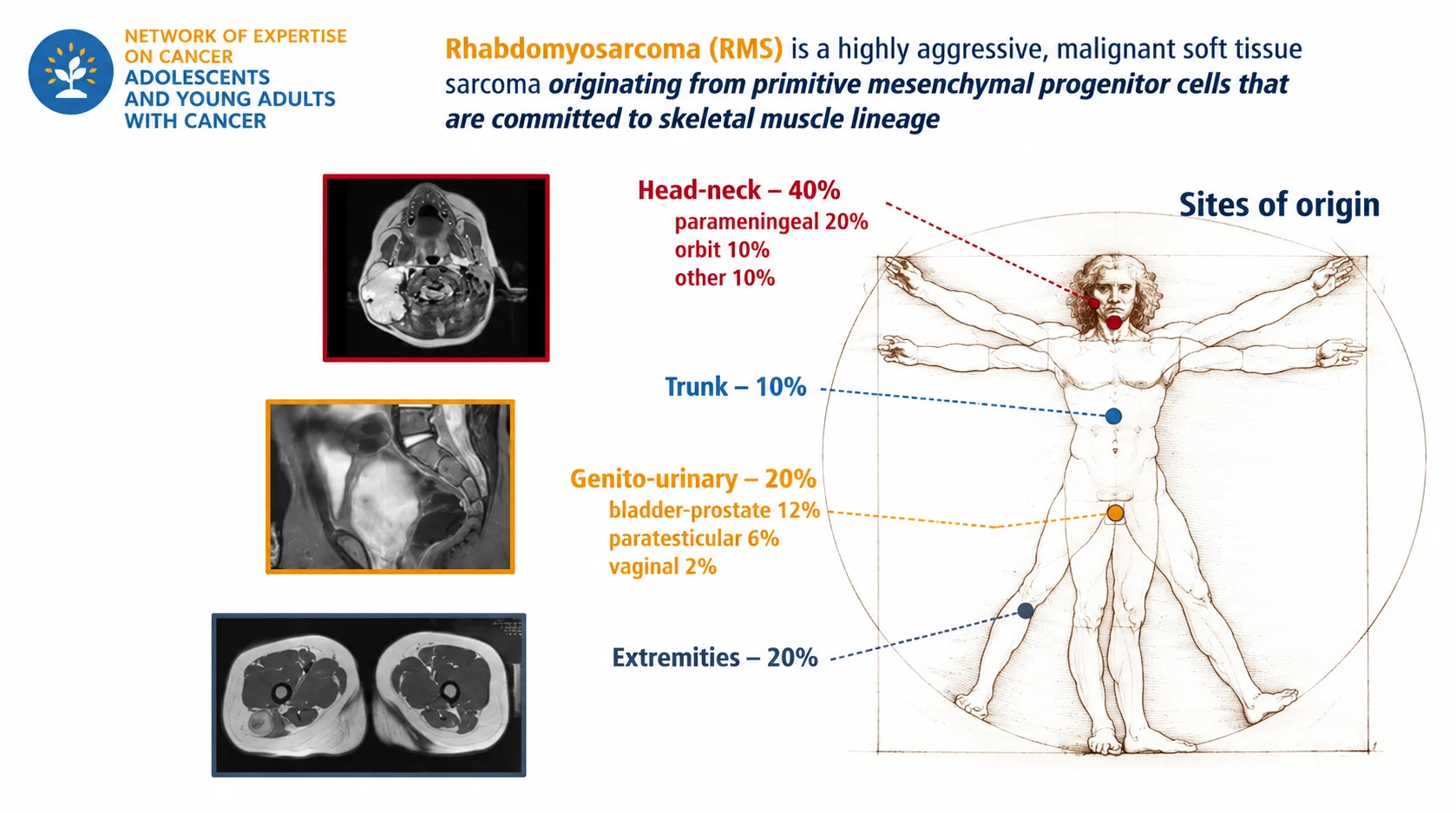
Source: Andrea Dr. Ferrari, “Rhabdomyosarcoma in AYAs,” Training Programme on AYA Oncology, YouTube.
It is also an aggressive disease, with a marked tendency to spread.
“It is a tumor of high grade of malignancies with local invasiveness and a marked propensity to give metastasis, to the point that all rhabdomyosarcoma patients should be assumed to have micrometastatic disease at diagnosis. And so systemic therapy should be definitely recommended for all the patients. But the good news is that rhabdomyosarcoma generally has a good response to chemotherapy, 90% of response rate, and a good response to radiotherapy.”
That treatment sensitivity, however, does not mean all rhabdomyosarcomas carry the same prognosis. Some subtypes are far more favorable than others, and that distinction has become increasingly important as classification has evolved.
The “Herbivore” and the “Tyrannosaurus”
For years, pediatric rhabdomyosarcoma was taught through two major histological categories: embryonal rhabdomyosarcoma, the more common and generally more favorable type, and alveolar rhabdomyosarcoma, the less common but traditionally more unfavorable form.
Dr. Ferrari gives that old distinction a memorable image:
“The good type, the herbivorous rhabdomyosarcoma, and the bad type, Tyrannosaurus.”
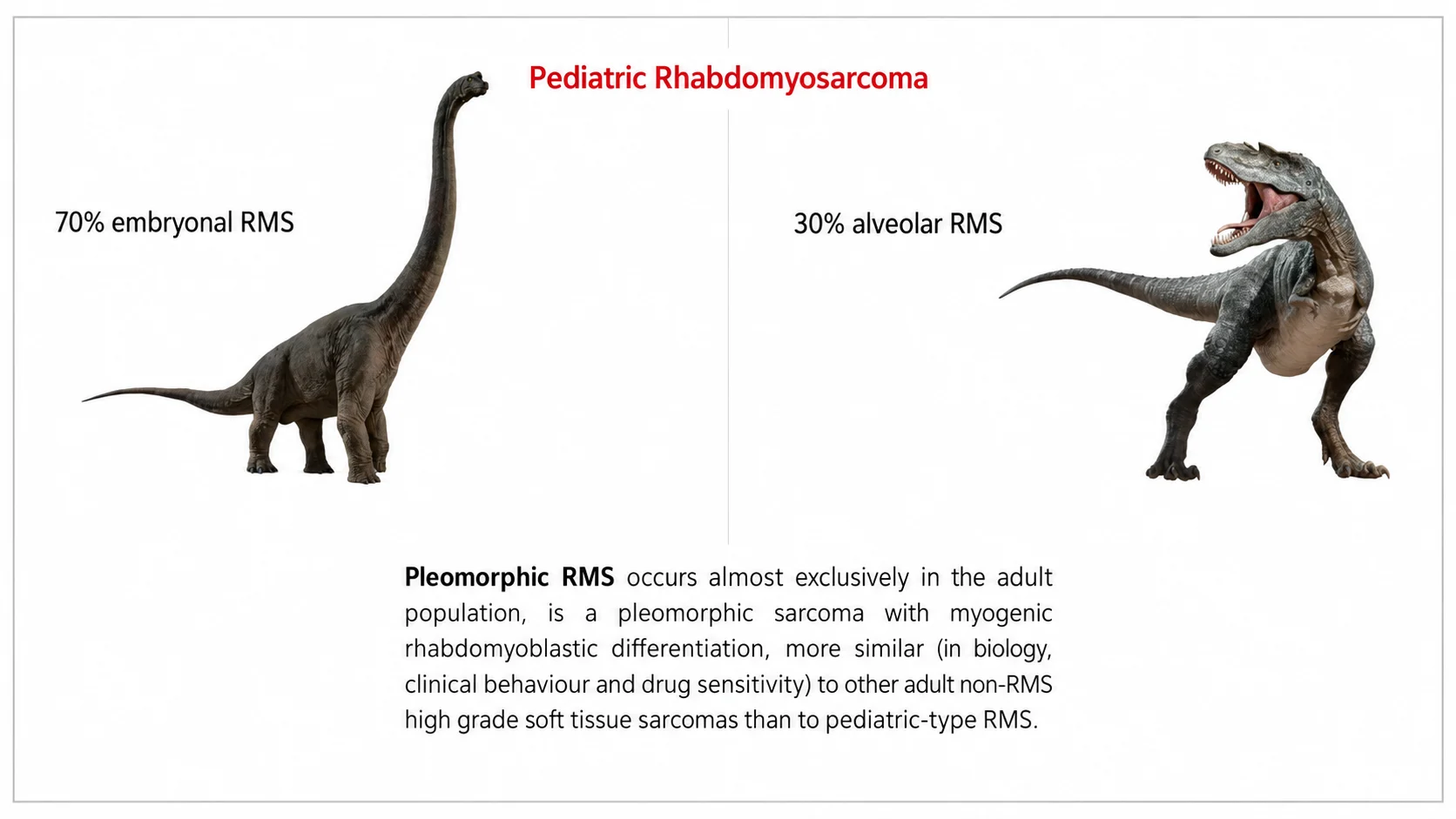
Source: Andrea Dr. Ferrari, “Rhabdomyosarcoma in AYAs,” Training Programme on AYA Oncology, YouTube.
There is an important exception when discussing adults.
“Pleomorphic rhabdomyosarcoma occurs almost exclusively in the adult population and is perhaps not a true rhabdomyosarcoma, but rather a pleomorphic sarcoma with myogenic differentiation – more similar in biology, clinical behavior and drug sensitivity to other high-grade adult soft-tissue sarcomas than to pediatric rhabdomyosarcoma.”
But even the familiar embryonal-versus-alveolar division is no longer enough.
Modern classification increasingly goes beyond morphology to the molecular biology of the tumor. Pediatric-type rhabdomyosarcoma is now commonly divided into fusion-negative and fusion-positive disease, while molecular profiling has identified additional subgroups that appear particularly relevant in adolescents and adults.
Among them are spindle cell/sclerosing rhabdomyosarcomas with MYOD1 mutations, which are more frequently encountered in AYA patients, often arise in the head and neck, respond less well to chemotherapy, and are associated with poor outcomes. Another emerging group carries TFCP2 gene fusions, occurs particularly in young adults, may arise within craniofacial bones, and can behave extremely aggressively.
This changes the old “herbivore versus Tyrannosaurus” picture. Histology still provides important information, but tumors that look related under the microscope may carry very different molecular drivers – and those differences may ultimately matter more for prognosis and treatment.
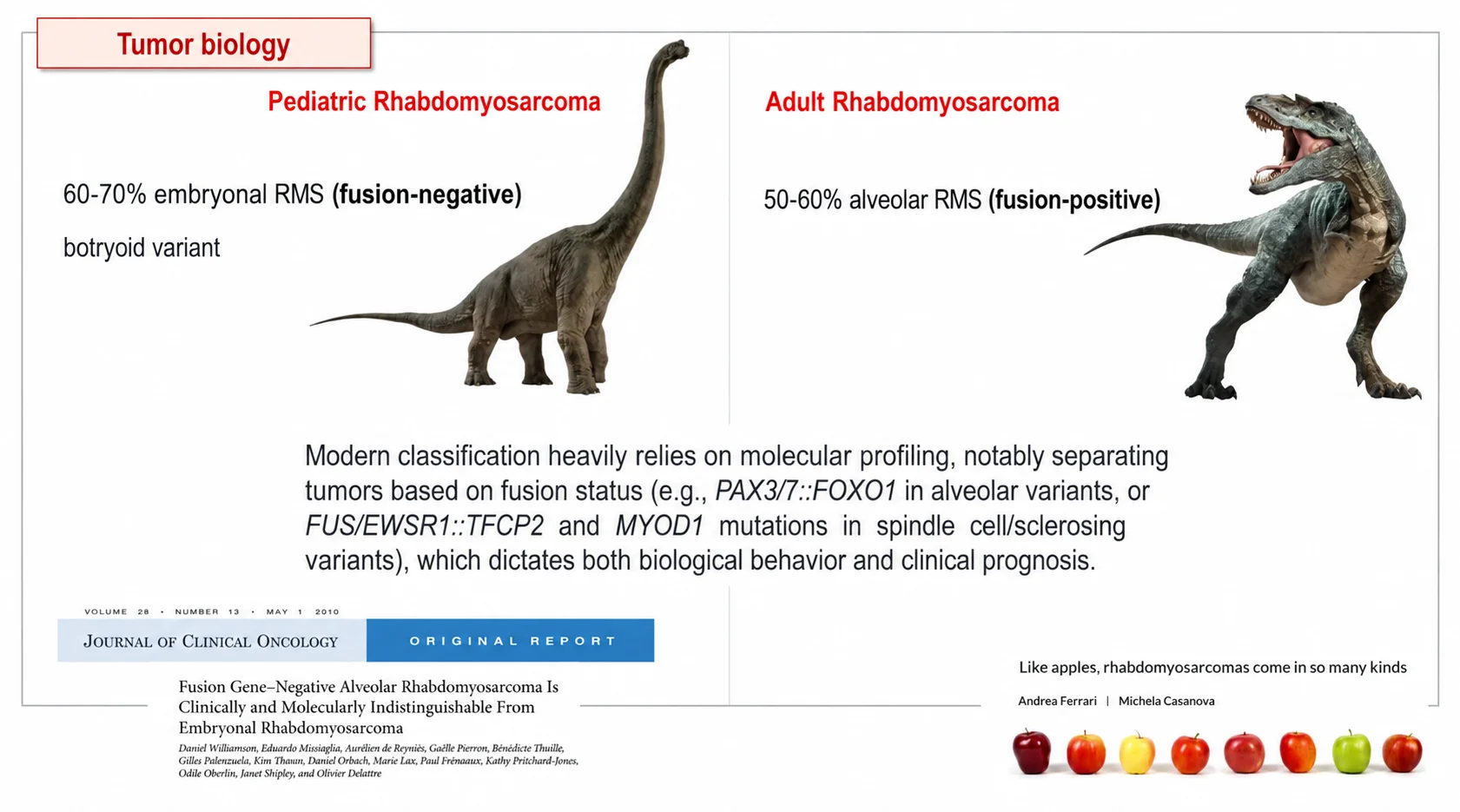
Source: Andrea Dr. Ferrari, “Rhabdomyosarcoma in AYAs,” Training Programme on AYA Oncology, YouTube.
The challenge is that some of these molecular subgroups are extraordinarily rare. A 2023 review, “Biological Role and Clinical Implications of MYOD1L122R Mutation in Rhabdomyosarcoma,” identified only 72 reported cases across 10 publications. The limited number of cases illustrates just how difficult it is to define the biology, prognosis, and optimal treatment of these newly recognized subtypes.
The Price of Success: Balancing Cure and Toxicity
For localized pediatric-type rhabdomyosarcoma, modern treatment has pushed overall survival above 70%. That progress has come through an intensive multimodal approach combining systemic therapy with carefully selected local treatment, together with risk-adapted strategies developed through international cooperative studies.
In Europe, treatment for localized rhabdomyosarcoma includes nine courses of alkylating-agent–based chemotherapy, followed by six months of maintenance therapy with vinorelbine and oral cyclophosphamide. From there, treatment is adapted to risk: patients with less favorable disease may need greater treatment intensity, while those with more favorable disease should be spared unnecessary toxicity whenever this can be done without compromising cure.
Risk is built from several pieces of information:
- Histology and biology,
- Extent of tumor removal,
- Lymph-node involvement,
- Tumor site and size,
- Patient’s age.
As the risk rises, so does the intensity of treatment. The difficulty is that every step up in treatment may improve the chance of cure, but it also increases the burden a patient may carry long after therapy ends.
For higher-risk disease, the advantage of intensification is the possibility of improving the chance of cure in a tumor already more likely to fail treatment.
The disadvantage is greater acute and long-term toxicity.
For patients with favorable disease, the calculation runs in the opposite direction. Reducing unnecessary therapy can spare chronic complications – but only if treatment can be reduced without sacrificing the chance of cure.
Dr. Ferrari describes the decision almost as a set of scales.
“On one side, we have the survival curve, and on the other, the chronic side effects – the chronic sequelae that a patient has to pay for before being cured. This is the price of success. But in rhabdomyosarcoma, the price of success is much lower than the price of failure.”
That tension of curing more patients without unnecessarily increasing the burden of treatment is at the heart of risk-adapted therapy, and age makes that balance even more difficult.
When Age Changes the Equation
Age is not simply a demographic detail in rhabdomyosarcoma. It has repeatedly emerged as a prognostic factor.
Children generally fare better than adolescents and young adults, while outcomes deteriorate further in adults. Epidemiological datasets including SEER and EUROCARE have demonstrated a clear survival gap across age groups.
The difficult question is why.
There is no single explanation, but Dr. Ferrari describes three broad possibilities.
- The disease may be different. Older patients are more likely to present with unfavorable tumor characteristics, and certain aggressive molecular subtypes are enriched in AYA and adult populations.
- The treatment may be different. Referral patterns, diagnostic delays, access to clinical trials, treatment intensity, and adherence to pediatric rhabdomyosarcoma principles can all vary with age.
- The patient may be different. Physiology and comorbidities may influence how treatment is tolerated, how consistently it can be delivered, and potentially how effective it is.
This raised a more practical question: how much of the survival gap could be explained by differences in treatment? Several studies began to provide an answer.
The Evidence Behind the Survival Gap
The long history of studies in AYA rhabdomyosarcoma becomes much easier to follow when it is reduced to three questions.
1. Are adults actually receiving pediatric-style rhabdomyosarcoma treatment?
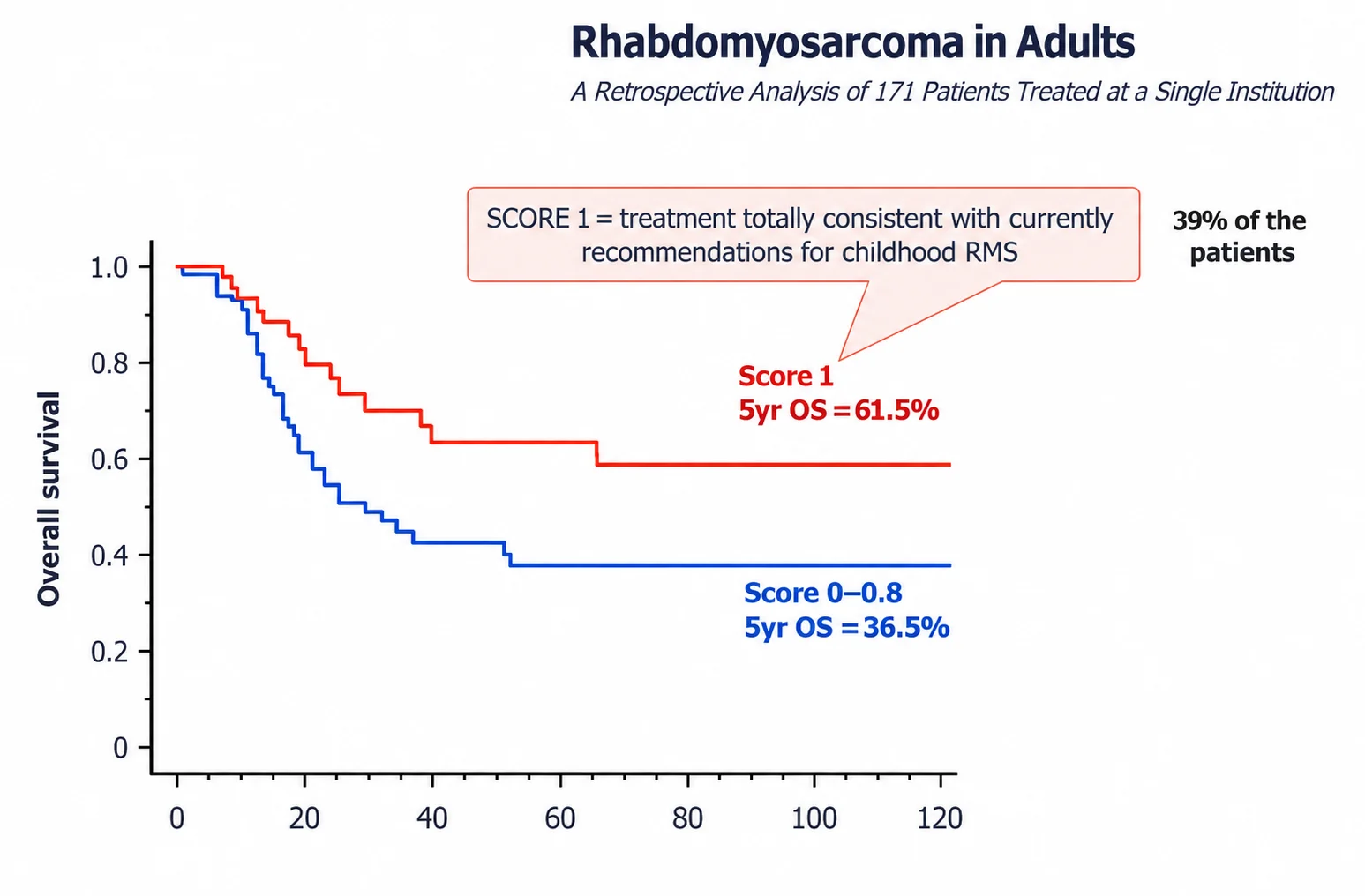
A 2003 study, “Rhabdomyosarcoma in Adults: A Retrospective Analysis of 171 Patients Treated at a Single Institution,” examined how closely the treatment received by adults with rhabdomyosarcoma followed established pediatric treatment principles.
Source: Andrea Dr. Ferrari, “Rhabdomyosarcoma in AYAs,” Training Programme on AYA Oncology, YouTube.
The answer was striking: only 39% had received treatment comparable to a pediatric rhabdomyosarcoma strategy. More than half had potentially inadequate treatment – particularly systemic therapy. Some received different drugs, some received substantially shorter chemotherapy courses of the kind used for other adult soft-tissue sarcomas, and some received no chemotherapy after surgery.
The difference was not merely theoretical. Patients whose treatment closely followed pediatric principles had an overall survival of 61%, compared with 36.5% among those whose treatment did not.
That did not prove that treatment alone caused the survival difference, but it strongly suggested that part of the adult disadvantage was potentially modifiable.
So the next step was practical: could care be changed?
When pediatric and adult oncologists began discussing adult rhabdomyosarcoma cases together, specific adult recommendations based on pediatric principles were introduced and patients were prospectively followed, the proportion receiving pediatric-consistent treatment rose from 39% to 70%.
But delivering pediatric-style treatment to older patients was not always straightforward. Chemotherapy schedules were modified in 44% of cases, and treatment delays occurred in more than half, raising the next question.
2. Can adolescents and young adults tolerate treatment designed for children?
The EpSSG cohort study, “Adolescents and Young Adults With Rhabdomyosarcoma Treated in the European Paediatric Soft Tissue Sarcoma Study Group Protocols,” tested this more directly by comparing AYA patients and children enrolled in the same rhabdomyosarcoma protocols.
Among patients aged 15-21, there was no signal of greater major toxicity or more frequent protocol modification than in children. In fact, some hematological toxicities, infections, and chemotherapy modifications were reported more often in the younger patients.
The findings suggest that AYA patients, at least up to around 20 years of age, can tolerate intensive treatment strategies originally developed for children.
3. If AYA patients receive the same treatment, does the survival gap disappear?
The gap narrows, but it does not disappear. AYA patients treated within the pediatric trials had a five-year overall survival of around 57% – considerably better than the 39.6% reported for comparable AYA patients in population-level EUROCARE data.
That suggests access to pediatric-style protocols and clinical trials can make a substantial difference.
Children treated within the same protocols still had an overall survival of approximately 78%, showing that the survival gap could not be explained by treatment alone.
Access Is Part of Treatment
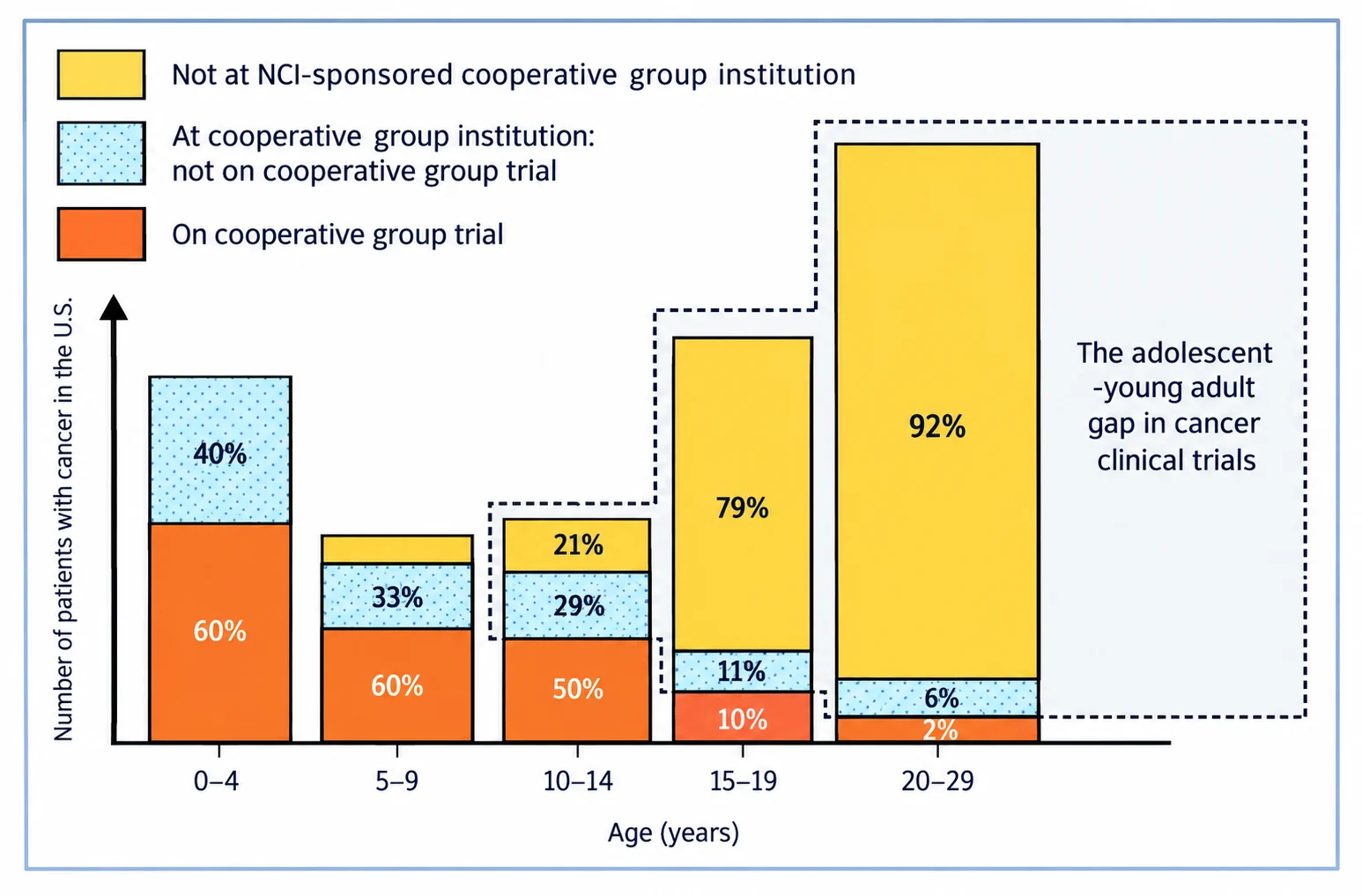
Another part of the survival gap lies in access to care, including how quickly AYA patients are diagnosed, whether they reach specialized centers, and whether they are enrolled in clinical trials.
Source: Andrea Dr. Ferrari, “Rhabdomyosarcoma in AYAs,” Training Programme on AYA Oncology, YouTube.
Diagnosis can be delayed. Adolescents may experience longer intervals between the onset of symptoms and a definitive diagnosis, potentially allowing disease to present at a more advanced stage.
Care is less often centralized. AYA patients are less consistently treated at high-volume specialist centers where pediatric and adult sarcoma expertise can be combined.
Clinical-trial participation is lower. In an EpSSG analysis, adolescents represented a smaller proportion of enrolled patients than expected – 64% compared with 77% – even though the protocols accepted patients up to 20 years of age.
And those barriers are connected. A patient who does not reach a specialized rhabdomyosarcoma network may also be less likely to enter a clinical trial, less likely to receive risk-adapted pediatric-style therapy, and less likely to have pathology, molecular findings, surgery, radiotherapy and systemic treatment discussed by teams familiar with this exceptionally rare disease.
“We learned many years ago that working with a very rare tumor like rhabdomyosarcoma means the importance to working together to find friends.”
In practice, those “friends” are the collaborative networks that bring pediatric and adult sarcoma experts together across institutions and countries.
The Future Has No Upper Age Limit
The way forward is closer integration between pediatric and adult oncology, particularly in the design of clinical trials and the management of AYA patients.
The current FaR-RMS platform reflects that idea. Opened within EpSSG in 2020, it includes patients with newly diagnosed and relapsed rhabdomyosarcoma, tests new treatment approaches, and has no upper age limit for recruitment.
But simply deleting an age limit from a protocol is not enough.
“I strongly believe that simplifying the upper age limit in pediatric rhabdomyosarcoma protocols to include adult cases may only work if adult teams are included in the project from the beginning. Otherwise, other physicians may not hear about such trials or might be reluctant to enroll their patients in trials which they themselves have no part.”
The same integration is needed on the biological side. Molecular profiling is revealing aggressive subgroups enriched in older patients, while early studies suggest that the tumor microenvironment and inflammatory biology may also differ between children and AYA patients. These findings remain incomplete, but they offer a possible route toward explaining the part of the age-related survival gap that equal treatment alone cannot erase.
The goal is to make the system work across age groups, not around them. That means opening trials to adults, involving adult oncologists from the start, bringing pediatric and adult teams together in tumor boards, and studying the biology of AYA rhabdomyosarcoma more closely. Prospective registries can then help capture what happens to patients who are not enrolled in trials and improve treatment recommendations for them.
The evidence leaves a difficult but important conclusion. Giving AYA patients access to pediatric-style treatment can improve survival, but it does not erase the disadvantage that comes with age. Even within the same protocols, outcomes remain worse than in children.
“AYA-type rhabdomyosarcoma must be treated with pediatric protocols, but this is not enough, this is not sufficient.”
Further progress will depend on understanding why the disease behaves differently with age and making sure pediatric and adult teams are involved in care from the beginning.
“The concept is that the key issue is cooperation. I strongly believe that simplifying the upper age limit in pediatric rhabdomyosarcoma protocols to include adult cases may only work if adult teams are included in the project from the beginning.”
Written by Eliz Baloyan, MD, Features Writer and Editor at OncoDaily and CancerWorld