 Brazil
 The 17th International Congress of Uro-Oncology reinforced Brazil’s growing role as a hub for oncologic innovation in Latin America. With a record 4,751 participants and 309 speakers, the congress highlighted the scale of Brazil’s cancer burden, with the Instituto Nacional de Câncer (INCA) estimating 781,000 new cancer cases annually between 2026 and 2028, while prostate cancer accounts for 30.5% of cancer diagnoses among men. Under the coordination of Dr. Fernando Maluf, the congress highlighted the growing implementation of personalized medicine across Latin America.
How Do Genomics and Radiogenomics Redefine Care?
Key sessions explored how emerging scientific data can be integrated into clinical decision-making:
• Radiogenomics and Active Surveillance: Laurence Klotz demonstrated that tumor visibility on multiparametric MRI (mpMRI) carries decisive weight, equaling the Gleason score in risk stratification.
• Germline Testing: Elena Castro established the mandatory identification of BRCA1/2 mutations for the appropriate selection of PARP inhibitors.
• Tumor Resistance: Alice Berger presented the use of liquid biopsies to detect resistance mechanisms prior to visible clinical progression.
• Metabolic Survivorship: Stephen Freedland highlighted the connection between metabolic health and the biological drivers of recurrence.
What are the Milestones in Surgical Innovation and Bladder Cancer Therapies?
The congress featured the first live robotic telesurgery in the Americas. Performed in the Robotic Arena using artificial intelligence and low-latency connectivity, the procedure demonstrated the feasibility of remote high-precision surgery. In bladder cancer, discussions centered on emerging data from the KEYNOTE-905 and KEYNOTE-B15 studies. The sessions reflected the growing role of immunotherapy and antibody-drug conjugates (ADCs) in the management of high-risk and BCG-unresponsive disease settings.
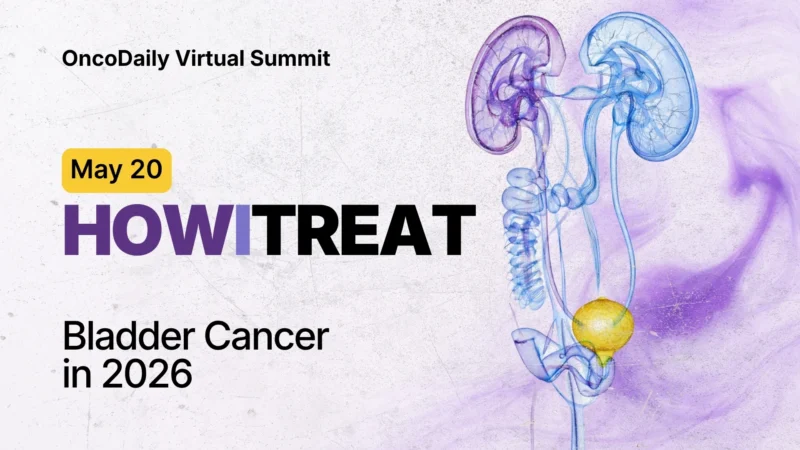
Learn more about the evolving landscape of bladder cancer treatment in OncoDaily’s virtual summit, “How I Treat Bladder Cancer,” featuring international experts in uro-oncology.
FAQ
What is the annual cancer incidence in Brazil?
According to INCA estimates, Brazil is expected to record approximately 781,000 new cancer cases annually during the 2026–2028 period.
How does Radiogenomics change clinical practice?
Radiogenomics integrates advanced imaging features with genomic and molecular information to improve risk assessment and potentially reduce overtreatment in selected patients.
Why is BRCA testing important in uro-oncology?
BRCA1/2 mutations may identify patients eligible for targeted therapies such as PARP inhibitors and may also have implications for familial cancer risk assessment.
What is the potential impact of telesurgery?
Telesurgery may help expand complex procedures to geographically isolated areas with specialist support.