


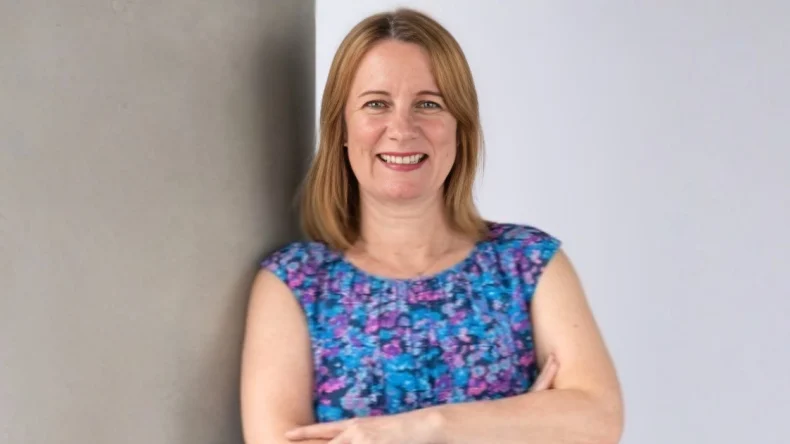
Michelle Mitchell, Chief Executive at Cancer Research UK, shared on LinkedIn:
“Over a decade ago we joined together with the Medical Research Council, Wellcome Trust, UCL, King’s College London, Imperial College London and our philanthropic supporters to back a bold vision: to create a world-leading environment where exceptional people, disciplines and technologies could come together to advance discovery science.
We believed then, as we do now, that progress against cancer and other complex diseases starts with a deep understanding of the biology that underpins them.
Today The Francis Crick Institute stands as a powerful example of what can be achieved through long-term partnership, shared ambition and sustained investment.
As the Crick celebrates its 10-year anniversary, I wanted to share some reflections on the institute and its founding philosophy.
Accelerating progress for people affected by cancer and upholding the UK’s leadership in research will depend on our continued commitment to discovery science and the partnerships that make it possible.”
A decade of the Crick – where discovery meets hope
Ten years ago, Cancer Research UK took a bold decision alongside our founding partners the Medical Research Council , Wellcome Trust, UCL, King’s College London and Imperial College Londonto invest in a new way of doing research. Through our Create the Change campaign, we brought together a constellation of philanthropic donors and partners to raise £100 million to help establish one of the world’s leading biomedical research institutes.
The Francis Crick Institute’s vast presence leaves an indelible impression on everyone who walks past it. I’ll always remember my first visit: its curved roof looming over the familiar King’s Cross St Pancras surroundings – a ‘cathedral of science’, as its Nobel Prize-winning founding director and former chief executive Sir Paul Nurse memorably described it – with collaboration and innovation baked into the very fabric of the building’s design.
Over the last decade, the institute has nurtured one of the world’s most distinguished research communities, creating innovative partnerships and spinout companies that have strengthened the UK’s position as a global research leader, helped establish the area as one of the most dynamic life sciences, tech and data clusters and is expected to generate long-term economic benefits worth around £13 billion
As one of our flagship institutes, the Crick exemplifies some of Cancer Research UK’s most deeply held values. We have long understood that major progress against cancer starts with fundamental scientific discovery and that requires backing ambitious ideas, investing for the long term, and creating the conditions for world-leading science to flourish.
At its heart, our shared vision was simple: we wanted to bring together exceptional people, institutions and technologies under one roof, to push the boundaries of scientific understanding – and so accelerate progress for people affected by disease like cancer.
“The Crick exemplifies some of Cancer Research UK’s most deeply held values.”
For me, its anniversary is about more than celebrating a decade of remarkable discoveries. It’s a chance to reflect on the model of discovery science the institute represents – which is core to what we do at Cancer Research UK – and why it remains as important today as it was back then.
A partnership to accelerate discovery
The bold decision to merge an institute dedicated to cancer research – our own London Research Institute – with another, the Medical Research Council’s National Institute for Medical Research, whose focus was far broader – may have raised a few eyebrows at the time, but to us it was necessary. Scientific creativity is fostered at the boundaries between disciplines.
Indeed, the more we’ve learnt about cancer, the clearer it has become that no single approach or organisation holds all the answers. As Crick researcher Professor Ilaria Malanchirecently remarked, “everyone here works on cancer, even if they don’t think of themselves as ‘cancer’ researchers.”
Of course, since the Crick was founded, there have been profound changes in the way science itself is done. Technological advances in fields like genomics, imaging, data science and, of course, artificial intelligence have transformed the tools available for biological exploration, opening up new possibilities for discovery.
As I’ve witnessed these advances unfold, I’ve become acutely aware of how brilliantly the Crick has been set up to navigate, and capitalise on, these trends.
Incredible progress against cancer
Reflecting on the progress the Crick’s scientific community has made against cancer over the last decade, several things stand out.
- The pioneering insights into cancer evolutionrevealed by the group of our former chief clinician, Professor Charles Swanton, which have fundamentally changed understanding of how cancers become resistant to treatment and spread.
- The spinning out of oncology biotech start-ups, like Myricx Bio and Artios – both rooted in Cancer Research UK-funded, Crick-based cancer science, looking to bring new treatments to people with cancer. There are now 15 Crick spinouts, attracting £2.3bn follow-on investment, along with 75 joint projects involving 37 Crick research groups and GSK, AstraZeneca and MSD.
- How the institute has attracted, nurtured and developed the leaders of the future – for example, Professor Samra Turajlić , who joined the institute as a Cancer Research UK Clinician Scientist, before going on to become an internationally recognised leader in cancer evolution research. She now leads our Cancer Research UK Manchester Institute as its Director.
“As Crick researcher Professor Ilaria Malanchi recently remarked, ‘everyone here works on cancer, even if they don’t think of themselves as ‘cancer’ researchers.’”
These achievements are impressive and they exemplify our own approach at Cancer Research UK: investing in long-term discovery research to power progress; translating that research into innovations that can ultimately benefit people with cancer; and investing in talent to develop future leaders.
They also highlight the benefits of breaking down boundaries, not just between scientific fields, but between professions – notably between academic science and the clinic – and industry. This is vital for ensuring scientific discoveries reach the people who urgently need them.
Shaping the next decade
The Crick’s first decade is a reminder that progress rarely comes from short-term thinking. It comes from backing talented people, supporting bold ideas and having the patience to see discovery through to impact.
Reflecting back on all this, and my very first visit to the Institute all those years ago, I’m filled with both optimism and pride: the Crick is an extraordinary place, where ideas are developed and tested, technologies advanced, and partnerships are forged – all in pursuit of tackling cancer and improving human health. And I’m proud of the crucial role Cancer Research UK has played in the Crick’s origin story.
As Professor Edith Heard and the Crick team pursue the discoveries that could shape the next decade of progress against cancer, we at Cancer Research UK are proud to continue to be a partner and the largest funder. We are entering a period of science unlike any we have seen before.
New technologies, deeper biological understanding and unprecedented scientific collaboration are creating extraordinary opportunities that would have been hard to imagine when the Crick first opened its doors.
The potential to transform how we prevent, detect and treat cancer is immense. The question is whether we are prepared to make the long-term investments in people, ideas and partnerships needed to turn potential into progress for people affected by cancer.
We need those with the vision, ambition and means to help us unlock that future, giving researchers the freedom to think bigger, move faster and pursue world-class discovery science that can reshape lives.
If the first decade has shown what is possible, I look forward to seeing what the next chapter will achieve.
Other articles about The Francis Crick Institute on OncoDaily.