






 Kenya
Kenya 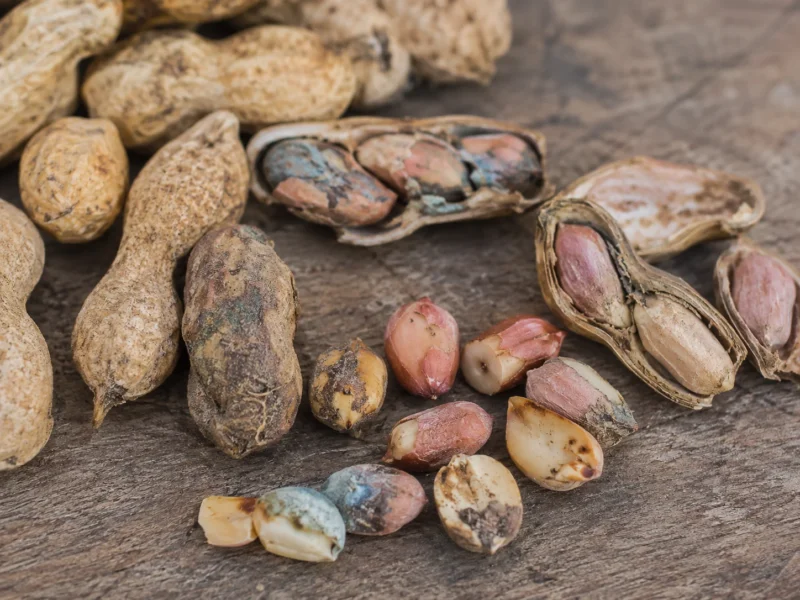
Groundnuts are among the food commodities susceptible to aflatoxin contamination when exposed to moisture, crop damage and inappropriate storage conditions. Visible mould should be treated as a food-safety warning, although aflatoxin requires laboratory confirmation.
When we speak about cancer prevention in Kenya, the conversation is understandably dominated by tobacco, alcohol, obesity, unhealthy diets, physical inactivity, infections and delayed screening. One important carcinogenic exposure, however, often remains outside routine cancer-prevention conversations: aflatoxin. For many Kenyans, exposure does not arise from an unusual occupational hazard or a rare environmental event. It can occur through something as ordinary as food; particularly maize and other susceptible foods that have been inadequately dried, handled or stored. That is why aflatoxin deserves to move from the margins of the food-safety conversation into the centre of cancer prevention, nutrition counselling and public health policy.
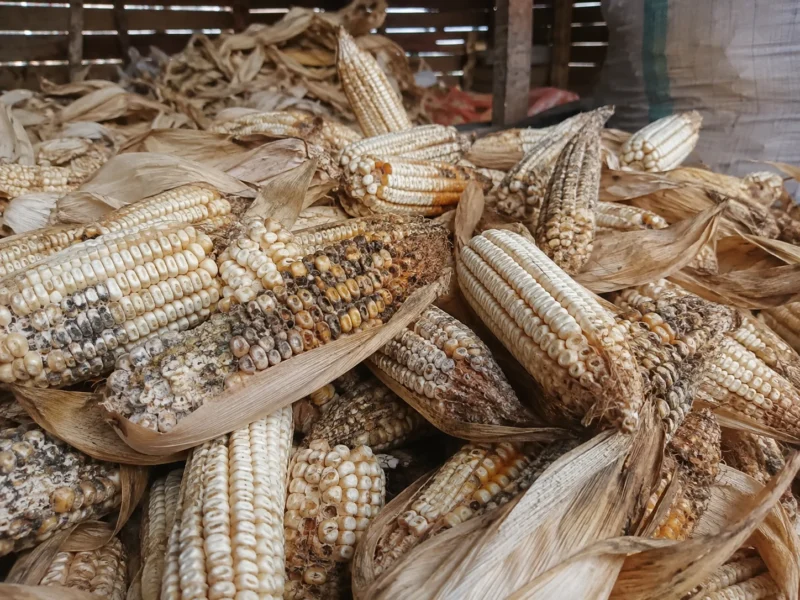
Poor drying and storage can promote fungal growth in maize and increase the risk of aflatoxin contamination. However, the presence or concentration of aflatoxin cannot be confirmed by appearance alone.
The urgency is particularly evident in Kenya.
Kenya faces a growing cancer burden that demands a shift from treating cancer as a cost to viewing prevention, early detection and timely care as an investment in the country’s future. According to GLOBOCAN 2022, Kenya recorded an estimated 44,726 new cancer cases and 29,317 cancer deaths in 2022. Women accounted for 28,377 new cases and 18,003 cancer deaths, compared with 16,349 new cases and 11,314 deaths among men. The leading cancers by incidence were breast, cervical and prostate cancers, while cervical cancer, breast cancer and oesophageal cancer were the leading causes of cancer mortality.
Against this background, reducing exposure to a known liver carcinogen should be recognised as a legitimate component of national cancer control.
A Known Human Carcinogen Hidden in the Food System
Aflatoxins are toxic secondary metabolites produced primarily by fungi including Aspergillus flavus and Aspergillus parasiticus. They may contaminate crops before harvest, during harvesting, and particularly when commodities are inadequately dried or stored under conditions that favour fungal growth. Among the different aflatoxins, aflatoxin B1 (AFB1) is the most potent hepatocarcinogen. Naturally occurring aflatoxins are classified by the International Agency for Research on Cancer as Group 1 carcinogens which are carcinogenic to humans.
Foods of particular concern include maize, groundnuts and some other grains and nuts. Aflatoxin can also enter the dairy food chain when animals consume contaminated feed and aflatoxin B1 is metabolised to aflatoxin M1, which may occur in milk. What makes the problem especially difficult is that food does not necessarily become visibly or obviously unsafe at the levels relevant to chronic exposure. Therefore, household inspection alone cannot replace effective food testing, surveillance and regulation.
How Aflatoxin Can Lead to Liver Cancer
The biological relationship between aflatoxin and hepatocellular carcinoma is particularly well established. After aflatoxin B1 is ingested, liver enzymes can convert it into a highly reactive metabolite, aflatoxin B1-8,9-epoxide. This metabolite can bind to DNA, producing DNA adducts and mutations. One of the molecular signatures associated with substantial aflatoxin exposure is a mutation involving codon 249 of the TP53 tumour-suppressor gene. The disruption of normal cellular safeguards against damaged DNA can contribute to the pathway towards malignant transformation and hepatocellular carcinoma.
A widely cited quantitative risk assessment by Liu and Wu estimated that aflatoxin exposure could account for approximately 4.6-28.2% of hepatocellular carcinoma globally, although these estimates were based on the liver-cancer burden and exposure information available at the time of that 2010 analysis. The study estimated 25,200–155,000 aflatoxin-attributable HCC cases annually in the populations then modelled, with much of the burden concentrated in sub-Saharan Africa and parts of Asia.
For Kenya, however, an even more important issue is the interaction between aflatoxin exposure and hepatitis B virus infection.
Aflatoxin and Hepatitis B: A Dangerous Convergence
Chronic hepatitis B infection is itself a major risk factor for hepatocellular carcinoma. When chronic HBV infection and aflatoxin exposure occur together, the carcinogenic risk can be substantially greater because chronic viral liver injury and aflatoxin-induced genomic damage affect the liver simultaneously.
This matters in Kenya.
A nationally representative analysis nested within the Kenya Population-based HIV Impact Assessment estimated an HBV prevalence of 3.0% among people aged 15–64 years, corresponding to approximately 810,600 people in that age group at the time of the underlying survey. The investigators also identified marked geographical variation in HBV prevalence.
This creates an important cancer-prevention argument.
Aflatoxin control and hepatitis B prevention should not be treated as unrelated programmes.
For populations affected by both exposures, interventions that reduce aflatoxin consumption, expand HBV testing, increase appropriate vaccination, identify chronic infection and ensure appropriate clinical follow-up can converge on the same long-term objective: preventing liver cancer.
Kenya Has Already Seen What Aflatoxin Can Do
Kenya’s experience with aflatoxin is not theoretical.
In 2004, one of the world’s most serious recorded outbreaks of acute aflatoxicosis occurred in eastern Kenya after consumption of heavily contaminated maize. By July of that year, 317 cases and 125 deaths had been reported; a case-fatality proportion of approximately 39%. The outbreak investigation found extensive contamination. Among food samples tested from affected households, aflatoxin B1 concentrations ranged as high as 8,000 parts per billion, while more than half of maize samples in a broader market survey exceeded the then-applied 20 ppb level.
The tragedy rightly focused attention on acute aflatoxin poisoning.
But from a cancer-prevention perspective, another problem may be less visible: chronic, repeated, lower-level exposure over many years.
Unlike an acute poisoning outbreak, chronic exposure does not necessarily produce an immediate medical emergency. A person can therefore continue consuming contaminated food without recognising the exposure while cumulative carcinogenic processes occur over time.
Recent Kenyan Evidence Shows the Problem Has Not Disappeared
Perhaps the strongest reason to bring aflatoxin back into the contemporary cancer conversation is that contamination remains detectable in foods being consumed in Kenya. A major Kenyan study published in PLOS ONE in November 2025 analysed 1,255 maize-flour samples collected from ten urban locations. Researchers found detectable aflatoxin in 97% of samples, while 16% exceeded Kenya’s 10 ppb regulatory limit. The study also demonstrated an important food-system dimension: average contamination was 9.9 ppb in informally processed flour compared with 4.9 ppb in packaged flour, and approximately one-quarter of sampled posho-mill flour exceeded the regulatory threshold. These results should not be interpreted to mean that every detectable quantity presents the same risk or that all informal milling is unsafe. They do, however, demonstrate that aflatoxin contamination remains sufficiently widespread to justify systematic surveillance and targeted risk reduction.
More recently, during World Food Safety Day activities in June 2026, KALRO officials reported that some grain samples collected from Kenyan markets had aflatoxin concentrations around 500 ppb, approximately 50 times the cited 10 ppb safety threshold. KEBS subsequently emphasised enhanced market surveillance.
The message is difficult to ignore: Kenya’s aflatoxin problem did not end with the 2004 outbreak.
This Is Not Simply a Problem of Individual Consumer Behaviour
It is tempting to tell households to avoid mouldy maize, dry grain adequately and improve storage.
Those measures matter, but they are not enough.
Aflatoxin exposure occurs within an interconnected system involving crop production, drought and rainfall patterns, harvesting, drying, transport, storage, aggregation, milling, animal feed, retail markets, household purchasing power and food regulation.
Economic realities are equally important.
A household facing food insecurity may find it extremely difficult to discard maize simply because some of the grain appears damaged. A small-scale farmer may understand the importance of adequate drying but lack access to moisture meters, drying infrastructure or appropriate storage technology. A small trader may not have affordable access to laboratory testing. Cancer prevention therefore cannot place the entire responsibility on the consumer. Safe food must become the easier and economically realistic choice.
Cancer Prevention Must Begin Before the Patient Reaches the Oncology Clinic
The Kenyan National Cancer Control Strategy 2023-2027 places cancer prevention and early detection among its central pillars. Aflatoxin prevention fits naturally within that framework because preventing exposure addresses a carcinogenic risk years before malignancy develops.
A stronger Kenyan response should connect agriculture, food safety, nutrition, infectious-disease control and oncology.
- Routine, risk-based surveillance of maize, groundnuts, animal feeds and other vulnerable commodities across formal and informal markets.
- Affordable and decentralised aflatoxin testing, including appropriate rapid-testing capacity closer to farmers, millers and markets.
- Improved harvesting, drying and storage technologies, particularly for smallholder farmers.
- Stronger enforcement of food and feed safety standards while ensuring that enforcement does not simply transfer the economic cost to already vulnerable households.
- Integration of aflatoxin awareness into nutrition counselling, cancer-prevention education and community health programmes.
- Stronger hepatitis B prevention, testing, vaccination and clinical management.
- Targeted professional education so that oncologists, nutritionists, primary-care clinicians, public-health practitioners and community health promoters understand the aflatoxin–HBV–liver cancer connection.
- Continued research linking food contamination surveillance, biomarkers of human exposure and cancer outcomes in Kenyan populations.
The National Cancer Institute of Kenya, Ministry of Health, Ministry responsible for Agriculture, KEBS, KALRO, county governments, universities, food producers, civil-society organisations and communities all have roles within such an approach.
Aflatoxin is a textbook example of why cancer prevention requires a whole-of-society response.
What Should Oncology Professionals Do?
Cancer professionals may reasonably ask: Is aflatoxin really our responsibility?
I believe the answer is yes.
Not because oncologists and oncology nutritionists should become agricultural inspectors, but because cancer professionals have an obligation to identify preventable carcinogenic exposures and ensure they are included in prevention conversations. For an oncology nutrition professional, food counselling should not focus exclusively on calories, protein, fruits and vegetables. Food safety also matters. For clinicians managing people with chronic hepatitis B, the patient’s broader environmental and dietary risk context matters. For cancer-control advocates, aflatoxin provides an important opportunity to connect cancer prevention with food systems and environmental health. And for policymakers, the long latency between exposure and cancer should not become an excuse for inaction.
From Food Safety to Cancer Prevention
Kenya’s experience offers an important lesson to the wider oncology community.
Aflatoxin is not merely an agricultural contaminant.
It is not simply a storage problem.
It is not only a matter for laboratories and standards agencies.
It is a preventable exposure to a proven human carcinogen.
The 2004 outbreak demonstrated what very high exposure can do rapidly. Contemporary surveillance demonstrates that lower-level contamination continues to circulate within parts of the food system. Kenya also carries a substantial burden of chronic hepatitis B infection—the very condition that can magnify the carcinogenic consequences of aflatoxin exposure. We therefore need to broaden the language of cancer prevention.
When we discuss preventing liver cancer, we should speak not only about hepatitis vaccination, alcohol and metabolic health, but also about the safety of the food reaching people’s tables.
Cancer prevention does not begin in the chemotherapy unit.
It does not even begin in the screening clinic.
Sometimes, it begins on the farm, at the drying floor, inside the grain store, at the mill and in the market. Reducing aflatoxin exposure is therefore not peripheral to cancer control in Kenya.
It is cancer prevention.
Written by Dr. Nancy Muyoka,
Clinical nutritionist | Founder Oncology Nutrition Space
Kenya Hub, OncoDaily