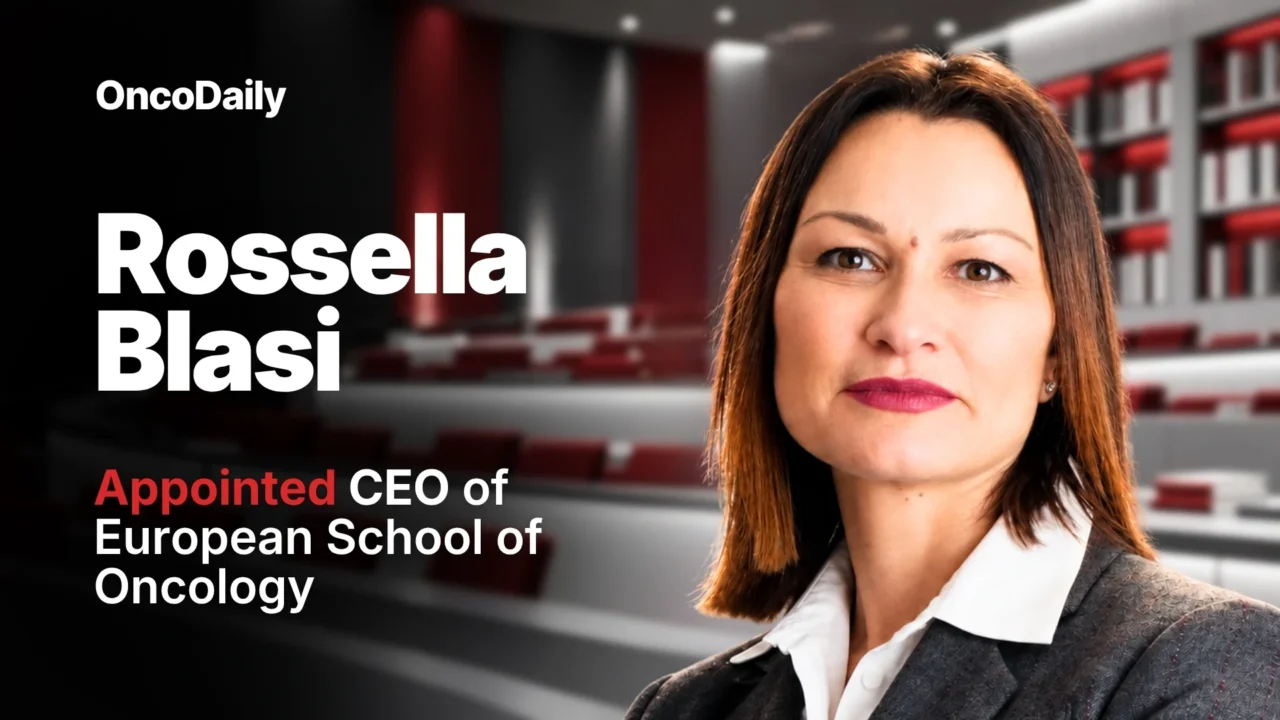
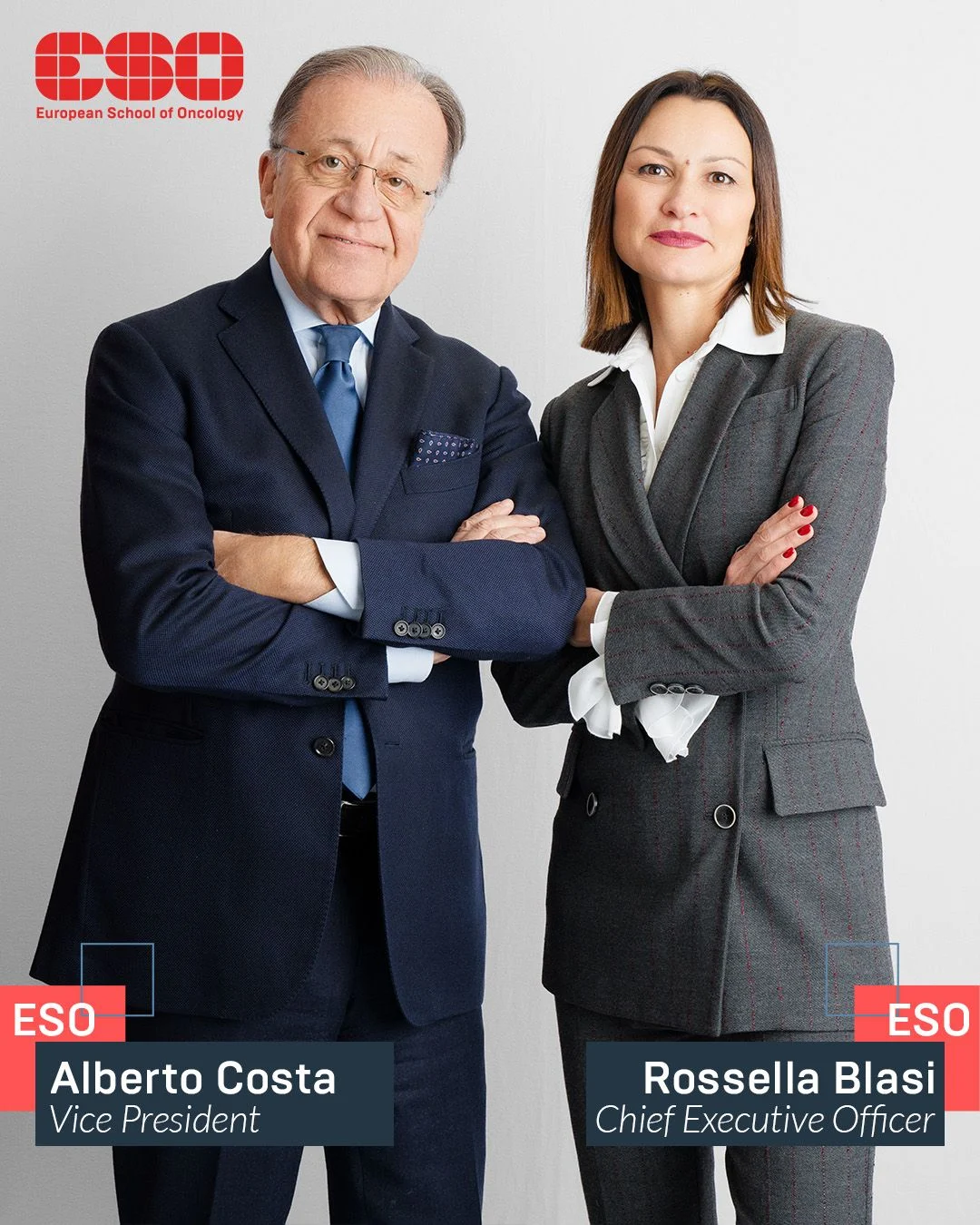
Rossella Blasi has been appointed Chief Executive Officer of the European School of Oncology (ESO), succeeding Alberto Costa, who has led the School since its foundation in 1982. Approved by ESO’s Board of Directors in Milan on October 8, 2026, the appointment marks a leadership transition for an institution that has trained more than 40,000 healthcare professionals worldwide.
According to ESO’s official announcement, Costa will become Vice President and continue supporting the School’s scientific development. Fedele Gubitosi, President since October 2023, will remain in his position.
From Executive Director to CEO: Rossella Blasi’s Priorities
Blasi takes on the CEO role after serving as ESO’s Executive Director. Her stated priorities connect the School’s longstanding educational mission with plans to strengthen its international role and develop new collaborations.
In her LinkedIn post, Blasi wrote:
“I am honored to lead European School of Oncology into a new phase of its history. My commitment is to preserve its values of independence, excellence and accessibility, while strengthening its international role, promoting new collaborations and creating growth opportunities for the oncologists of today and tomorrow.”
In the official announcement, Blasi thanked the Board for its trust and Costa for his work over more than four decades. She described her appointment as a continuation of her work as Executive Director, supported by an international community of faculty members, partners, healthcare professionals and young oncologists.
She also outlined a commitment to strengthening independent and accessible education that connects scientific knowledge, clinical practice and patients’ needs.
Rossella Blasi’s Career in Oncology Education and Leadership
Rossella Blasi brings more than 20 years of experience in nonprofit management, life sciences and organisational leadership. She began her career at the European Institute of Oncology (IEO) before contributing to the establishment of IFOM, the Institute of Molecular Oncology, where she progressed into senior management roles and served as Chief Operating Officer. Her responsibilities spanned human resources, information technology, procurement, facilities, research funding and research and development. European Cancer Organisation
Blasi joined the European School of Oncology in 2023 and served as Executive Director before her appointment as CEO. She oversaw operations across its Milan and Bellinzona offices, strengthened internal expertise and coordinated the organisational work supporting its educational programmes. Under her leadership, ESO achieved ISO 9001 certification for its Quality Management System, and she oversaw the review and renegotiation of major partnership agreements. ESO
Her involvement in the wider cancer community includes board positions with the ABC Global Alliance, Sharing Progress in Cancer Care (SPCC), European Cancer Organisation and Europa Donna Italia. Blasi holds a bachelor’s degree in Political Science and a master’s degree in Sociology, alongside professional coaching certification and additional leadership and management training. ESO
Alberto Costa Continues ESO’s Scientific Mission
The transition brings a new CEO while retaining the experience of the leader who has guided ESO since its establishment.
Costa was appointed to lead the School when he was an assistant to Umberto Veronesi at the National Cancer Institute in Milan. In the announcement, he expressed confidence in Blasi and confirmed that, as Vice President, he would continue supporting ESO’s scientific mission and future generations of oncology professionals.
Gubitosi described Blasi’s appointment as recognition of her strategic vision, organisational strength and commitment to ESO’s mission. He said the transition would preserve continuity while helping the School respond to changes in oncology and education.
Oncology Education Across Countries and Career Stages
Founded in Milan in 1982 through the collaboration of Umberto Veronesi and Laudomia Del Drago, ESO was established to bring together expertise across national borders and accelerate the translation of scientific advances into clinical practice.
Today, its educational activities include courses, masterclasses, university programmes, online learning and training placements at leading European cancer centres. These opportunities support medical students, physicians, nurses and allied health professionals, from early training through advanced clinical practice and leadership.
In 2025 alone, ESO’s activities involved more than 2,700 participants and over 600 faculty members from 53 countries. Across its history, the School has engaged 5,500 experts from Europe and beyond.
ESO describes its independence from the pharmaceutical industry as central to its commitment to high-quality, unbiased cancer education. Blasi’s appointment places the preservation of that independence, alongside accessibility and international collaboration, at the centre of the School’s next chapter.
Read more about the European School of Oncology on OncoDaily.