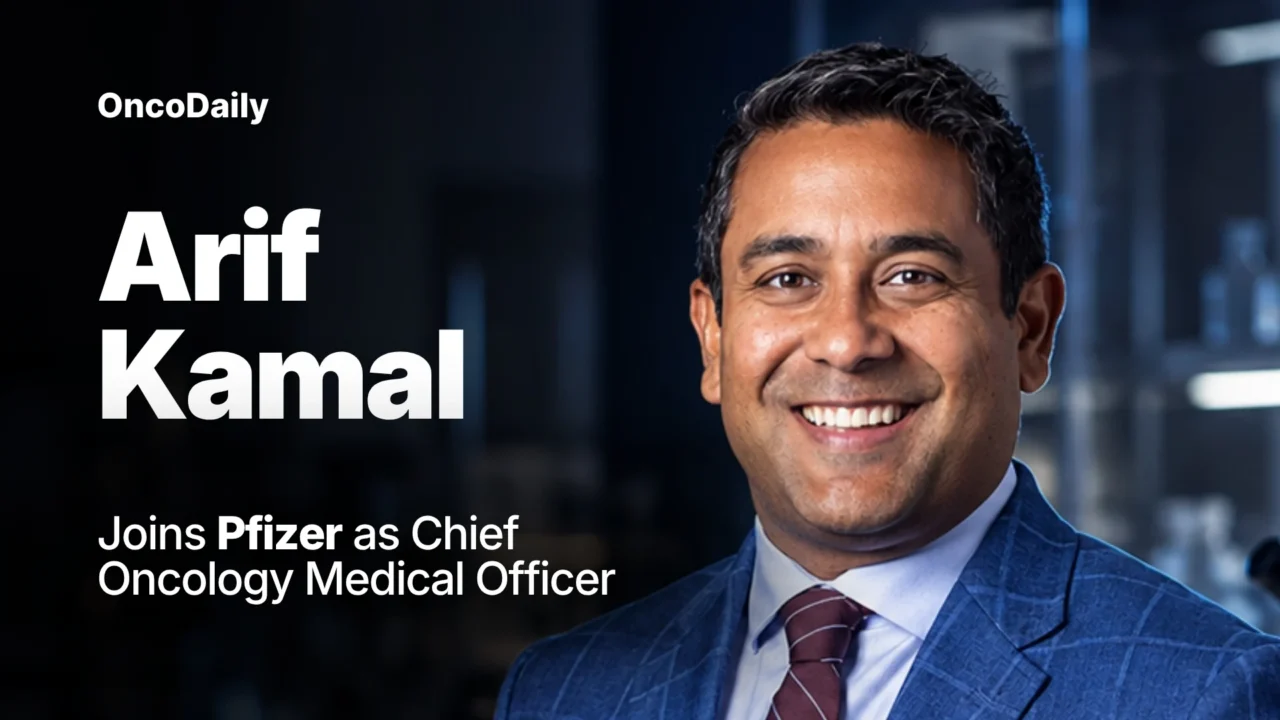
Arif Kamal, Chief Oncology Medical Officer at Pfizer, shared on LinkedIn:
“When you think about the future, what do you hope for the most?
I’ve asked that question in clinic hundreds of times. I learned it from several communication mentors along the way. A question meant to get past the presenting problem – a disease or condition – to what someone actually wants. Not as a patient, but as a human.
Earlier this year, someone asked it back to me.
What do I hope for as I think about the future?
- First, that the distance keeps closing between what oncology can do and what people actually experience. I’ve spent twenty years working on that gap from different angles – at the bedside as a clinician, in quality measurement as a physician executive, building technology as a start-up founder, and for the last four years, as the first Chief Patient Officer at the American Cancer Society. I’m proud of what that team built. It didn’t exist four years ago, and it will outlast me.
- Second, just as importantly, I hope that more families get to experience more and better days. That cancer does not take away grandmothers so that their grandkids can meet them. That more families can take vacations together without the worry of a health scare. That more smiles are genuine, without needing to cover up for deep worries underneath.
For me, fighting cancer was always about family. Mine. Yours. Everyone’s.
Today I’m joining Pfizer as Chief Oncology Medical Officer. For those unfamiliar with the function: Medical Affairs is the scientific organization inside a pharmaceutical company. It generates evidence in real-world settings, engages with clinicians on scientific questions, and carries what physicians and patients experience back into how medicines are developed.
Grateful to Jeff Legos for the invitation, to Chris Boshoff, for the vision he’s set for oncology research and development, to Karin Tollefson for building something worth stepping into, and to my Pfizer colleagues for passionately aiming to close these gaps.
When I left the American Cancer Society, I told my colleagues I’d be rowing from a different part of the boat. Same water. Same direction. And the direction is this: closing the gap between available and accessible. Availability is a scientific achievement. Accessibility is a human one. We will be excellent at both.
Because all our families deserve nothing less.”

You can also read: Pfizer to Present 45 Abstracts at ESMO 2026, With Data in Breast, Genitourinary, Lung Cancers and Melanoma