The success of CDK4/6 inhibition has transformed hormone receptor-positive/HER2-negative breast cancer treatment, but acquired resistance remains a major obstacle to durable disease control. A comprehensive review published in the Journal of Clinical Investigation examines the next generation of cell-cycle-directed therapies, including CDK4-selective inhibitors, CDK2 inhibitors, multitargeted compounds, and protein degraders. With new randomized evidence emerging for atirmociclib after CDK4/6 inhibitor progression, the field is moving toward more precise targeting of the molecular pathways that allow breast cancer cells to escape treatment.
For nearly a decade, cyclin-dependent kinase 4 and 6 (CDK4/6) inhibitors have represented one of the most important therapeutic advances in hormone receptor-positive/HER2-negative breast cancer.
Palbociclib, ribociclib, and abemaciclib, when combined with endocrine therapy, have substantially improved disease control in advanced breast cancer, while selected agents have also expanded into the adjuvant treatment of high-risk early-stage disease.
Yet the clinical success of these drugs has exposed an important biological limitation. Most metastatic tumors eventually develop resistance, often despite continued estrogen receptor suppression and effective initial inhibition of the cyclin D–CDK4/6 pathway.
In a review published on October 15, 2026, in the Journal of Clinical Investigation, Daria Seriak, Jun Yong Kim, Geoffrey I. Shapiro, and Antonio Giordano examined the scientific rationale and emerging clinical evidence for the next generation of CDK-directed therapies.
Titled Next-Generation CDK Inhibitors in HR+/HER2− Breast Cancer, the review explores how treatment may evolve beyond simultaneous CDK4/6 blockade toward more selective, multitargeted, and resistance-adapted approaches. Its publication coincides with an important advance in the field.
On October 24, 2026, the primary analysis of the randomized phase II FOURLIGHT-1 trial was published in Annals of Oncology, demonstrating a significant progression-free survival benefit with the selective CDK4 inhibitor atirmociclib plus fulvestrant after prior CDK4/6 inhibitor treatment.
Together, these developments highlight a central question: Can the next generation of CDK inhibitors overcome resistance without reproducing the toxicity limitations of existing therapies?
Understanding the Cell-Cycle Machinery That Drives HR-Positive Breast Cancer
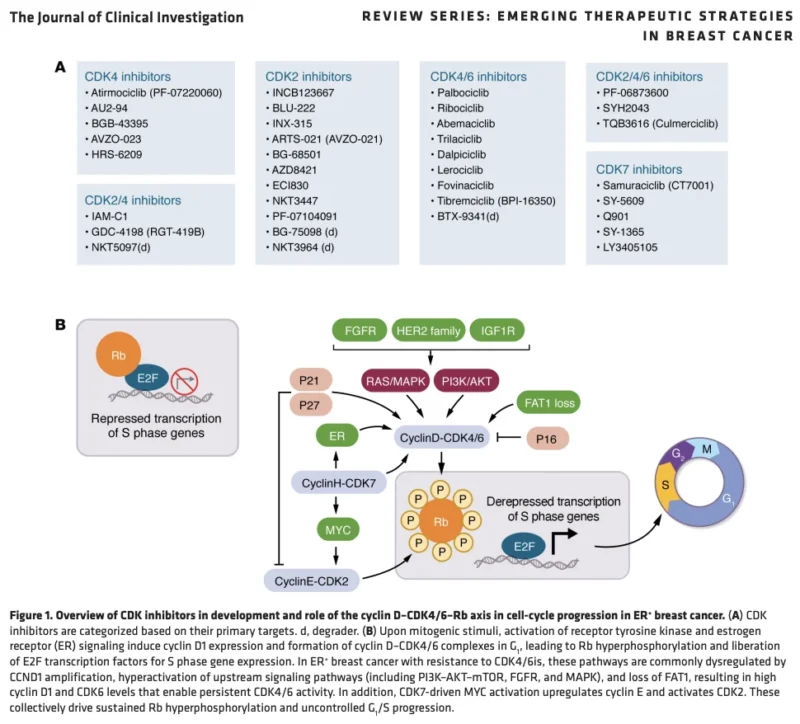
Cell-cycle progression is regulated by cyclin-dependent kinases, which coordinate cellular movement through the G1, S, G2, and mitotic phases. In HR-positive breast cancer, estrogen receptor signaling directly stimulates cyclin D1 expression.
Cyclin D1 forms complexes with CDK4 and CDK6, initiating phosphorylation of the retinoblastoma tumor suppressor protein, or Rb. This process progressively releases E2F transcription factors, allowing the expression of genes necessary for DNA synthesis and cellular proliferation.
CDK2, particularly through its association with cyclin E, also contributes to Rb phosphorylation and the transition from G1 to S phase. These regulatory systems are closely connected. When CDK4/6 activity is suppressed, some cancer cells can adapt by increasing dependence on alternative mechanisms, particularly cyclin E–CDK2 signaling.
The review emphasizes that this functional redundancy represents one of the central challenges in achieving durable cell-cycle inhibition. Simply suppressing CDK4/6 may not be sufficient when malignant cells retain alternative routes into DNA replication.
Why Resistance Develops Despite Effective CDK4/6 Inhibition
Resistance to CDK4/6 inhibitors is biologically heterogeneous. Some patients experience primary resistance, with little or no meaningful initial response. Others achieve prolonged disease control before acquired resistance develops.
The review estimates that approximately 10%–20% of cases exhibit primary resistance, although this proportion varies by clinical setting and definition. Multiple molecular mechanisms can contribute to treatment failure.
These include cyclin E1 overexpression, CCNE1 or CCNE2 amplification, CDK6 upregulation, activation of PI3K–AKT–mTOR and FGFR signaling, and alterations involving RB1 or other cell-cycle regulators. Not every resistance mechanism involves a new genomic alteration.
Cancer cells may undergo adaptive transcriptional changes, alter their dependence on individual kinases, or maintain small treatment-tolerant populations capable of continued proliferation. Another important limitation is that conventional CDK4/6 inhibitors primarily induce cell-cycle arrest rather than directly killing every malignant cell.
As a result, some surviving cells may regain proliferative capacity after treatment interruption or through compensatory signaling. The next generation of CDK-directed treatments aims to address these escape mechanisms while maintaining an acceptable safety profile.
Selective CDK4 Inhibition: Can Sparing CDK6 Reduce Toxicity?
One emerging strategy involves selectively inhibiting CDK4 rather than simultaneously blocking CDK4 and CDK6. Although these kinases share substantial structural similarity, their functions are not identical.
CDK4 is a dominant driver of proliferation in many HR-positive breast cancers. CDK6 also contributes to the proliferation and differentiation of hematopoietic progenitor cells. Consequently, CDK6 inhibition contributes to the myelosuppression associated with conventional CDK4/6 inhibitors, particularly neutropenia.
More selective CDK4 inhibition could theoretically preserve anticancer activity while reducing treatment-related hematologic toxicity. This approach may allow continuous treatment with fewer interruptions or dose reductions.
However, greater kinase selectivity does not automatically guarantee superior clinical efficacy or tolerability. The therapeutic value of selective CDK4 inhibition must be demonstrated through comparative trials.
Atirmociclib Emerges as a Leading Next-Generation CDK4 Inhibitor
Atirmociclib, previously known as PF-07220060, is among the most advanced selective CDK4 inhibitors in clinical development. Preclinical studies demonstrated substantially greater selectivity for CDK4 over CDK6 than conventional CDK4/6 inhibitors, together with suppression of Rb phosphorylation and tumor growth.
Early clinical studies have reported activity in both previously untreated and CDK4/6 inhibitor-exposed HR-positive/HER2-negative metastatic breast cancer.
In a first-line cohort receiving atirmociclib 300 mg twice daily plus letrozole, the reported confirmed objective response rate was 69.7%, with a clinical benefit rate of 93.9%. After a median follow-up of 24.8 months, median progression-free survival had not been reached.
The estimated probability of remaining progression-free was 67.2% at 24 months. The regimen nevertheless retained clinically relevant hematologic toxicity. Among 34 treated patients, neutropenia occurred in 61.8%, including grade 3 events in 26.5%.
These findings suggest that selective CDK4 inhibition may have a differentiated safety profile, but do not establish an absence of myelosuppression.
The ongoing phase III FOURLIGHT-3 study is directly comparing atirmociclib plus letrozole with established CDK4/6 inhibitor-based endocrine combinations in previously untreated advanced breast cancer.
Its results will be important in determining whether selective CDK4 inhibition should replace an existing first-line standard.
FOURLIGHT-1 Provides Randomized Evidence After CDK4/6 Progression
The strongest recent clinical evidence for atirmociclib comes from FOURLIGHT-1. The international randomized phase II trial enrolled 263 patients with HR-positive/HER2-negative advanced or metastatic breast cancer who had progressed after CDK4/6 inhibitor-based treatment.
Patients received atirmociclib plus fulvestrant or investigator’s choice of fulvestrant alone or everolimus plus exemestane. At the January 12, 2026 data cutoff, 126 patients had been assigned to atirmociclib and 137 to the control group.
Median progression-free survival was 9.4 months with atirmociclib plus fulvestrant versus 6.6 months with investigator’s choice. The hazard ratio was 0.60 (95% CI 0.440–0.825; one-sided P = 0.0007), corresponding to a 40% relative reduction in the hazard of progression or death.
The objective response rate among patients with measurable disease was 19.3% versus 11.3%, although this difference was not statistically significant in the reported nominal analysis. Clinical benefit rates were 61.9% and 46.0%, respectively.
The most common treatment-emergent adverse events with atirmociclib were neutropenia (47.2%), leukopenia (33.6%), and diarrhea (28.0%). Treatment-emergent adverse events led to permanent discontinuation of atirmociclib in 6.4% of patients.
These findings are important because they demonstrate randomized activity with renewed selective CDK4 inhibition after previous exposure to a CDK4/6 inhibitor. However, the comparator was investigator’s choice of endocrine-based treatments, not a head-to-head comparison against every available post-CDK4/6 therapy.
An overall survival advantage has not been established. The results therefore support further development without independently defining the optimal treatment sequence for all patients.
Why Might CDK4 Inhibition Work After CDK4/6 Inhibitor Failure?
At first glance, the activity of atirmociclib after progression on another CDK4/6 inhibitor appears counterintuitive. If a tumor has developed resistance to CDK4/6 inhibition, why would a selective CDK4 inhibitor remain effective?
The JCI review offers several possible explanations. First, resistance can be heterogeneous. Although some tumor-cell populations may activate alternative pathways, others may retain substantial CDK4 dependence.
More potent or sustained CDK4 inhibition could continue to suppress these sensitive compartments. Second, adaptive resistance is not always irreversible. Changes in gene expression and signaling can potentially alter treatment sensitivity without requiring permanent genomic evolution.
Third, the pharmacological characteristics of atirmociclib may differ from those of conventional dual inhibitors. Nevertheless, these explanations remain hypotheses. Greater selectivity for CDK4 may also create vulnerabilities when tumors increase CDK6 activity or shift toward cyclin E–CDK2 dependence.
Preclinical studies suggest that CDK6 expression, as well as alterations involving FAT1, PTEN, and ARID1A, may influence resistance to selective CDK4 inhibition. These mechanisms underscore why the next stage of development must include predictive biomarker research.
BGB-43395 Expands the Selective CDK4 Pipeline
Atirmociclib is not the only selective CDK4 inhibitor advancing through clinical development. BGB-43395 is another orally administered agent designed to suppress CDK4-driven Rb phosphorylation while reducing CDK6-associated hematologic toxicity.
In a first-line safety expansion cohort involving 58 patients with CDK4/6 inhibitor-naive HR-positive/HER2-negative advanced breast cancer, BGB-43395 was evaluated with letrozole across several doses.
Preliminary confirmed objective response rates ranged from 55.0% to 68.4% across dose cohorts. At the evaluated 240 mg and 400 mg twice-daily doses, toxicity was described as manageable, with predominantly low-grade gastrointestinal events and limited hematologic toxicity.
These early observations are encouraging but cannot be directly compared with atirmociclib or established CDK4/6 inhibitors. Differences in trial populations, follow-up, response assessment, and treatment exposure prevent reliable cross-trial efficacy comparisons.
A phase III study is evaluating BGB-43395 plus letrozole against standard CDK4/6 inhibitor-based endocrine therapy in the first-line setting. Other selective CDK4 inhibitors, including HRS-6209 and AVZO-023, remain in earlier phases of development.
The expanding field reflects increasing interest in separating CDK4-dependent antitumor effects from CDK6-related toxicity.
CDK2: The Escape Pathway That May Sustain Resistance
While CDK4-selective agents seek to improve an established therapeutic mechanism, CDK2 inhibition addresses a different biological problem. CDK2 becomes particularly important when tumors escape CDK4/6 dependence.
Cyclin E1 overexpression, CCNE1 amplification, alternative cyclin D1–CDK2 complex formation, and activation of growth factor signaling can restore proliferation despite effective CDK4/6 blockade. These changes make CDK2 an attractive therapeutic target in resistant disease.
However, CDK2 dependence is not uniform across tumors. The review emphasizes the importance of Rb and p16INK4A status, cyclin E expression, and the activity of related signaling pathways.
In some genetic contexts, CDK2 inhibition can induce G1 arrest by preventing effective Rb phosphorylation. In others, it primarily disrupts later cell-cycle processes, producing G2 arrest that may be incomplete or reversible.
Consequently, selective CDK2 inhibitors may be effective in specific molecularly defined populations, while other tumors may require simultaneous inhibition of CDK2 and CDK4/6.
Tegtociclib Shows Early Activity After CDK4/6 Resistance
Tegtociclib, previously known as PF-07104091, is among the earliest selective CDK2 inhibitors evaluated in patients. Preclinical studies demonstrated antitumor activity in models with acquired resistance to endocrine therapy and CDK4/6 inhibitors.
In an early-phase clinical study involving heavily pretreated HR-positive/HER2-negative metastatic breast cancer, three of 16 response-evaluable patients achieved confirmed partial responses, corresponding to an objective response rate of 18.8%.
Stable disease was also documented in six patients. These findings provide an initial clinical signal that some CDK4/6 inhibitor-resistant tumors retain sensitivity to selective CDK2 inhibition. However, the cohort was small, and the predictive biomarkers of response remain uncertain.
The development of tegtociclib and related agents raises an important question: can CDK2 targeting restore disease control in tumors that have shifted their cell-cycle dependence away from CDK4/6? Answering that question will require prospective biomarker-guided trials.
Other CDK2 Inhibitors Enter Clinical Development
Several additional agents are being evaluated. INX-315 demonstrated preclinical activity in CCNE1-amplified tumors and CDK4/6 inhibitor-resistant breast cancer models. In early clinical testing involving multiple tumor types, partial responses were reported in selected patients, including one with HR-positive/HER2-negative breast cancer.
INCB123667 has been evaluated in patients with advanced solid tumors, particularly those with CCNE1 amplification. Its early development has identified gastrointestinal and hematologic toxicity as important considerations, alongside preliminary antitumor activity in molecularly selected populations.
BG-68501 has also entered clinical testing. Its design provides high selectivity for CDK2, with preliminary clinical findings suggesting relatively limited myelosuppression compared with some other investigational CDK2 inhibitors.
Although these programs support continued development, clinical evidence remains early. Response rates derived from small, heterogeneous phase I cohorts should not be interpreted as established efficacy. Furthermore, the optimal CDK2 biomarker strategy remains unresolved.
Dual CDK2 and CDK4 Inhibition: A More Comprehensive Approach?
The biological limitations of single-target treatment have stimulated interest in simultaneously inhibiting CDK2 and CDK4. This strategy aims to suppress the original cell-cycle dependency while blocking a major route of therapeutic escape.
Preclinical evidence suggests that dual inhibition may be particularly effective in tumors that have already developed resistance to CDK4/6 inhibitors. One approach involves combining two selective agents.
In a phase I/II study evaluating atirmociclib with tegtociclib, a partial response rate of 27.8% was reported among 18 patients with measurable metastatic breast cancer. In the broader 26-patient cohort, the disease control rate was 69.2%, and median progression-free survival was 8.3 months.
These results provide preliminary evidence that combined cell-cycle inhibition can retain activity in heavily pretreated patients. However, the combination’s efficacy and tolerability require confirmation in larger studies.
An alternative approach uses a single compound with activity against multiple CDKs. GDC-4198, formerly RGT-419B, was designed to inhibit CDK4 and CDK2 while limiting CDK6 inhibition. In an early clinical study, four confirmed partial responses were reported among 24 patients with measurable disease and at least one postbaseline assessment.
A phase Ib/II program is evaluating GDC-4198 in combination with endocrine treatment. The challenge for dual-target strategies will be achieving stronger pathway suppression without recreating the toxicity limitations of earlier pan-CDK inhibitors.
Protein Degradation Offers a Different Therapeutic Mechanism
Another emerging approach involves proteolysis-targeting chimeras, or PROTACs. Unlike conventional kinase inhibitors, which block catalytic activity, PROTAC molecules recruit cellular protein-degradation machinery to eliminate a target protein.
This mechanism may suppress both kinase-dependent and noncatalytic functions of CDK proteins. Several investigational agents are being developed against CDK4, CDK6, and CDK2. BTX-9341 targets CDK4/6 for degradation and has demonstrated early clinical pharmacodynamic activity.
NKT3964 is designed to degrade CDK2, while NKT5097 targets CDK2 and CDK4. These agents remain investigational, and their clinical efficacy is not established. Important development challenges include pharmacokinetics, oral bioavailability, target selectivity, tissue exposure, and resistance involving the degradation machinery itself.
The FDA’s May 2026 approval of vepdegestrant in ESR1-mutated advanced breast cancer provides a precedent for targeted protein degradation as a therapeutic modality. However, vepdegestrant is an estrogen receptor degrader, not a CDK degrader.
Its regulatory success does not establish the clinical effectiveness of the emerging CDK-directed PROTAC programs.
CDK7: Targeting Transcription and Cell-Cycle Control Together
CDK7 represents another potential vulnerability. Unlike CDK4 and CDK2, CDK7 has important roles in both cell-cycle regulation and transcriptional control. It contributes to activation of other CDKs and influences RNA polymerase II-mediated transcription.
CDK7 also participates in estrogen receptor signaling and MYC-associated transcriptional programs. These functions provide a rationale for investigating CDK7 inhibition in tumors with resistance to endocrine treatment and CDK4/6 inhibitors.
Samuraciclib is an oral selective CDK7 inhibitor undergoing clinical development. In a phase I study, samuraciclib combined with fulvestrant achieved a clinical benefit rate of 36% among 25 patients with HR-positive/HER2-negative breast cancer previously exposed to CDK4/6 inhibitors.
Additional studies are examining combinations with endocrine agents. However, the optimal clinical role of CDK7 inhibition remains uncertain. Its effects on both transcription and cell-cycle regulation may create therapeutic opportunities, but could also influence tolerability and resistance.
Biomarkers May Determine Whether the Next Generation Succeeds
The expanding CDK inhibitor pipeline creates an urgent need for biomarker-guided treatment selection. For selective CDK4 inhibitors, residual CDK4 dependence and CDK6 expression may influence treatment response.
For CDK2 inhibitors, cyclin E expression, CCNE1 amplification, p16INK4A status, Rb function, and combined transcriptional signatures may be important. However, no single biomarker has been prospectively validated to select all patients who should receive a particular next-generation CDK inhibitor.
The review highlights the possibility that composite molecular signatures may be more informative than isolated genomic alterations. Longitudinal ctDNA assessment, paired tissue biopsies, and dynamic analysis of cell-cycle signaling could potentially help identify evolving treatment dependencies.
The challenge is especially important because resistance may be heterogeneous and partly non-genetic. A static pretreatment assay may not fully capture how a tumor changes under therapeutic pressure.
Future clinical trials should therefore integrate translational research capable of distinguishing patients who retain CDK4 dependence from those whose tumors rely predominantly on CDK2 or alternative pathways.
Combining Cell-Cycle Inhibition With New Endocrine Therapies
Another important direction involves combining next-generation CDK inhibitors with newer estrogen receptor-targeting agents. The treatment landscape now includes oral selective estrogen receptor degraders and targeted estrogen receptor degradation approaches.
Investigational combinations include atirmociclib with camizestrant or vepdegestrant and triplet strategies incorporating PI3Kα inhibition. These approaches aim to address both endocrine signaling and downstream cell-cycle escape.
The rationale is particularly relevant for tumors harboring ESR1 mutations, PI3K pathway alterations, or acquired resistance to conventional CDK4/6 inhibitor-based endocrine therapy. However, combining effective agents does not automatically improve patient outcomes.
Greater treatment intensity may increase toxicity, complicate sequencing, and limit later therapeutic options. The benefit of each combination will therefore need to be demonstrated in appropriately designed randomized studies.
What Does This Mean for Clinical Practice?
The therapeutic landscape is becoming more complex, but current treatment standards should not be replaced prematurely. Established CDK4/6 inhibitor-based endocrine regimens remain important options in appropriately selected patients with HR-positive/HER2-negative breast cancer.
FOURLIGHT-1 provides meaningful randomized phase II evidence supporting selective CDK4 inhibition after prior CDK4/6 inhibitor exposure. However, the role of atirmociclib relative to other available post-progression strategies remains to be defined.
Likewise, selective CDK2 inhibitors, dual-target compounds, and CDK degraders remain investigational. Their development supports the possibility of overcoming resistance through more precise modulation of cell-cycle pathways, but there is not yet sufficient clinical evidence to establish routine use.
For the future, the most important question may not be whether a drug targets CDK4, CDK2, or CDK7 individually. It may be whether clinicians can identify the dominant cell-cycle dependency of a tumor at a particular point in its evolution and select treatment accordingly.
OncoDaily Takeaway
The next generation of CDK inhibitors represents a shift from broad cell-cycle suppression toward more selective and resistance-adapted treatment strategies in HR-positive/HER2-negative breast cancer. The comprehensive JCI review by Seriak and colleagues highlights several complementary approaches.
Selective CDK4 inhibitors aim to maintain antitumor efficacy while reducing CDK6-associated hematologic toxicity. CDK2 inhibitors seek to target a major escape pathway activated during acquired resistance.
Dual CDK2/4 agents and CDK-directed degraders offer additional opportunities for more comprehensive or durable pathway suppression. FOURLIGHT-1 has strengthened the clinical evidence for this field, demonstrating a median PFS of 9.4 months with atirmociclib plus fulvestrant versus 6.6 months with investigator’s choice after prior CDK4/6 inhibitor treatment.
Nevertheless, most emerging agents remain in early clinical development, predictive biomarkers are incompletely validated, and direct comparative evidence remains limited.
The central message is that overcoming CDK4/6 inhibitor resistance may require more than switching between existing drugs. It may require understanding how cancer cells reorganize their cell-cycle machinery and targeting the resulting dependencies with greater precision.
The success of this approach will ultimately depend on randomized clinical evidence, molecularly informed patient selection, tolerable long-term treatment, and thoughtful integration with evolving endocrine therapies.
Sources
- Seriak D, Kim JY, Shapiro GI, Giordano A. Next-Generation CDK Inhibitors in HR+/HER2− Breast Cancer. Journal of Clinical Investigation. 2026;136(20). Published October 15, 2026. DOI: 10.1172/JCI207631
- Giordano A, Xu B, Yoshinami T, et al. Atirmociclib and Fulvestrant for Patients With HR+/HER2− Advanced/Metastatic Breast Cancer Who Progressed on a Prior Cyclin-Dependent Kinase 4/6 Inhibitor: Primary Analysis of the Randomized FOURLIGHT-1 Trial. Annals of Oncology. Published online October 24, 2026. DOI: 10.1016/j.annonc.2026.10.1282
- US Food and Drug Administration. FDA Approves Vepdegestrant for ER-Positive, HER2-Negative, ESR1-Mutated Advanced or Metastatic Breast Cancer. May 1, 2026.
- FOURLIGHT-3 — NCT06760637. BGB-43395 Phase III Study — NCT07492641.
- Atirmociclib and Tegtociclib Combination — NCT05262400.
- GDC-4198 Development Program — NCT07100106.