The Breast Cancer Research Foundation (BCRF) shared on LinkedIn:
“As the world’s largest private funder of metastatic breast cancer (MBC) research, BCRF recognizes the urgent need to find the cures patients are waiting for. For those living with MBC and those who will face an MBC diagnosis in the future, we’re committed to driving breakthroughs that will end it’s life-threatening grasp.
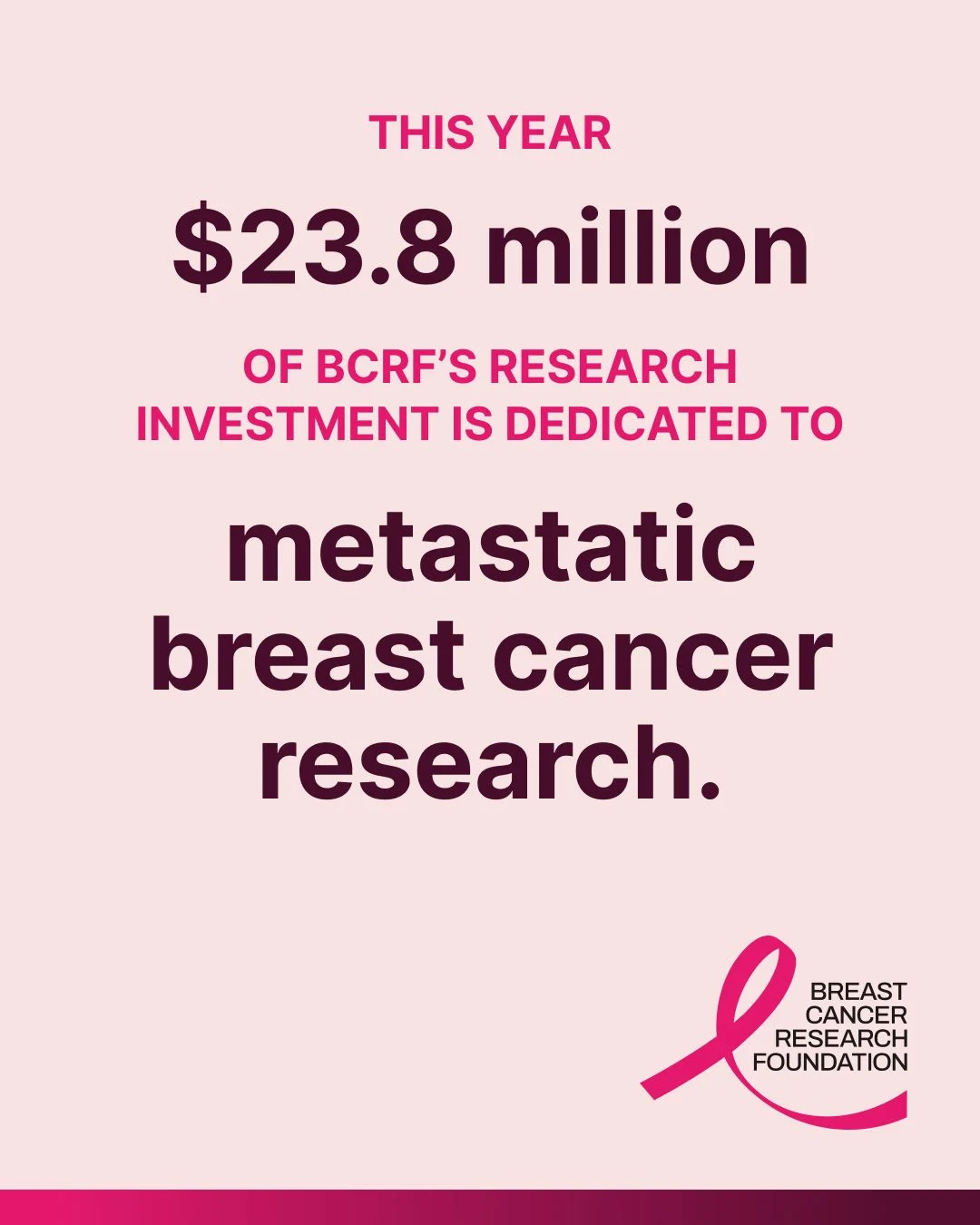
This year, we’re devoting $23.8 million across 102 projects to metastatic breast cancer.
Learn more about metastatic breast cancer and how BCRF is fueling progress in this crucial area.”
Ginny Mason, Executive Director of the Inflammatory Breast Cancer Research Foundation, added:
“One third of those diagnosed with inflammatory breast cancer are metastatic from the start, another third develop mets…We’re grateful for all research but especially for the emphasis on patients who have few options for treatment.”
About the Breast Cancer Research Foundation
The Breast Cancer Research Foundation (BCRF) supports research aimed at preventing and curing breast cancer. Founded by Evelyn H. Lauder and Larry Norton, the foundation funds scientific work to advance understanding of the disease and improve patient care.
BCRF-supported researchers investigate inherited risk, screening, prevention and targeted treatments. The foundation also supports research addressing disparities in breast cancer outcomes, including the roles of access to care, tumor biology and systemic inequities.
In September 2026, BCRF announced BCRF Ventures, a venture philanthropy program supporting early-stage companies developing approaches to breast cancer prevention, detection, diagnosis and treatment. Launched with $23 million in seed donations, the program aims to raise and deploy $100 million over five years to help move innovations from the laboratory to patients.

Metastatic Breast Cancer and the Importance of Early Detection
Metastatic breast cancer occurs when cancer spreads to distant organs, most commonly the bones, liver, lungs or brain. It may be present at the initial diagnosis or develop following treatment for earlier-stage disease. Although generally not curable, metastatic breast cancer is treatable, with care focused on controlling disease, relieving symptoms, extending survival and maintaining quality of life.
Treatment depends on the tumor’s biological characteristics and may include endocrine therapy, targeted treatments, chemotherapy or immunotherapy. Identifying breast cancer while it remains localized generally allows more effective treatment and a more favorable prognosis. Screening, awareness of breast changes and timely diagnostic assessment are central to early detection.
Recognizing Possible Recurrence
For people previously treated for breast cancer, awareness of new, unexplained or persistent symptoms remains important. Symptoms include persistent bone pain, breathlessness and neurological changes, depending on where the disease has spread.
Early detection of primary breast cancer and surveillance for distant recurrence are distinct. ASCO follow-up guidance notes that routine imaging for distant metastases is not recommended in asymptomatic patients after treatment. Routine blood tests, tumor markers and circulating tumor DNA monitoring are also discouraged outside appropriate clinical contexts.
You can also read: ESMO 2026 Metastatic Breast Cancer Guideline: Biomarker-Driven Therapy Reshapes Treatment Across Subtypes.