OncoThon 2026 convened a powerful global dialogue on the future of cancer care, bringing together voices from policy, clinical practice, research, civil society, and survivorship.
Perspectives were shared by Benda Kithaka, Abdikani Mohamed Jeylani, Miriam Mutebi, Judith Mwansa-Kambafwile, Andreas Charalambous, Andre Ilbawi, Sushmita Sen, Annet Nakaganda, and Monique Bareham, each underscoring that equitable cancer care depends on strong systems, trusted data, community engagement, and sustained support across the entire cancer journey.
Benda Kithaka (Kenya), Founder and Executive Director of KILELE Health Association and Secretariat Lead of the African Cervical Health Alliance (ACHA), emphasized the critical role of civil society and communities in cancer control. She highlighted that investments in oncology systems fail if communities are not engaged—fear, stigma, and lack of awareness often prevent people from accessing care even when services exist. She stressed community education on symptoms, self-examination, and early warning signs, the need to humanize cancer care, and empowering communities to demand better policies and accountability from governments. Her message centered on reducing stigma, increasing uptake of services, and placing people—not systems—at the heart of cancer care.
Abdikani Mohamed Jeylani (Somalia), NCD Cancer Focal Person at the Ministry of Health & Human Services, shared the policy and system challenges of cancer care in fragile settings. He highlighted limited infrastructure, late diagnosis, and rising cancer burden, noting that access often depends on a small number of facilities. He emphasized the importance of national coordination, cancer registries, and government-led planning, and welcomed platforms like OncoThon that allow countries such as Somalia to share challenges, learn from regional experiences, and amplify their voices globally.
Miriam Mutebi (Kenya), Breast Surgical Oncologist and Assistant Professor at Aga Khan University Hospital, focused on women-centered and patient-centered cancer care. She highlighted that patients often present late not due to neglect, but because they navigate systems not designed for them, facing financial toxicity, cultural barriers, and language gaps. She stressed that access does not mean availability alone—care must be affordable, understandable, and culturally sensitive. Dr. Mutebi emphasized community navigation, survivor engagement, respectful communication, and comprehensive care across the entire continuum, from diagnosis to surgery, radiotherapy, and survivorship.
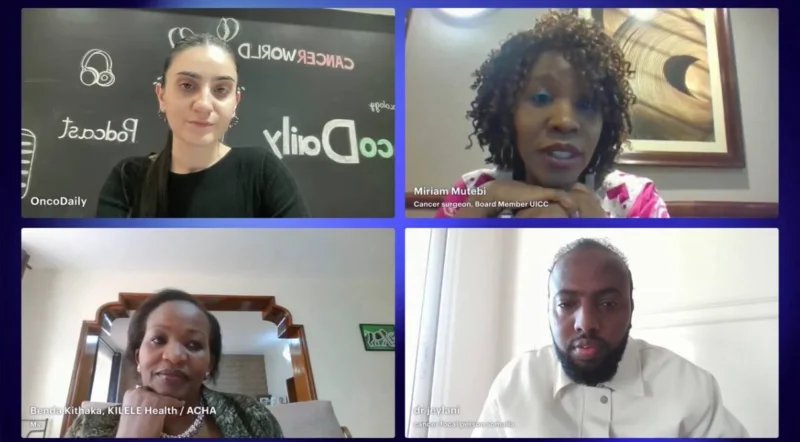
Together, this session underscored that effective cancer control in Africa requires community engagement, policy leadership, culturally sensitive care, and regional collaboration—working in parallel, not isolation.
Judith Mwansa-Kambafwile (South Africa), Senior Epidemiologist at the National Cancer Registry and Researcher at the University of the Witwatersrand School of Public Health, highlighted the critical role of cancer registration in effective cancer control.
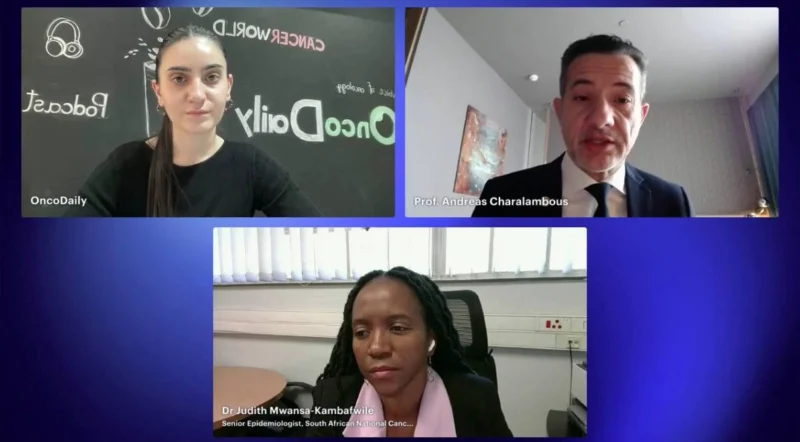
She explained that in South Africa, the cancer registry historically relied primarily on pathology-based reporting, limiting completeness and timeliness. While important progress has been made, current reporting still occurs with an approximately two-year delay, falling short of real-time surveillance needs.
Dr. Mwansa-Kambafwile described early “baby steps” toward integrating AI tools into cancer registration, with the goal of accelerating case capture, improving data linkage, and moving closer to near–real-time reporting. She emphasized that stronger engagement with AI is essential to modernize registries and reduce delays.She also highlighted persistent gaps in mortality data, underscoring that without accurate survival and mortality information, national cancer planning remains incomplete.
Andreas Charalambous (Cyprus), Chair of the Department of Nursing at Cyprus University of Technology and Immediate Past President of the European Cancer Organisation, highlighted how digital training programs are being delivered to oncology professionals across Europe, expanding access to education beyond geographic boundaries.
He emphasized that a multidisciplinary approach—integrating nurses, physicians, researchers, and allied health professionals—is essential for high-quality oncology and palliative care. In addition, he stressed the importance of robust cancer registries, noting that reliable data systems are critical for planning care, evaluating outcomes, and supporting research and policy decisions.
Andre Ilbawi (USA), Technical Lead for Cancer Control at the World Health Organization, opened a session during OncoThon 2026 with a powerful reminder that cancer knows no boundaries.
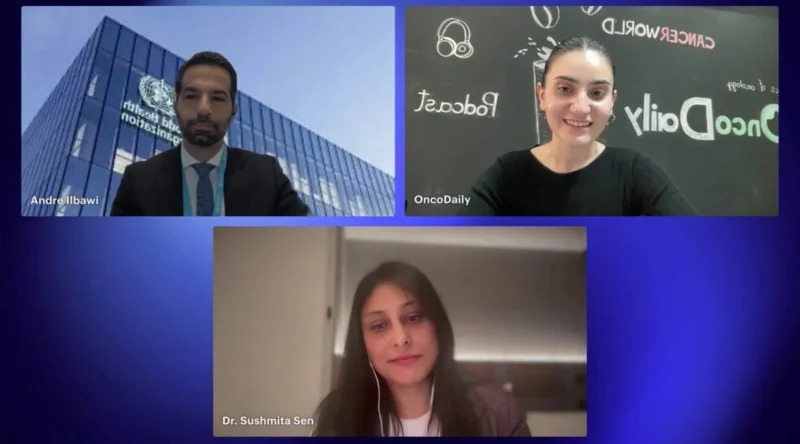
He emphasized that while cancer affects every country, access to cancer care varies dramatically, and that quality cancer care must never be a luxury. Dr. Ilbawi highlighted the importance of integrated cancer services, including advanced treatments such as stem cell transplantation, which require strong partnerships between clinicians, researchers, governments, and global institutions.
His central message was clear and values-driven: every person has a fundamental right to timely, high-quality cancer care, regardless of geography or income level—a principle that must guide global cancer control efforts moving forward.
Sushmita Sen (India), Global Medical Scientific Alliances in Oncology and Hematology at Roche, reflected on a career that began in research and has spanned some of oncology’s most transformative breakthroughs.She noted that the field has witnessed the approval of CAR-T cell therapy, yet more than a decade later, access remains limited, with many patients still unable to benefit. Her message was clear: innovation alone is not enough—there is no true innovation if it cannot be implemented.
Dr. Sen emphasized that partnerships are the key to closing this gap, calling for closer integration between physicians, nurses, researchers, industry, and health systems to discuss not only discovery, but how to implement innovation in real-world settings.
Annet Nakaganda (Uganda), Director of Research, Innovation, and Education at the Ananda Centre for Cancer Research (ACCR), shared a deeply personal perspective on the cancer burden in Uganda and the power of hope in science.
Drawing from her time working at the cancer institute, she described how many patients arrive late to care, often after long delays. She recalled a patient previously enrolled in a clinical trial who continued to ask about research opportunities—not out of privilege, but out of hope that science could offer a chance to live. That experience shaped her conviction that patients do not give up on science, even when systems fail them.
Recognizing that late presentation remains a major challenge in Uganda, Dr. Nakaganda explained how this realization led her toward public health, with a focus on prevention, early engagement, and community-level pathways to reduce cancer burden before treatment is needed.
Her message highlighted that research, prevention, and trust in science must go hand in hand to change cancer outcomes in resource-limited settings.
Monique Bareham (Australia) Leading Australian Lymphoedema Patient Advocate
Candidate, Master in Health and Clinical Research (Flinders University), Health Performance Council South Australia, Parliamentary Friends of Lymphoedema Consumer Advisor , Wounds Australia Consumer Advisory Group Chair shared a powerful, deeply personal story of life after cancer treatment and why survivorship must not be overlooked.
She acknowledged that Australia has strong funding and awareness efforts in cancer care, yet emphasized that inequities in access to treatment and rehabilitation still exist. Diagnosed during a highly active period of her life, she underwent breast-conserving surgery and hoped to become a mother, but described how treatment left her physically and emotionally depleted. Fatigue, lymphoedema, financial pressure, and the breakdown of her marriage followed—illustrating that survival often comes with lasting consequences.
While grateful to be alive, she stressed that survivors are frequently neglected once treatment ends, and that post-treatment rehabilitation and support are often insufficient and poorly targeted. This experience led her to become a patient advocate, dedicated to helping others rebuild their lives, find a new purpose, and return to society with dignity.
Her message was clear: equitable cancer care must include survivorship, not only treatment—and systems must do more to support life after cancer.
More OncoThon 2026 highlights coming soon.