During OncoThon 2026, global perspectives in pediatric and global oncology were shared by Scott Howard, Anna Avagyan, Dilyara Kaidarova, Hiba Al-Tarrah, Ching-Tien Peng, Biniyam Tefera Deressa, and Mahmoud Hammad, each highlighting how diagnosis, access, systems, survivorship, collaboration, and data-driven policy shape the future of equitable cancer care worldwide.
Scott Howard (USA/Spain/Armenia) and Anna Avagyan (Armenia) led a powerful, practical conversation on diagnosis, access, and system-level solutions.
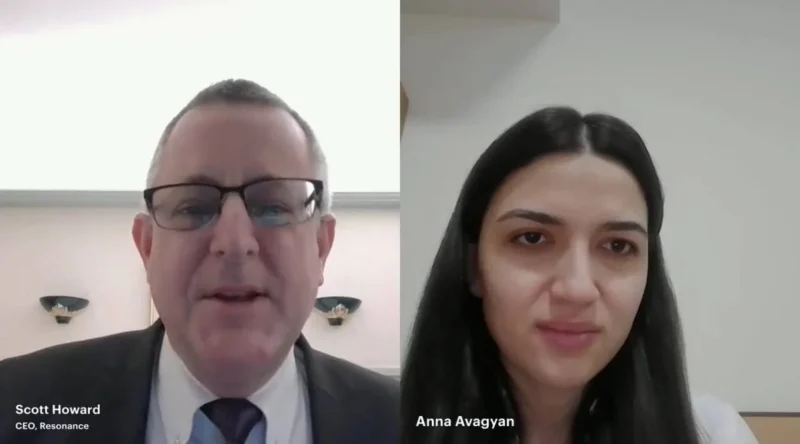
Dr. Howard emphasized that childhood cancer is more common in LMICs, largely because children represent a greater proportion of the population in these settings. Yet the number one barrier remains failure to achieve a timely and accurate diagnosis. Without diagnosis, cure is impossible. However, he stressed that current numbers remain uncertain, as many LMICs still lack reliable cancer registries.
Dr. Avagyan reinforced that LMICs are not a single, uniform group—each country faces distinct challenges and requires context-specific solutions. She underscored the importance of correct diagnosis, access to treatment, and financial protection for families, drawing from Armenia’s experience. She shared how the City of Smile Foundation plays a critical role by covering the cost of childhood cancer care, and how international support mechanisms such as ACT for Children have strengthened national capacity.
During OncoThon 2026, Dilyara Kaidarova (Kazakhstan), President of the Kazakhstan Cancer Society and First Vice-Rector of Asfendiyarov Kazakh National Medical University, shared how structured national planning and academic leadership have transformed cancer care in Kazakhstan.
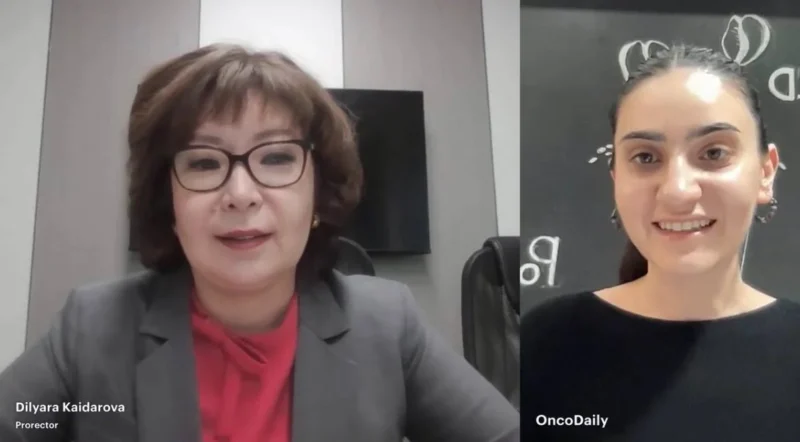
Prof. Kaidarova emphasized the importance of geographic equity in access, noting that because Kazakhstan is a vast country, every region now has an oncology clinic, reducing disparities between urban and remote populations.
She also discussed major advances in hematopoietic stem cell transplantation, describing the establishment of a national stem cell transplant program. Through this initiative, Kazakh specialists collaborate closely with international experts, strengthening local expertise and ensuring high-quality care.
Hiba Al-Tarrah (Saudi Arabia), Director of Quality Improvement and Consultant Pediatric Hematologist-Oncologist at King Fahad Specialist Hospital, shared how Saudi Arabia has built strong, highly specialized pediatric oncology centers, while also outlining the next priorities for progress.
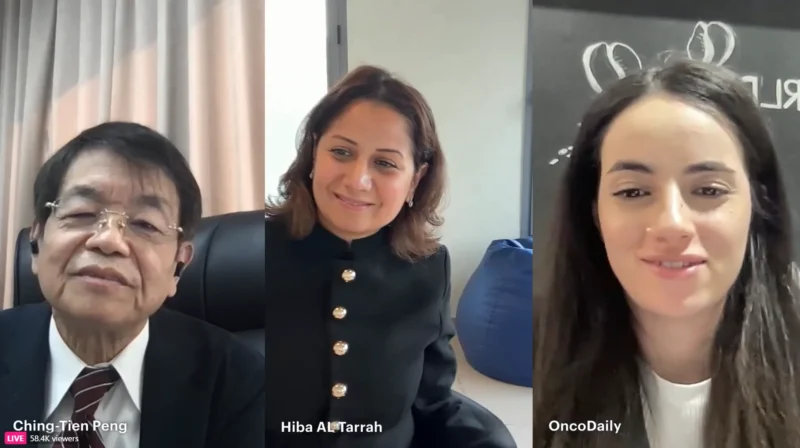
She highlighted that the country now has well-developed infrastructure and specialized centers, which were not always available in the past and previously represented a major barrier to care. While infrastructure has improved significantly, she emphasized that barriers are not only financial.
A key focus of her talk was the need to better integrate patients into clinical trials and drug development, ensuring access to innovation and contributing to global research efforts.
Dr. Al-Tarrah placed strong emphasis on survivorship care, reminding the audience that curing cancer is not the end of the journey. Many survivors face long-term consequences, including endocrine disorders and other late effects, after years of intensive treatment during critical periods of growth and development.
She stressed that mindset and time-related barriers now play a larger role than infrastructure alone. Addressing survivorship means recognizing what patients lose during treatment—not only physically, but socially, emotionally, and developmentally—and building systems that support them long after therapy ends.
Ching-Tien Peng (Taiwan), Professor of Pediatric Hematology-Oncology at China Medical University Children’s Hospital and SIOP Asia Ambassador, presented a concise overview of how national coordination, advanced therapies, and universal health coverage have shaped pediatric cancer outcomes in Taiwan.
He noted that Taiwan diagnoses around 500 new pediatric cancer cases annually, all managed in specialized national centers. Long-term outcomes are strong, with overall survival approaching 80%, and even higher in several disease entities. Standardized, risk-adapted protocols developed through TPOG ensure consistency of care across the country, with MRD monitoring integrated for selected diseases such as ALL and AML to guide treatment intensification or de-escalation.
Prof. Peng highlighted Taiwan’s national experience in hematopoietic stem cell transplantation, with more than 2,200 pediatric HSCTs performed and a 5-year overall survival of approximately 85%. Outcomes have improved through better infection control, GVHD management, and access to donors via the Tzu Chi stem cell registry,which provides strong matching rates for Taiwanese patients.
He also discussed relapse management after allogeneic HSCT, including the use of donor lymphocyte infusions, immune modulation strategies, and careful balancing of graft-versus-leukemia effects against GVHD risk.
A key focus was the integration of CAR-T therapy, which began nationally in November 2023 for relapsed or refractory B-ALL in patients under 26 years. CAR-T delivery is restricted to certified centers, with strict national regulation and close monitoring of toxicities. CRS and neurotoxicity are reported as manageable with trained teams, and CAR-T is often used to achieve MRD negativity, followed by HSCT when appropriate.
Biniyam Tefera Deressa (Ethiopia), Clinical Oncologist, Associate Professor, and UICC Young Leader, offered a powerful and honest perspective on the real-world barriers to cancer care delivery in Ethiopia.
He emphasized that Ethiopia is a large country, and many cancer centers are geographically distant from where patients live. For many families, simply reaching a hospital requires long, exhausting journeys—often multiple times—before treatment can even begin.
Once patients arrive, overcrowded hospitals and long waiting lines further delay care, adding to physical and emotional exhaustion. Dr. Deressa noted that fear of chemotherapy remains common, shaped by limited health literacy, late presentation, and difficult prior experiences shared within communities.
As a result, many patients turn to traditional treatments, which feel more familiar, accessible, and culturally trusted—especially when modern healthcare facilities are difficult to reach or perceived as overwhelming.
His message underscored that improving outcomes in such settings is not only about introducing new drugs, but about bringing care closer to patients, reducing system burden, addressing fear and misconceptions, and building trust through accessible, patient-centered cancer services.
This session highlighted why bridging gaps in cancer care requires infrastructure, education, and cultural understanding—together.
Dr Mahmoud Hammad Head of Hematology and BMT Gustave Roussy International Egypt , Prof . of Pediatric Hem/Onc National cancer Institute, Cairo University, Chair Education and Training SIOP Africa, highlighted Egypt as a regional example, where cancer care is largely delivered through university and Ministry of Health hospitals. In pediatric oncology, treatment costs are covered by insurance, and children have reliable access to essential cancer medications, demonstrating how national commitment can reduce financial barriers to care.
A major focus of his talk was the critical role of cancer registries. He noted that while significant gaps have historically existed, recent implementation of a national ID system has transformed data collection. The implementation will enabled medical specialists to move beyond hospital-based registries toward population-based cancer registries, improving accuracy, coverage, and planning capacity.
He emphasized that cancer control is impossible without data, and that registry development is a cornerstone of national cancer policy. Egypt is working toward a fully integrated national cancer registry by 2030, a step expected to strengthen prevention strategies, early detection, and resource allocation.
Highlighted that while stem cell transplantation is available in Egypt with 50% government cost coverage, centralization in the capital remains a major barrier—and that digital registries could enable remote post-transplant care and reduce the need for repeated travel.