





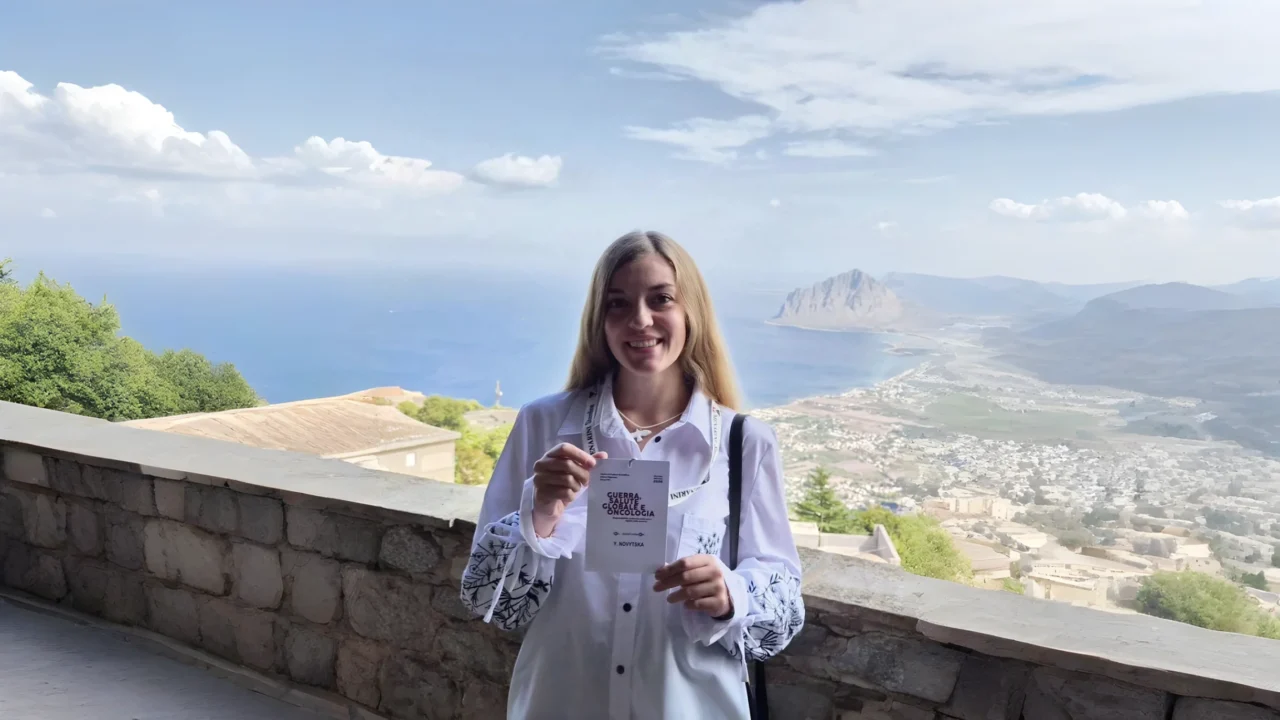
Yuliia Novytska, Oncologist at oncoHUB, shared on LinkedIn:
“Clinical trials in Ukraine during wartime
On 18-19 September, I had the honour of speaking at ‘Ethics in Oncology Days’ in Erice, Italy, organised by AIOM Associazione Italiana di Oncologia Medica, about the impact of the war on clinical trials in Ukraine.
Before the full-scale invasion, Ukraine was an important destination for international clinical trials. Between 2011 and 2021, the country hosted more than 2,500 clinical trials, including 507 oncology studies. For many patients, clinical trial was a lifeline that provided access to innovative treatments that were otherwise unavailable or unaffordable.
Then, in February 2022, everything changed:
Some hospitals were damaged, several cancer centres were lost due to occupation, patients and healthcare professionals were displaced, and then power outages, disrupted logistical ways and direct strikes on drugs storages severely affected cancer care. Moreover, we’ll face later diagnosis, increased number of patients and more advanced stages of oncological diseases.
Clinical trials were initially interrupted. But the Ukrainian oncology community adapted.
Staff relocated to safer regions, patients were transferred between sites, generators and satellite communication helped maintain essential operations, and rail and road transportation replaced disrupted air logistics.
Importantly, war does not automatically make clinical research impossible – but it fundamentally changes the conditions in which research must be conducted.
At the same time, the number of new oncology trials remains very limited: 36 new oncology clinical trials have been initiated in Ukraine since the beginning of the full-scale war-compared with hundreds before 2022.
For Ukraine, maintaining clinical research means more than access to innovative treatments today. It means preserving the scientific capacity needed to rebuild cancer care tomorrow.
I am deeply grateful to our European colleagues and institutions for supporting Ukrainian patients, researchers and healthcare professionals throughout these years.
And I am proud of the Ukrainian oncology community oncoHUB, which I represented at this event, which continues to work, learn, collaborate and build – even when the future can change in a moment.
Thanks to AIOM Associazione Italiana di Oncologia Medica and Massimo Di Maio for the invitation and for creating a space for this important conversation.
We continue to stand, work and collaborate.”
Other posts featuring Yuliia Novytska on OncoDaily.