Vivek Subbiah, Director of Early Phase Drug Development Program at NYU Langone Health, shared on LinkedIn:
“Which clinical specialties are shielded from AI, and which are exposed?
New, NEJM AI: the authors measure how much of each specialty’s work requires in-person physical interaction and what that means for AI’s reach into practice.”
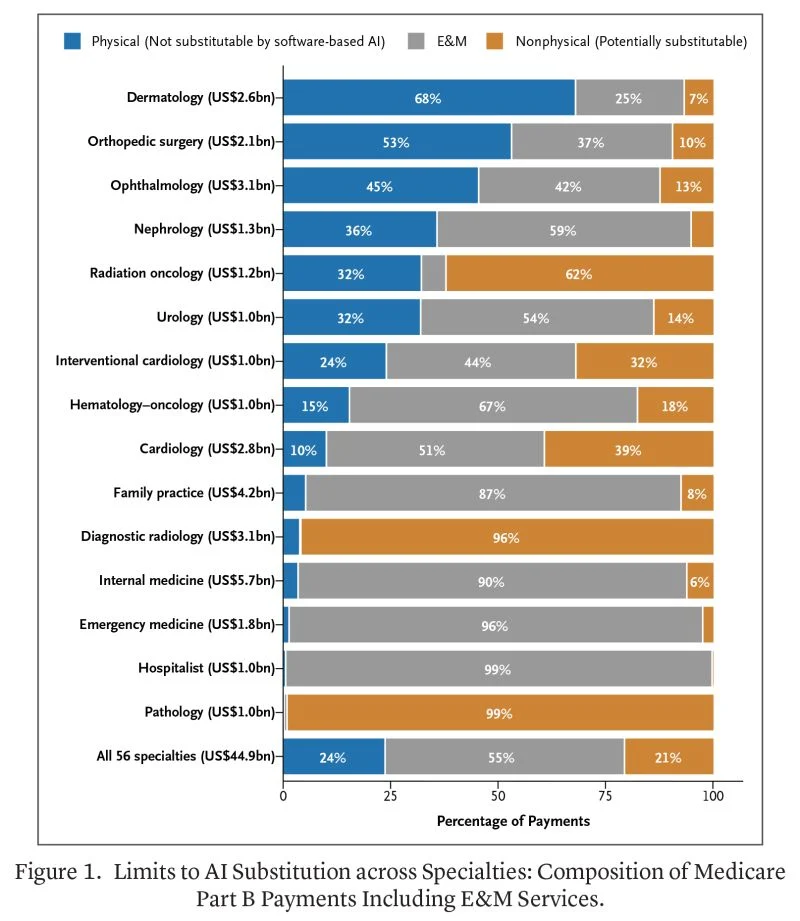
Title: Physical Limits to AI Substitution across Physician Specialties – Implications for the Physician Workforce
Authors: Dan Zeltzer, Tyler Tam, Benji Bhattacharya, Victoria Udalova, Maria Polyakova
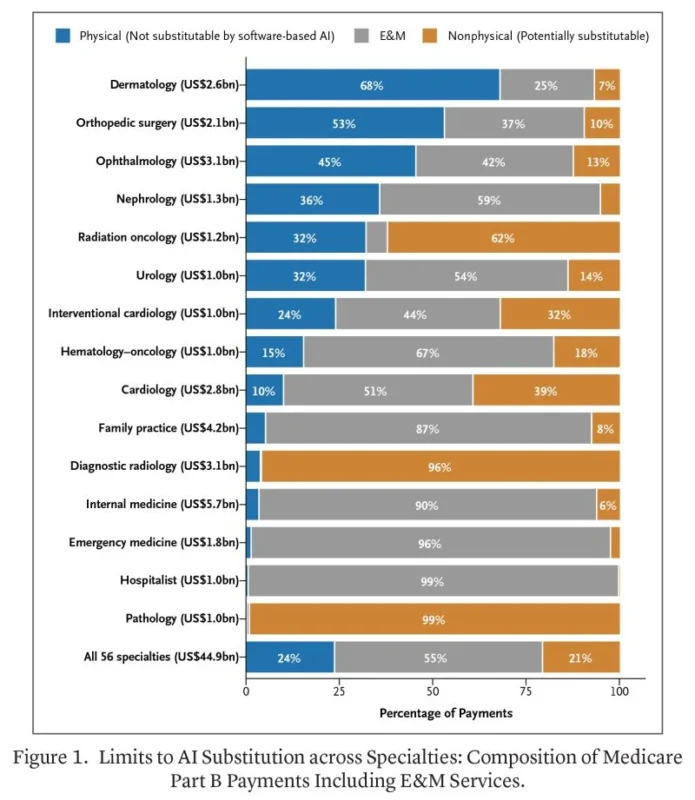
- Most Shielded (Blue): Specialties requiring physical intervention – such as dermatology (68%), orthopedic surgery (53%), and ophthalmology (45%) – are the least susceptible to substitution by software-based AI.
- Most Exposed (Orange): Specialties involving nonphysical work – particularly pathology (99%), diagnostic radiology (96%), and radiation oncology (62%) – have the highest potential for AI substitution.
- Overall Picture: Across all 56 specialties, 24% of work is physical (not substitutable), 21% is nonphysical (potentially substitutable), and 55% consists of Evaluation and Management (E&M) services.
Other articles about artifical intelligence on OncoDaily.