





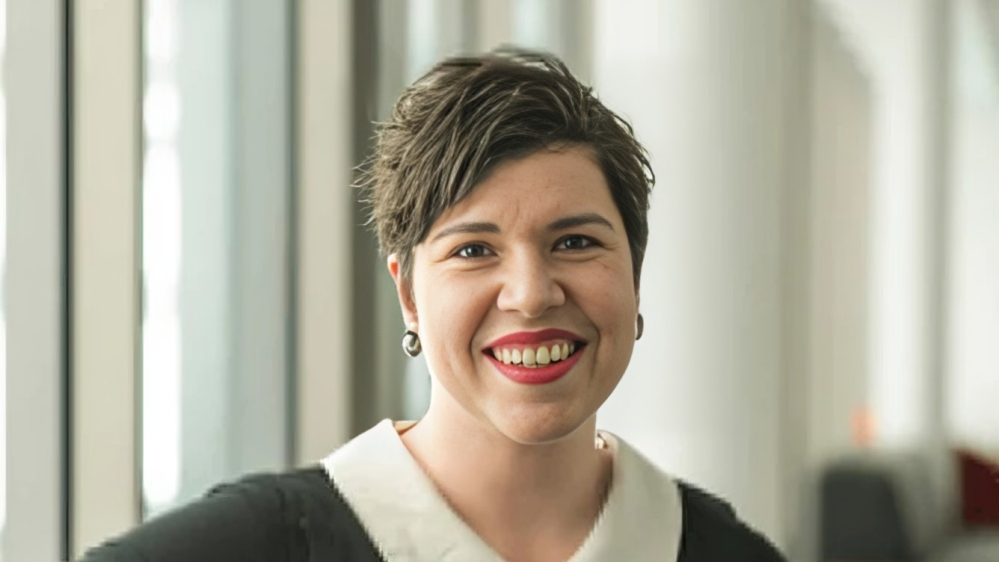
Ursula Sansom-Daly, Director of Behavioural Sciences Unit at UNSW Sydney, shared Journal of Cancer Survivorship’s post on LinkedIn, adding:
“Over a decade ago, when I first started working with adolescents plus young adults living with and beyond cancer – and running psychological support groups for young people in the early months after completing treatment in our Recapture Life program – I remember being struck by how differently young people felt about one word:
‘SURVIVOR’
Fast forward to 2026, and the question of language is as important as ever. For more and more young people, survivorship is not simple, straightforward, or binary: post-treatment some live long-term with a guarded prognosis; for others, cancer treatment is chronic as they continue on taking novel therapies with no foreseeable end date in sight. Are they ‘survivors’ too?
This research was borne of the experiences of so many young people, and further shaped by the lived experiences of 3 of our authorship team. I’m grateful to every one of them for their courage in sharing their perspectives on life after cancer.
In the quest to design person-centred survivorship care.”
Quoting Journal of Cancer Survivorship’s post:
“What’s in a Name? Exploring Cancer Identity Among Adolescents and Young Adults
How do adolescents and young adults (AYAs) with a history of cancer choose to describe themselves? A new study highlights the diversity of cancer-related identities and underscores the importance of using language that reflects individual experiences.
Key Findings
- AYAs with a cancer history were more likely to identify with the term ‘survivor’ compared with peers who had experienced other serious illnesses.
- Those who viewed cancer as a more central part of their identity were more likely to adopt the “survivor” label.
- The greatest preference for the term “survivor” occurred shortly after treatment, with 35% selecting it as their preferred identity.
- Over the following 12 months, identity preferences became increasingly diverse, reflecting the evolving nature of life beyond cancer.
- Importantly, most AYAs did not prefer the term ‘survivor,’ demonstrating that no single label captures the experiences of all young people affected by cancer.
Why It Matters
As survivorship care continues to evolve, understanding how young people perceive and define themselves is essential. The language used by healthcare professionals, researchers, advocacy organizations, and society can influence identity, adjustment, and well-being throughout the cancer journey and beyond.
These findings reinforce the importance of person-centered care that respects individual preferences and recognizes that cancer experiences—and identities—are not one-size-fits-all.
This research invites a broader conversation about how we talk about cancer survivorship and how language can empower young people to define their own stories.”
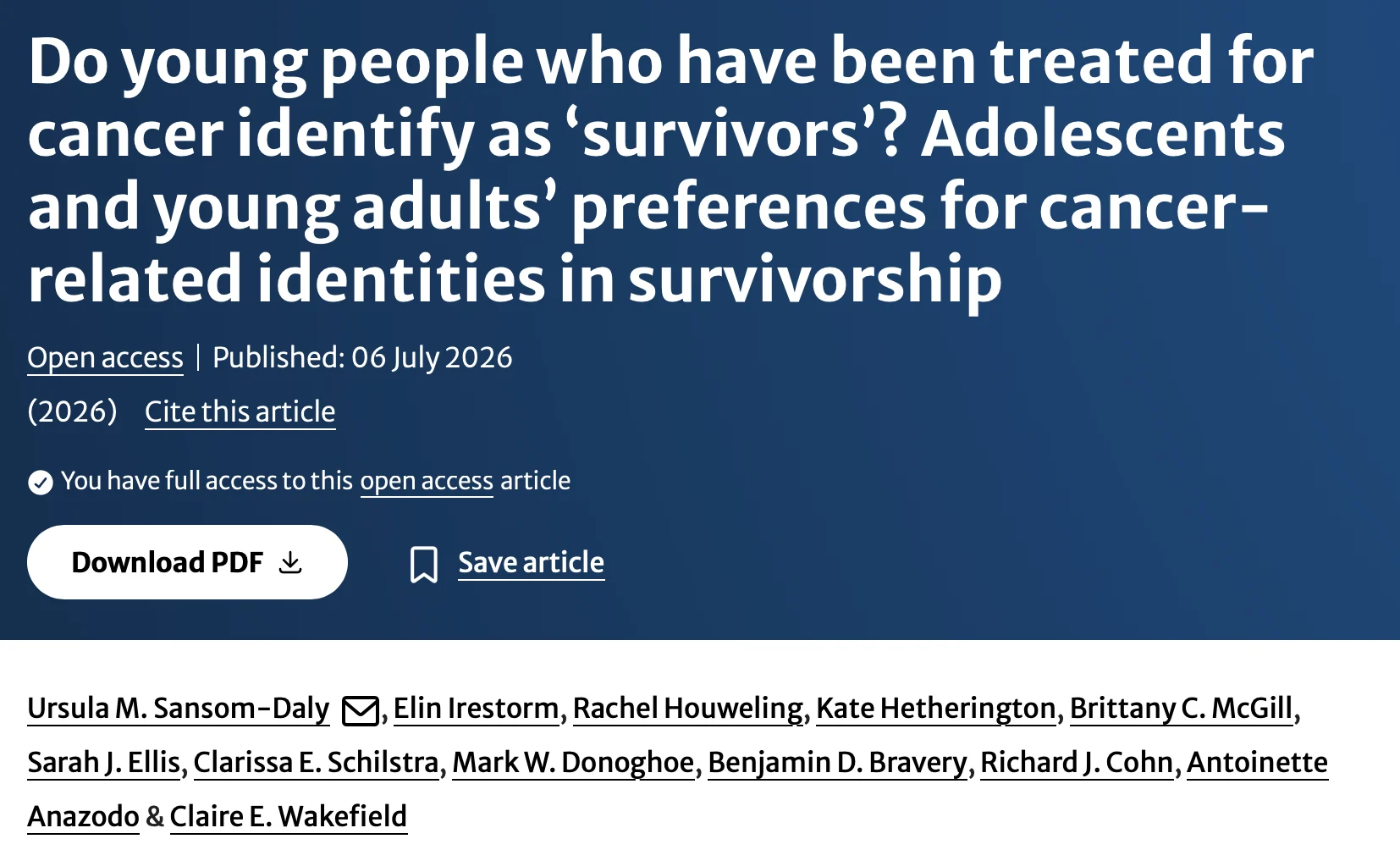
Title: Do young people who have been treated for cancer identify as ‘survivors’? Adolescents and young adults’ preferences for cancer-related identities in survivorship
Authors: Ursula M. Sansom-Daly, Elin Irestorm, Rachel Houweling, Kate Hetherington, Brittany C. McGill, Sarah J. Ellis, Clarissa E. Schilstra, Mark W. Donoghoe, Benjamin D. Bravery, Richard J. Cohn, Antoinette Anazodo, Claire E. Wakefield
Read the Full Article on Journal of Cancer Survivorship
Other posts featuring Ursula Sansom-Daly on OncoDaily.