





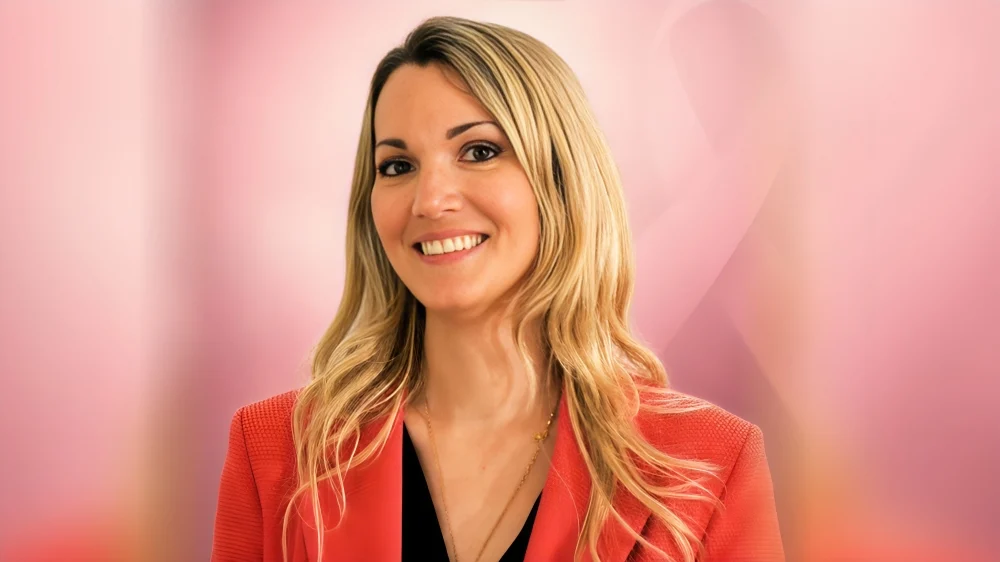
Susanna Polotto, Consultant Oncoplastic Breast Surgeon at Chesterfield Royal Hospital NHS Foundation Trust, Honorary Assistant Professor at the University of Nottingham, invites the cancer surgery community to take part in an international survey exploring what meaningful mentorship should look like and how we can build more accessible, inclusive opportunities for surgeons at every stage of their careers.
For many surgeons, there is someone who changed the course of their career.
A mentor who opened a door. Someone who encouraged them to pursue an opportunity they did not believe was within reach. Someone who taught them not only how to operate, but how to become a surgeon. Someone they could turn to when training became difficult, a career decision felt overwhelming, or a challenging professional environment seemed impossible to navigate.
But not everyone has that person.
And even when mentorship exists, does it truly respond to the realities of a modern career in cancer surgery?
These questions sit at the heart of our work in the Surgical Mentorship Working Group (WG4) within COST Action CA24158 DISSECT – Disparities in Surgical Specialisation and Education in Cancer Training.
Together with our international WG4 team, I am inviting colleagues across countries, specialties and career stages to help answer a fundamental question:
What should meaningful mentorship in cancer surgery actually look like?
Our starting point is the DISSECT Surgical Mentorship Survey, designed to capture experiences and priorities across different settings and from both sides of the mentoring relationship.
The ambition, however, goes far beyond collecting responses. We want to turn what we learn into practical resources, adaptable approaches and stronger connections between mentors and mentees across institutions and borders.
The principle is simple: listen first, then build.
Beyond Technical Training
A career in cancer surgery requires far more than operative expertise.
It also demands complex oncological decision-making, communication under uncertainty, effective multidisciplinary working, teaching, research, leadership and continuous adaptation to new evidence and technology.
Alongside these demands come decisions about fellowships, academic pathways, international opportunities and career progression, as well as periods of uncertainty, stress or burnout. Some colleagues may also face exclusion, discrimination, bullying or difficult professional relationships – experiences that can be hard to discuss openly and that formal training structures may not fully address.
These needs can be particularly complex in surgical oncology, which sits at the intersection of surgery, oncology, multidisciplinary care, research and rapidly evolving technology.
This is where mentorship can be transformative.
Effective mentorship should not reproduce a senior colleague’s career in someone else. It should help individuals identify their strengths, clarify their goals, recognise opportunities, develop confidence and build a professional path that reflects their own circumstances and ambitions.
It must also be tailored.
The person best placed to guide technical development may not be the right mentor for research, leadership, wellbeing or career transitions. One-to-one relationships remain valuable, but the future may also lie in broader mentoring networks, giving people access to different expertise and perspectives at different moments in their careers.
Mentorship is not a substitute for formal supervision or institutional responsibility, particularly when bullying, discrimination or unsafe working environments are involved. It can, however, provide trusted guidance, perspective and connection when an individual might otherwise feel isolated.
When Mentorship Becomes an Equity Issue
Access to excellent mentorship is uneven.
Some colleagues work in institutions with established academic pathways, strong international networks and several potential mentors. Others are based in settings where specialist expertise, research support or senior professional connections are limited.
Geography, resources, institutional culture, career stage and personal circumstances can all influence who finds guidance – and which opportunities become visible or achievable as a result.
If mentorship can shape confidence, progression and opportunity, unequal access can amplify existing disparities in training.
That is why this work sits naturally within DISSECT.
DISSECT is an international COST Action bringing together professionals across Europe and beyond to identify and address disparities in cancer surgery training. Within the Action, I lead the Surgical Mentorship Working Group (WG4), which focuses on developing sustainable approaches to clinical and technical growth, leadership, communication, research careers and professional wellbeing.
We are not trying to impose one rigid model across different countries, specialties and healthcare systems. We are seeking shared principles and practical tools that can be adapted to local contexts while remaining responsive to individual needs.
Before designing that model, we need to listen.
Asking the Community What it Needs
The DISSECT Surgical Mentorship Survey is anonymous and takes approximately 8-10 minutes to complete.
It aims to map current access to mentorship, identify unmet needs and barriers, understand existing initiatives, and inform the development of an adaptable framework and future mentor network.
We want to hear from people who have benefited from exceptional mentorship, because understanding what works is essential.
We equally need the perspectives of those who have never had access to a mentor, those whose mentoring relationships did not meet their needs, and experienced colleagues who already support others.
The questionnaire explores clinical and technical development, research, communication, leadership and career progression. It also addresses wellbeing and burnout, difficult professional relationships, bullying, exclusion, discrimination and inclusivity.
It asks practical questions too.
How should mentors and mentees be matched? Should specialty, career goals, language or geography matter? Should mentors receive training? What value could cross-border mentorship offer? Should one person be expected to meet every mentoring need, or would a broader network be more effective?
There may not be one model that works everywhere.
That is precisely why a wide range of perspectives matters.
From Listening to Action
The survey is not the endpoint.
Its findings will guide the next phase of the WG4 programme, including educational resources, practical tools, training and support for mentors, webinars, and the foundations of a future international network.
The vision is straightforward.
A trainee or early-career colleague working where particular expertise is unavailable should still be able to seek informed guidance.
Someone considering an academic or leadership pathway should be able to connect with people who understand it.
Experienced professionals who want to support the next generation should themselves have access to the preparation and tools needed to mentor well.
Where someone trains should not determine the quality of mentorship they can access. Whom they happen to know should not determine how far their potential can take them.
Mentorship cannot remove every structural disparity in cancer surgery training. It can, however, widen access to knowledge and opportunity, reduce professional isolation and help ensure that talent is not constrained by geography or existing connections.
Your Experience matters
Hundreds of colleagues have already contributed to the survey. But a project with international ambitions needs genuinely broad and diverse participation.
Stories of outstanding mentorship show us what should be preserved and reproduced.
Experiences of poor or absent support reveal where change is needed.
Perspectives from people and settings that may be underrepresented when educational initiatives are designed are especially important.
We do not want to build a mentorship programme and only then ask the community whether it works. We want the community to help us build it from the beginning.
Tell us what helped.
Tell us what was missing.
Tell us what you would need from a mentor now – and what you would want to offer as a mentor to somebody else.
Have your say in the future of mentorship in cancer surgery.
Be part of building it.
Complete the anonymous 8-10 minute survey: Take the survey
Learn more and share the initiative: Visit the Survey Hub
Learn more about COST Action CA24158 DISSECT: Visit the DISSECT website
About the Author
Susanna Polotto is a Consultant Oncoplastic Breast Surgeon at Chesterfield Royal Hospital NHS Foundation Trust and Honorary Assistant Professor at the University of Nottingham. She leads the Surgical Mentorship Working Group (WG4) of COST Action CA24158 DISSECT, represents the United Kingdom on the Action’s Management Committee, and serves on the European Breast Surgical Oncology Certification (BRESO) Executive Committee. Her work brings together clinical practice, surgical education and international collaboration to advance evidence-based mentorship and more equitable professional development in cancer surgery.
About Cost Action CA24158 DISSECT
DISSECT – Disparities in Surgical Specialisation and Education in Cancer Training – is COST Action CA24158, a multi-specialty international network bringing together surgeons and other stakeholders in cancer care across Europe and beyond. It aims to identify gaps and variations in cancer surgery training, strengthen knowledge exchange between high- and low-resource settings, and advance multidisciplinary learning, research capacity, mentorship and innovation – helping shape a new generation of cancer surgeons able to deliver more equitable, high-quality care and contribute to better patient outcomes.