





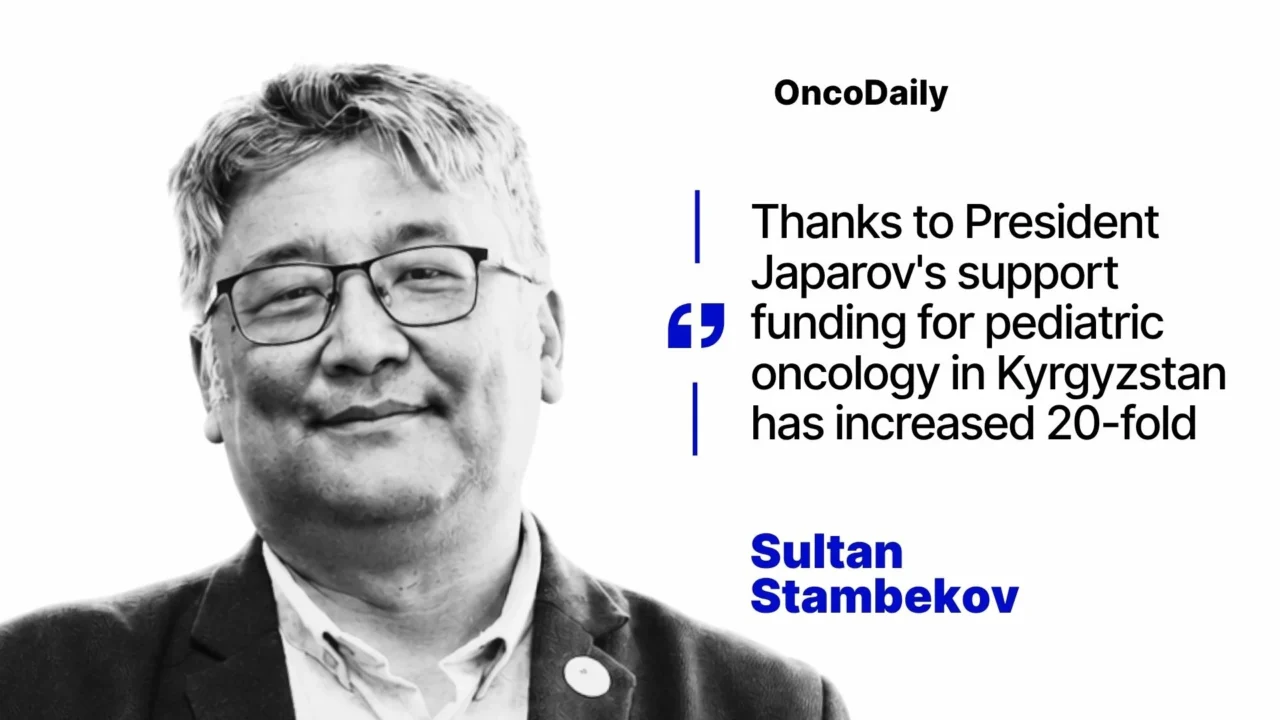
Sultan Stambekov, Kyrgyzstan’s Chief Paediatric Oncologist, shared on Facebook:
“Amazing news! It has finally happened!
Last year, we set ourselves an ambitious goal—to establish a comprehensive pediatric bone marrow transplantation program in Kyrgyzstan.
We had previously performed our first transplant, but we had to rely on equipment borrowed from our colleagues. We understood that without our own state-of-the-art technology, further development would not be possible.
At that point, I approached the As-Safa Charitable Foundation with a proposal to support this life-saving initiative. A single bone marrow transplant can cost up to US$100,000, and acquiring the necessary equipment requires a substantial investment.
We first met with the Foundation’s President, Ibrahim Malsagov, who listened carefully to our proposal. This was followed by a meeting with a sheikh from Kuwait, whose support was instrumental in securing approval for the project.
Today, I would like to express my sincere gratitude to the people of Kuwait. At a time when the world is facing many challenges, they found the opportunity to help the children of Kyrgyzstan by funding the purchase of this unique medical equipment.
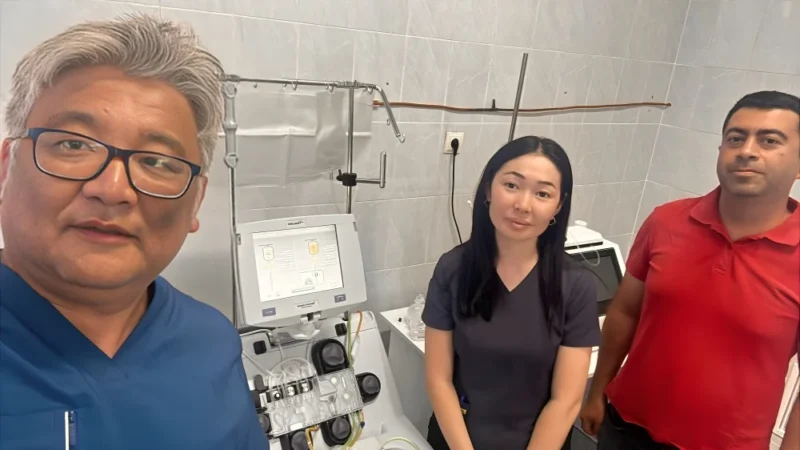
Our center now has:
- a state-of-the-art apheresis system from a leading global manufacturer;
- an extracorporeal photopheresis (ECP) system.
What does this mean in practice?
We can now perform bone marrow transplantation independently in Kyrgyzstan, without the need to seek equipment abroad.
But that is not all.
Extracorporeal photopheresis is an advanced treatment that plays a critical role in managing graft-versus-host disease (GVHD) following bone marrow transplantation. It is also widely used to treat chronic rejection after kidney, liver, heart, and lung transplantation, as well as a number of severe autoimmune diseases.
This represents a major step forward for our country’s healthcare system.
I would also like to answer a question that I am sure will appear in the comments: “Why was this funded by a charitable foundation rather than the government?”
Around the world—including in the United States and across Europe—charitable foundations are indispensable partners of public hospitals. These partnerships enable healthcare institutions to adopt cutting-edge technologies more rapidly and save more lives.
At the same time, one of the most important points must be acknowledged.
Over the past several years, thanks to the support of President Sadyr Japarov, funding for pediatric oncology in the Kyrgyz Republic has increased nearly twenty-fold. This has enabled us to strengthen pediatric oncology services, introduce new treatment approaches, and implement projects that once seemed beyond reach.
I would also like to express my special gratitude to First Lady Aigul Japarova, who has supported us in implementing three major initiatives. Her commitment to children with cancer has become an important part of the positive changes taking place today.
It is precisely this combination of government support, international partnerships, and philanthropic organizations that makes achievements like this possible.
Thank you to everyone who believed in us.
Thank you to everyone helping save the lives of children.
We will continue moving forward.”
Other article about pediatric oncology care in Kyrgyzstan on OncoDaily.