SPCC (Sharing Progress in Cancer Care) shared on LinkedIn:
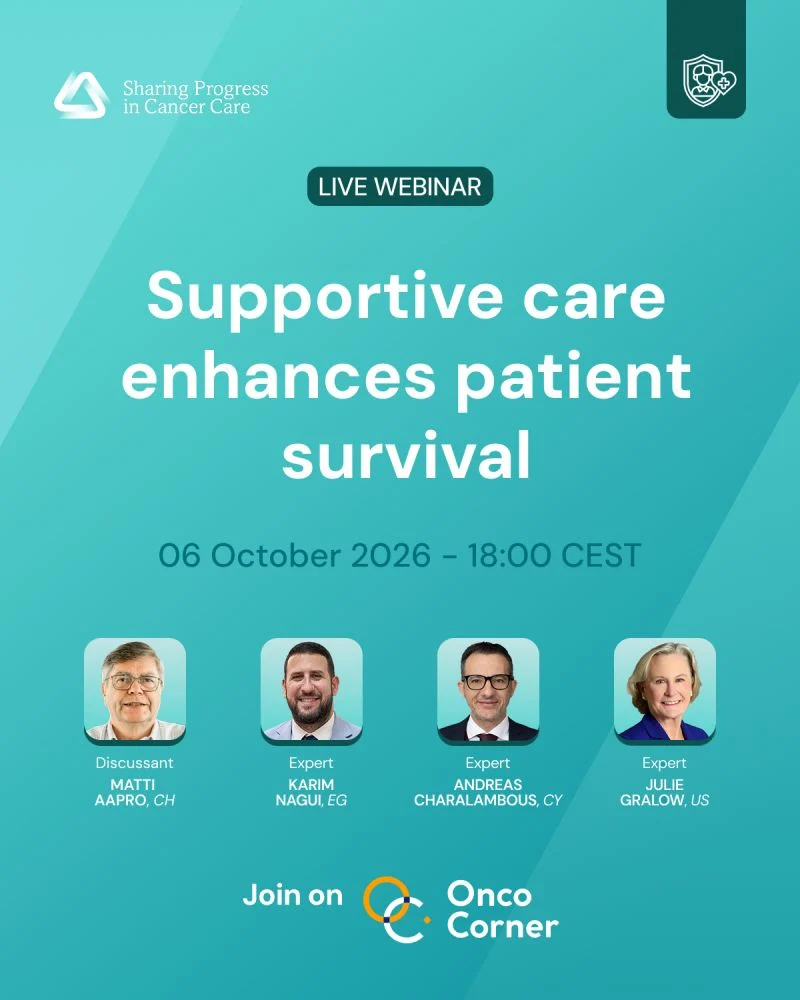
“Meet the multidisciplinary experts leading our upcoming discussion on integrative oncology and survival outcomes!
On Tuesday 6 October 2026, from 18:00 to 19:00 CEST, SPCC will launch a new session of its Corporate Programme on Integrative Oncology: ‘Supportive care enhances patient survival’.
Co-chaired by Matti Aapro and Karim Nagui, this live webinar brings together internationally recognised leaders to examine how personalized supportive care directly influences treatment efficacy and host biology.
Julie Gralow will explore the evidence behind exercise as a core therapeutic intervention, whilst Prof. Andreas Charalambous will address how integrating structured symptom management directly improves survival outcomes.
The presentations will be followed by an interactive Q&A session, giving participants the opportunity to engage directly with the faculty.
Participation is free of charge, but prior registration is mandatory.
Secure your place on OncoCorner: Supportive care enhances patient survival
This session is part of the SPCC Sustaining Corporate Programme 2026.
Sharing Progress in Cancer Care wishes to extend appreciation to its Sustaining Companies for providing unrestricted educational support to the following webinar.
Companies have no control over the session content or speakers.”
To which Andreas Charalambous, Chair Department of Nursing, Cyprus University of Technology at Cyprus University of Technology, added:
“It’s with great pleasure to participate in the SPCC (Sharing Progress in Cancer Care) on supportive care together with Matti Aapro, Julie Gralow and Karin Nagui.
In oncology, integrating structured symptom assessment measures such as pain, fatigue, nausea, dyspnea, neuropathy, psychological distress, nutritional status, and functional decline into routine cancer care enables earlier identification of treatment-related toxicities and disease-related complications.
It’s essential that such assessments are integrated early in the disease continuum and linked to standardized management protocols, to allow oncology teams to intervene promptly (also proactively) through medication adjustments, supportive therapies, nutritional interventions, rehabilitation, or specialist referrals.
This may reduce avoidable hospitalizations, treatment interruptions, dose reductions, and complications that compromise patients’ ability to continue therapy.
By supporting treatment adherence, functional status, quality of life, and tolerance of anticancer treatment, systematic symptom assessment and management can contribute to improved clinical outcomes and, in some settings, longer survival.
Join Us.”
Other articles about SPCC on OncoDaily.