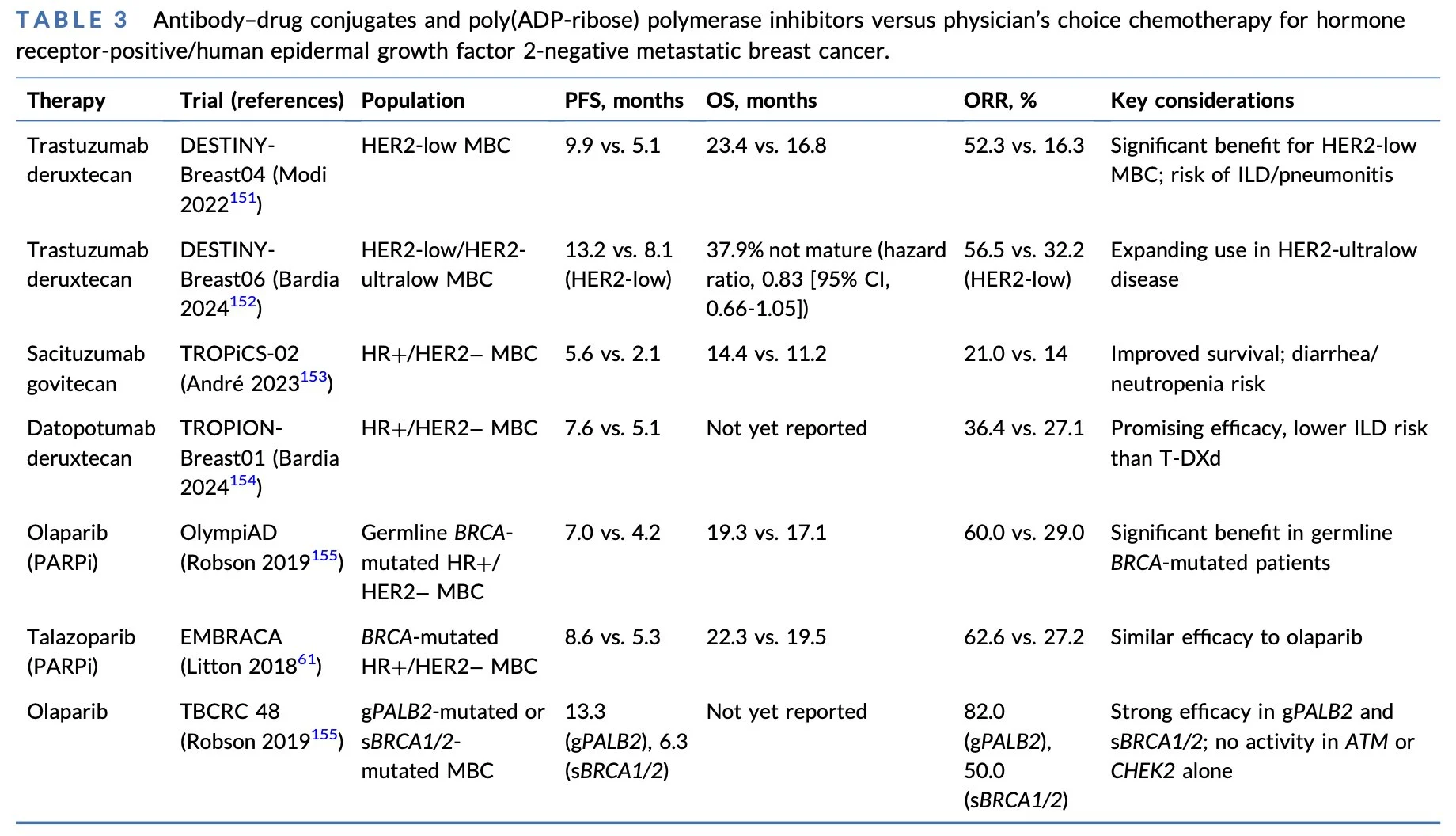
Sergio Cifuentes Canaval, Medical Oncologist at Las Américas Auna Clinic, shared a post on X about a recent article by Akshara Singareeka Raghavendra et al, published in CA: A Cancer Journal for Clinicians:
“Personalizing therapies over the course of hormone receptor–positive breast cancer
This review outlines the evolving treatment landscape of HR-positive breast cancer across disease stages, emphasizing dynamic therapeutic sequencing based on tumor biology, resistance mechanisms, and prior treatments.
Key biological concepts
- HR+ breast cancer is heterogeneous and evolves under treatment pressure
- Endocrine resistance arises via ESR1 mutations, PI3K/AKT/mTOR activation, CDK pathway dysregulation, and epigenetic changes
- Clonal evolution supports reassessment of biomarkers over time
Early-stage disease
- Adjuvant endocrine therapy remains the backbone
- CDK4/6 inhibitors (abemaciclib, ribociclib) improve invasive DFS in selected high-risk patients
- Germline BRCA status and emerging genomic tools may refine risk stratification
Metastatic setting
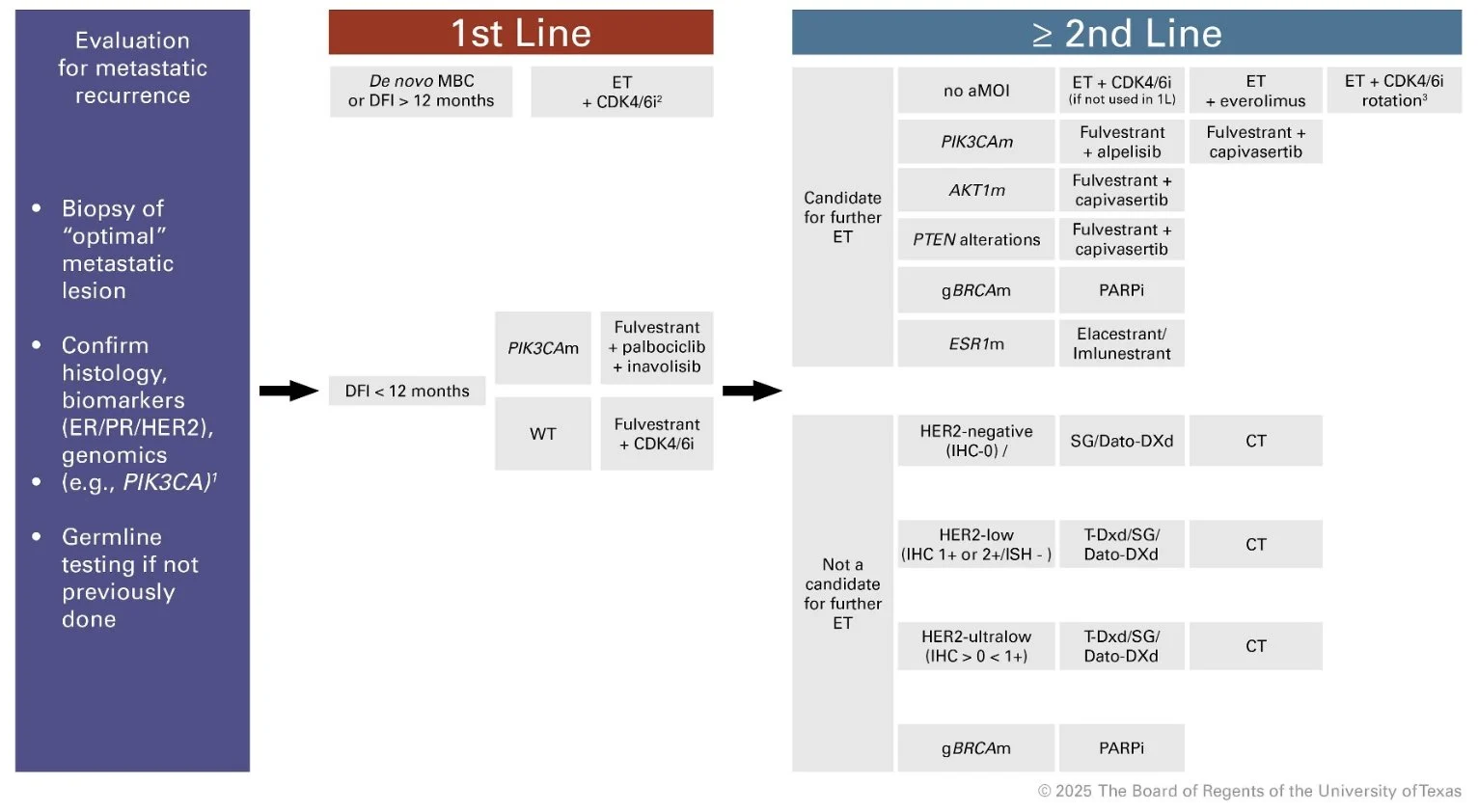
- First-line: endocrine therapy + CDK4/6 inhibitors is standard
- Subsequent lines incorporate:
– PI3K inhibitors (alpelisib) for PIK3CA-mutant tumors
– mTOR inhibition (everolimus)
– Oral SERDs for ESR1-mutant disease - Treatment choice depends on prior exposure, mutational profile, and disease kinetics
Treatment sequencing
- No fixed algorithm; optimal sequencing remains an unmet need
- Serial molecular testing (tissue or ctDNA) supports therapy adaptation
- Avoidance of overtreatment and preservation of endocrine sensitivity are key goals
Q: This apply for us in LATAM?”
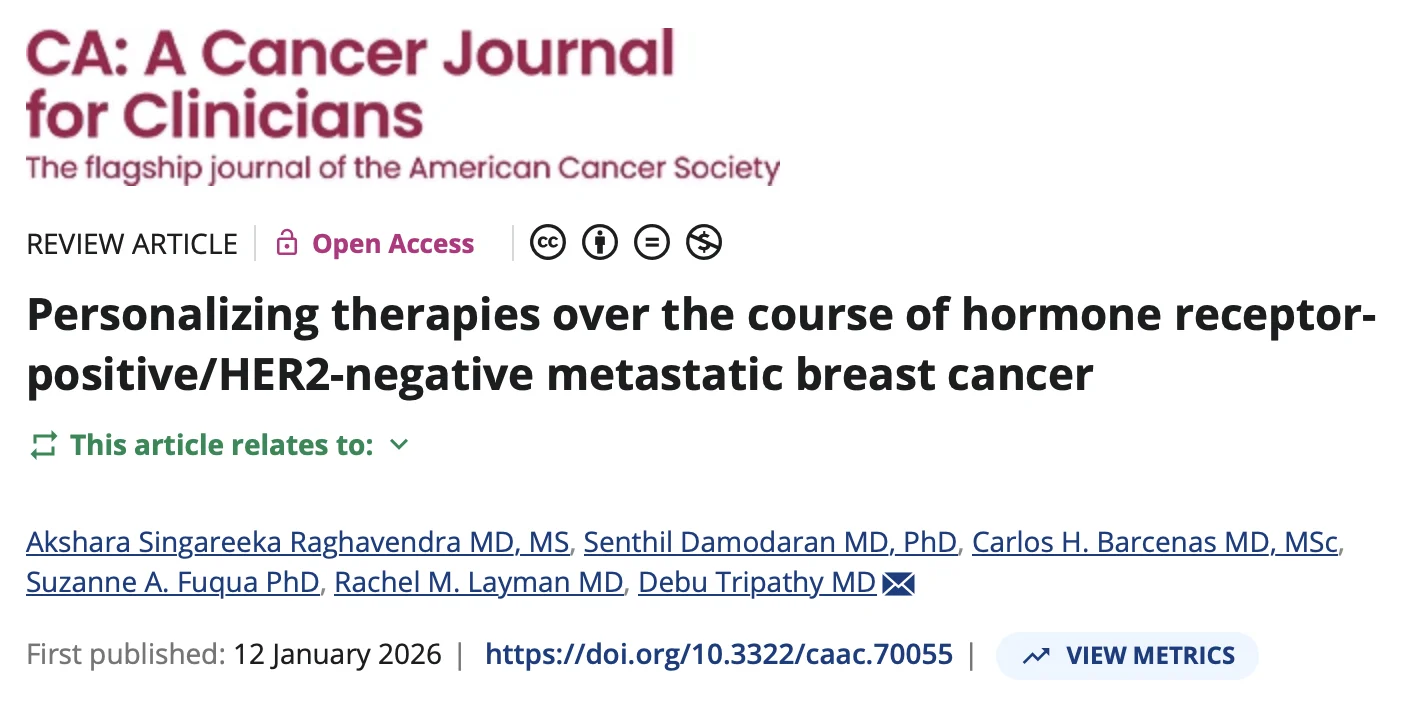
Title: Personalizing therapies over the course of hormone receptor-positive/HER2-negative metastatic breast cancer
Authors: Akshara Singareeka Raghavendra, Senthil Damodaran, Carlos H. Barcenas, Suzanne A. Fuqua, Rachel M. Layman, Debu Tripathy
Read the Full Article on CA: A Cancer Journal for Clinicians
More posts featuring Sergio Cifuentes Canaval.