





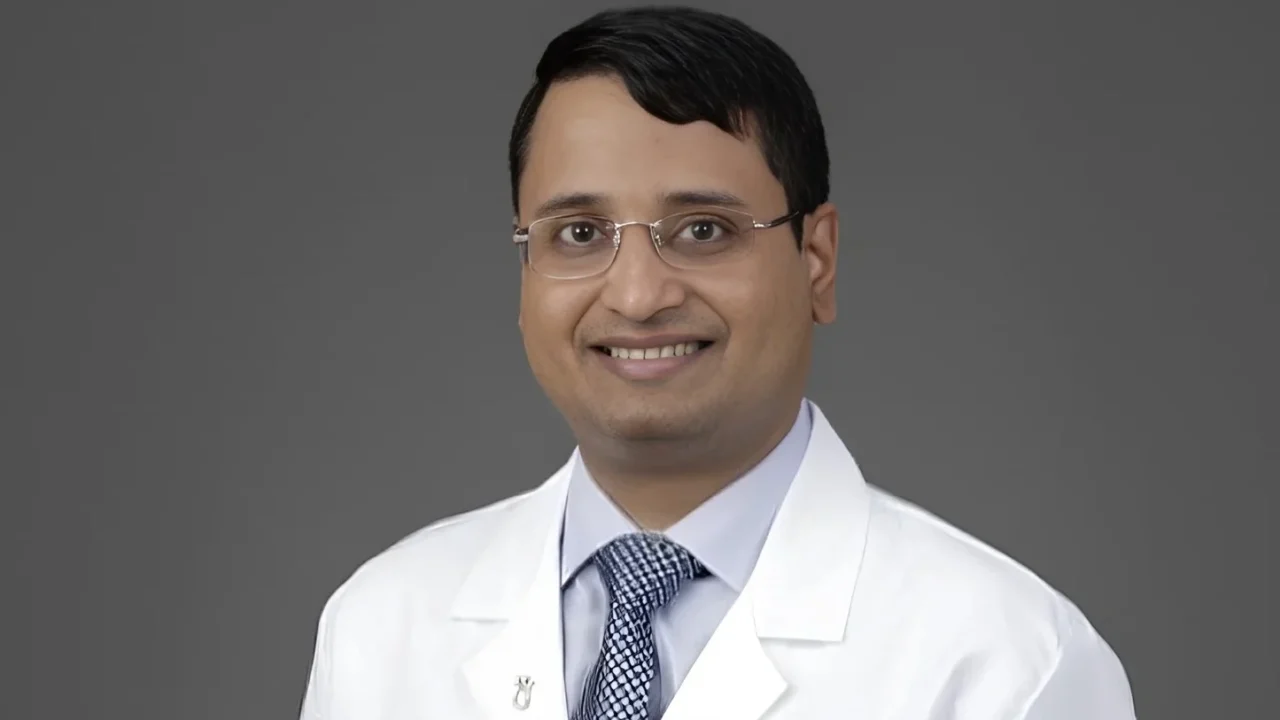
Sarbajit Mukherjee, Chief of GI Medical Oncology at Miami Cancer Institute and Co-Chair of GI Clinical Trial Working Group at Hoosier Cancer Research Network, shared on LinkedIn:
“CtDNA can tell us who is at risk. The next frontier is proving that it can tell us what to do next – and that acting on the result improves patient outcomes.
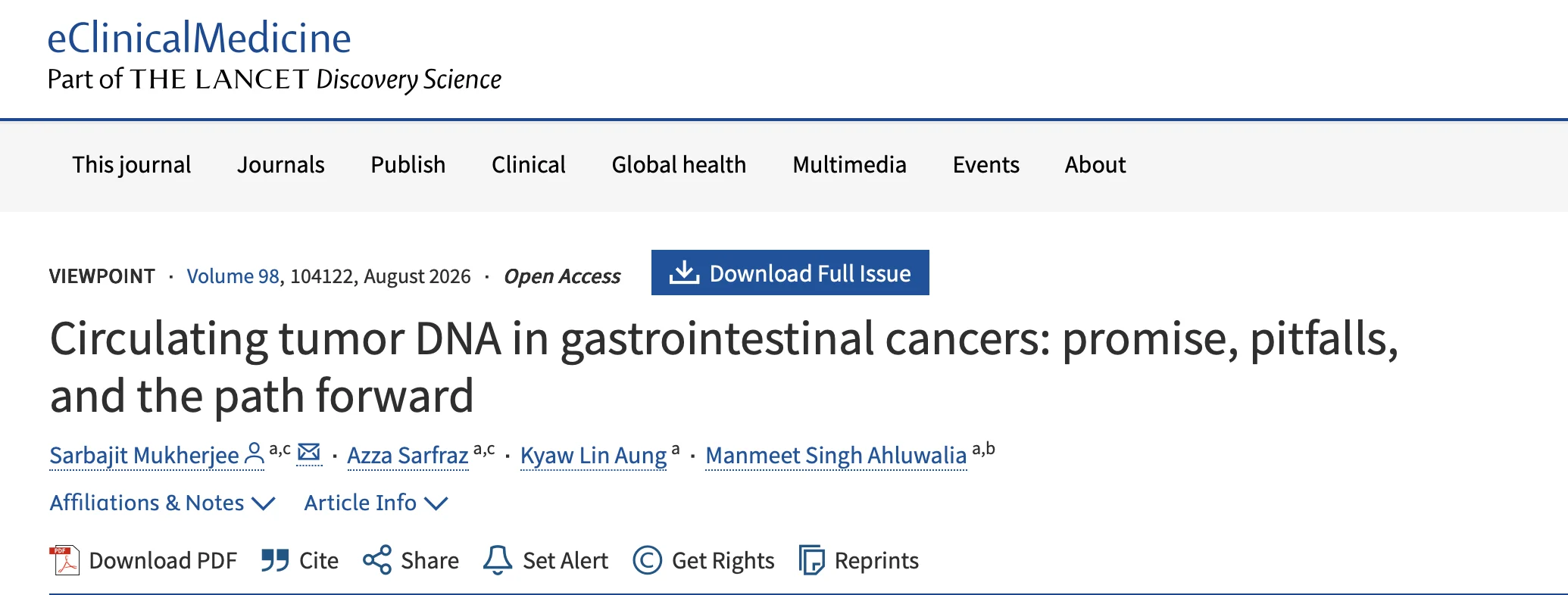
That distinction is at the heart of our new Viewpoint in eClinicalMedicine: ‘Circulating tumor DNA in gastrointestinal cancers: promise, pitfalls, and the path forward.‘
Three takeaways:
From prognostic signal to clinical utility
Postoperative ctDNA is among the most powerful markers of recurrence risk in gastrointestinal oncology, with the strongest evidence currently in colorectal cancer. But a biomarker that predicts recurrence does not automatically predict benefit from a particular treatment.
Evidence before reflex
The enthusiasm around ctDNA is justified – but enthusiasm cannot substitute for prospective evidence.
When uncertainty remains, a positive result should preferentially open the door to an ctDNA-guided clinical trial rather than reflexively trigger additional treatment.
The path toward ‘ctDNA 2.0’
The future is unlikely to be defined by a single binary ‘positive or negative’ blood test.
ctDNA 2.0 will incorporate serial molecular trajectories and integrate genomic alterations with methylation, fragmentomics, circulating RNA and proteins, imaging, pathology, and clinical outcomes. Artificial intelligence can serve as the integration layer that translates these longitudinal signals into adaptive, patient-specific decisions.
In other words, the future is not ctDNA alone. It is a continuously learning liquid-biopsy ecosystem.
This is also the translational vision we are building at the Baptist Health Herbert Wertheim Cancer Institute: a prospective liquid biopsy platform for gastrointestinal malignancies.
I am deeply grateful to my co-authors for their insight, scholarship, and collaboration, and to eClinicalMedicine – The Lancet Discovery Science for providing a platform for this timely discussion.”
Title: Circulating tumor DNA in gastrointestinal cancers: promise, pitfalls, and the path forward
Authors: Sarbajit Mukherjee, Azza Sarfraz, Kyaw Lin Aung, Manmeet Singh Ahluwalia
Read the article here.
Other articles featuring Sarbajit Mukherjee on OncoDaily.