Samer Al Hadidi, Associate Professor at UT Southwestern Medical Center, shared a series of updates and reflections from IMWG 2026, highlighting key discussions shaping the future of multiple myeloma care. Across several posts, he covered emerging data on quadruplet-based therapies, fixed-duration treatment strategies, novel immunotherapies, high-risk disease management, and the growing focus on achieving long-term disease control and potential cure. He also emphasized the importance of balancing efficacy with quality of life and offered a thoughtful perspective on the interpretation of long-term progression-free survival projections.
Below, we feature a selection of his insights and highlights from the meeting.
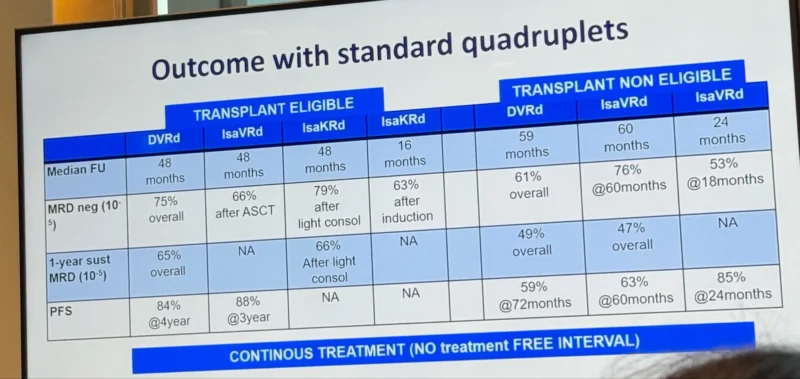
“IMWG26 Outcomes with standard quadruplets in myeloma.
Goal is to move for fixed duration therapy to achieve cure for more myeloma patients.”
“IMWG26 Great discussion in the quad based therapies.
- With promising therapies (many effective products going for upfront studies) fixed duration therapy should be the way to go (duration of therapy is to be determined).
- Personalized treatment in myeloma is different than other cancers since for most part treatments work for all myeloma patients (one focus will be: standard vs. high risk or t(11;14) vs. no t(11;14)).
- Trials design may need to have new trials endpoints centered about cure (need long follow up off therapy to be implemented in clinical trials).”
“Nice figure Shaji Kumar on how to improve KM curve. Focus on improving outcomes for high risk disease.”
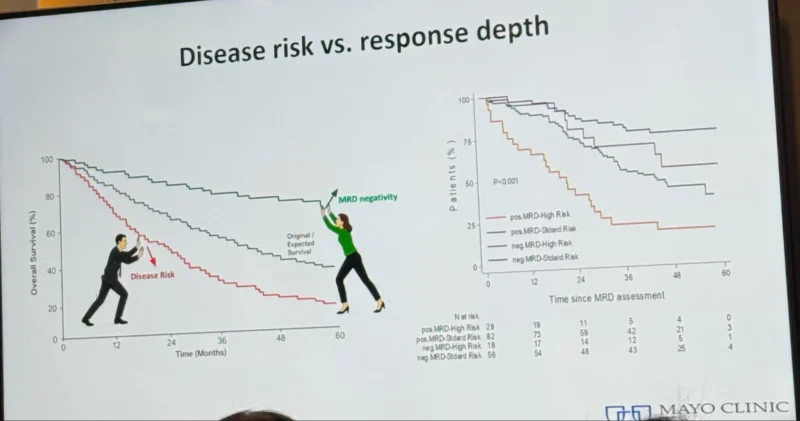
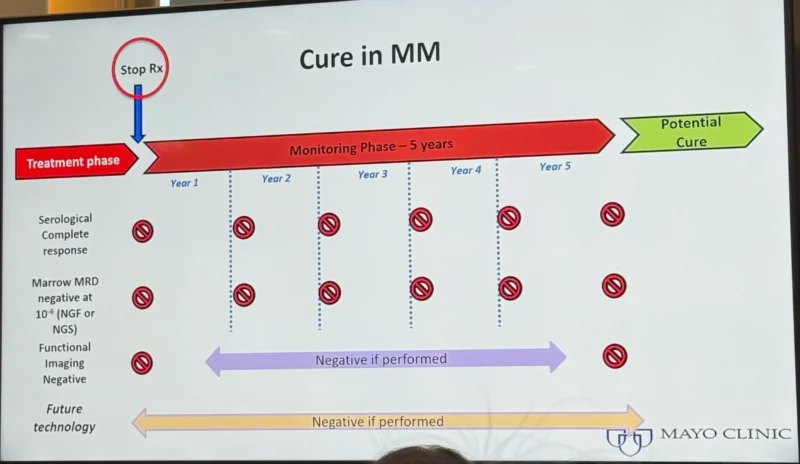
“IMWG26 A glimpse on the future centred about cure in myeloma with limited duration therapy.”
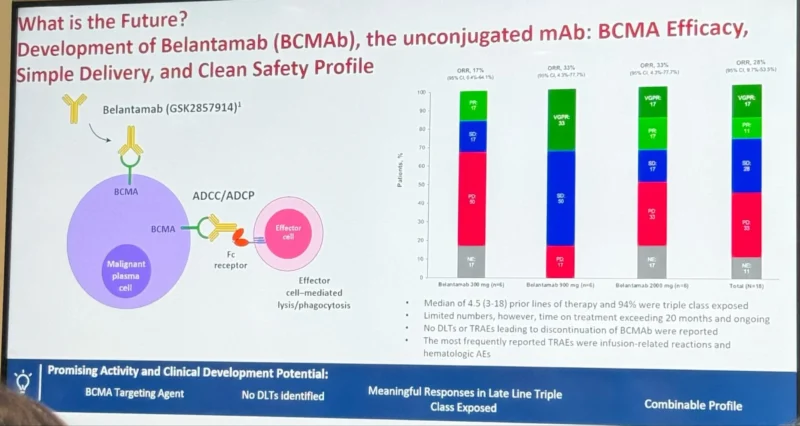
“Belantamab without the mafodotin maybe a new strategy as a naked BCMA antibody with better safety signal.”
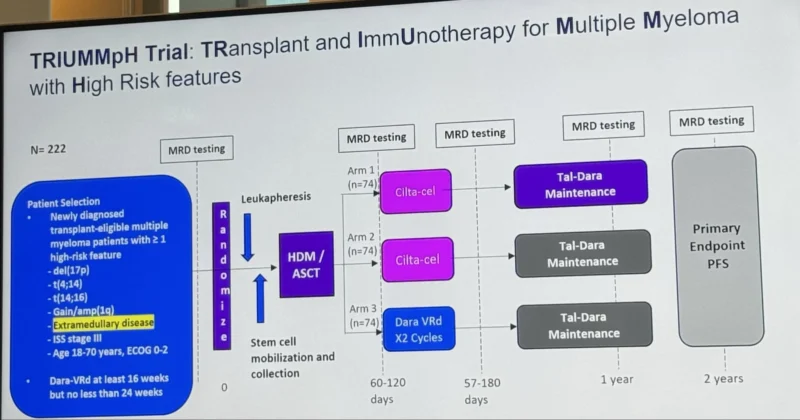
“TRIUMMpH trial design for high risk patients with myeloma which includes EMD.”
“Study to compare BsAb vs transplant.”
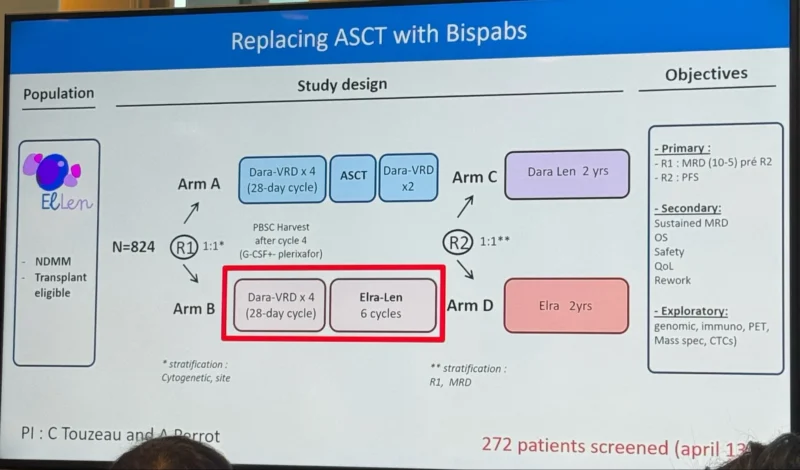
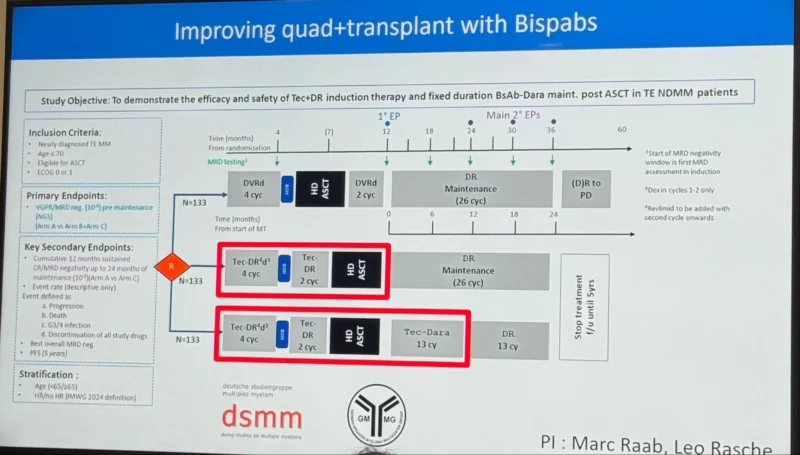
“German study using BsAb in NDMM.”
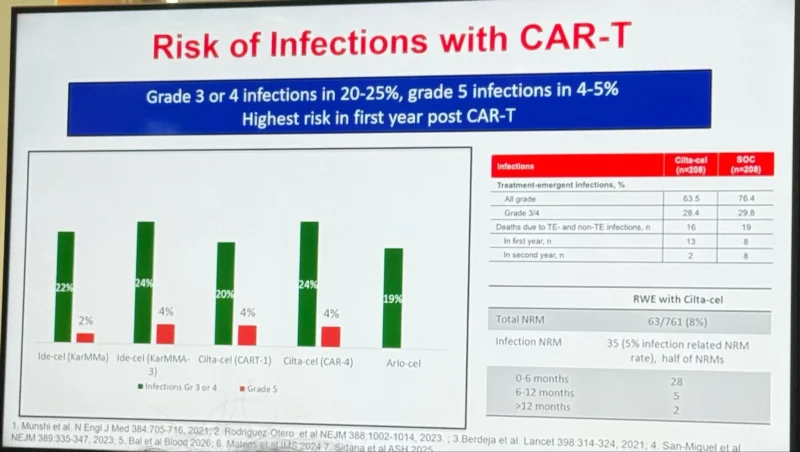
“Nice presentation Surbhi Sidana on infections with BsAb and CAR-T in myeloma.”
“A great first day with exciting future for myeloma field and patients.
- Cure is no longer aspirational: it is the cornerstone of future drug development. Time limited therapy is the direction, moving away from indefinite treatment paradigms toward defined endpoints with deep, durable responses.
- Toxicity cannot be an afterthought: as we push for deeper responses, we must not lose sight of tolerability.The field has a responsibility to optimize regimens that patients can actually sustain quality of life is not secondary to efficacy.
- Collaboration is how we get there: the spirit of collective work.The future of myeloma will be built together, not in silos More to come. The field is aligned, energized, and moving with purpose.”
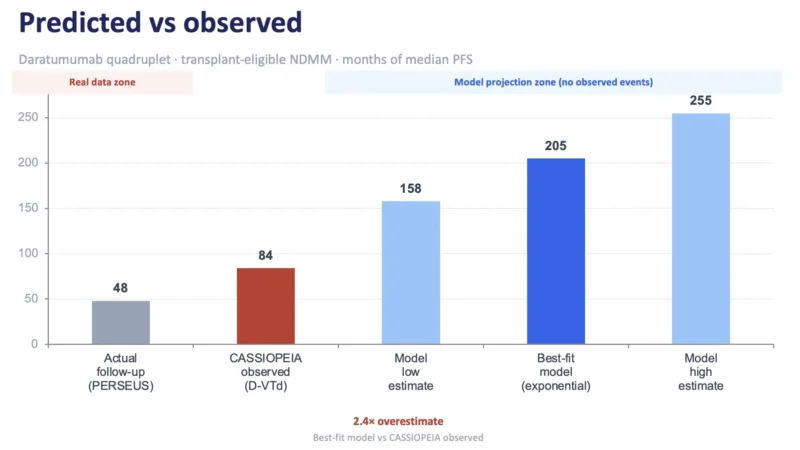
One important discussion point brought by Vincent Rajkumar was to be careful about the assumption that PERSEUS study PFS will be 17 yrs. While outcomes are great with quad based therapies in transplant eligible patients, such modeling need to be taken with grain of salt
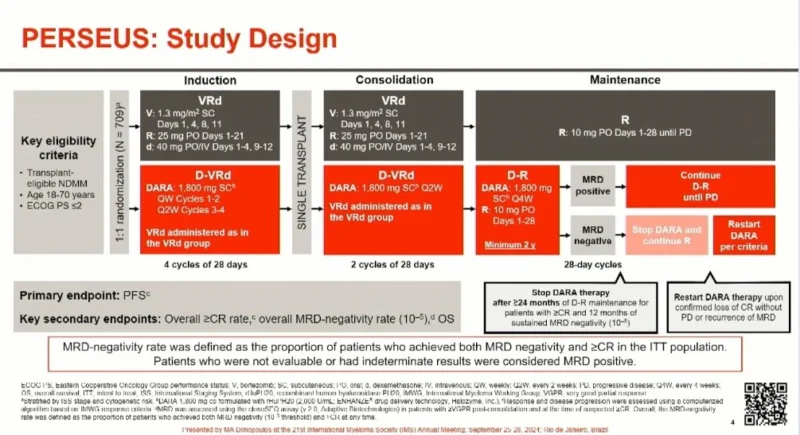
Here is why
- The models are working almost entirely on extrapolation.
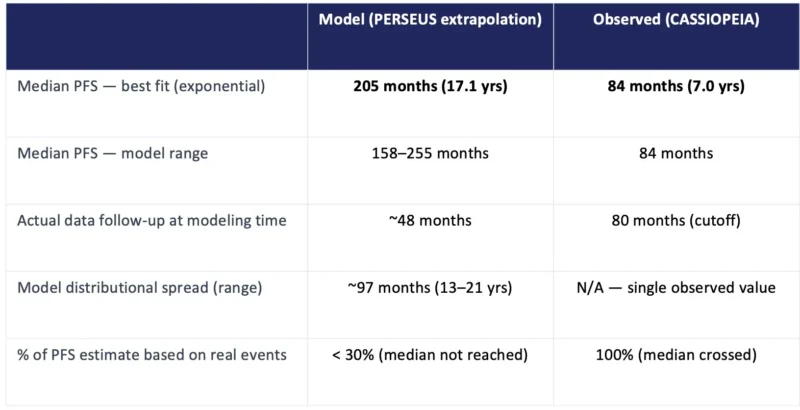
- At ~4 years follow-up, median PFS hasn’t even been reached yet in the Dara-VRd arm. That means the ’17 years’ figure is based on zero observed median events (it’s pure mathematical projection).
- 7 models were fitted. Such models gave answers ranging from 13 to 21 years. An 8-year spread is not a prediction (it’s uncertainty).
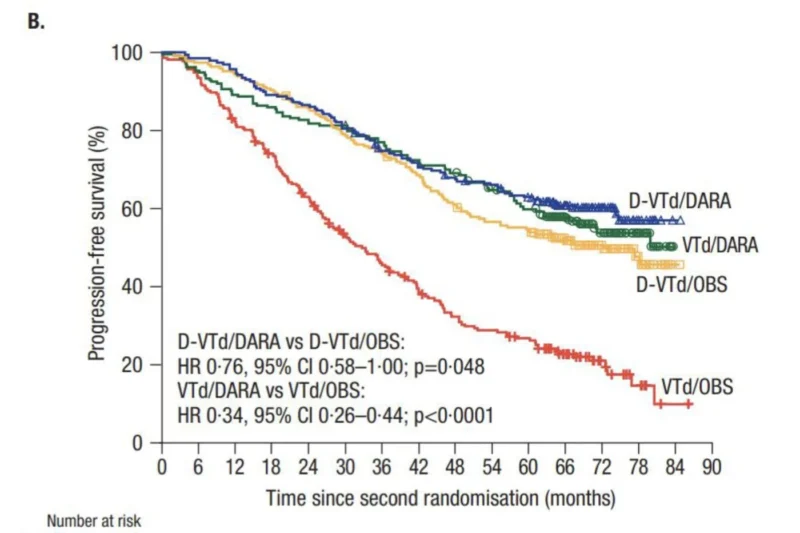
CASSIOPEIA study (will have longer follow up soon)
- ~7 years follow-up, the actual observed median PFS with Dara-VTd: 84 months (~7 years).
- That’s maybe a 2.4× overestimate, Dara-VRd is arguably better than Dara-VTd and the duration/maintenance were different between both studies.
Why overestimation happens?
- The ‘best fit’ model chosen was exponential, which assumes the risk of progression never changes over time.
- That’s not how myeloma progression occurs. Hazard increases over time. Patients who are still in remission at year 5 are a selected group
So the key issue is that exponential models on immature data systematically overestimate long-term PFS.
None of this diminishes the real benefit of Dara-VRd (it has excellent outcomes).
We need longer follow-up, not better curve-fitting to better know the actual outcomes for patients.
End.”
Other articles about IMWG 2026 on OncoDaily.