





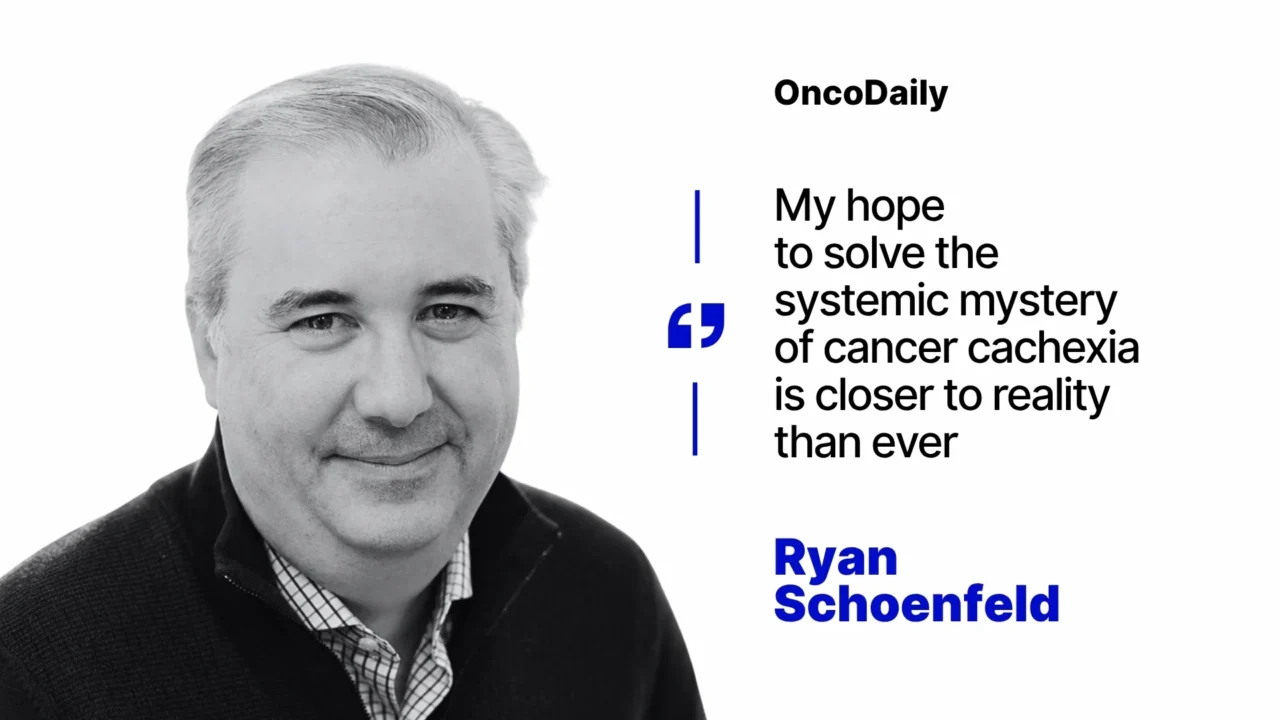
Ryan Schoenfeld, Chief Executive Officer at The Mark Foundation for Cancer Research, shared a post on LinkedIn:
“For a long time, cancer cachexia was treated almost as an afterthought, an inescapable side effect of advanced cancer rather than something we could actively target and treat.
That narrative is finally shifting. This week, Amber Dance wrote a terrific feature in Nature looking at how our understanding of cachexia is evolving. We now know it isn’t just about malnutrition and muscle wasting. Instead, it’s a systemic syndrome involving crosstalk between the brain, metabolism, and immune system.
I was glad to share a few thoughts for the piece, including my hope that we are closer than ever to solving this persistent scientific mystery and to finding a way to treat it.
What makes me most optimistic is the sheer momentum in the field right now. As the piece highlights, the Cancer Grand Challenges CANCAN team, led by past Mark Foundation grantee Tobias Janowitz, is doing extraordinary work untangling cachexia’s drivers.
I’m also excited about the work coming out of an ongoing The Mark Foundation for Cancer Research Endeavor Award focused on cachexia. Together, Ayelet Erez, Steffen Jung, Asya Rolls, and Keren Yizhak are exploring the precise neural and metabolic circuits that underpin cachexia. They’ve already made exciting progress, showing that vagal dysregulation disrupts the connection between the brain and liver in cachexia patients, leading to metabolic dysfunction and inflammation.
Thanks to the collaborative efforts of these researchers and others who work together diligently across disciplines, institutions, and countries, we are closer than ever to real solutions.
Worth a read if you want to see where the science is heading.”
More from The Mark Foundation on OncoDaily.