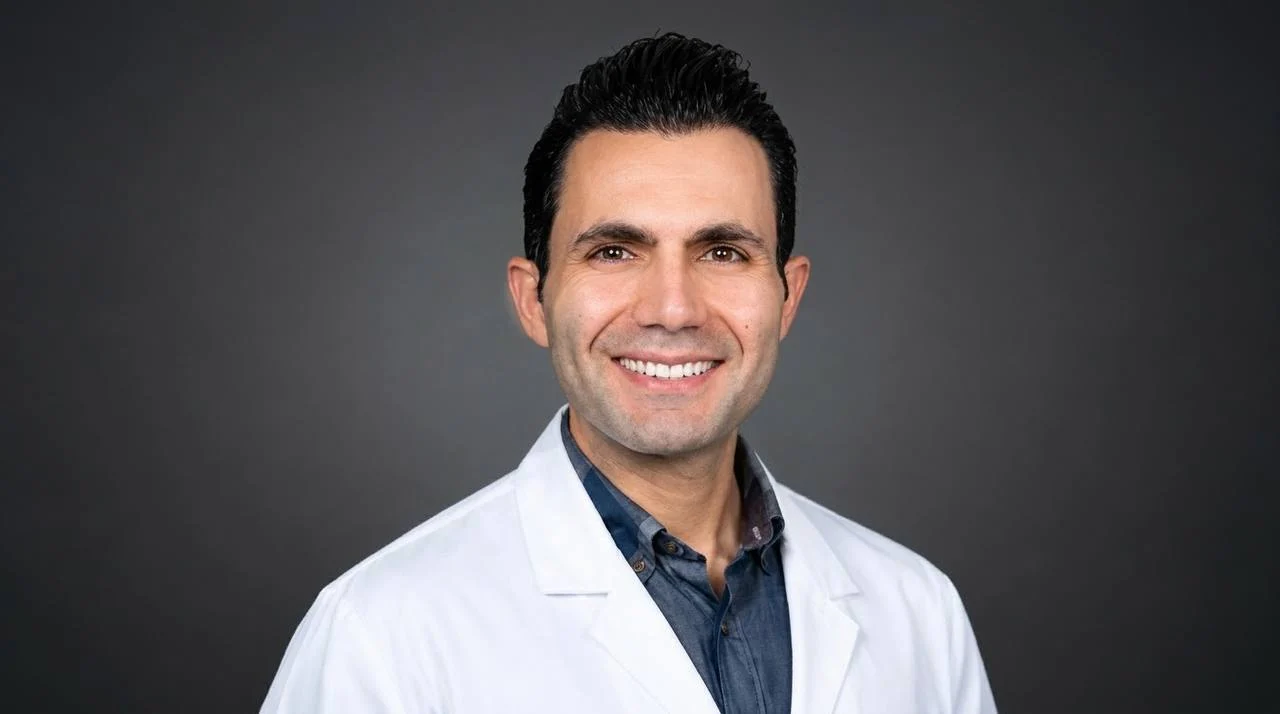
Roupen Odabashian, Chief Medical Officer at Spiraldot Health, Oncologist at Abbotsford Regional Hospital and Cancer Centre, Founder at MeDucation AI, Podcast Host at OncoDaily, shared a post on LinkedIn:
“I think, as an oncologist, I live a lot of ups and downs in my day. Sometimes my work feels like someone with bipolar disorder, and I wanted to write about it and share it with the world. I don’t really care if people read it or not, but I think it’s insightful and useful to share what happens behind the walls of the clinic.
When I open LinkedIn, it’s a completely different world than what I experience in real life. LinkedIn is full of people who are talking about burnout in healthcare. Anyone can come up with a new technology and then find a reason for burnout and say that technology solves that specific reason, so it helps with patients’ burnout. I’m not really sure if this is true or not, because there are good parts of medicine. I do still enjoy medicine, and I enjoy it now more than I enjoyed it in the past, given that I’m the one who’s responsible for taking care of my patients. Although it adds lots of weight on my back, I think it’s worth it.
The oncology clinic is not mainly people who are burned out and don’t want to work. There are some days I don’t want to work, but I do have really good days. This week, I discharged four or five patients who had head and neck cancer because we can cure these people in this day and age. I love seeing my prostate cancer patients. They are the easiest. All I have to do is prescribe a pill, and that puts their prostate cancer under control for several years.
Kidney cancer patients surprise me the most. Some of them do amazingly on treatments. The new immunotherapies and the pills cut through their cancer like a hot knife through butter. Some of them, the cancer progresses so rapidly that I mix the kidney cancer with other aggressive cancers like pancreatic cancer and cholangiocarcinoma.
My day has lots of moments of joy. When I read a CT scan of a patient who is on treatment and the CT scan shows no progression, I get excited like a kid. I run to the patient’s room. I open the door. I don’t even introduce myself. The first thing I say is, ‘Hey, your scan is normal. There is no progression. We’re controlling this.‘ I become like a kid who can’t hold a secret, and I just want to tell the world about it.
On the other hand, when I see a scan that shows progression, I feel heaviness in my stomach. Actually, every scan report I open, I get palpitations, like a student who’s opening their exam results. I start scrolling down, down, down very fast, very fast, because that’s where the impression of the scan is: the last part that tells me, ‘Yes, there is a progression,’ or ‘No, there is no progression.’
When there is a progression, that’s so hard. I don’t believe my eyes, usually. I just try to open the scans and try to read them on my own. Maybe the radiologist is mistaken, and then I go to the radiologist. I try to knock on their door, and I ask them to review the images with me. Most of the time, they are right, and my eyes are blind. Or maybe they just don’t want to see the truth that the cancer is progressing and my treatment is failing my patients.
These are very hard moments, but not always. There are moments where, if there is a progression, some people might feel relieved. Some people might feel like they’ve done what they can, and at least they don’t blame themselves. They can look at their families and say, ‘I tried everything I can.‘
Maybe what really excites me about AI is not the technology. It’s knowing that if I master AI, maybe one day I can cure cancer. I don’t think there’s a more noble or important thing to work on for us as a humanity other than curing cancer. I’m not sure about going to Mars. Going to Mars is just like someone who wants to build a yacht, but their house is broken. They should fix their house first.
These are some thoughts at the end of the day from my clinic, transcribed but not read by me and not AI.”
You can also read: Empowering Oncologists: How to Fight Burnout? Dr. Mimi Knoll