





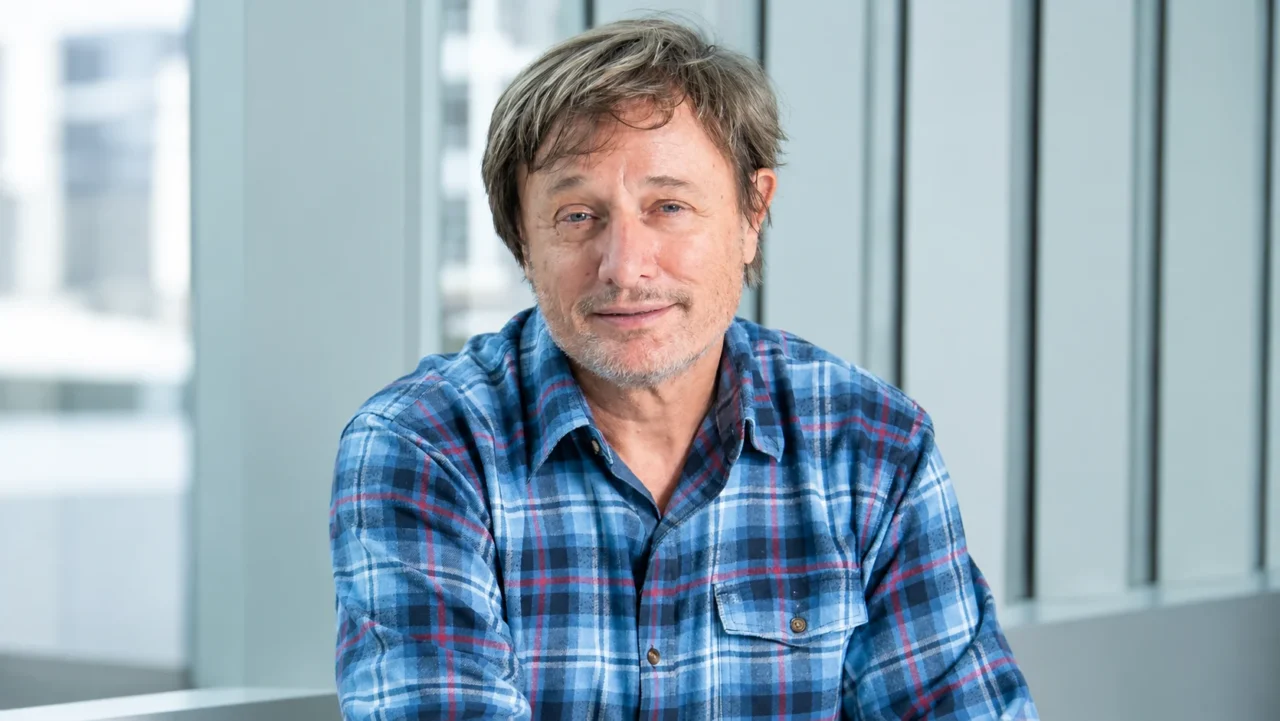
Robert Gourdie, Heywood Fralin Professor and Director at the Center for Vascular and Heart Research at the Fralin Biomedical Research Institute (FBRI) at Virginia Tech Carilion, shared a post on LinkedIn:
“Our paper is out in the September issue of Cancer Letters, and Virginia Tech has written it up.
The problem: radiation therapy treats about half of all cancer patients, but the dose is limited by what healthy tissue can tolerate. And for severe whole-body exposure — an accident, or an attack — there is no FDA-approved countermeasure at all.
What we found: a single oral dose of XOlacta, given one hour after an otherwise lethal whole-body dose in mice, produced 42% survival at 30 days. No untreated animal survived. It still worked when we delayed dosing by 24 hours, which matters enormously for anything meant to be useful after a real event.
The part I find most interesting is what it does not do. In a glioma model it protected healthy tissue while leaving radiation’s effect on the tumor intact. Protecting the patient without protecting the cancer has always been the hard part.
It works by packaging the peptide αCT11 inside milk-derived extracellular vesicles, which survive the gut well enough to make an oral dose possible. The formulation is stable at room temperature for a year or more — so it could sit in a stockpile, a hospital, or a pack.
This is preclinical. But Lovelace Biomedical Inc has independently reproduced the mouse findings, and we are now in safety and large-animal work under the FDA’s Animal Rule.
Enormous credit to Spencer Marsh, who led the work in my lab, and to Claire Beard, Zhi Sheng, Mark Bannon, Ruhul Amin, Rachel Letteri and Ilektra Athanasiadi. Supported by NIH, NSF, NCI, the Red Gates Foundation, the Fralin Family, and FBRI.
Disclosure: Spencer and I are officers of Tiny Cargo Co., which is developing this technology, and Virginia Tech, MUSC and I hold related patents.”
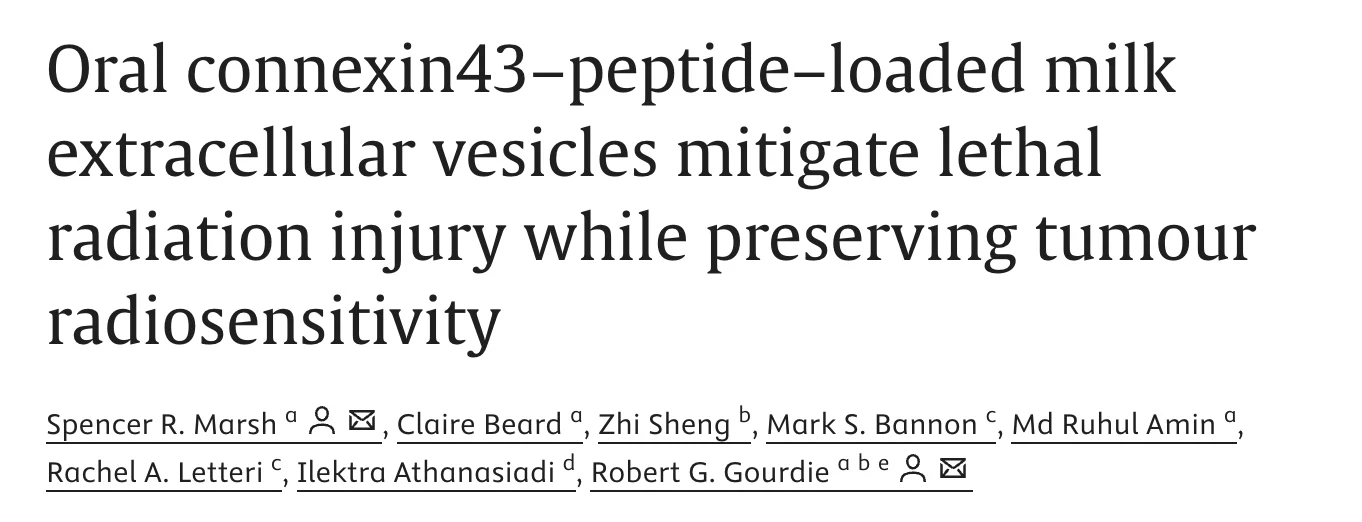
Title: Oral connexin43–peptide–loaded milk extracellular vesicles mitigate lethal radiation injury while preserving tumour radiosensitivity
Authors: Spencer R. Marsh, Claire Beard, Zhi Sheng, Mark S. Bannon, Md Ruhul Amin, Rachel A. Letteri, Ilektra Athanasiadi, and Robert G. Gourdie.
Read the Full Article on Cancer Letters
Other posts about Radiation Therapy on OncoDaily.