






Renjith Vijayakumar Selvarani, Founder, Chairman, Chief Scientific and Technology Officer at OLUSIUM, shared a post on LinkedIn:
“Cancer Plasticity: The Shape-Shifting Challenge in Oncology
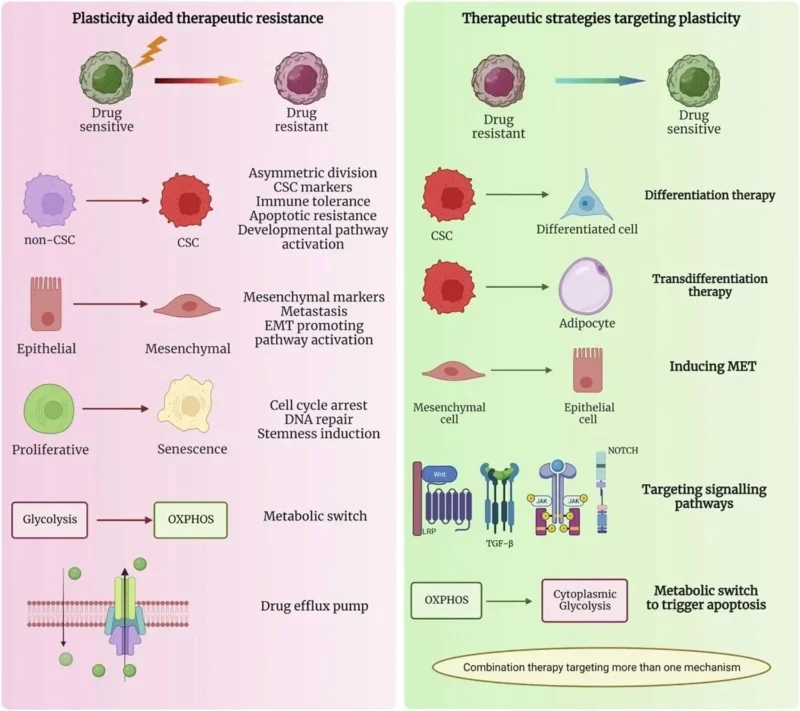
Cancer is not a static disease. One of the key reasons behind treatment failure and disease recurrence is cancer cell plasticity – the ability of tumor cells to dynamically change their identity, behavior, and function in response to environmental stress or therapeutic pressure.
Unlike permanent genetic mutations, cancer plasticity involves reversible epigenetic and phenotypic changes, allowing cancer cells to adapt, evade therapies, and survive. Processes such as epithelial-mesenchymal transition (EMT), acquisition of stem-like traits, lineage switching, and transdifferentiation enable tumors to develop heterogeneity and resistance to treatment.
Cancer cells also adapt through immune evasion, metabolic reprogramming, and interactions with the tumor microenvironment, which further complicates precision oncology and biomarker-based treatment strategies (Bhat et al., 2024; Qin et al., 2020).
Recent advances in single-cell RNA sequencing, lineage tracing, and 3D tumor models are providing deeper insights into these dynamic transitions. Emerging therapeutic strategies are now targeting the mechanisms underlying plasticity, including epigenetic therapies, plasticity inhibitors, and combination treatments with immunotherapy (Liu et al., 2024; Sadida et al., 2024).
Understanding cancer plasticity is shifting the paradigm of oncology – from targeting only genetic mutations to addressing the dynamic and adaptive nature of tumor cells. These insights may ultimately lead to more durable and personalized cancer treatments.”
Title: Cancer Plasticity: The Shape-Shifting Threat Challenging Modern Treatments
Author: Renjith Vijayakumar Selvarani.
Other articles featuring Renjith Vijayakumar Selvarani on OncoDaily.