





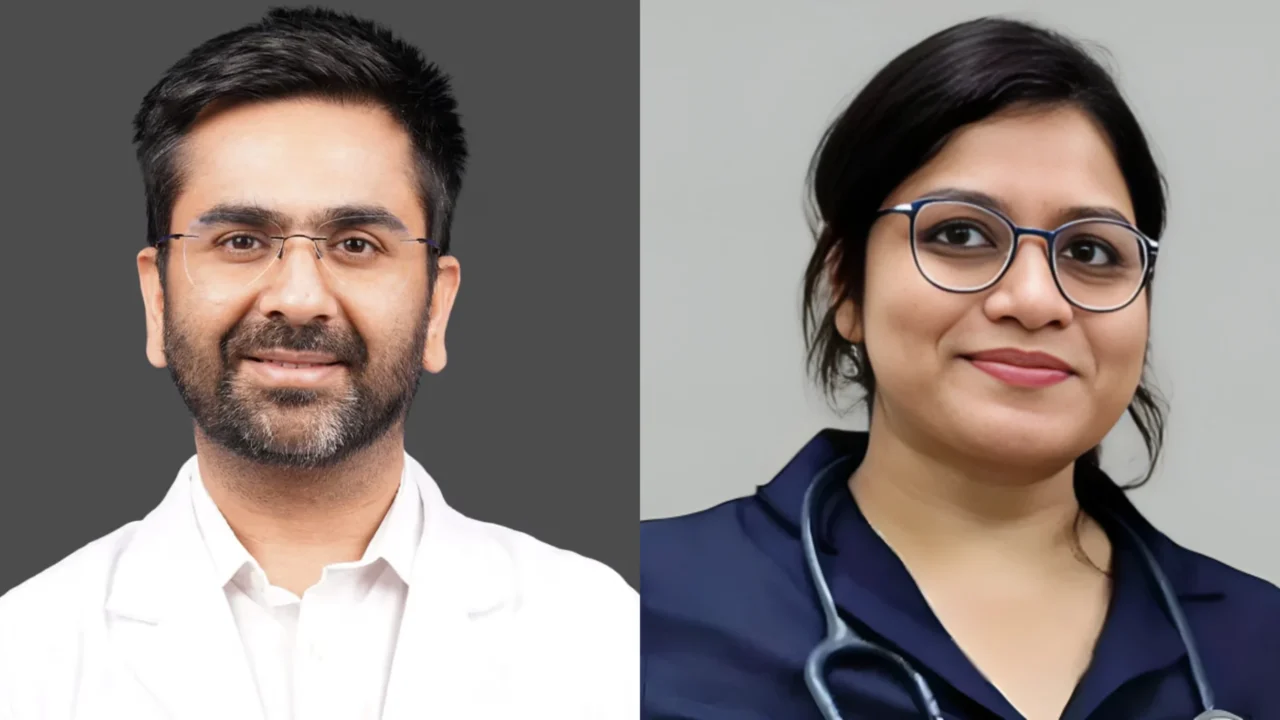
Prashant Mehta, Senior Consultant and Assistant Professor in the Department of Medical Oncology/Hematology-Oncology and Bone Marrow Transplantation at the Amrita Hospital, shared Aishee Pal Sadhu’s, Medical Advisor and Manager, Medical Team, Delhi NCR, North Zone at ImmunoACT, post on LinkedIn, adding:
“Great thoughts Aishee Pal Sadhu. Just adding my bit here!
IEC – HS is an ‘HLH like’ syndrome (that is how it has been named).
The diagnostic criteria of HLH in my opinion do not apply here, if applied to IEC- HS may lead to difficulty diagnosing or underdiagnosis.
Think IEC-HS when a post-CAR-T patient has:
- A rising ferritin plus generally a second-wave inflammation after CRS is settling, with one or more of:
- Worsening cytopenias,
- Falling fibrinogen/coagulopathy,
- Transaminitis/bilirubin rise,
- Renal/pulmonary dysfunction,
- Marrow hemophagocytosis,
with active work up for infections (including viral) disease progression, DIC/sepsis, drug toxicity, GVHD, TA-TMA overlap.
We also now need to start looking at ‘Endothelial activation syndromes‘ as a divergent and convergent pathophysiology .
That is how I would look at it.”
Quoting Aishee Pal Sadhu’s post:
“Episode 4 | CAR-IEC-HLH
CAR-T Physiology Pearls | Translating Physiology into Precision Cellular Therapy
Prediction. Recognition. Intervention.
The next challenge in CAR-T is not efficacy. It is toxicity recognition.
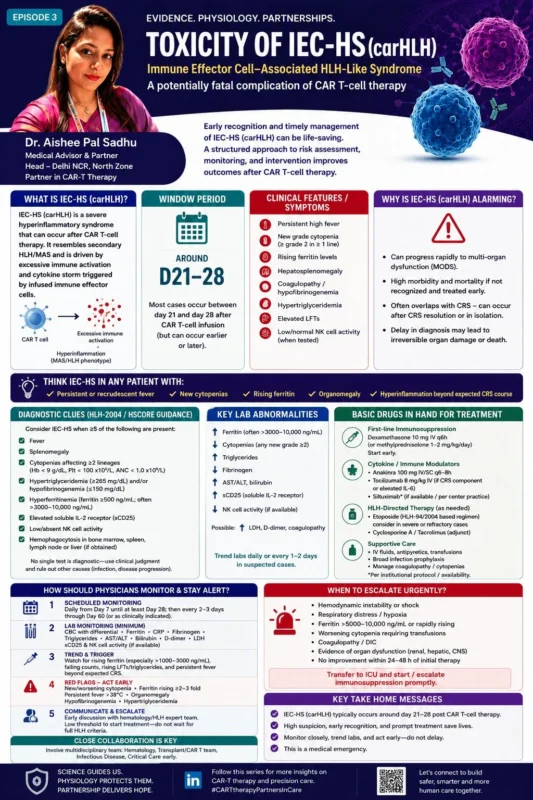
IEC-HLH remains a potentially fatal hyperinflammatory syndrome that frequently presents after the acute CRS window has passed.
In my experience supporting CAR-T programs, one recurring lesson stands out:
Ferritin trends matter. New cytopenias matter. Timing matters.
Reognizing the Day 21-28 window can make the difference between early intervention and critical illness.
A CAR-T toxicity. A medical emergency.A diagnosis that cannot afford delay.
A concise visual summary of IEC-HS involved in CAR-T care.”
Other articles featuring Prashant Mehta on OncoDaily.