Prajwal Bhandari, Captain at COPD Foundation, shared a post on LinkedIn:
“Breast cancer care must begin before the hospital, in homes, communities, health posts, and primary care centers.
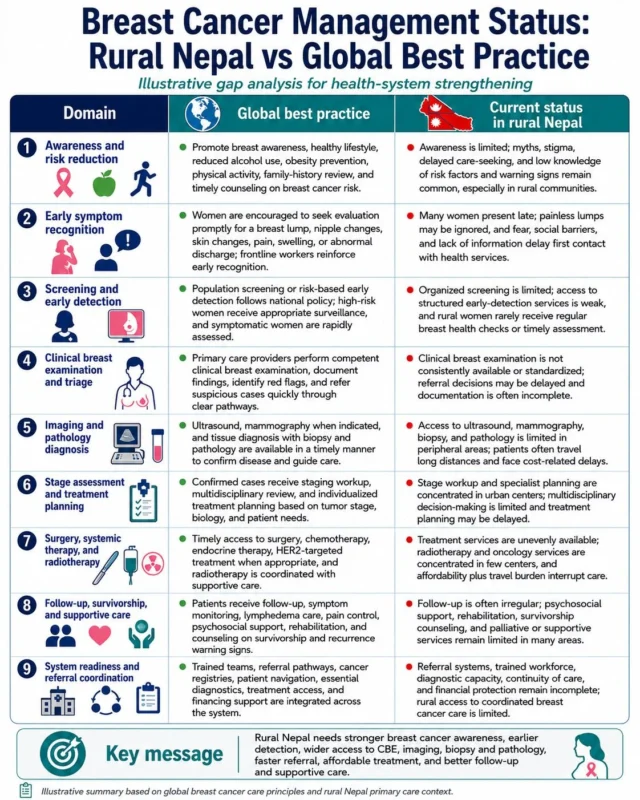
In many rural communities of Nepal, women may recognize symptoms late, delay seeking care due to fear or stigma, and face long travel, high costs, and limited access to clinical breast examination, imaging, biopsy, pathology, oncology care, and follow-up support.
This illustrative gap analysis compares breast cancer management in rural Nepal with global best practice across key domains: awareness, early symptom recognition, screening, clinical breast examination, imaging and pathology, treatment planning, surgery/systemic therapy/radiotherapy, survivorship care, and referral coordination.
The key message is clear: Rural Nepal needs stronger breast cancer awareness, earlier detection, wider access to clinical breast examination, imaging, biopsy and pathology, faster referral, affordable treatment, and better follow-up and supportive care.
At Health Care Association of Nepal, we believe breast cancer outcomes can improve when early detection is brought closer to communities, frontline health workers are trained, referral pathways are strengthened, and women are supported from awareness to diagnosis, treatment, and survivorship. Early detection saves lives, but only when the system is ready to respond.”